This Nebraska waterfowl guide covers what changed, what didn’t, and what you need to line up before opening day.
The Nebraska Game & Parks Commission approved the full slate of 2026–2027 waterfowl seasons at its March meeting, confirming the shift to three duck zones. Nebraska sits on the Central Flyway, which is why both residents and traveling hunters build fall trips around this state.
This guide is meant to serve three groups: residents who need their zone’s dates quickly, non-residents working out costs and access before booking a trip, and first-timers who want a plain walkthrough of the legal requirements. Regulations do change, so confirm details with Nebraska Game & Parks before you hunt.
Here’s what’s covered below:
- Season dates by zone (teal, ducks, coots, and goose seasons) plus bag and possession limits
- Every license, stamp, and HIP requirement, with resident and non-resident costs
- Where to legally hunt: public WMAs, private leases through Hunting Locator, and guided options
Get your gear squared away while you plan, then move into the dates that matter most.
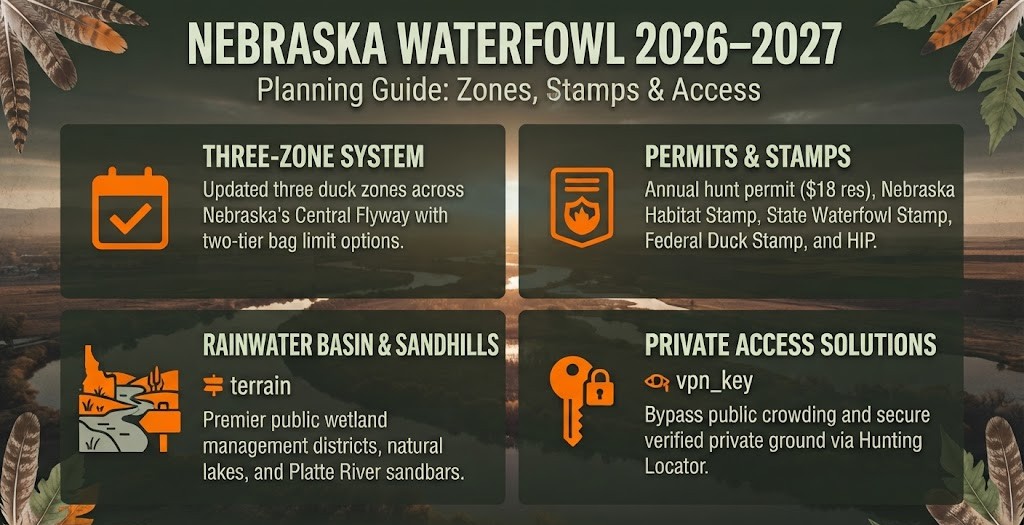
Quick Overview: Nebraska Duck Season 2026 Dates & Limits at a Glance
Which zone you’re hunting determines almost everything else in this guide. With Nebraska now running three duck zones instead of four, that answer has changed for a lot of hunters. The table below has every confirmed date and limit in one place.
| Species / Season Type | Zone or Area | Dates | Daily Bag Limit | Notes |
|---|---|---|---|---|
| Early Teal | Statewide | Sept. 5–13, 2026 | 6/day | 18 in possession |
| Regular Duck & Coots | Zone 1 | Oct. 24–Dec. 6, 2026 & Dec. 19, 2026–Jan. 17, 2027 | Two-tier system (see below) | Possession is 3× daily bag |
| Regular Duck & Coots | Zone 2 (High Plains) | Oct. 3–Dec. 15, 2026 & Jan. 6–27, 2027 | Two-tier system (see below) | Possession is 3× daily bag |
| Regular Duck & Coots | Zone 3 (High Plains) | Oct. 24, 2026–Jan. 5, 2027 & Jan. 6–27, 2027 | Two-tier system (see below) | Possession is 3× daily bag |
| Light Goose (Regular) | Statewide | Oct. 3–Dec. 30, 2026 & Jan. 25–Feb. 9, 2027 | 50/day | No possession limit |
| White-fronted Goose | Statewide | Oct. 17–Dec. 27, 2026 & Jan. 25–Feb. 9, 2027 | 2/day | 6 in possession |
| Dark Goose | Varies by unit | Per Nebraska Game & Parks unit schedule | 5/day | 15 in possession |
For more detail on how these species-specific seasons play out across the state, see our Nebraska waterfowl breakdown. The licensing checklist below covers the paperwork side.
License, Permit & Education Requirements Snapshot
Before any of those dates apply to you, you’ll need the following in hand:
- Annual Hunt Permit (ages 16+) — required for all adult hunters
- Nebraska Habitat Stamp — required alongside your hunting permit
- Nebraska Waterfowl Stamp — required for all waterfowl hunters
- Federal Duck Stamp — required nationwide for migratory bird hunting
- HIP number — annual Harvest Information Program registration is mandatory
- Hunter Education certificate — required for hunters ages 12–29, per Nebraska Game & Parks
That’s the full list. Resident and non-resident costs are broken down in the Licenses & Permits section below.
Nebraska Waterfowl Hunting Seasons
Nebraska builds its waterfowl calendar around zones first, species second. With the shift to three duck zones for 2026, figuring out your zone is the first step. From there, the calendar follows Central Flyway migration timing: teal season opens things up in September, and the two-tier system governs duck limits once the regular season starts.
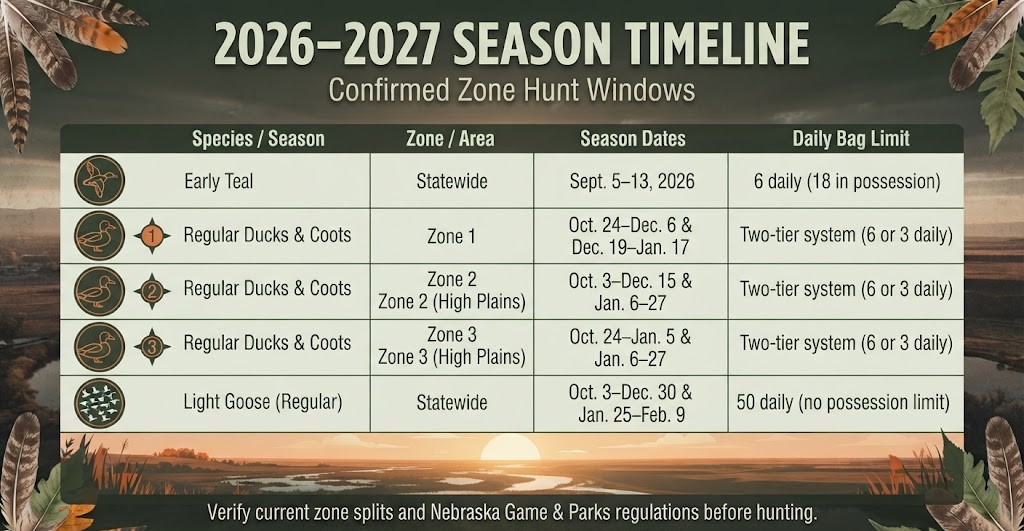
Early Teal Season
Nebraska’s early teal season runs statewide from September 5–13, 2026, with a daily bag limit of 6 birds and 18 in possession. This nine-day window opens the waterfowl calendar each year, giving hunters a chance at birds before the main duck seasons begin.
Nebraska Game & Parks sets the length of this season based on blue-winged teal breeding population status, which is why it stays short rather than extending further. It’s tied directly to the health of the resource.
Regular Duck & Coot Season (by Zone)
The regular duck and coot season is where the new three-zone system matters most. Here’s how each zone breaks down for 2026–2027:
- Zone 1: October 24–December 6, 2026, and December 19, 2026–January 17, 2027
- Zone 2 (High Plains): October 3–December 15, 2026, and January 6–27, 2027
- Zone 3 (High Plains): October 24, 2026–January 5, 2027, and January 6–27, 2027
Understanding the two-tier duck system
This is the key thing to understand before your first regular-season hunt. Nebraska requires every hunter to pick one tier for the entire season, and you can’t switch between them once you’ve chosen.
- Tier 1: 6 ducks per day, with specific species restrictions
- Tier 2: 3 ducks per day, any species and sex
- Possession limit for both tiers is 3× your daily bag
Nebraska’s two-tier duck program is designed to help beginning hunters build duck-identification skills in the field without the risk of accidentally breaking the law. If you’re still working out a hen mallard from a gadwall at forty yards, Tier 2’s simplicity removes that pressure while you learn.
Goose Seasons: Light, Dark & White-fronted
Goose hunting in Nebraska runs on its own calendar, separate from ducks, across three categories:
- Light Goose (Regular Season): October 3–December 30, 2026, and January 25–February 9, 2027 — 50 per day, no possession limit
- White-fronted Goose: October 17–December 27, 2026, and January 25–February 9, 2027 — 2 per day, 6 in possession
- Dark Goose: 5 per day, 15 in possession, with exact dates varying by management unit
The 50-bird light goose limit with no possession cap reflects ongoing efforts to manage an overabundant population. It’s one of the more generous limits in any flyway.
Youth, Veteran & Active-Duty Military Season
Nebraska sets aside special early dates for youth, veteran, and active-duty military hunters, with the daily bag limit matching the regular season:
- Zone 1: October 17–18
- Zone 2: September 26–27
- Zone 3: October 17–18
This is a good entry point for younger or first-time hunters going out alongside experienced family or mentors. Confirm exact dates and any changes with Nebraska Game & Parks before heading out.
Nebraska Waterfowl Licenses and Permits
Getting legal to hunt waterfowl in Nebraska comes down to three things: the right permit, the full stamp stack, and HIP registration. It’s a fair amount of paperwork, but broken into a checklist it’s straightforward to knock out in one sitting, whether you’re a lifelong resident or booking your first non-resident trip.
Nebraska Hunting Licenses
Here’s what each hunter needs and what it costs:
| Permit / Stamp Type | Resident Cost | Non-Resident Cost |
|---|---|---|
| Annual Hunt Permit (ages 16+) | $18 | $128 |
| Youth Permit (ages 15 & under) | Free | Free |
| Nebraska Habitat Stamp | $25.00 | $25 |
| Nebraska Waterfowl Stamp | $10.00 | $10 |
| Federal Duck Stamp | $32 | $32 |
Non-resident permit pricing varies, so confirm the current figure directly with Nebraska Game & Parks before booking. What’s consistent across the board: these stamps stack on top of your base permit. Every hunter age 16 and older needs both the Nebraska Waterfowl Stamp and the Federal Duck Stamp in addition to the Annual Hunt Permit and Habitat Stamp. None of these are optional.
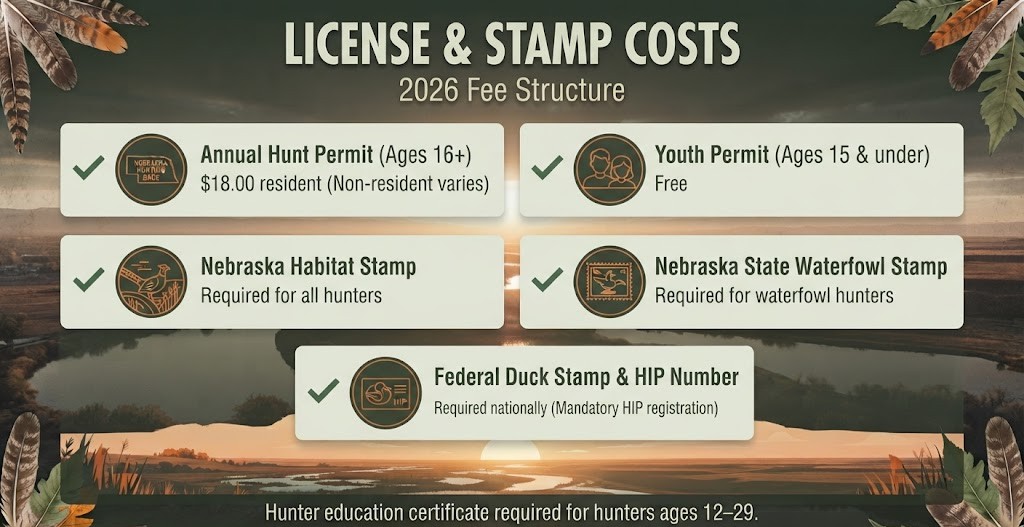
Nebraska Hunting Permits, Stamps & HIP Registration
Once you know what each piece does, the system is easier to follow:
- Habitat Stamp — funds habitat conservation work and is required alongside your hunting permit
- Waterfowl Stamp — the state-level stamp specific to duck and goose hunting
- Federal Duck Stamp — required nationwide for anyone hunting migratory waterfowl
You’ll also need to register for a HIP number, short for Harvest Information Program. This U.S. Fish and Wildlife Service program tracks migratory bird harvest data annually, and every waterfowl hunter must register in each state they hunt before heading out. Nebraska Game & Parks handles this registration through its online permit system, which includes a walkthrough.
Hunters between the ages of 12 and 29 need a completed Hunter Education certificate before buying a permit. All of this is available through the official Nebraska Game & Parks permit system — as with everything else here, confirm current requirements with them before your season starts.
Where to Hunt Waterfowl in Nebraska
Nebraska’s reputation as a Central Flyway destination rests on three regions: the Rainwater Basin wetlands, the Sandhills lakes, and the Platte River’s sandbars. Where you hunt them, whether public ground, a private lease, or a guided trip, shapes the whole experience.
Best Public Lands & WMAs
Nebraska offers real public access for waterfowl hunters, led by the Rainwater Basin Wetland Management District, along with broader opportunities across the Sandhills lakes region and the Platte River corridor. These areas draw birds consistently through the season and give any hunter, resident or visiting, a legitimate starting point.
- Rainwater Basin Wetland District — a network of wetlands that’s one of the most significant waterfowl corridors in the state
- Sandhills lakes — scattered natural lakes that hold birds throughout the migration
- Platte River corridor — sandbar and river-bottom habitat that draws both ducks and geese
Public land works, but it’s open to everyone, which means popular spots fill up fast, especially on weekends and around opening weekend of each zone. If you’re traveling from out of state and can’t scout ahead of time, that competition can turn a planned hunt into a frustrating one.
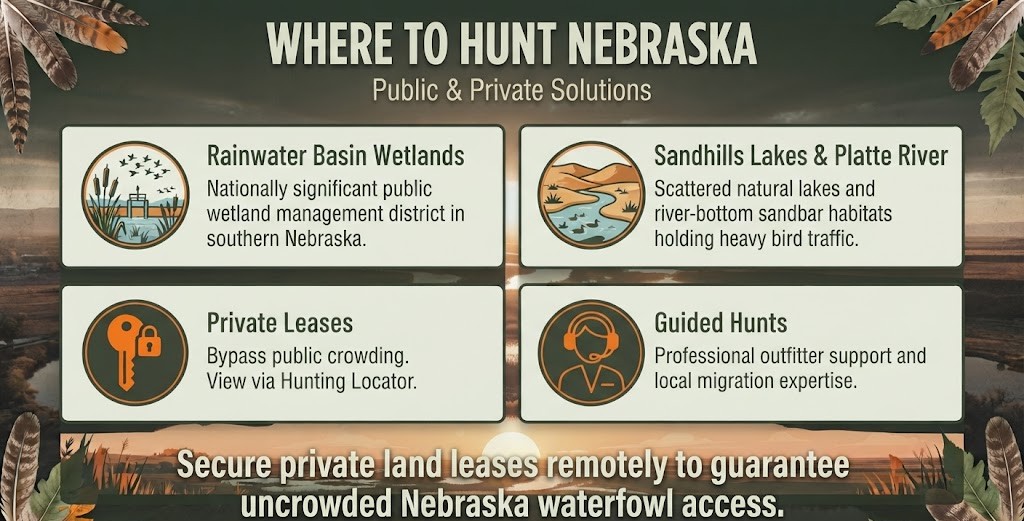
Private Land Hunting with Hunting Locator
Losing a spot to a crowded parking lot at 4 a.m., or not finding one at all, is a common problem for hunters without reliable access lined up. Leasing or buying private land removes that uncertainty: instead of hoping a public spot pans out, you know exactly where you’re hunting and who’s hunting it with you.
That’s what Hunting Locator was built to solve. How Hunting Locator works is straightforward: it connects hunters directly with landowners ready to lease or sell hunting access, with every listing vetted before it goes live. No cold-calling farmhouses, no guessing about property lines, no trespassing concerns.
You can browse vetted Nebraska waterfowl leases to see what’s currently available across the state’s wetland and river corridors, whether you’re after a season-long lease or considering owning a piece of Nebraska waterfowl ground.
Guided Waterfowl Hunts
For hunters coming into Nebraska for the first time, or anyone who’d rather hunt alongside someone who already knows the local birds, a guided hunt cuts down on the guesswork. A good guide brings knowledge of where birds are moving that week, a spread and blind already set up, and often gear you don’t have to pack yourself.
- Local expertise on demand: Guides track daily migration movement so you’re not guessing where birds are working
- Gear and setup handled: Many guided hunts include decoys, blinds, and calls, cutting down what you need to travel with
- Book ahead of peak weeks: Popular dates around the migration’s front edge fill up early, so plan your booking well before the season opens
- Vet before you commit: Confirm reviews, licensing, and communication before sending any deposit; a legitimate outfitter will answer questions plainly
Many of the landowners and outfitters offering this kind of access connect with hunters directly through Hunting Locator’s platform, alongside public land and private leases.
Nebraska Waterfowl Hunting Tips
These are the field-tested basics that tend to separate a productive Nebraska hunt from a frustrating one.
- Match your spread to the water: Large decoy spreads perform well in open fields, while smaller, tighter spreads work better in wetlands and rivers where birds expect less crowding.
- Learn your ducks before you pick a tier: If you’re still building species identification skills, Tier 2’s any-species-any-sex simplicity takes the pressure off while you learn. You can graduate to Tier 1 once you’re confident.
- Layer up and stay put: Nebraska’s fall and winter weather swings hard, so dress in layers and choose your concealment, layout blind or traditional blind, based on the terrain.
- Scout the migration, not the calendar: Hunt the front edge of a weather push through the Central Flyway rather than a fixed date, since migration timing shifts year to year with the weather.
- Have your stamps and HIP squared away before you leave the truck: A five-minute pre-hunt check of your permit, stamps, and HIP registration prevents a costly mistake in the field.
None of this works without the right equipment. From waders and decoys to layout blinds, calls, and non-toxic shot, you’ll find what you need in waterfowl gear at our store to match whichever tactic you’re building your hunt around.
More Resources from Hunting Locator
Planning more than ducks this year? Here’s coverage across the rest of Nebraska’s season.
- Plan your whole Nebraska year — Nebraska hunting season guide: a statewide hub covering every major season in one place.
- Waterfowl deep dive — Nebraska waterfowl hunting season: more species-specific detail beyond what’s covered here.
- Upland & game birds — Nebraska game bird hunting season: a natural pairing for hunters already chasing waterfowl.
- Small game to round out your trip — Nebraska small game hunting season: extend your season with additional species.
- Spring follow-up — Nebraska turkey hunting season: start planning your spring hunt while waterfowl season winds down.
- Deer — Nebraska deer hunting season: season dates and access info for the state’s marquee big game species.
- Elk — Nebraska elk hunting season: everything you need for pursuing Nebraska’s growing elk herds.
- Antelope — Nebraska antelope hunting season: open-country hunting across the state’s western plains.
- Bighorn sheep — Nebraska bighorn sheep hunting season: a look at one of the state’s most exclusive draw hunts.
- Find your land — Nebraska leases: browse current private land access across the state.
- Explore the platform — Hunting Locator homepage: see everything the platform offers hunters and landowners alike.
Frequently Asked Questions
When does duck season open in Nebraska in 2026?
Early teal opens statewide on September 5, 2026. Regular duck seasons open by zone — Zone 2 opens earliest on October 3, while Zones 1 and 3 open October 24. These dates reflect Nebraska Game & Parks’ 2026–2027 season approvals, so check the zone table above for your specific area.
What license do I need to hunt ducks in Nebraska?
You need an Annual Hunt Permit (ages 16+), plus the Nebraska Habitat Stamp, Nebraska Waterfowl Stamp, and Federal Duck Stamp. You’ll also need a HIP number. Hunters ages 12–29 must complete Hunter Education first. Nebraska Game & Parks manages all of these requirements directly.
How does Nebraska’s two-tier duck bag limit work?
Hunters choose one tier for the entire season. Tier 1 allows 6 ducks per day with species restrictions, while Tier 2 allows 3 ducks per day of any species and sex. Possession limit is 3× your daily bag under either tier. The system is designed to help newer hunters build identification skills without legal risk.
How much does a non-resident Nebraska waterfowl license cost?
Non-resident Annual Hunt Permit costs vary (residents pay $18.00), and non-residents also need the Habitat Stamp, Waterfowl Stamp, and Federal Duck Stamp on top of that permit. Because non-resident pricing varies, confirm the current exact figure with Nebraska Game & Parks before your trip.
Do I need a HIP number to hunt waterfowl in Nebraska?
Yes. Every migratory bird hunter must register annually with the Harvest Information Program before hunting. Nebraska Game & Parks handles this registration through its online permit system, which includes a walkthrough.
Where can I legally hunt waterfowl in Nebraska as a non-resident?
Public WMAs, including the Rainwater Basin district, are open to everyone, though crowding is common during peak weeks. Private leases through Hunting Locator offer vetted access without trespassing concerns, and guided hunts are a turnkey option if you’d rather hunt with local expertise from day one.
The Final Shot
A smooth Nebraska waterfowl season comes down to three things: knowing your zone under the new three-zone setup, having your full stamp stack and HIP registration locked in, and securing legal access before opening day.
Start by confirming your zone and its exact dates. Buy your permit along with every required stamp, register your HIP number, then lock in where you’re actually going to hunt. Regulations can shift, so confirm the latest details with Nebraska Game & Parks before you head out.
Hunting Locator is built to make that last step easier, consolidating this season’s rules in one place and connecting you directly to land that’s ready to hunt, whether that’s a season-long lease or a property worth owning outright. When you’re ready, start your search through the current Nebraska leases and make sure your gear is dialed in before opening morning.


