Season dates, fees, and land-access options are gathered here so you’re not chasing down a dozen sources before opening day. That includes New Hampshire black bear season dates by method, license costs, and where to find ground to hunt, for residents and non-residents alike. NH Fish and Game remains the final word on regulations — confirm final 2026 dates in the NH Hunting and Trapping Digest, published each August, since rules can shift year to year.
What’s ahead:
- Season dates by method — stalking, baiting, and dog seasons broken down by Wildlife Management Unit
- Licenses, permits, and costs — resident vs. non-resident fees, plus the second-tag opportunity
- Where to hunt — public land, private leases through Hunting Locator, and guided-hunt options
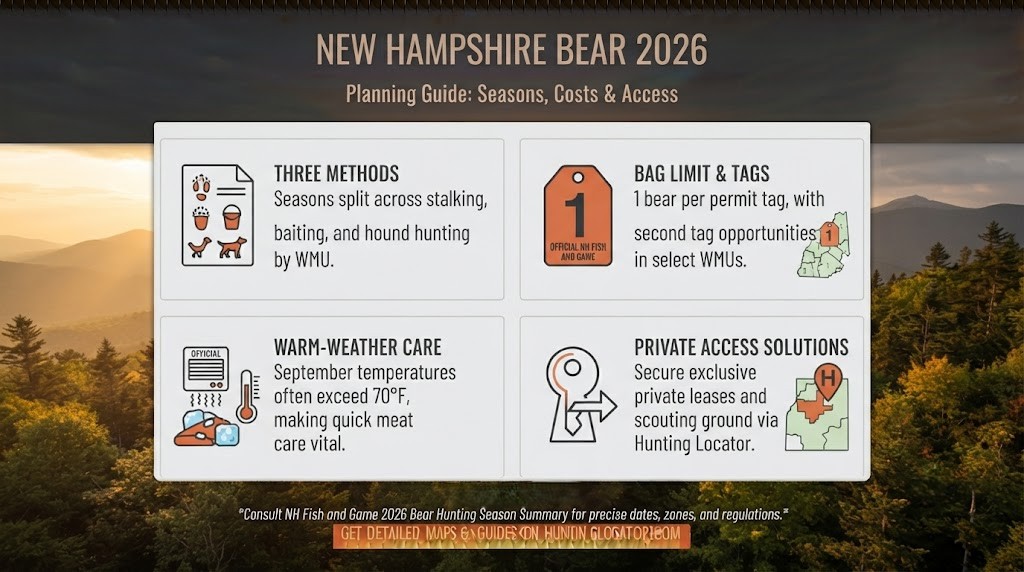
Quick Overview: NH Bear Season Dates 2026 at a Glance
New Hampshire permits three legal bear-hunting methods — still hunting, baiting, and hound hunting — and exact season dates depend on your method and Wildlife Management Unit (WMU). Nearly every rule in this guide traces back to which WMU you’re standing in, so it’s worth getting that straight first.
| Method | Dates | WMUs | Bag Limit | Notes |
|---|---|---|---|---|
| General / Stalking | Sept 1 – Nov 30 | Most WMUs | 1 bear (either sex) per tag | Closes Nov 11/12 in units A, B, C2, D1, H1, I2 |
| Baiting | Sept 1 – Oct 5 | C1, D2, E, F, G, I1, J1, J2 | 1 bear per tag | Method-restricted to listed units |
| Dog | Sept 21 – Nov 10 | A, B, C1, C2, D1, D2, E, F, G, H1, I1, I2, J1, J2 | 1 bear per tag | Closed in H2, K, L, M |
For a deeper method-by-method breakdown, see our New Hampshire black bear season guide. For the full picture across game types, our New Hampshire hunting seasons guide places bear within the state’s broader calendar.
License, Permit & Education Requirements
Before heading out, make sure your paperwork is in order. NH Fish and Game requires:
- A bear license for all ages. Hunters 16 and older must also hold a valid NH hunting, combination, or archery license.
- Bag limit: One black bear (either sex) per bear permit/tag.
- Registration before taking or tagging an additional bear.
- Apprentice option: A one-time Apprentice Hunting License lets those 16 and older hunt under an experienced hunter (18+) without first completing Hunter Education — a reasonable entry point if you’re new to the sport.
The bear license is species-specific and sits on top of your base hunting license; it’s not a substitute for one. Keep both current and you’re covered for NH’s licensing requirements, including the resident bear permit fee covered below.
New Hampshire Black Bear Hunting Seasons by Method
New Hampshire’s bear season splits into three hunting styles: still hunting (also called stalking or general season), baiting, and hound hunting. Each has its own calendar, and where you’re hunting matters as much as when.
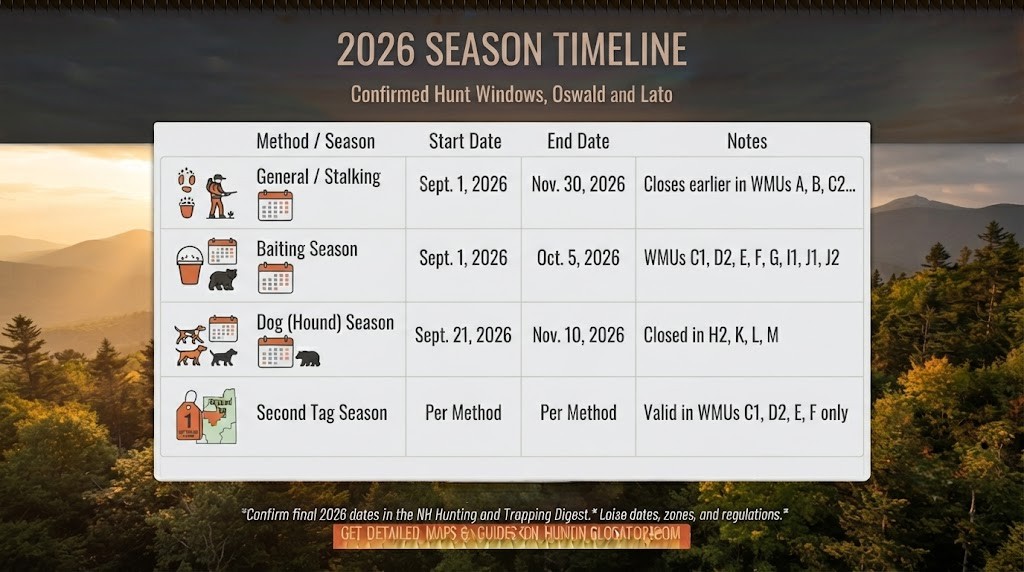
General (Stalking) Season
The general or stalking season runs September 1 through November 30 in most WMUs, closing earlier — on November 11/12 — in units A, B, C2, D1, H1, and I2. It’s the longest and most widely available bear season in the state, and NH Fish and Game calls it the most accessible method for beginners.
Most harvests happen in September, when temperatures often exceed 70°F, per NH Fish and Game, which makes meat care an immediate priority once you tag out. Black bears carry thick fat and heavy coats, so cool and process quickly rather than letting a bear sit. The general season also covers bowhunters with a valid archery license, giving them the same long window as rifle hunters.
Baiting Season
Baiting season runs September 1 through October 5 in WMUs C1, D2, E, F, G, I1, J1, and J2. The shorter window lines up with a specific stretch of bear behavior.
Late-September bears key in on wild apples and beechnuts as they bulk up before denning, which makes bait placed near mast-rich habitat especially effective — a pattern NH Fish and Game ties directly to natural food availability. Baiting on state-owned or managed land and the White Mountain National Forest requires a permit application submitted to NH Fish and Game within the posted window, so confirm current requirements and deadlines directly with the department before setting bait.
Dog (Hound) Season
Dog season runs September 21 through November 10 across WMUs A, B, C1, C2, D1, D2, E, F, G, H1, I1, I2, J1, and J2, and is closed in H2, K, L, and M.
A free Take Bear With Dogs Permit is required for anyone hunting bear with hounds, and non-residents may only bring dogs into New Hampshire under specific reciprocity rules. These terms can shift, so confirm current requirements directly with NH Fish and Game before planning a trip around hound hunting.
New Hampshire Bear Licenses and Permits
Every bear hunter in New Hampshire needs two things: a base hunting license and a bear license/permit layered on top of it. Non-residents pay more than residents for both.
New Hampshire Hunting Licenses & Bear Permits
| License / Permit | Resident | Non-Resident | Notes |
|---|---|---|---|
| Bear License/Permit | $16.00 | $48.00 | Requires a valid regular hunting, combination, or archery license |
| Second Tag | $16.00 | $48 | Valid only in WMUs C1, D2, E, F; after registering first bear |
The bear license doesn’t replace your base hunting, combination, or archery license — it’s an add-on. Purchase through NH Fish and Game, and verify current fees before the season, since the official Digest is published each August and pricing can change year to year.
The purchase path, in order:
- Obtain your base license — hunting, combination, or archery, depending on your preferred method.
- Add the bear permit — required for all ages, layered on top of your base license.
- Add a second tag if eligible — only if you’re hunting in WMUs C1, D2, E, or F and have already registered your first bear.
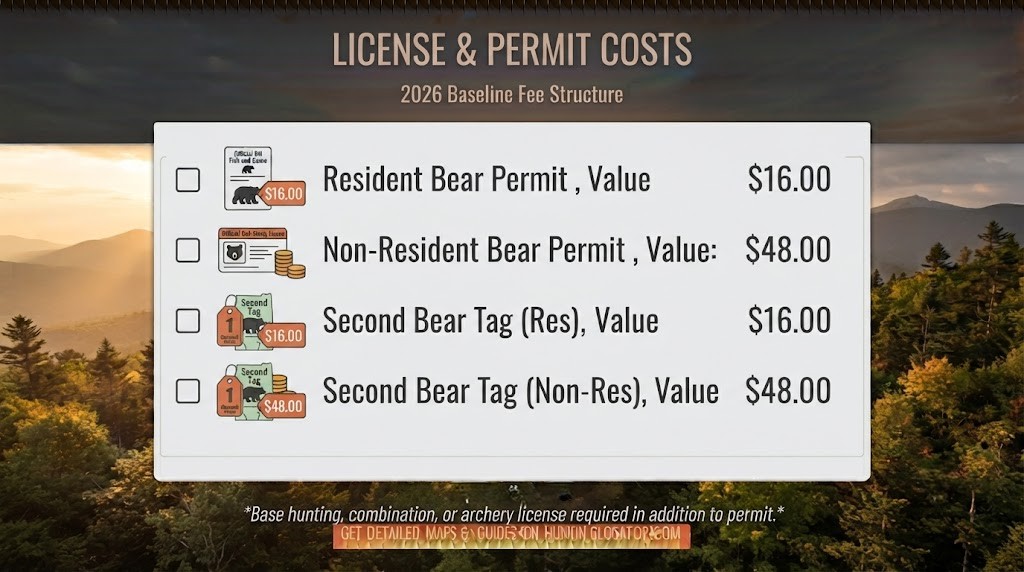
Bear Permits & the Second Tag
A second tag is available for $16 (resident) or $48 (non-resident), but only in units C1, D2, E, and F, and only after you’ve registered your first bear.
The sequence:
- Harvest and register your first bear in any legal WMU.
- Confirm your hunting unit qualifies — the second tag is valid only in C1, D2, E, and F.
- Purchase the second tag at the applicable resident or non-resident rate.
- Hunt your second bear within the same season dates that apply to your chosen method and unit.
The registration step has to happen first; there’s no way around it.
Where to Hunt Black Bear in New Hampshire
Bears are found statewide, with the highest densities in central New Hampshire and the White Mountains, according to NH Fish and Game. Whether you’re working with free public access, a private lease, or a guided package, there’s a path here for most hunters.
Best Public Lands for Bear Hunting
New Hampshire offers substantial public-land opportunity for hunters willing to put in the scouting time. State-owned and managed lands, along with large federal tracts, are open to hunting under NH Fish and Game regulations.
- White Mountain National Forest — vast public acreage with strong bear habitat, especially productive over natural food sources in late September.
- State-owned and managed lands — open to hunting under NH Fish and Game regulations; confirm any site-specific permit requirements before you go.
- Northern and central WMUs — noted for higher bear densities, a solid starting point if you’re unsure where to focus.
If you’re ready for more control over your hunt — less pressure, better bait placement, reliable access year after year — browse New Hampshire bear leases and see what’s available. Bear-productive habitat in the central and northern WMUs often overlaps prime deer and moose range, so keep an eye out for other sign while scouting.
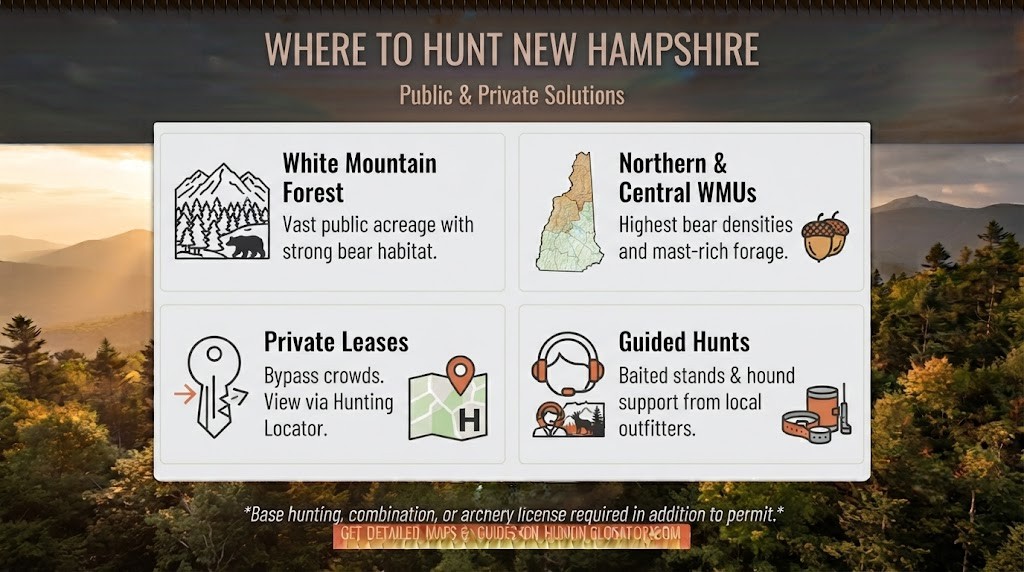
Private Land Hunting with Hunting Locator
Private land offers real advantages over public ground: less hunting pressure, control over bait sites and stand placement, and access you can count on returning to season after season. Whether you’re leasing for this season or investing in land for the long haul, private access changes the equation.
The Hunting Locator platform connects you directly with landowners across New Hampshire who are ready to lease or sell hunting land, no middleman. You browse verified listings, connect with the landowner, and secure your ground before the September opener instead of scrambling for permission at the last minute. If you’ve lost access to a longtime spot or you’re hunting NH for the first time, New Hampshire bear leases offer a direct path to quality private ground without needing to already own property.
Guided Bear Hunts
If you’re new to New Hampshire’s terrain or want expert support, a guided hunt can shorten the learning curve. Guides aren’t legally required to hunt bear in New Hampshire, but they offer real value for non-residents unfamiliar with WMU boundaries and beginners who want mentorship in the field.
Typical guided packages include:
- Baited stands and hound hunts run by licensed guides who know the local bear activity
- Lodging and registration assistance often bundled directly into the package
- Higher success rates for hunters who are new to New Hampshire’s terrain and regulations
Whether you go guided or DIY, get your kit dialed in before opening day — the Hunting Locator store is worth checking for rounding out your gear list.
Black Bear Hunting Tips
These field-tested fundamentals come from NH Fish and Game guidance.
- Scout logged and disturbed edges. Areas logged 2–5 years ago grow the blackberries bears feed on; check old apple orchards and oak stands, and use game cameras to pattern movement, according to NH Fish and Game.
- Read the mast crop. When beechnuts, acorns, and apples are scarce, bears roam farther to feed and become more vulnerable; in abundant years they’re harder to locate, per NH Fish and Game.
- Start with still hunting. NH Fish and Game calls it the most accessible method for beginners — low cost, low complexity, effective near food sources.
- Plan for warm-weather meat care. Most harvests happen in September above 70°F; bears carry thick fat and heavy coats, so cool and process quickly. Legal shooting hours run from one-half hour before sunrise to one-half hour after sunset, so plan morning and evening sits accordingly.
- Gear up for the terrain. Reliable optics, quality boots for steep White Mountain ground, a cooling/processing kit, and the right caliber setup matter — gear up at Hunting Locator before your season starts.
More Resources from Hunting Locator
Hunting Locator is built as a hub for New Hampshire hunting planning, bear season and beyond.
Bear & Access:
- Hunting Locator homepage — the hub for finding land, leases, and gear.
- New Hampshire bear leases — browse and secure private bear-hunting access.
- NH black bear season deep-dive — an expanded look at bear seasons and tactics.
- NH hunting season guide — the full statewide season calendar.
- Hunting Locator store — gear for your 2026 bear hunt.
Plan Your Other NH Hunts:
- Deer — plan your whitetail season alongside bear.
- Moose — NH’s premier big-game lottery hunt.
- Turkey — spring and fall turkey dates and rules.
- Small Game — rabbit, squirrel, and more.
- Waterfowl — duck and goose season planning.
- Game Bird — upland bird opportunities.
- Coyote — year-round predator hunting.
Frequently Asked Questions
Do I need a bear permit in New Hampshire?
Yes — a bear license/permit is required for all ages, and hunters 16 and older must also hold a valid hunting, combination, or archery license. The bear permit is species-specific and sits on top of your base license; it doesn’t replace it. This is per NH Fish and Game regulations.
How much does a New Hampshire bear license cost in 2026?
The resident bear license/permit costs $16.00, and the non-resident version costs $48.00 — both require a valid base license. A second tag matches those same prices in eligible units. Confirm current fees with NH Fish and Game before purchasing.
What are the 2026 NH black bear season dates?
General/stalking season runs September 1–November 30 (closing earlier, on November 11/12, in units A, B, C2, D1, H1, and I2). Baiting season runs September 1–October 5 in specific listed units, and dog season runs September 21–November 10. Confirm final dates in the August NH Hunting and Trapping Digest.
Can I take a second bear in New Hampshire?
Yes — after registering your first bear, a second tag is available in WMUs C1, D2, E, and F for $16 (resident) or $48 (non-resident). The second tag is valid only within those four units, so confirm your hunting location qualifies before purchasing.
What’s the easiest method for a first-time bear hunter?
Still hunting. NH Fish and Game identifies it as the most accessible method for beginners: low-cost, straightforward, and effective when you position yourself near food sources like apple orchards and berry-rich logged edges.
How can non-residents access private land to hunt bear in NH?
Non-residents can secure private access by connecting with landowners who lease or sell hunting land through the Hunting Locator platform. Leases give you control over bait sites and stand placement without needing to own property outright.
The Final Shot
A successful New Hampshire bear season comes down to three things: knowing your WMU-specific season dates, securing the right licenses and permits (including the second tag if you’re eligible), and locking in land access before September arrives.
Next steps: confirm final 2026 dates in the NH Hunting and Trapping Digest, purchase your base license and bear permit through NH Fish and Game, start scouting mast crops and logged edges early, and secure your ground before the rush.
This guide is meant to be a starting point. Hunting Locator is here as a planning companion, consolidating the access and information you need. When you’re ready, browse New Hampshire bear leases and gear up for the season ahead.


