North Carolina’s four-zone system works great for managing deer populations. For hunters trying to plan their season? Not so much. You shouldn’t need a wildlife biology degree just to figure out opening day.
This guide cuts through the regulatory maze. We’ve pulled together everything from the North Carolina Wildlife Resources Commission and organized it so you can actually use it.
What you’ll get:
- Exact season dates for every zone and weapon type
- Complete licensing costs (no hidden fees or surprises)
- Real hunting access options beyond overcrowded public land
Let’s get you ready for the 2026 North Carolina deer season.
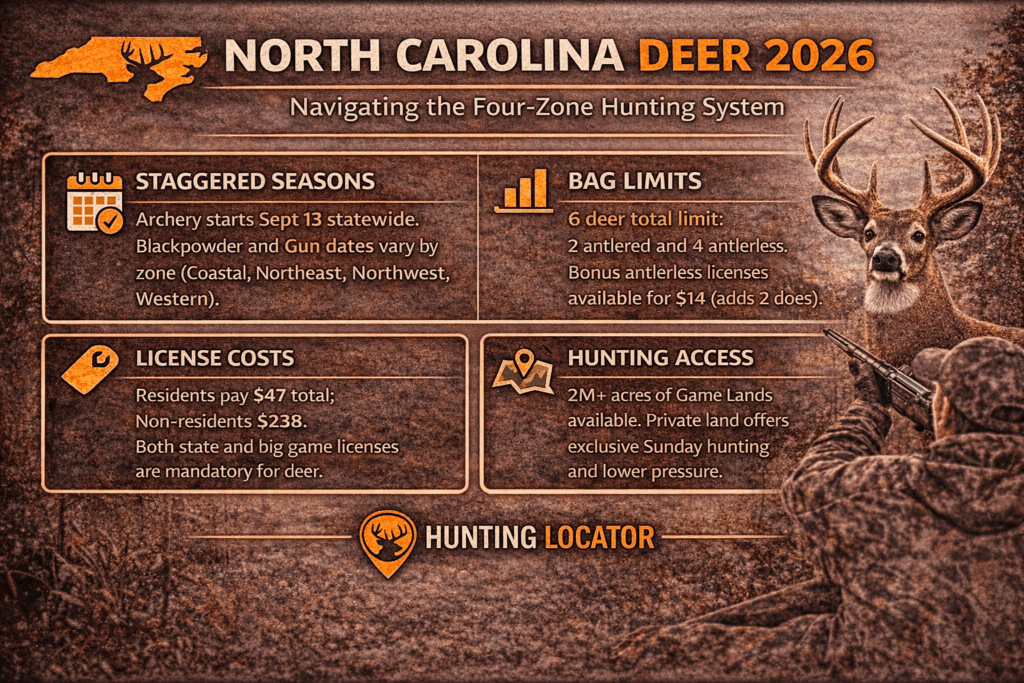
Quick Overview: 2026 NC Deer Season at a Glance
North Carolina’s four hunting zones exist because deer don’t read maps. Coastal populations behave differently than mountain herds, so the state adjusts seasons accordingly.
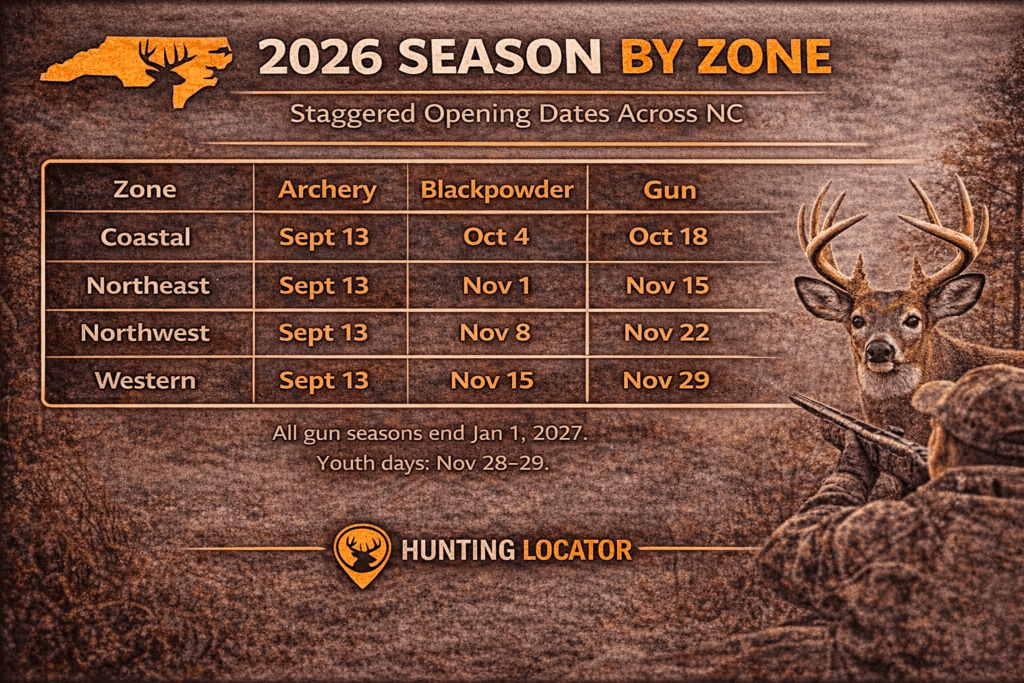
| Zone | Archery Season | Blackpowder Season | Gun Season |
|---|---|---|---|
| Coastal | Sept 13 – Oct 3, 2026 | Oct 4 – Oct 17, 2026 | Oct 18, 2026 – Jan 1, 2027 |
| Northeast | Sept 13 – Oct 31, 2026 | Nov 1 – Nov 14, 2026 | Nov 15, 2026 – Jan 1, 2027 |
| Northwest | Sept 13 – Nov 7, 2026 | Nov 8 – Nov 21, 2026 | Nov 22, 2026 – Jan 1, 2027 |
| Western | Sept 13 – Nov 14, 2026 | Nov 15 – Nov 28, 2026 | Nov 29, 2026 – Jan 1, 2027 |
Special Seasons Worth Noting:
- Youth Deer Days: November 28-29, 2026 (all zones)
- Urban Archery: September 13 – October 3, 2026 and January 10 – February 15, 2027 (select cities only)
Bag Limits: 6 deer maximum (2 bucks, 4 does)
What You’ll Pay to Hunt Legally:
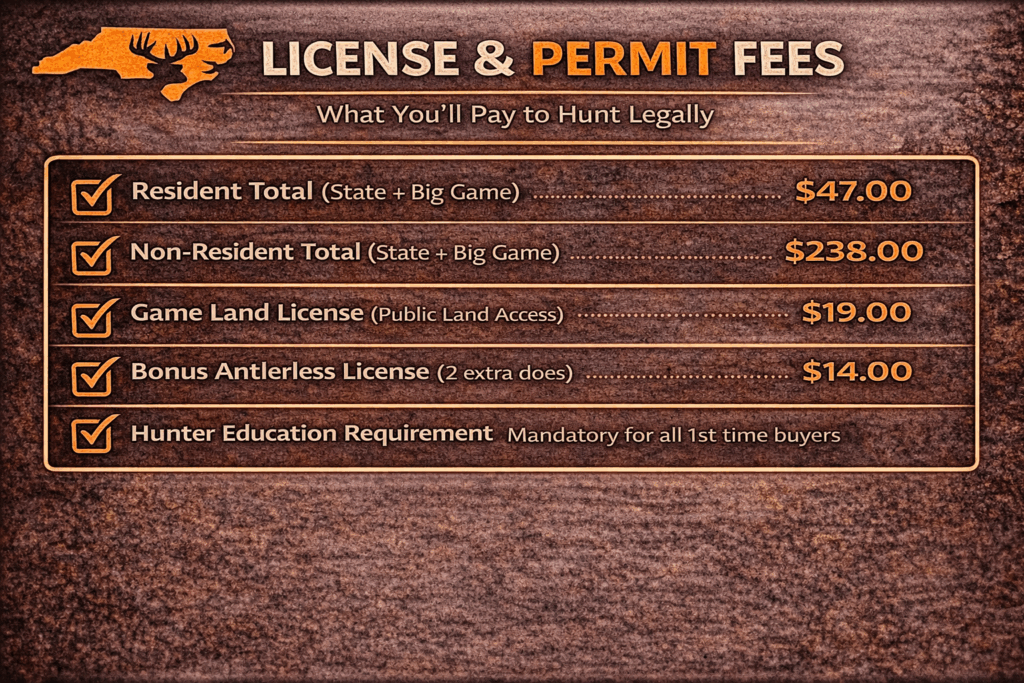
- Resident licenses: $47 total ($30 state + $17 big game)
- Non-resident licenses: $238 total ($119 state + $119 big game)
- Public land access: Add $19 for Game Land License
- Extra does: $14 per Bonus Antlerless License (2 additional deer each)
New hunters need hunter education first. Six-hour minimum course, available online or in-person. Your certification works in all 50 states and Canada.
Deer Hunting Seasons in North Carolina
The season progression makes sense once you see the pattern. Archery starts everywhere September 13th, but the zones stagger everything else based on local deer populations and hunting pressure.
Archery Deer Season
September 13th is your universal start date. Where it gets interesting is how long you get:
- Coastal Zone: September 13 – October 3, 2026 (21 days)
- Northeast Zone: September 13 – October 31, 2026 (49 days)
- Northwest Zone: September 13 – November 7, 2026 (56 days)
- Western Zone: September 13 – November 14, 2026 (63 days)
Mountain hunters get the longest archery season because deer densities are lower and the terrain is tougher. Makes sense when you’re climbing ridges instead of sitting over food plots.
Crossbows are legal during archery season, which levels the playing field for hunters who can’t draw a traditional bow. Minimum draw weights still apply.
Blackpowder Deer Season
Two weeks per zone, timed to bridge archery and gun seasons. The timing varies dramatically:
- Coastal Zone: October 4 – October 17, 2026
- Northeast Zone: November 1 – November 14, 2026
- Northwest Zone: November 8 – November 21, 2026
- Western Zone: November 15 – November 28, 2026
Western zone blackpowder hunters hit the jackpot—their season runs right through peak rut. That’s not an accident.
Your muzzleloader must be single-shot and muzzle-loading. No modern inlines that blur the line between blackpowder and centerfire rifles.
Gun Deer Season
Here’s where the zones flip the script. Shorter archery seasons get longer gun seasons:
- Coastal Zone: October 18, 2026 – January 1, 2027 (75 days)
- Northeast Zone: November 15, 2026 – January 1, 2027 (47 days)
- Northwest Zone: November 22, 2026 – January 1, 2027 (40 days)
- Western Zone: November 29, 2026 – January 1, 2027 (33 days)
Hunter orange becomes mandatory during gun season. This applies to everyone in the woods, including bowhunters. Visible from all sides means visible from all sides.
Rifles must be .24 caliber or larger—no .22 centerfire or rimfire cartridges for big game. The state wants clean, ethical kills.
North Carolina Deer Hunting Licenses and Permits
The licensing system isn’t complicated once you understand you need two licenses, not one. Here’s what it actually costs:
North Carolina Hunting Licenses
| License Type | Resident Cost | Non-Resident Cost |
|---|---|---|
| State Hunting License | $30 | $119 |
| Big Game License | $17 | $119 |
| Total Required | $47 | $238 |
You can’t hunt deer with just the state license. The big game license is mandatory, not optional. Buy both through Go Outdoors North Carolina or find a local Wildlife Service Agent.
Landowner Exemption: Own the land? You, your spouse, and kids under 18 living at home can hunt without licenses. You still follow all other rules—seasons, bag limits, tagging requirements.
Additional Permits You Might Need
Game Land License: $19 – Mandatory for any state-managed public hunting land. Each game land has specific rules beyond the basic regulations.
Bonus Antlerless Deer License: $14 each – Adds 2 more does to your bag limit per license. Buy multiple if you want.
Big Game Harvest Report Card: Free but required. Tag your deer immediately after harvest. Electronic reporting works without cell service.
Hunter Education: One-time requirement for new hunters. Six hours minimum, online or classroom. Your certificate works nationwide.
Where to Hunt Deer in North Carolina
Access makes or breaks your season. North Carolina has options, but they’re not all created equal.
Public Land Reality Check
North Carolina manages about 2 million acres for public hunting. That sounds like a lot until you realize how many hunters are competing for the same deer.
Game Lands Worth Your Time:
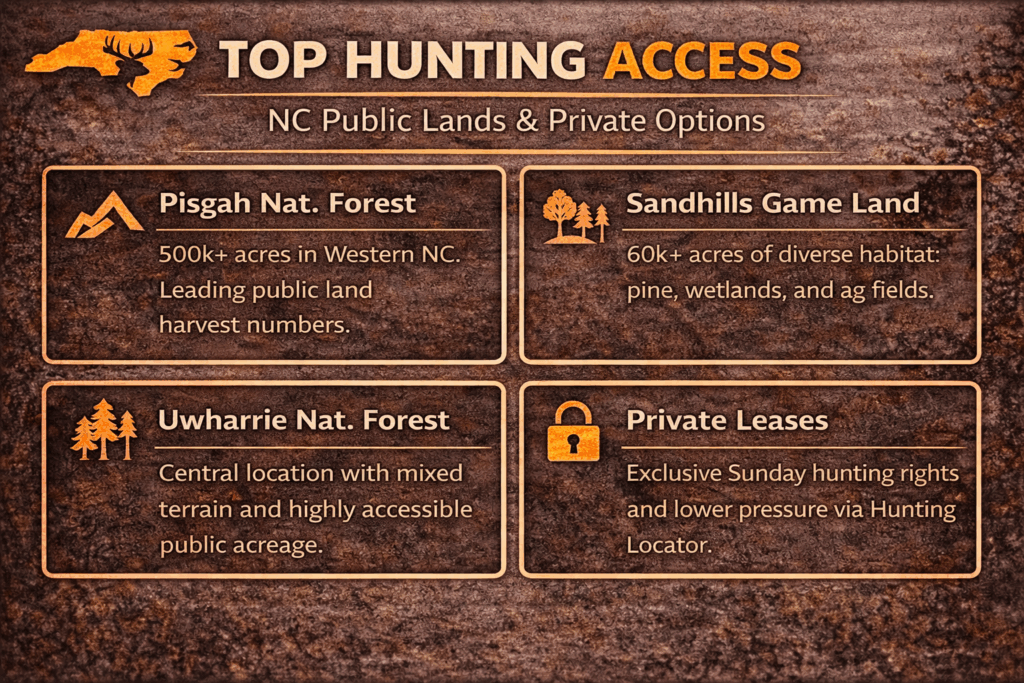
- Sandhills Game Land: 60,000+ acres of longleaf pine, wetlands, and ag fields. Diverse habitat means consistent deer populations
- Pisgah National Forest: Half a million acres in western NC. 496 deer harvested last season tells you something about the population
- Nantahala National Forest: Another 500,000 acres across 19 counties. Led the state with 554 public land deer harvests
- Uwharrie National Forest: Central location with mixed terrain and decent access
Most game lands follow the same seasons as surrounding private land. Buffalo Cove, Nicholson Creek, Rockfish Creek, Sandhills, and South Mountains are exceptions—check before you hunt.
Guided Hunts
Guides make sense for non-residents or hunters tackling unfamiliar terrain. Mountain hunting especially benefits from local knowledge about deer patterns and access routes.
North Carolina doesn’t require non-residents to use guides, but they can save you time and frustration. Services typically include land access, lodging, and someone who knows where the deer actually are.
Private Land Advantages
Public land hunting works. It’s just crowded, competitive, and often frustrating. Private land access changes everything.
Sunday Hunting: Only allowed on private land. Firearms are legal except 9:30 AM to 12:30 PM. No Sunday hunting on public lands. That’s an extra day every week.
Your Options: Day leases for occasional hunting. Season leases for regular access. Purchase for long-term investment and complete control.
Hunting Locator’s North Carolina database connects you directly with landowners actively seeking hunters. Verified listings, transparent pricing, property details that actually matter.
Deer Hunting Tips
North Carolina’s terrain varies from coastal plains to mountain ridges. Your strategy needs to adapt:
- Start Scouting in August: Trail cameras reveal deer patterns before season pressure changes behavior. Focus on food sources, water, and travel corridors.
- Humidity Carries Scent: North Carolina’s moisture amplifies scent issues. Invest in scent control and plan your approach routes carefully.
- Zone-Specific Timing: Coastal deer move at dawn and dusk. Mountain deer often move throughout cooler days. Adjust accordingly.
- Weather Triggers Movement: Cold fronts activate deer across all zones. Plan your best days around weather changes, especially the first cold snap.
- Food Sources Concentrate Deer: Acorns, crops, food plots. Find what they’re eating and position yourself accordingly.
- Calling Works During Rut: Grunt calls and rattling are most effective October through November. Match your calling intensity to local hunting pressure.
More Resources from Hunting Locator
Expand beyond deer hunting with these North Carolina guides:
- Complete NC Hunting Season Guide: All species, all seasons, one resource
- Turkey Hunting in NC: Spring and fall seasons, calling strategies, prime locations
- Black Bear Hunting Guide: Zone dates, safety requirements, success tips
- Waterfowl Hunting Season: Duck and goose regulations, migration timing, best spots
- Small Game Opportunities: Rabbit, squirrel, and other small game seasons
- Hunting Gear Store: Equipment selected specifically for North Carolina conditions
FAQ
When does deer season start in North Carolina 2026?
Archery season opens September 13, 2026, in all four zones. Gun season varies: Coastal zone starts October 18, Northeast begins November 15, Northwest opens November 22, and Western zone starts November 29.
How much does a non-resident hunting license cost in North Carolina?
Non-residents pay $238 total: $119 for the state hunting license plus $119 for the required big game license. Add $19 for Game Land License if hunting public land.
What are the bag limits for deer in North Carolina?
Six deer total per season: 2 antlered, 4 antlerless. You can buy Bonus Antlerless Deer Licenses for $14 each—every license adds 2 more does to your limit.
Do I need hunter education to hunt in North Carolina?
All first-time license buyers must complete hunter education, regardless of age. Minimum six-hour course available online or in-person. Certification from any US state or Canadian province works.
Can I hunt on Sundays in North Carolina?
Sunday hunting is only legal on private land. Firearms are prohibited 9:30 AM to 12:30 PM. No Sunday hunting allowed on public game lands.
What hunting zone is my county in?
North Carolina has four deer zones with different season dates. Check the official NC Wildlife Resources Commission zone map to find your county’s designation.
The Final Shot
North Carolina’s 2026 deer season offers something for everyone—if you know how to navigate the system. Four zones, multiple weapon seasons, and opportunities from coastal swamps to mountain ridges.
Success comes down to three things: understanding your zone’s dates, getting properly licensed, and securing quality hunting access. Public land is free but crowded. Private land costs more but delivers better experiences.
The difference between a frustrating season and unforgettable hunts often comes down to where you hunt, not just when.
Ready to secure your 2026 hunting access? Browse verified private land leases across North Carolina and connect with landowners who want responsible hunters on their property. Your best season starts with better access.


