Between regulation updates, license renewals, and finding decent land, waiting too long on your game bird plans can mean opening morning in the wrong field — or out of compliance.
This North Carolina Game Bird Season Guide for 2026 pulls the confirmed 2026-27 season dates from the North Carolina Wildlife Resources Commission (NCWRC), along with the license, permit, and land access details you need whether you’ve hunted NC dove fields for twenty years or you’re crossing state lines for your first quail hunt. One note up front: final bag limit specifics should be cross-checked against the NCWRC’s 2026-2027 Inland Fishing, Hunting and Trapping Regulations Digest, which publishes this August.
Here’s what’s covered below:
- Confirmed season dates and bag limits for dove, quail, grouse, pheasant, and crow across the 2026-27 season
- License and permit costs for both resident and non-resident hunters, including the short-term travel option
- Where to hunt — from public game lands to private leases and guided hunts
Before opening day, it’s worth gearing up with the right shotgun, loads, and field gear — browse Hunting Locator for land access and gear in one place. Here are the dates.
Quick Overview: NC Game Bird Seasons & Bag Limits at a Glance
The table below summarizes the confirmed 2026-27 North Carolina game bird season dates, bag limits, and key notes. These come from NCWRC’s approved 2026-27 season announcements — cross-check final bag details against the official Regulations Digest once it publishes this August.
| Species | Season Type | Dates | Bag Limit | Notes |
|---|---|---|---|---|
| Bobwhite Quail | Regular | Nov 22, 2026 – Feb 28, 2027 | No daily limit | — |
| Ruffed Grouse | Regular | Oct 13, 2026 – Feb 28, 2027 | No daily limit | Mountain areas |
| Ring-necked Pheasant | Regular | Sep 1, 2026 – Feb 28, 2027 | No daily limit (either sex) | — |
| Mourning/White-winged Dove | Regular | Sep 1, 2026 – Nov 20, 2026 | 15 daily | Migratory — no Sunday hunting |
| Crow | Fall/Winter | Aug 1, 2026 – Feb 28, 2027 | No limit | Wed, Fri, Sat only (+ major holidays) |
| Crow | Summer | Jun 3, 2027 – Jul 31, 2027 | No limit | Wed, Fri, Sat only (+ major holidays) |
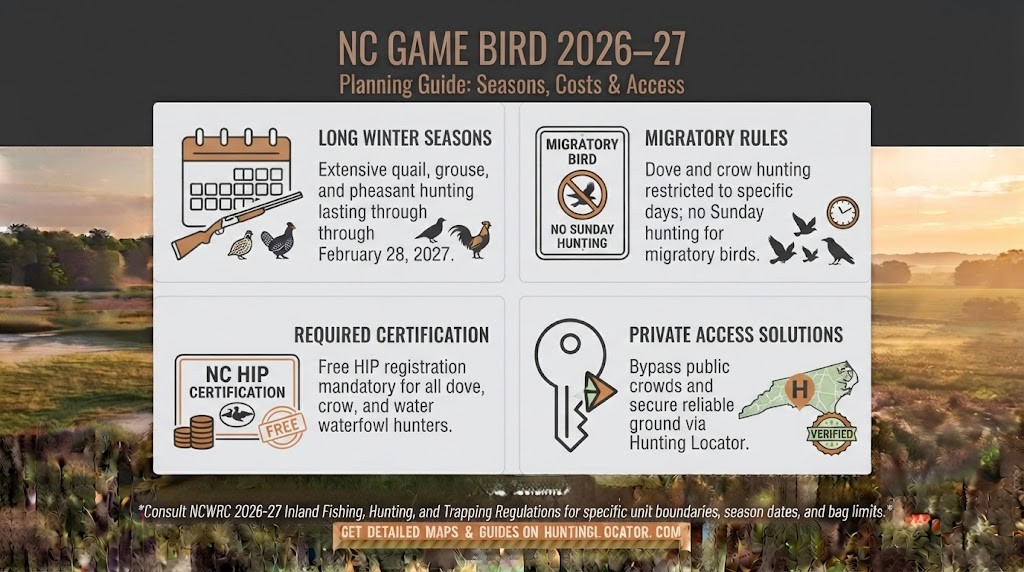
Two rules trip up more hunters than any others in North Carolina’s game bird regulations. Crow hunting is legal only Wednesday, Friday, and Saturday, plus major holidays — hunting outside these days is a violation regardless of season dates. No Sunday hunting is allowed for migratory birds, which covers both dove and crow. Sunday rules can differ for other game on private land, but migratory species are off-limits every Sunday, statewide.
Before heading out, make sure the paperwork is in order:
- Resident or non-resident state hunting license — required for all game bird hunting
- HIP Certification — free, but mandatory for anyone hunting migratory game birds like dove and crow
- NC Waterfowl Privilege — $17, required if you’re also pursuing waterfowl
- Federal Duck Stamp — required for waterfowl hunters age 16 and older
- Hunter education certification — a prerequisite for first-time license holders
If crowded game lands aren’t appealing, it’s worth browsing available North Carolina leases early — more on that later in this guide.
Game Bird Hunting Seasons in North Carolina
North Carolina’s game bird lineup runs from an early September dove opener through a long late-winter stretch for quail, grouse, and pheasant. Every date below reflects NCWRC’s confirmed 2026-27 seasons — treat the August regulations digest as the final checkpoint before heading afield.
Dove Season
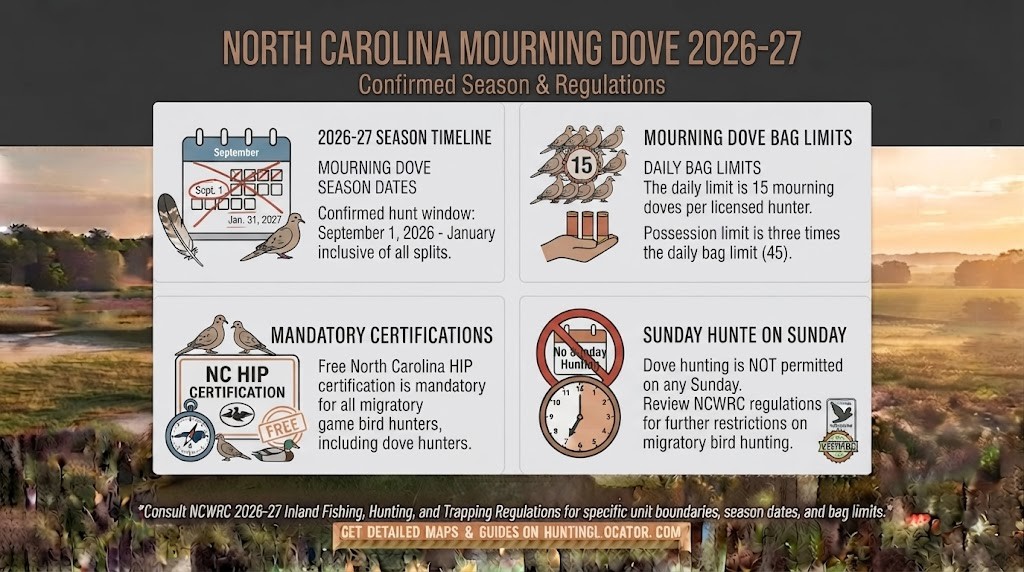
Mourning and white-winged dove season runs September 1, 2026 through November 20, 2026, with a daily bag limit of 15 birds. The Sept. 1 opener is the traditional kickoff to North Carolina’s entire game bird calendar, and fields fill up fast on opening weekend.
Because dove are classified as migratory birds, the no-Sunday-hunting rule applies throughout the season. A Sunday hunt isn’t fair game just because it falls within the season window.
Quail, Grouse & Pheasant Seasons
These three species make up North Carolina’s long-season small-game lineup, all running well into late winter:
- Bobwhite Quail: November 22, 2026 – February 28, 2027, with no daily bag limit
- Ruffed Grouse: October 13, 2026 – February 28, 2027, with no daily bag limit — primarily a mountain-region hunt
- Ring-necked Pheasant: September 1, 2026 – February 28, 2027, with no daily bag limit (either sex)
If small game is your focus for the season, the NC small game hunting guide covers habitat, technique, and regional differences between these three species in more depth.
Crow Season
Crow hunting runs in two separate windows: a Fall/Winter season from August 1, 2026 to February 28, 2027, and a Summer season from June 3, 2027 to July 31, 2027, with no bag limit in either window.
The detail that’s easy to miss is that crow hunting is legal only on Wednesday, Friday, and Saturday, plus major holidays. Crow are also classified as migratory birds, so the no-Sunday-hunting rule applies here too.
North Carolina Game Bird Licenses & Permits
Before opening day, every hunter — resident or not — needs the right license and permits locked in. NCWRC and the state’s Go Outdoors North Carolina licensing system handle the actual purchase; here’s what’s needed and what it costs.
North Carolina Hunting Licenses
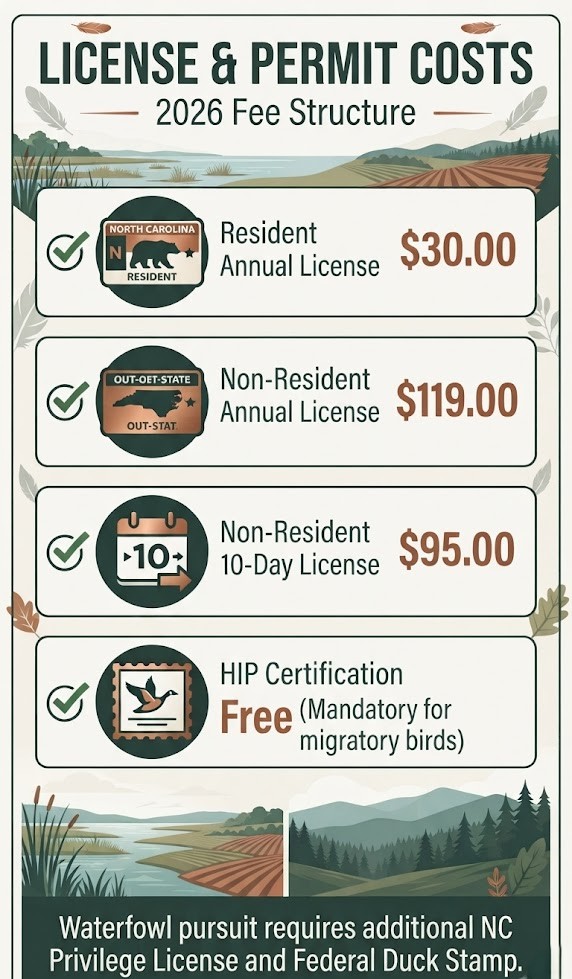
North Carolina’s base licensing structure is straightforward, with a meaningful cost difference between residents and non-residents:
| License Type | Resident Cost | Non-Resident Cost | Notes |
|---|---|---|---|
| State Hunting License | $30 | $119 | Annual |
| Short-Term (10-Day) | — | $95 | Non-resident travel option |
For a single trip rather than a full season, the 10-day short-term license at $95 is usually the better buy compared to the full $119 annual non-resident license, especially for a long weekend hunt.
Licenses are purchased online through the state’s Go Outdoors North Carolina system, with NCWRC serving as the regulatory authority behind all license types and fees. First-time hunters should also confirm their hunter education certification is on file, since it’s a prerequisite for license issuance in North Carolina.
North Carolina Hunting Permits & Stamps
Beyond the base license, a few additional permits and stamps come into play depending on what you’re hunting:
- HIP Certification — Free, and mandatory for all migratory game bird hunters, including anyone pursuing dove or crow.
- NC Waterfowl Privilege — $17, required for hunters targeting waterfowl species.
- Federal Duck Stamp — Required for all waterfowl hunters age 16 and older.
If you’re planning to add waterfowl to your season alongside dove or quail, the NC waterfowl hunting guide breaks down the privilege license and duck stamp requirements in more detail.
HIP certification isn’t optional if dove or crow are anywhere on your season plan. It’s free, takes a few minutes, and is tied directly to your license — skipping it is a compliance risk that’s not worth taking.
Where to Hunt Game Birds in North Carolina
Once dates and paperwork are locked in, the next question is where you’ll actually be standing on opening morning. Public game lands are open to any licensed hunter, but they get crowded fast once dove and quail season hits full swing. Private leases offer a quieter, often more productive alternative, and that’s where many hunters eventually land.
Best Public Game Lands
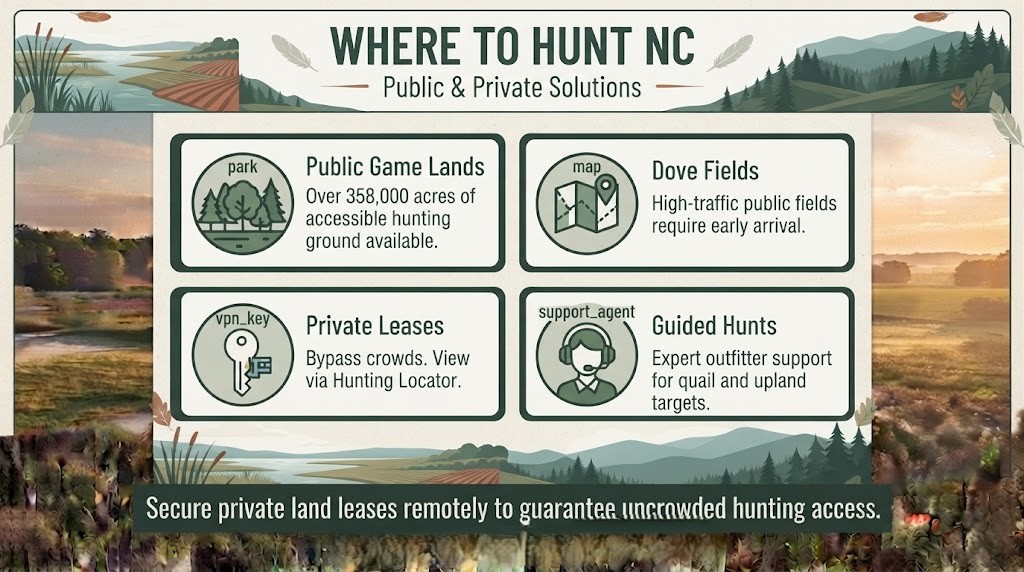
North Carolina’s public game lands remain a solid, accessible option for licensed hunters across the state, particularly for dove and small-game species. A few things worth knowing before you go:
- Game lands are open to any properly licensed hunter, though a Game Lands access privilege may be required depending on the specific tract and activity — check NCWRC’s current rules before you head out.
- Dove fields on public land fill up fast on opening weekend, so arriving early or scouting alternate fields is smart strategy.
- Quail habitat on public land can see heavy pressure once the November opener hits, especially near population centers.
- Rules and access requirements vary by tract, so always confirm specific regulations for the game land you plan to hunt directly with NCWRC.
Public land gets the job done, but pressure and crowding during peak weeks are real frustrations for a lot of NC hunters, which is why many eventually look toward private access.
Private Land Hunting with Hunting Locator
Fighting for a spot on a crowded public dove field is a different experience from walking onto private acreage that’s yours for the season. Private land means less pressure, more consistent bird activity, and the freedom to hunt on your own schedule — including Sundays, which public land doesn’t allow for migratory species.
Leasing and buying are both realistic paths to private access in North Carolina. Leases give you seasonal or annual rights to hunt a property without the long-term commitment of ownership, and pricing typically ranges from roughly $1,000 to $15,000 annually depending on acreage, habitat quality, and lease length, with shorter seasonal arrangements also available. Buying land is the bigger commitment, but it delivers permanent access and long-term control over habitat management, which matters if you’re building a property specifically for dove fields or quail cover.
This is where Hunting Locator does its work. We connect hunters directly with landowners across North Carolina who are ready to lease or sell, without the cold-calling or wondering whether a listing is legitimate. Our platform is built to solve that access problem, connecting you with real opportunities so you can plan your season around land you can actually count on.
Browse North Carolina hunting leases to see what’s currently available before the best properties are gone.
Guided Hunts
If you’re traveling into North Carolina or don’t have time to secure your own land access, a guided game bird hunt can be a solid alternative to leasing. Here’s what to know before booking one:
- What to expect from a guided hunt: A licensed outfitter typically provides access to private or managed land, handles scouting and bird activity, and often supplies trained dogs for quail and upland bird retrieval.
- Confirm what’s included: Ask upfront whether your license, HIP certification, and any required stamps are your responsibility or bundled into the guide’s package.
- Ask about dog handling: Quail hunting depends heavily on well-trained pointing dogs — a good outfitter should be transparent about the dogs they use and their experience level.
- Clarify bird-per-gun expectations: Guided hunts often set expectations around flush counts or birds per hunter per day — get specifics before you book.
- Understand the land type: Ask whether you’ll be hunting managed dove fields, natural quail cover, or mountain grouse terrain, since technique and gear needs differ significantly.
Weighing a guided hunt against leasing your own land often comes down to time and control — guides handle the logistics, while a lease gives you ongoing access you can return to season after season.
Game Bird Hunting Tips
A few field-tested basics can make a real difference in your success rate this season, whether you’re working a dove field or pushing through quail cover.
- Scout Before Opening Day — Find fields and edges with reliable food sources and cover before the crowds descend. Scouting ahead of time puts you in the right spot when the season opens.
- Match Your Shotgun & Load to the Bird — Dove hunting typically calls for lighter loads and smaller shot sizes given the birds’ size and speed, while upland birds like quail and grouse often call for a different choke and shot combination. Dial in your setup before opening day, not during it.
- Dress for Concealment & Comfort — Earth tones and camo patterns matter more than most hunters think, especially in open dove fields where birds have a clear line of sight. Layer for early-morning cool and midday heat, since NC’s early season can swing widely in temperature.
- Work the Dog on Quail and Grouse — A well-trained pointing dog changes the experience for upland hunting, locating birds in cover you’d otherwise walk right past. If you don’t have your own dog, ask about dog availability when booking a guided hunt.
- Respect Bag Limits & Legal Days — Keep the crow season’s Wednesday-Friday-Saturday rule and the no-Sunday-hunting restriction for migratory birds front of mind. A citation isn’t worth it.
Whatever’s missing from your kit, find the right gear before opening day — from shotguns and loads to blinds, calls, and field gear built for NC conditions.
More Resources from Hunting Locator
Planning a full season means looking beyond game birds. Explore Hunting Locator’s other North Carolina guides to round out your 2026-27 hunting calendar:
- NC Hunting Season Overview — the broad hub covering every North Carolina hunting season in one place.
- North Carolina Game Bird Hunting Season — a companion deep-dive into game bird specifics.
- NC Small Game Hunting Season — more detail on quail, grouse, and other small-game species.
- NC Waterfowl Hunting Season — duck and goose seasons plus waterfowl privilege details.
- NC Turkey Hunting Season — everything you need for spring turkey planning.
- NC Deer Hunting Season — whitetail dates and zone-specific regulations.
- NC Black Bear Hunting Season — season dates and regional rules for bear hunters.
- NC Bobcat Hunting Season — dates and regulations for bobcat hunters.
- Hunting Locator Home — leases, gear, and guides all in one place.
Frequently Asked Questions
When does dove season open in North Carolina for 2026?
Mourning and white-winged dove season runs September 1 through November 20, 2026, with a 15-bird daily bag limit. Because dove are migratory, no Sunday hunting is allowed during the season. These dates are confirmed by NCWRC for 2026-27 — double-check final details against the August regulations digest.
How much is a non-resident hunting license in North Carolina?
A non-resident annual state hunting license costs $119, while a 10-day short-term option runs $95, a good choice for a single trip. Resident licenses cost $30. Licenses are purchased online through the state’s official licensing system.
Is HIP certification required for game bird hunters in NC?
Yes. HIP certification is free and mandatory for all migratory game bird hunters, including anyone pursuing dove or crow. It’s a quick certification tied directly to your hunting license and helps wildlife agencies track harvest data nationwide.
Can you hunt game birds on Sunday in North Carolina?
No, Sunday hunting is not allowed for migratory birds, which includes both dove and crow. Private land hunting offers more flexibility for some other game species where public land restrictions are tighter, but the migratory bird Sunday restriction applies statewide regardless of land type.
What days can you hunt crow in North Carolina?
Crow hunting is legal only on Wednesday, Friday, and Saturday, plus major holidays. The season runs in two windows: August 1, 2026 through February 28, 2027, and June 3 through July 31, 2027, with no bag limit in either window.
How much does it cost to lease hunting land in North Carolina?
NC hunting leases commonly range from roughly $1,000 to $15,000 annually, depending on acreage, habitat features, and lease term, with seasonal arrangements also available for shorter commitments. Compare current listings on Hunting Locator’s North Carolina lease directory to see what fits your budget and hunting goals.
The Final Shot
North Carolina’s 2026-27 game bird season has plenty on the calendar: a September 1 dove opener, a November 22 quail season, an October 13 grouse opener in the mountains, and a long pheasant and small-game stretch running into late February. Pair those confirmed dates with the right license, your HIP certification, and any waterfowl add-ons you need, and you’re squared away legally before you step into the field.
Confirm your dates, secure your license and HIP certification, then lock in your land before opening day arrives. Whether that land is a public game land or a private lease often comes down to how much company you want to share the field with.
NCWRC remains the official source for North Carolina’s hunting regulations, and it’s worth confirming final bag limit details against the 2026-2027 Regulations Digest once it publishes this August.
Browse North Carolina hunting leases and secure your land access before opening day, and make sure your gear is dialed in with a stop at the Hunting Locator store.


