This North Carolina waterfowl guide covers the 2026–27 season for residents and for hunters coming from Virginia or farther out: season dates and bag limits by zone, the license and permit stack for residents and non-residents, and where to hunt, whether on public ground, a private lease, or a guided trip. If you need gear for the blind, the Hunting Locator hunting gear store carries it.
Quick Overview: NC Waterfowl Season 2026–27 at a Glance
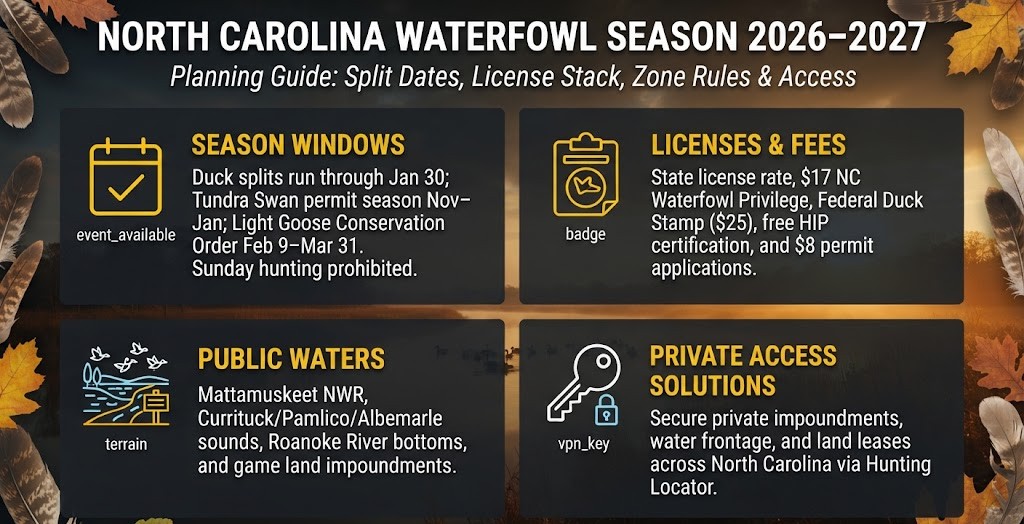
North Carolina’s 2026–27 duck season runs in three splits ending January 30, with a 6-duck daily bag, zone-specific Canada goose limits, a permit-only tundra swan season, and a February 9–March 31 Light Goose Conservation Order. Sunday hunting is prohibited.
The state uses two zone systems. Ducks are managed by Inland and Coastal zones, while Canada geese are managed by the Resident Population Zone and the Northeast Hunt Zone. Seasons are “split,” meaning they run in separate blocks timed to migration instead of one continuous stretch. For the statewide picture, see all NC hunting seasons.
| Species/Season | Dates | Daily Bag | Notes |
|---|---|---|---|
| Ducks (Inland Zone) | Oct 15–17, Nov 7–28, Dec 18–Jan 30 | 6 (species caps apply) | Black/mottled may open later; check proclamation |
| Ducks (Coastal Zone) | Oct 23–24, Nov 7–28, Dec 17–Jan 30 | 6 (species caps apply) | Same sub-limits |
| Mergansers & Coots | Follow duck split format | Per NCWRC proclamation | Split blocks Oct, Nov, Dec–Jan |
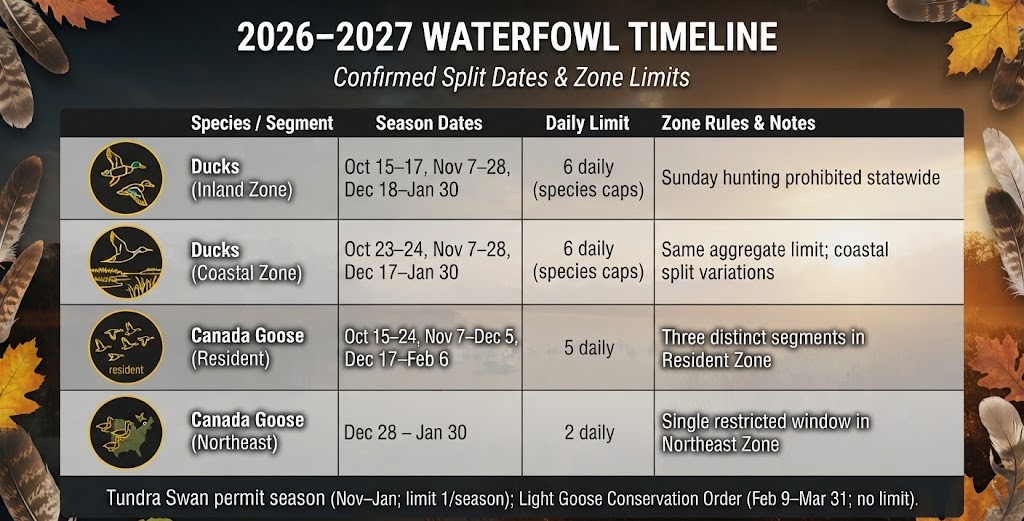
| Canada Goose (Resident Zone) | Oct 15–24, Nov 7–Dec 5, Dec 17–Feb 6 | $5.00 | Three segments |
| Canada Goose (Northeast Hunt Zone) | Dec 28–Jan 30 | $2 | Often confused with the Resident Zone |
| Brant | See NCWRC proclamation | $1 | Coastal specialty |
| Light Geese (regular) | See NCWRC proclamation | 25 | Snow & Ross’s |
| Light Goose Conservation Order | Feb 9–Mar 31 | No limit | By permit; electronic calls and unplugged guns allowed |
| Tundra Swan | November–January | 1 per season | Permit only |
| Youth & Veterans/Military Days | Dec 5, 2026; Feb 6, 2027 | Regular bags | Statewide |
Possession limits are three times the daily bag unless noted. The September teal season (Sept 10–19, east of US 17) has already closed and is listed for context only. Verify all dates and limits against the NCWRC proclamation before you hunt.
Sunday hunting of migratory birds is prohibited in North Carolina on both public and private land.
You need to carry the following afield:
- State hunting license: resident or non-resident
- NC Waterfowl Privilege: $17, waived with certain annual or lifetime Sportsman’s/Comprehensive licenses (check whether the waiver applies to your license)
- Federal Duck Stamp: required for hunters 16 and older
- HIP certification: mandatory and free
- Permit hunt applications: $8 nonrefundable fee
North Carolina Waterfowl Hunting Seasons
North Carolina divides duck season into segments timed to migration, with separate Inland and Coastal duck zones and distinct goose zones. Each split carries the same 6-bird aggregate bag, but species sub-limits, zone boundaries, and permits determine what you can legally keep.
The segments follow the way birds move down the Atlantic Flyway, which gives you several windows instead of one. For more on how the season is structured, read the companion NC waterfowl season explainer.
Weekend math for traveling hunters
With no Sunday hunting, Saturdays carry the schedule.
- Nov 7–28 split Saturdays: Nov 7, 14, 21, 28
- Dec–Jan split Saturdays: Dec 19 and 26; Jan 2, 9, 16, 23, 30
- Youth Day: Dec 5 falls on a Saturday between the splits
Friday–Saturday or Saturday–Monday trips get you two hunting days out of one drive.
Duck, Merganser & Coot Splits
Inland and Coastal zones share the November 7–28 split but differ at the edges. The Inland Zone runs October 15–17, then November 7–28, then December 18–January 30. The Coastal Zone runs October 23–24, then November 7–28, then December 17–January 30. The December start differs by one day: December 18 inland, December 17 on the coast.
The daily bag is 6 ducks, with these species caps inside that number:
| Species | Daily limit |
|---|---|
| Mallards | 4, max 2 hens |
| Wood ducks | 3 |
| Redheads | 2 |
| Canvasbacks | 2 |
| Pintails | 2 |
| Black/mottled ducks | 1 combined |
In practice, a legal 6 could be 4 mallards (no more than 2 hens) plus 2 wood ducks. Four mallards plus 3 wood ducks would total 7, which is over the limit.
Two limits cause the most trouble. The hen mallard cap requires a clean ID before you shoot, and black and mottled ducks are limited to 1 combined, with a season that may open later than the rest, so check the proclamation. Scaup are 1 per day before January 8 and 2 after. Sea ducks carry a separate 4-bird combined limit and are permit-related.
The species mix shifts with habitat. Wood ducks favor inland swamps and flooded timber, while divers such as canvasbacks and redheads work the big sounds.
Goose & Brant Seasons
The Resident Population Zone allows 5 Canada geese a day across three segments: October 15–24, November 7–December 5, and December 17–February 6. The Northeast Hunt Zone is much tighter, with a 2-goose daily limit and a single window of December 28–January 30. Hunters mix up the two zones every year, so confirm which one you’re in before you set decoys.
If you’re hunting coastal water near Currituck or the Albemarle region, you may be inside the Northeast Zone. Confirm the boundaries with NCWRC before you go.
Brant are a coastal specialty with a 1-bird daily limit; see the NCWRC proclamation for dates. Light geese (snow and Ross’s) carry a 25-bird daily limit during the regular season, also with dates per the proclamation.
Tundra Swan
The tundra swan season runs November through January, by permit only, with a limit of 1 swan per season. It’s a signature North Carolina opportunity and one reason non-residents make the trip. Permit details are in the permits section below. NCWRC sets application windows and quota numbers, so check with them directly.
Light Goose Conservation Order & Youth/Veteran Days
The Light Goose Conservation Order runs February 9–March 31, by permit, with no bag limit. Electronic calls and unplugged guns are allowed because the order is a population-control measure aimed at overabundant snow and Ross’s geese.
Youth and Veterans/Military Waterfowl Days fall on December 5, 2026 and February 6, 2027, statewide. They’re a chance to mentor a new hunter or honor those who’ve served. Check NCWRC for supervision rules before you head out.
North Carolina Waterfowl Licenses and Permits
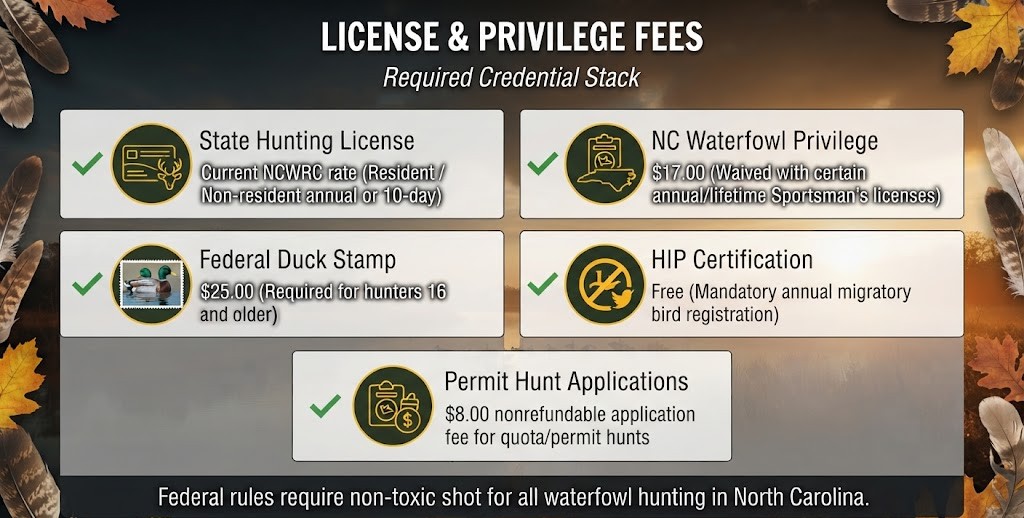
To hunt waterfowl in North Carolina you need a state hunting license, the $17 NC Waterfowl Privilege (unless your license waives it), a Federal Duck Stamp if you’re 16 or older, and free HIP certification, plus permits for swan and special hunts.
You assemble this stack once per season. Have every piece in place before opening day.
North Carolina Hunting Licenses
| Credential | Who Needs It | Cost | Notes |
|---|---|---|---|
| Resident hunting license | NC residents | $32 | Some Sportsman’s/Comprehensive licenses waive the privilege |
| Non-resident hunting license | Visitors | $119 annual and $95 for a 10-day trip | Annual and short-term (10-day) options |
| NC Waterfowl Privilege | All waterfowl hunters, unless waived | $17.00 | Waived with certain annual/lifetime Sportsman’s/Comprehensive licenses |
| Federal Duck Stamp | Ages 16+ | $29.00 | Required nationwide |
| HIP certification | All migratory bird hunters | Free | Must be NC-specific |
| Permit hunt application | Quota/permit applicants | $8 nonrefundable | Applies to quota and permit hunts |
Before you leave the house, check that you have:
- [ ] State hunting license (resident or non-resident)
- [ ] NC Waterfowl Privilege, or confirmation that your license waives it
- [ ] Federal Duck Stamp (if you’re 16 or older)
- [ ] NC HIP certification
- [ ] Any required permits for swan or special hunts
Non-resident checklist
- Choose between an annual license and a 10-day license
- Get the Waterfowl Privilege and the Federal Duck Stamp
- Get NC HIP certification even if you’re HIP certified in another state
- Check NCWRC for current license prices before you buy
Federal rules require non-toxic shot for waterfowl. For the full list of requirements, including HIP certification for out-of-state hunters, see the NCWRC waterfowl hunting requirements.
North Carolina Hunting Permits
Several waterfowl opportunities in North Carolina require a permit on top of your license stack:
- Tundra swan permit: allows 1 swan per season
- Light Goose Conservation Order permit: needed for the February 9–March 31 season
- Quota and permit hunts on game lands: including impoundment draws
- Sea duck permit: for coastal hunters
You apply through NCWRC, and quota and permit hunt applications carry an $8 nonrefundable fee. Application windows change, so check NCWRC for current dates. If you’re traveling from out of state, confirm that non-residents can apply for the hunt you want.
Where to Hunt Waterfowl in North Carolina
North Carolina offers three ways to get a spot: public lands, private leases or land you buy, and guided hunts. Public ground costs the least but draws the most pressure, private access gives you control, and guides handle the logistics.
Public areas get crowded, and with Sundays off the table, every Saturday counts. Each option is covered below.
Best Public Lands
Public ground is affordable, but it’s pressured, and many prime spots require permits. These are the established places to start:
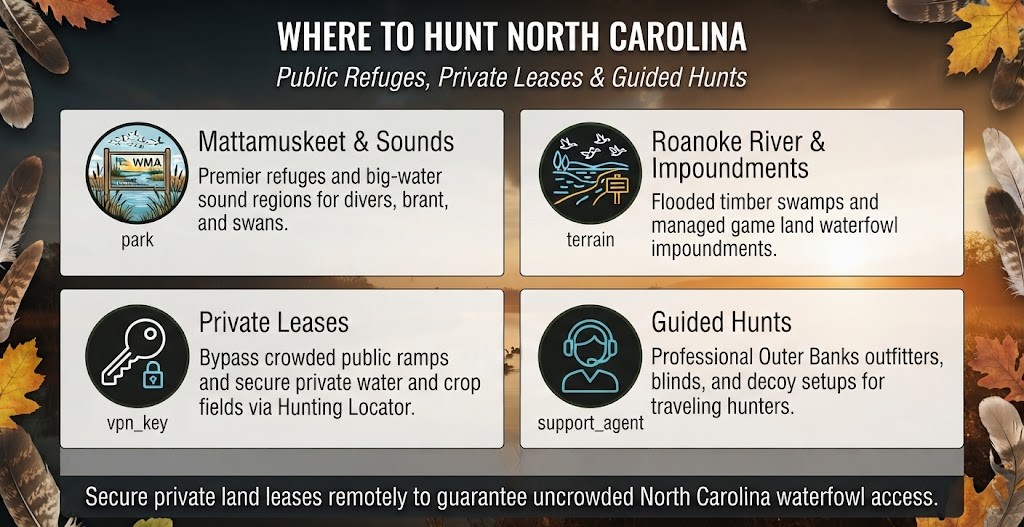
- Mattamuskeet National Wildlife Refuge: a premier waterfowl destination during designated seasons, though access is limited and competitive
- Currituck, Pamlico, and Albemarle Sound regions: big water for divers, brant, and swans, with boat and weather skills required
- Roanoke River bottoms: flooded timber and swamp habitat
- NC game land waterfowl impoundments: many are managed by permit or quota draw, so expect crowded ramps on open days
If you keep losing draws or sharing water, private access is the next step.
Private Land Hunting with Hunting Locator
A lease gives you managed pressure, a consistent spot, and time to scout before opening day. Landowners may cap the number of hunters or limit waterfowl hunts to certain times, so read the terms before you sign. For a resident who keeps losing public draws, a small lease or a club split can be a practical alternative to fighting for space.
Good waterfowl ground tends to share a few traits:
- Water control and impoundments: the ability to hold and manage water on the property
- Crop fields such as corn: a proven draw for feeding ducks
- Proximity to major water: the Roanoke River, Chowan River, and Albemarle Sound region are known for duck populations
Leasing means lower commitment and season-by-season flexibility; buying means long-term control and asset value. Either way, a few compliance points apply on private ground:
- Sunday hunting is illegal on private land too
- Federal and state baiting rules apply, so know them before you hunt near manipulated crops
- Lessees and their guests each need their own full license stack
To see what’s available, browse current North Carolina leases, review property details, and contact landowners directly.
Hunting Locator connects hunters with landowners who lease or sell hunting land. Hunters can search, compare, and contact the people who own the ground directly. Landowners can list their property and reach responsible, qualified hunters. It’s an option when public draws and crowded ramps aren’t working.
Guided Hunts
Guided hunts suit non-residents who don’t want to lease or buy. Guided duck hunts on the Outer Banks are a common destination search, and NC guides typically offer half-day to multi-day packages, with many specializing in waterfowl.
Before you book, ask about:
- Package length: half-day or multi-day
- Blind types: marsh, timber, or layout boat
- Species and zone: which birds you’ll hunt, and whether Northeast Zone goose limits apply
- Sunday ban: no Sunday hunts, so plan your travel days around it
- License responsibility: you still need your own license stack
- Lead time: book 6–12 months ahead for prime dates
If you plan more than one trip a season, compare North Carolina lease options against the cost of a guided trip to see which fits your schedule.
North Carolina Waterfowl Hunting Tips
Success in North Carolina waterfowl hunting depends on scouting, concealment, matching your spread to the habitat, shooting legal shot, and planning around Saturdays. Gear helps with each of these, and the tips below cover the ones that matter most:
- Scout midweek, hunt Saturday: With Sundays off limits, weekdays are your scouting window. Find where birds feed and roost, then be set before sunrise on your hunt day.
- Match decoys to the water: Smaller spreads work in wood duck swamps, while larger rigs suit diver ducks on the sounds. Browse waterfowl decoys at the Hunting Locator store.
- Call sparingly: Learn calling cadence and let the birds tell you how much is too much. Check out duck and goose calls in the store.
- Stay dry and safe: Waders and cold-weather layers matter in marsh and timber, and boat safety matters on open sounds. Find waders and layers in the store.
- Conceal everything: Blinds and natural cover keep wary birds committing. See blinds and concealment gear.
- Shoot non-toxic: It’s a federal requirement for waterfowl, so pattern your loads before the season. Shop non-toxic waterfowl loads.
- Know your birds before you shoot: Telling a hen mallard from a black duck protects your bag and keeps you legal.
- Watch the fronts: Cold fronts push new birds down the Atlantic Flyway, so track the weather and hunt the days after a front moves through.
More Resources from Hunting Locator
Hunting Locator has more North Carolina planning tools beyond waterfowl, grouped here by purpose.
Plan the season
- NC hunting seasons overview: statewide planning for every NC season
- NC waterfowl hunting season: our waterfowl explainer
Find land
- North Carolina hunting leases: current NC lease listings you can browse and contact directly
Gear
- Hunting Locator store: waterfowl gear and more
Other NC seasons
- NC game bird hunting season: another bird option on your off days
- NC small game hunting season: small game dates and rules
- NC turkey hunting season: what’s next after the Conservation Order closes March 31
- NC deer hunting season: big game dates and rules
- NC black bear hunting season: bear season details
- NC bobcat hunting season: predator season details
FAQ
Can you hunt ducks on Sunday in North Carolina?
No. Migratory bird hunting is prohibited on Sundays in North Carolina, on both public and private land. Plan your trips around Saturdays and use weekdays for scouting.
How much is the NC Waterfowl Privilege, and who is exempt?
The NC Waterfowl Privilege costs $17. It is waived for holders of certain annual or lifetime Sportsman’s/Comprehensive licenses. Check your specific license with NCWRC to confirm whether the waiver applies before you buy.
What age requires a Federal Duck Stamp?
Hunters aged 16 and older must carry a Federal Duck Stamp to hunt waterfowl. Younger hunters aren’t required to have one, but they still need to follow all other state and federal rules.
Does HIP certification cost anything?
No. Harvest Information Program (HIP) certification is free, but it is mandatory for anyone hunting migratory birds in North Carolina. You complete it once and carry proof with you in the field.
Do non-residents need NC HIP certification?
Yes. Non-resident hunters who are already HIP certified in another state must also be HIP certified in North Carolina. Certification is free, so add it to your checklist before you travel.
What is the Canada goose limit in the Northeast Hunt Zone?
The limit is 2 Canada geese per day in the Northeast Hunt Zone, compared with 5 per day in the Resident Population Zone. The Northeast Zone season runs December 28–January 30, so confirm your zone before you hunt.
How do I get a tundra swan permit?
Apply through NCWRC. The permit allows 1 swan per season during the November–January window, and quota and permit hunt applications carry an $8 nonrefundable fee. Check NCWRC for current application dates and details.
When is the Light Goose Conservation Order, and what methods are allowed?
The Light Goose Conservation Order runs February 9–March 31 and requires a permit. Electronic calls and unplugged guns are allowed, and there is no bag limit. It targets overabundant snow and Ross’s geese.
When are the 2026–27 Youth Waterfowl Days?
Youth and Veterans/Military Waterfowl Days are December 5, 2026 and February 6, 2027, statewide. Confirm all dates with NCWRC before you hunt, and check the proclamation for supervision rules.
How do I find a duck hunting lease in North Carolina?
Browse Hunting Locator’s North Carolina lease page and look for waterfowl features such as water and impoundments. You can review property details and contact landowners directly. For dove and other migratory bird questions, see our NC game bird guide.
The Final Shot
Two splits remain: November 7–28 and the December 17/18–January 30 stretch. Finish your license stack now, check the zone limits for where you’ll hunt, and keep Sundays clear of your plans.
Fall also overlaps with deer season, so if you hunt both, plan your calendar early. To secure a spot before the December–January split, browse North Carolina hunting leases. Landowners with ground that could host waterfowl hunters can list it with Hunting Locator and connect with responsible, qualified hunters.


