Here’s the catch that changes everything: Oregon banned hound hunting back in 1994 with Measure 18. No dogs means you’re stuck with spot-and-stalk, calling, and a whole lot of patience. Most hunters quickly discover this isn’t like chasing elk or deer. It’s a completely different game.
We’ve pulled together everything you need to know about Oregon’s cougar regulations, licensing, and where to actually find these elusive cats:
- Season dates, quotas, and the zone system that controls when hunting closes
- License costs and tag requirements that won’t break the bank
- Public land options, guided hunts, and why private access matters more than you think
Planning other Oregon hunts? Check out our complete Oregon hunting guide covering all major game species and seasons.
Quick Overview: Oregon Cougar Hunting at a Glance
Oregon runs one of the most accessible cougar programs in the West. No lottery, no preference points, just buy your tag and go hunt.
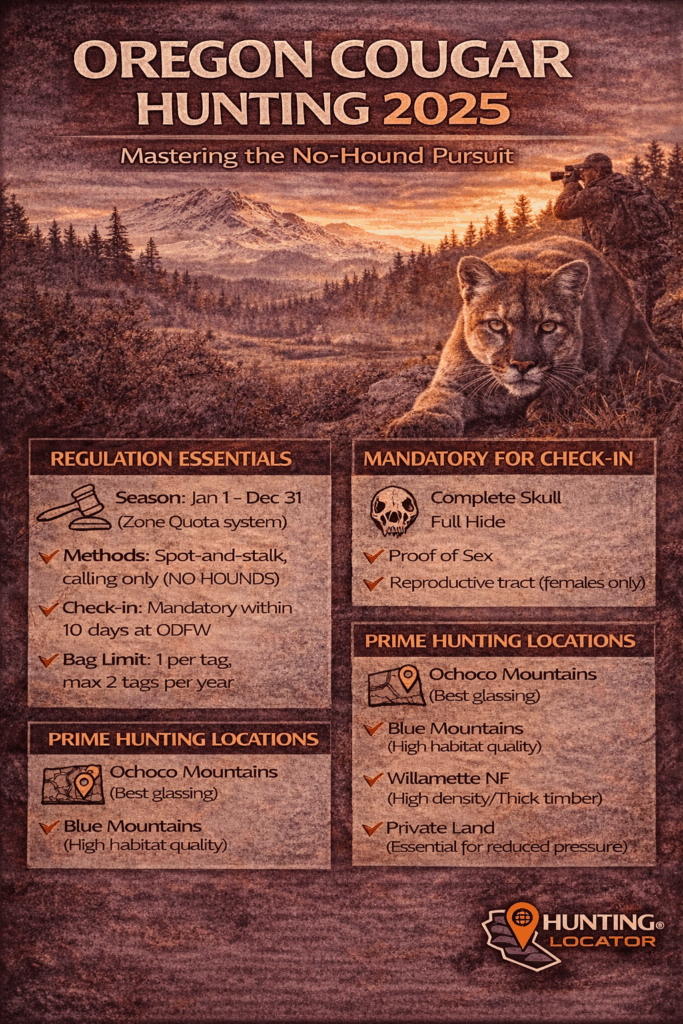
| Element | Details | Notes |
|---|---|---|
| Season Dates | January 1 – December 31 (or until zone quota met) | Year-round opportunity |
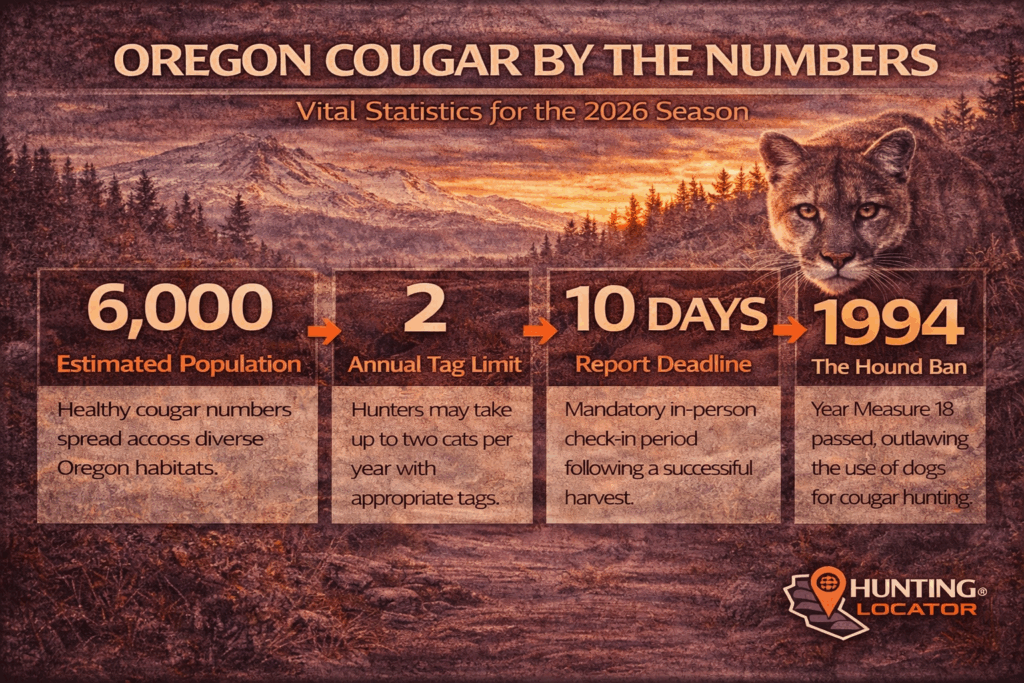
| Bag Limit | One cougar per tag; maximum 2 tags per year | Two-cougar annual limit |
| Hunting Methods | Spot-and-stalk, calling, incidental take | NO HOUNDS permitted |
| Harvest Restrictions | Unlawful to take spotted kittens or females with spotted kittens | Ethical harvest requirements |
| Check-In Requirement | In-person at ODFW office within 10 days | Skull, hide, and proof of sex required |
| Female Requirement | Must submit reproductive tract of any female cougar taken | Research data collection |
Here’s something that might surprise you: most Oregon cougars get shot by deer and elk hunters who weren’t even looking for them. That’s why smart hunters always carry a cougar tag during big game season.
What You Actually Need:
- Current Oregon hunting license
- General Season Cougar Tag (mandatory)
- Additional Cougar Tag (optional second cat)
- Hunter education card (if you need one)
Oregon Cougar Hunting Season
Forget traditional season dates. Oregon does things differently with their zone quota system that runs January 1 through December 31, or until each hunt zone hits its harvest limit.
Year-Round General Season
Each zone gets a cougar quota. Hit that number, zone closes. Simple as that. This setup gives you incredible flexibility while keeping harvest sustainable.
Residents love this system because you can hunt cougars during the slow periods between deer and elk seasons. Non-residents get to plan trips without worrying about specific dates, though you’d better check zone status before booking flights. Your best shot at success comes late fall through early spring when cold weather and snow make tracking actually possible.
Smart move? Time your cougar hunt with Oregon elk season or Oregon deer season. Most successful cougar hunters weren’t even cougar hunting when they got their cat.
Oregon Cougar Licenses and Permits
Oregon keeps licensing simple. No lottery headaches, no point systems, just straightforward over-the-counter tags with a big price difference between residents and non-residents.
Oregon Hunting Licenses
| License Type | Resident Cost | Non-Resident Cost | Notes |
|---|---|---|---|
| Adult Hunting License | $39.00 | $193.00 | Required for all cougar hunters |
| Additional Cougar Tag | $17.00 | $17.00 | One cougar per tag |
Non-residents actually get a break here compared to other western states. No complicated applications, no waiting periods. Oregon residents just add cougar tags to their existing hunting license.
Oregon Cougar Tags and Permits
Buy your tags online, at sporting goods stores, or any ODFW office. You need a valid hunting license plus either a General Season Cougar Tag or Additional Cougar Tag, or both.
Two tags means two cougars per year, which is pretty generous. But here’s what you can’t skip: bring your cougar to an ODFW office within 10 days of the kill. They need to see the skull, hide, and proof of sex. Shoot a female? You’re also handing over the reproductive tract for their research.
Where to Hunt Cougars in Oregon
Getting tags is easy. Finding cougars? That’s where things get interesting. You need to know where these cats actually live and how to get legal access to hunt them.
Best Public Lands for Cougar Hunting
Your Best Public Land Bets:
- Willamette National Forest – Tons of cougars, but good luck seeing them through all that timber
- Ochoco Mountains – Eastern Oregon with actual visibility for spot-and-stalk work
- Blue Mountains – Quality habitat where you can glass effectively
- Wallowa-Whitman National Forest – Remote country with less competition
- Coastal Range – Solid cougar numbers but dense cover everywhere
Eastern Oregon generally gives you better hunting conditions since you can actually see more than 50 yards. Problem is, everyone else knows this too. Plus the best cougar country often sits behind locked gates on private land.
Guided Cougar Hunts
Guides earn their money on cougar hunts, especially without hounds to do the heavy lifting. Oregon guides have gotten creative with calling techniques and know where cougars actually show up. They’ll use everything from fawn distress calls to predator calls trying to pull a curious cat into the open.
Non-residents should seriously consider guides for their first Oregon cougar hunt. Even experienced hunters struggle with cougar hunting, and local knowledge can save you from burning vacation days staring at empty hillsides.
Private Land Hunting
Here’s the truth most people don’t want to hear: private land access often separates successful cougar hunters from everyone else. You need permission to hunt private land in Oregon, but private properties usually mean less pressure, known habitat quality, and reliable access.
Leasing hunting rights gives you consistent access without the uncertainty of public land conditions or competition from other hunters. Serious cougar hunters eventually figure out that private access isn’t optional—it’s essential.
Hunting Locator connects you directly with Oregon landowners offering hunting leases and land sales. Skip the cold calls and public land lottery. Browse verified properties filtered by location, size, and target species. Check out Oregon hunting opportunities and find the access that actually gets you on cougars instead of just hoping for the best.
Cougar Hunting Tips for Oregon
No hounds means you need to master techniques that most western hunters never bother learning. Oregon forces you to become a better hunter.
What Actually Works in Oregon:
- Get Good at Calling – Distress calls can bring cougars in close, but you better know what you’re doing. Practice before your hunt, not during it.
- Time It Right – Late fall through early spring is your window, especially when snow hits the high country and makes tracking possible.
- Glass the Edges – Cougars travel where timber meets open country. Set up where you can watch these transition zones during prime movement times.
- Follow the Deer – Cougars go where their food goes. Find areas with strong deer populations and you’ll find cougar habitat.
- Always Carry Your Tag – Most Oregon cougars get shot during deer and elk hunts. Don’t be the guy who sees a cougar without a tag in his pocket.
- Learn to Read Sign – Fresh tracks, scrapes, and kill sites tell you where cougars are actually living. Snow makes this infinitely easier.
More Resources from Hunting Locator
Get the complete picture of Oregon hunting opportunities and find the resources you need:
- Oregon Hunting Season Guide – Everything you need to know about Oregon hunting
- Oregon Black Bear Season – Another predator hunting option
- Oregon Elk Season – Plan combination hunts where cougar encounters happen
- Oregon Deer Season – Maximize your time in cougar country
- Oregon Turkey Season – Spring hunting in prime cougar habitat
- Oregon Hunting Leases – Find the private access that makes the difference
FAQ
Can you hunt cougars with dogs in Oregon?
Nope. Oregon voters banned hound hunting in 1994 with Measure 18. Using dogs to hunt cougars is illegal, period. You’re stuck with spot-and-stalk, calling, and whatever other legal methods you can figure out.
How many cougar tags can you buy in Oregon?
Two tags max per year. You need the General Season Cougar Tag for your first cat, then you can add an Additional Cougar Tag for a second one. Each tag is good for one cougar, so two tags means you could potentially shoot two cougars in a year.
Do you need to check in your cougar in Oregon?
Absolutely. Get that cougar to an ODFW office within 10 days or you’re in trouble. Bring the skull, hide, and proof of sex. Shoot a female? You’re also turning in the reproductive tract for their research program.
What does a non-resident hunting license cost in Oregon?
Non-resident hunting license runs $193. That’s just the basic license though—you’ll pay extra for cougar tags. Contact ODFW for current tag prices since they change these rates periodically.
When is the best time to hunt cougars in Oregon?
Late fall through early spring gives you the best shot. Snow in the mountains helps with tracking, and winter conditions make lions easier to locate. Plan around these optimal windows.
Can you take female cougars in Oregon?
Yes, but pay attention to the rules. You cannot shoot spotted kittens or females with spotted kittens. Kill a female and you must submit the reproductive tract to ODFW. Make sure your target is legal before you pull the trigger.
The Final Shot
Oregon’s year-round cougar season gives you opportunities that most western states don’t offer. With around 6,000 cougars spread across incredibly diverse habitat, the cats are out there for hunters who put in the work.
Success boils down to understanding the regulations, finding quality habitat you can legally access, and developing the patience this hunt demands. Public lands offer opportunities, but private access often determines whether you’re telling cougar stories or just cougar hunting stories.
Ready to get serious about Oregon cougar hunting? Browse hunting leases and properties to find the private land access that turns your cougar hunting from wishful thinking into actual success. The right hunting ground makes all the difference.


