Oregon’s season structure is complicated, the controlled hunt system can be confusing, and getting decent hunting access? That’s where most people struggle.
The 2026 season brings some real curveballs too. Eastern Oregon archery seasons just got shaken up, and tag numbers are down across the board. If you’re not paying attention to these changes, you’re already behind.
I’ve put together this guide using ODFW’s official 2026 regulations, current population data, and real insights from hunters who actually fill their tags. Whether you’re a local who hunts every year or you’re thinking about making the trip from out of state, this is the straight-up information you need to plan your 2026 hunt right.
What you’ll find here:
- 2026 season dates broken down by weapon type and region
- Complete cost breakdown for residents and non-residents, including those new application fees
- Real hunting strategies for public land, guided hunts, and private access
Let me start with the quick-reference stuff for veterans, then we’ll dig into the details for anyone new to Oregon’s system.
Quick Overview of Oregon Elk Hunting 2026
Here’s what you need to know right now, with the full breakdown coming up in the next sections.
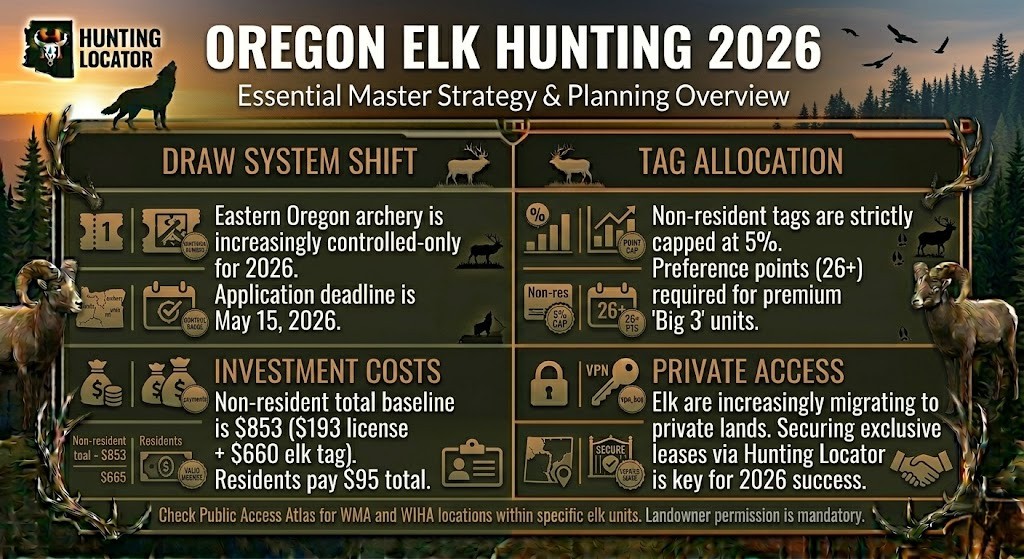
The Oregon Hunters Association is reporting a 1% drop in available elk tags for 2026. Even worse? Some eastern Oregon units are going controlled-only for archery. Oh, and they bumped controlled hunt application fees up by $2 to $10 per species.
| Season Type | Dates | Region/Notes |
|---|---|---|
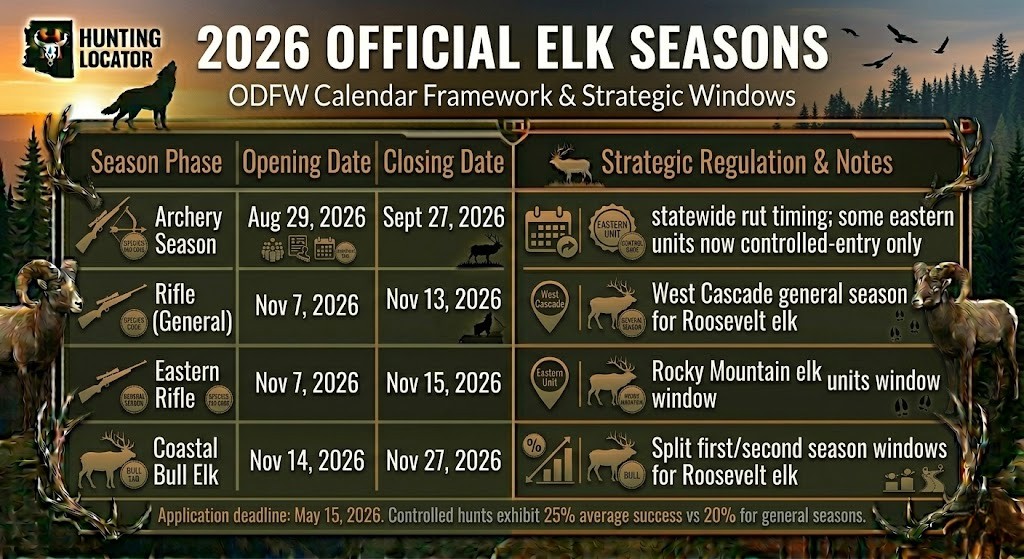
| Archery Elk (Western & Eastern) | Aug. 29 – Sept. 27 | Statewide; some eastern units now controlled-only |
| West Cascade Any Legal Weapon | Nov. 7 – Nov. 13 | General season |
| Eastern Oregon Rocky Mountain Second Season | Nov. 7 – Nov. 15 | Rocky Mountain elk units |
| Western Oregon Coast Bull Elk – First Season | Nov. 14 – Nov. 17 | Roosevelt elk |
| Western Oregon Coast Bull Elk – Second Season | Nov. 21 – Nov. 27 | Roosevelt elk |
| Antlerless Damage | Aug. 1 – Mar. 31, 2027 | Limited eastern units: Aug. – Nov. 30; requires existing land access |
What It’ll Cost You:
Oregon Residents:
- Hunting License: $39
- Elk Tag: $56
- Total: $95
Non-Residents:
- Hunting License: $193
- Elk Tag: $660
- Total: $853
Don’t Forget These:
- Valid Oregon hunting license (get this first, always)
- Hunter education certification (check ODFW for birth date requirements)
- Controlled hunt application fee: $10 per species (up from $8)
- Application deadline: May 15, 2026
- Results available: June 12, 2026
Oregon Elk Hunting Seasons
Oregon runs multiple elk seasons targeting two completely different elk species. Roosevelt elk dominate western Oregon while Rocky Mountain elk rule the eastern part of the state. The terrain and hunting strategies? Night and day difference.
Archery Elk Season
Dates: August 29 – September 27, 2026
This season covers the entire state, but pay attention to this major change: some eastern Oregon units switched to controlled-only for archery. Western Oregon archery is still mostly general season with over-the-counter tags. Eastern Oregon? Now it’s controlled hunts across many units.
Hunt Infool calls Oregon’s Roosevelt elk archery hunting some of the best in the West. You’re hunting during the rut, so calling action is incredible. The numbers back it up too: controlled hunts are hitting 25% success rates compared to 20% for general season.
Rifle Seasons
Oregon splits rifle seasons by region and elk species. Here’s how it breaks down:
West Cascade Any Legal Weapon:
- Dates: November 7 – November 13, 2026
- General season for Roosevelt elk
Eastern Oregon Rocky Mountain Second Season:
- Dates: November 7 – November 15, 2026
- Rocky Mountain elk in eastern units
Western Oregon Coast Bull Elk – First Season:
- Dates: November 14 – November 17, 2026
- Roosevelt elk, shorter window
Western Oregon Coast Bull Elk – Second Season:
- Dates: November 21 – November 27, 2026
- Roosevelt elk
Hunt Infool warns that western Oregon rifle hunts are brutal—thick timber, steep terrain, and elk that know every hiding spot. Oregon divides everything into hunting units, so you need to pick specific units when applying for controlled hunts or buying tags.
Antlerless and Damage Seasons
Dates: August 1, 2026 – March 31, 2027 (some eastern units limited to August – November 30)
Listen up: ODFW is crystal clear about this: “Do not purchase this tag unless you already have access to a place to hunt.” These tags exist because of chronic elk damage and growing private land elk populations. Translation: you need private land access.
Oregon Elk Licenses and Permits
Oregon’s licensing system isn’t rocket science, but you need to understand it before you start applying. Non-residents especially need to know what they’re getting into cost-wise.
Oregon Hunting Licenses
Step one: buy your Oregon hunting license. Step two: buy your elk tag. Don’t mess up the order.
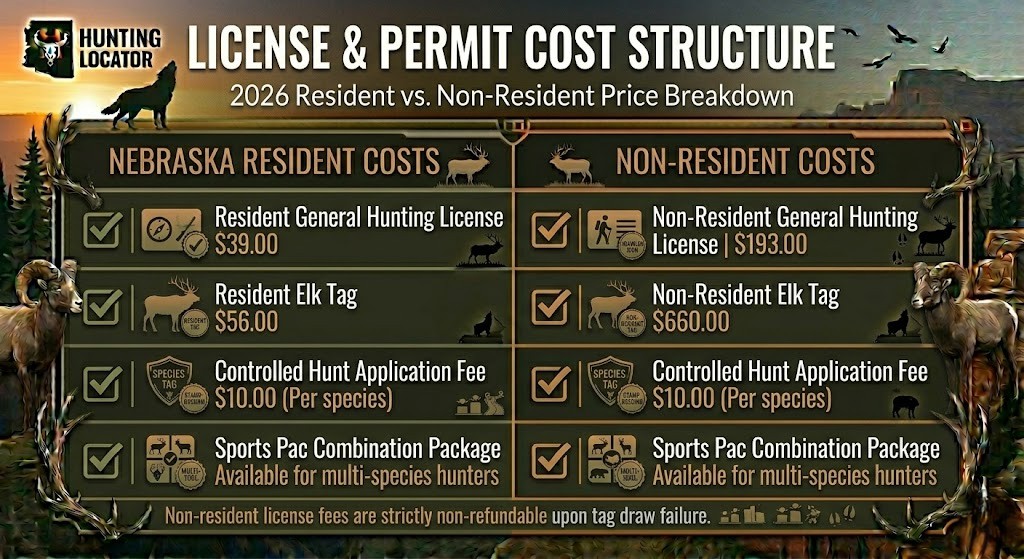
| License Type | Resident Cost | Non-Resident Cost |
|---|---|---|
| General Hunting License | $39 | $193 |
| Elk Tag | $56 | $660 |
| Total for Elk Hunting | $95 | $853 |
| Controlled Hunt Application Fee | $10 per species | $10 per species |
Here’s a reality check from Hunt Infool: Oregon caps non-resident elk and deer tags at just 5%. Get this—only 2.5% goes to non-residents in the regular draw before guides get their allocation.
Oregon offers a Sports Pac combination package if you’re hunting multiple species. Lots of hunters pair elk with Oregon deer hunting.
Oregon Elk Hunting Permits
Oregon’s controlled hunt system demands advance planning and understanding how preference points work:
Controlled Hunt Application Process:
- Application fee: $10 per species (up $2 from last year)
- Application deadline: May 15, 2026
- Results available: June 12, 2026
ODFW’s system gives 75% of controlled draw permits to applicants with the most points. Hunt Infool reports that premium units like Mt. Emily, Walla Walla, and Wenaha need 26+ points to draw for archery or rifle. Premium hunts run as separate lottery drawings with no preference points needed.
Non-residents get only 2.5% of elk tags in the regular draw. That makes point accumulation a long-term game for premium units. The Oregon Guides and Outfitters Program gets tags equal to half the non-resident tags drawn the previous year, giving non-residents another option if they book guided hunts.
Where to Hunt Elk in Oregon
Finding quality hunting access is usually the biggest headache hunters face in Oregon. The state gives you several options—massive public lands, guided experiences, or private land opportunities.
Best Public Lands for Elk Hunting
Oregon has some of North America’s best public land elk hunting. Over 61% of the state is public ground.
Top Public Land Areas:
- Wallowa-Whitman National Forest (Eastern Oregon): Over-the-counter archery deer and elk hunters should check this out, where OTC tags give you solid public land opportunities
- Blue Mountains Region: Home to Oregon’s legendary “Big 3” units—Mt. Emily, Walla Walla, and Wenaha—most consider these once-in-a-lifetime hunts
- Ochoco Mountains (Central Oregon): Units like Ochoco and Grizzly have good elk numbers and accessible public lands
- Coast Range (Western Oregon): Prime Roosevelt elk country with thick forests and steep terrain
- Silvies and Starkey Units: More accessible options with decent odds that offer opportunity and elk numbers
ODFW biologists are seeing overcrowding cause “elk distribution problems” as more elk move to private land. Result? Fewer elk available on public land during hunting seasons.
Guided Elk Hunts in Oregon
Guided hunts give you professional expertise, often on private land, with the outfitter handling logistics. Oregon’s Guides and Outfitters Program provides specific tag allocation for this.
What You’ll Pay:
- 5-day fully outfitted 2×1 hunts run $6,000-$6,800 plus license and tag fees
- Quality outfitters handle food, lodging, and guiding
- One outfitter reports roughly 50% success rates with nearly 100% opportunity—way better than public land averages
Most outfitters are booked years ahead, so plan early. Roosevelt elk hunts especially fill up fast.
Private Land Hunting with Hunting Locator
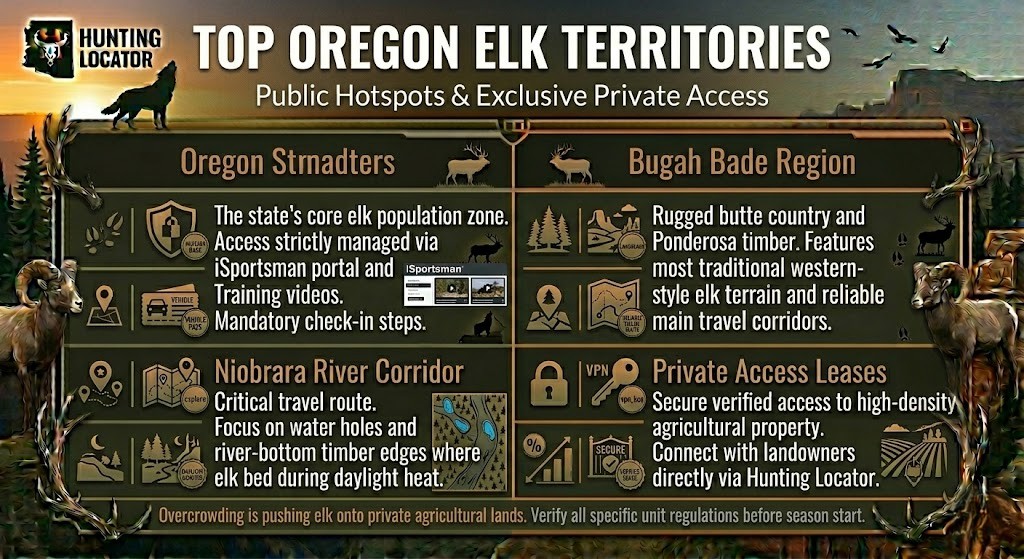
Private land hunting is the premium solution for hunters wanting less pressure, higher success rates, and more consistent opportunities. Because of chronic elk damage and increasing private land elk populations, ODFW created damage tags specifically for private land access.
Private land gives you less pressure, better habitat, and more consistent results year after year. Many hunters discover that leasing private hunting land offers private access benefits without the full ownership investment.
Hunting Locator: Your Private Land Solution
Hunting Locator connects hunters seeking quality access with landowners looking for responsible hunters. Our Oregon listings include detailed property information, elk population data, success rates, and direct landowner contact. Whether you want a Roosevelt elk lease in the Coast Range or Rocky Mountain elk access in eastern Oregon, our platform makes finding and securing private hunting opportunities simple. Check out Oregon hunting leases to find available properties matching your hunting preferences and budget.
Elk Hunting Tips for Oregon Success
Success in Oregon’s diverse elk country means adapting your strategy to the terrain, elk species, and hunting method.
- Scout During Summer: Use trail cameras and scouting trips to identify elk patterns before season opens—Oregon’s elk move between summer and winter ranges
- Master Elk Calling: Archery season during the rut offers the best calling action, especially for Rocky Mountain elk
- Get in Shape: Terrain, weather, and elevation make elk hunting a real physical workout—off-season conditioning pays off big
- Know Species Differences: Roosevelt elk in western Oregon live in thick timber requiring different tactics than Rocky Mountain elk in eastern Oregon’s more open country
- Plan for Weather Changes: Oregon’s weather changes fast, especially in mountains—pack layers and rain gear no matter what the forecast says
- Study Unit Regulations: Each hunting unit has specific rules for legal weapons, season dates, and bag limits
For gear to handle Oregon’s challenging elk hunting conditions, check out the Hunting Locator store for equipment recommendations from experienced hunters.
More Resources from Hunting Locator
Expand your Oregon hunting knowledge with these additional resources from our hunting guide library:
- Oregon Hunting Season Guide – Complete overview of all hunting seasons and species in Oregon
- Oregon Deer Hunting Season – Detailed guide to Oregon’s deer hunting opportunities, perfect for combination hunts
- Oregon Black Bear Hunting Season – Information on Oregon’s excellent black bear hunting opportunities
- Oregon Turkey Hunting Season – Spring turkey hunting guide for Oregon hunters
- Oregon Waterfowl Hunting Season – Duck and goose hunting information for Oregon’s diverse waterfowl opportunities
- Oregon Game Bird Hunting Season – Upland bird hunting guide covering pheasant, quail, and grouse
FAQ
When do Oregon elk hunting applications open for 2026?
Oregon elk hunting applications for controlled hunts open in early spring with a deadline of May 15, 2026. Results come out June 12, 2026. General season tags are available over-the-counter for qualifying units, but many eastern Oregon archery units switched to controlled hunts only for 2026.
How much does it cost for a non-resident to hunt elk in Oregon?
Non-resident elk hunting in Oregon costs $853 total ($193 for hunting license + $660 for elk tag). Add the $10 controlled hunt application fee if you’re applying for premium units. Non-residents get only 2.5% of elk tags in the regular draw, making Oregon one of the tougher states for out-of-state hunters.
What’s the difference between Roosevelt and Rocky Mountain elk hunting in Oregon?
Roosevelt elk live in western Oregon’s thick forests and steep terrain, making them challenging to hunt but offering unique opportunities in dense timber. Rocky Mountain elk live in eastern Oregon’s more open country with different terrain and hunting strategies. Oregon’s eastern Oregon Rocky Mountain elk population sits at 70,600, while Roosevelt elk numbers are lower at approximately 52,507 animals.
Can I hunt elk on public land in Oregon without a guide?
Yes, Oregon doesn’t require non-residents to hire a guide, and the state offers extensive public land opportunities. However, ODFW biologists note that overcrowding is causing elk distribution problems as more elk move to private land during hunting seasons.
How many preference points do I need for premium Oregon elk units?
Premium units like Mt. Emily, Walla Walla, and Wenaha need 26+ points to draw for archery or rifle hunts. These are once-in-a-lifetime hunting opportunities. More accessible units like Silvies, Ochoco, and Starkey offer better draw odds for hunters building points.
What are Oregon’s elk hunting success rates?
For the 2023 season, Oregon hunters hit an overall 24% success rate. Controlled hunts showed 25% success rates versus 20% for general season hunts. Private land and guided hunts typically report higher success rates, with some outfitters reporting 50% success rates.
The Final Shot
Oregon’s 2026 elk season offers incredible opportunities for both Roosevelt and Rocky Mountain elk, but success requires understanding the state’s complex regulations, realistic expectations about draw odds, and smart planning for hunting access. With fewer tags available and more competition for public land, many hunters are finding that private land access provides the edge needed for consistent success.
Whether you’re building preference points for a premium unit, planning a general season hunt, or exploring private land opportunities, the key is starting your planning early and having backup strategies. The hunters who consistently fill their tags adapt to changing conditions and secure quality access before season starts.
Ready to take your Oregon elk hunting to the next level? Explore private hunting leases in Oregon and discover how Hunting Locator can connect you with quality hunting access that transforms your hunting experience from hoping for success to planning for it.


