This Oregon game bird guide pulls together confirmed season and fee data for 2026–2027, with the official Oregon game bird regulations as the source to check when something looks off. Hunting Locator organizes the regulations here and connects you to land access, so the guide leads somewhere useful.
Whether you’re hunting pheasants in the Willamette Valley or planning a chukar trip into Eastern Oregon’s canyon country, here’s what’s covered:
- 2026–2027 season dates and bag limits for pheasant, quail, grouse, and chukar/partridge, by species and region
- License, validation, and permit costs for residents, non-residents, and youth hunters, plus how and when to buy
- Where to hunt — public land options, private-land leases through Hunting Locator, and guided hunts
Start with the dates and limits.
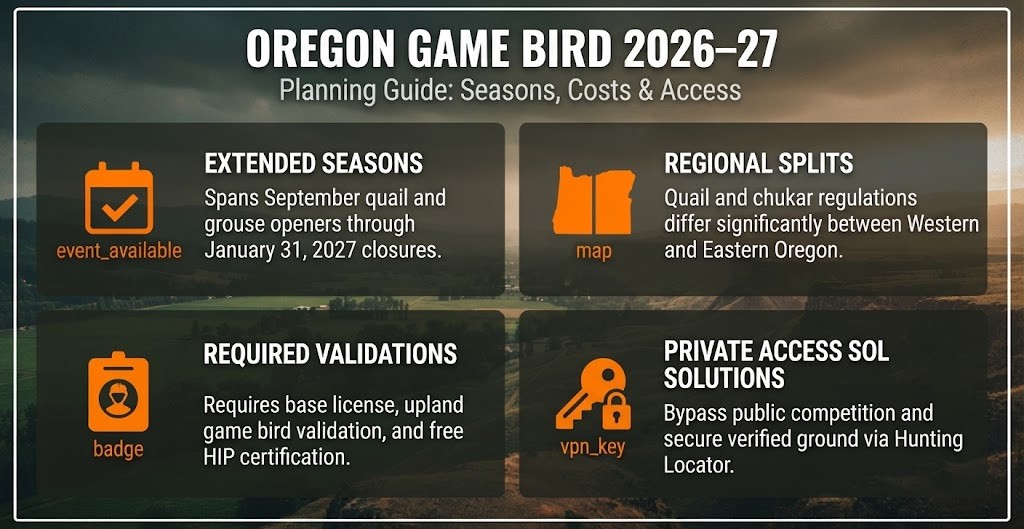
Quick Overview: 2026–2027 Oregon Game Bird Seasons at a Glance
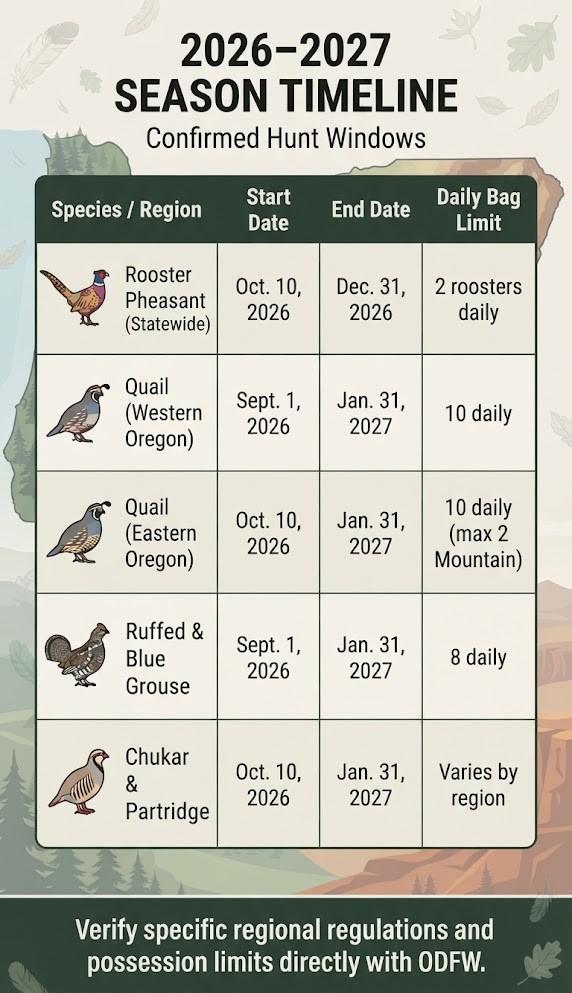
Oregon doesn’t run a single calendar for game birds. Some seasons split between Western and Eastern Oregon, and at least one upland season stays open statewide from September 1 through January 31. The table below is the fast-reference version for 2026–2027.
| Species | Region/Season Type | Start Date | End Date | Daily Bag Limit | Possession Limit / Notes |
|---|---|---|---|---|---|
| Rooster Pheasant | Statewide | Oct. 10, 2026 | Dec. 31, 2026 | 2 | Possession 8 |
| California & Mountain Quail | Western Oregon | Sept. 1, 2026 | Jan. 31, 2027 | 10 | Possession 30 |
| California & Mountain Quail | Eastern Oregon | Oct. 10, 2026 | Jan. 31, 2027 | 10 (max 2 Mountain Quail) | Possession 30 (max 6 Mountain) |
| Ruffed & Blue Grouse | Statewide | Sept. 1, 2026 | Jan. 31, 2027 | 8 | Possession 24 |
| Chukar & Hungarian Partridge | Statewide | Oct. 10, 2026 | Jan. 31, 2027 | Varies by region | Verify with ODFW |
A note on accuracy: Season dates and fees can change, and regional rules add complexity. This table reflects confirmed 2026–2027 information, but ODFW’s published regulations are the last word — verify before you head out.
If spring gobblers are on your list too, Oregon turkey hunting season runs as a separate upland opportunity worth planning around. For ducks and geese, Oregon waterfowl hunting season comes with its own validations and federal duck stamp requirements — your upland paperwork doesn’t cover you there. And if you want more control over where you hunt this fall, Oregon hunting land leases are worth a look.
Beyond season dates and bag limits, every game bird hunter in Oregon needs:
- A valid Oregon hunting license — the base license required for all hunters, resident or non-resident
- An upland game bird validation — a required add-on specifically for hunting upland birds
- HIP (Harvest Information Program) validation — a free validation used for harvest data collection
- Hunter education certification — required for hunters 17 and under before they can hunt
Costs and the exact process are covered in the licensing section below.
Key Terms Every Oregon Bird Hunter Should Know
A few definitions worth knowing up front:
Validation — An add-on requirement layered on top of your base hunting license. You need the upland game bird validation specifically to legally pursue pheasant, quail, grouse, chukar, and partridge.
Daily Bag Limit vs. Possession Limit — Your daily bag limit is the maximum number of birds you may take in a single day. Your possession limit is the maximum total you’re allowed to have in your possession at any time, whether in the field, at camp, or at home. For pheasant, that’s a daily limit of 2 roosters and a possession limit of 8.
Western vs. Eastern Oregon:
Oregon splits several game bird seasons and limits along a Western/Eastern regional line. Quail is the clearest example — Western Oregon’s season opens September 1, while Eastern Oregon’s opens over a month later on October 10. Confirm which region you’re hunting before you go.
Oregon Game Bird Hunting Seasons by Species
Here’s each species in order: pheasant, quail, grouse, and chukar/partridge. All dates and limits reflect confirmed 2026–2027 data — double-check specifics with ODFW before your hunt, especially for regional nuances not covered here.
Season 1: Rooster Pheasant
Statewide: October 10 – December 31, 2026. Daily limit: 2. Possession limit: 8.
Pheasant season runs the same statewide, with no Western/Eastern split, which simplifies planning. The “rooster” designation matters: only male pheasants are legal game, so hens need to be correctly identified and left alone. This is one of Oregon’s most popular upland seasons, and the two-rooster daily limit gives you a realistic target for a good day afield.
Season 2: Quail — Western vs. Eastern Oregon
Western Oregon: September 1, 2026 – January 31, 2027. Daily limit: 10. Possession limit: 30.
Eastern Oregon: October 10, 2026 – January 31, 2027. Daily limit: 10 (max 2 Mountain Quail). Possession limit: 30 (max 6 Mountain Quail).
Quail season is Oregon’s clearest example of the Western vs. Eastern divide. Western Oregon hunters get an earlier start on September 1, while Eastern Oregon’s season doesn’t open until October 10 — six weeks later. Both close on the same date, January 31, 2027.
California quail and Mountain quail share the same overall bag limit, but Mountain quail carry a sub-limit in both regions, capped at 2 daily and 6 in possession, so know which bird is in hand before it goes in your vest.
Season 3: Ruffed & Blue Grouse
Statewide: September 1, 2026 – January 31, 2027. Daily limit: 8. Possession limit: 24.
Grouse season opens early and runs the full length of the extended upland calendar — nearly five months statewide. It’s a solid early-season option, especially for hunters working national forest land where forest grouse habitat is abundant. For area-specific rules, ODFW’s official regulations are the best place to confirm details beyond what’s covered here.
Season 4: Chukar & Hungarian Partridge
Statewide: October 10, 2026 – January 31, 2027. Daily bag limit varies by region — confirm your specific limit with official ODFW regulations before hunting.
Chukar hunting is a marquee destination pursuit for hunters willing to work steep, rocky terrain, particularly in Eastern Oregon’s canyon country, where chukar populations concentrate on rimrock and sagebrush slopes. Because bag limits vary by region for chukar and Hungarian partridge, don’t assume a single statewide number applies everywhere — check ODFW’s current regulations for your specific hunt area before you go.
Oregon Game Bird Licenses and Permits
Hunting game birds legally in Oregon means stacking a few required pieces of paperwork — a base license plus specific validations — and costs differ depending on whether you’re a resident, non-resident, or youth hunter. Here’s what you need and what it costs.
Oregon Hunting Licenses & Fees
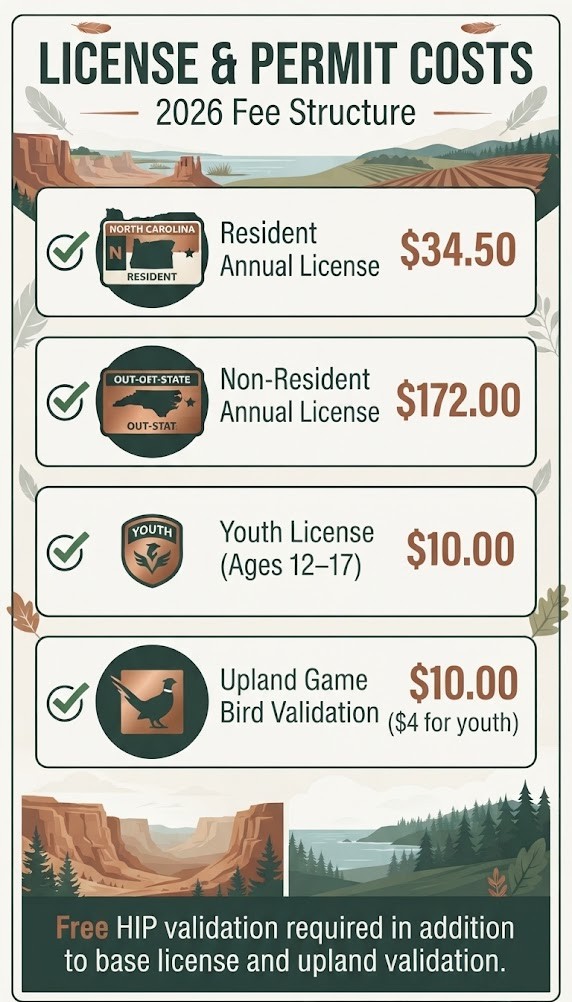
| License / Validation | Fee | Notes |
|---|---|---|
| Annual Hunting License (Resident) | $35 | Base license |
| Annual Hunting License (Non-Resident) | $172.00 | Base license for out-of-state hunters |
| Juvenile/Youth License (Age 12–17) | $10.00 | Youth pricing |
| Upland Game Bird Validation | $10.00 (Youth: $4.00) | Required to hunt upland birds |
Non-resident planning note: If you’re traveling from out of state, budget for the $172.00 base license up front — it’s the single biggest line item in your trip cost, well above the validation fees.
Beyond the license and validation, you’ll also need the free HIP (Harvest Information Program) validation before hunting any upland game bird. According to ODFW’s official licensing guidance, a valid hunting license, upland game bird validation, and HIP validation together cover what’s needed to legally pursue upland birds in Oregon. Non-residents hunting migratory birds separately, like waterfowl, may need additional federal stamps — a different requirement from upland birds. Fees are subject to change, so verify current costs with ODFW before you purchase.
Oregon Hunting Permits & How to Get Licensed
Getting legally set up to hunt game birds in Oregon follows a straightforward sequence:
- Complete hunter education if required — Mandatory for hunters 17 and under before they can legally hunt in Oregon.
- Buy your Oregon hunting license — Choose resident, non-resident, or youth pricing based on your status.
- Add the upland game bird validation — Required on top of your base license to hunt pheasant, quail, grouse, chukar, or partridge.
- Complete the free HIP validation — Required for all upland bird hunters and used for harvest data collection.
- Confirm any region-specific rules with ODFW — Especially important for chukar bag limits and any area-specific restrictions.
Oregon manages licensing and validations through the state’s MyODFW system, also available as a mobile app, where you can purchase your license, display it in the field, and track your history. All of this can be done anytime before you hunt — just make sure it’s done before your boots hit the field.
Where to Hunt Game Birds in Oregon
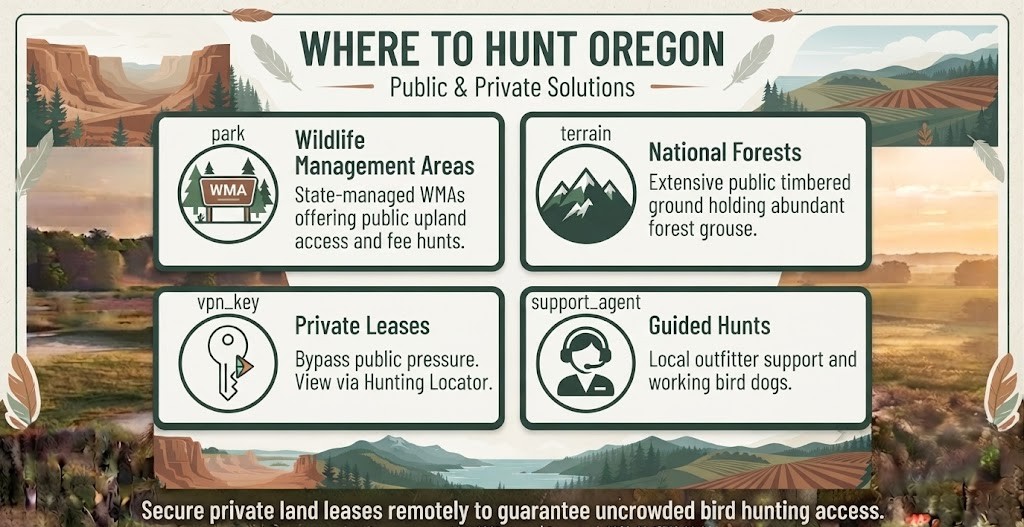
Once your paperwork is squared away, the next question is where to go. Oregon hunters generally choose from three paths — public land, private leases, and guided hunts — and the right one depends on your experience level, budget, and how much time you have to scout.
Best Public Lands for Oregon Bird Hunting
Oregon offers a solid foundation of public and cooperative-access hunting ground for upland birds, particularly through dedicated wildlife area programs. If you’re just getting started or want a no-cost entry point into the season, these are the categories to explore:
- Wildlife Management Areas (WMAs) — State-managed wildlife areas across Oregon offer public upland hunting access, with some running dedicated fee pheasant hunts in season.
- National forests — Particularly valuable for grouse hunters working forested terrain in both Western and Eastern Oregon.
- ODFW’s Open Fields Program — Opens cooperating private lands to game bird hunters in areas like the Willamette Valley and Columbia River Basin; review current Oregon public land access programs for details.
- Hunt by Reservation and Regulated Hunt Areas — Additional cooperative access programs that open private property to hunters through a reservation system.
Public land is a good starting point, especially for newer hunters, but popular WMAs and cooperative areas can get crowded fast once the season opens, which is why many experienced hunters look toward private access as the season wears on.
Wildfire and drought conditions can also affect where you’re able to hunt during the fall. Check current conditions before committing to a location, since Oregon’s ongoing wildfire season has real potential to close off usual spots.
Private Land Hunting with Hunting Locator
Crowded public ground, lost leases, and limited scouting time are real problems for Oregon bird hunters. Private access addresses all three by putting you on quality ground with less competition.
There are two real paths: leasing private hunting land for the season, or buying hunting land outright if you’re ready to invest in a permanent spot. An Oregon private hunting land lease gives you exclusive or semi-exclusive access to a property without the long-term commitment of ownership, while buying hunting land in Oregon suits hunters who want a permanent base for years of seasons to come.
This is where Hunting Locator fits in. It connects hunters directly with landowners across Oregon who are ready to lease or sell — no middleman, no cold-calling strangers off a county map. Browse available ground and connect directly with landowners to secure access on your terms.
Browse Oregon hunting leases to compare properties by acreage, game type, and location. Whether you’re a local hunter avoiding public-land pressure, a traveling hunter seeking a reliable destination lease, or a newer hunter looking for an affordable way into private access, current Oregon listings are worth checking.
Guided Upland Hunts in Oregon
For non-resident hunters traveling into unfamiliar territory, or newer hunters who want expert guidance without the learning curve, a guided upland hunt is often the smartest way to have a productive trip. A good guide brings local knowledge of bird patterns and terrain, working dogs that improve your odds, and land access you wouldn’t otherwise have — all of which lowers the risk of traveling a long way for a disappointing hunt.
Hunting Locator connects you with landowners and access opportunities across Oregon, so you can build a trip around quality ground and handle the access side separately from the guide search. If a guided experience is what you’re after, starting your search for access through the platform is a reasonable first step before committing to a specific package.
Oregon Game Bird Hunting Tips
Knowing the season dates and having access to good ground covers half the work — the rest is preparation. Here are field-tested fundamentals for the 2026 Oregon season.
- Scout the habitat, not just the map. Match cover type and food sources to the species you’re chasing — pheasants favor grassy field edges and grain stubble, while chukar stick to steep, rocky sagebrush slopes.
- Match your gear to Oregon’s terrain. What works in a flat Willamette Valley field won’t cut it in Eastern Oregon’s steep chukar canyons — plan your boots, layers, and load accordingly.
- Dress for the weather and the walk. Oregon’s fall conditions swing from wet coastal mornings to dry Eastern Oregon afternoons, so layering and a good pair of boots matter more than almost any other gear decision.
- Know your limits before you go. Daily bag and possession limits keep you legal and protect the resource — review the season tables above before every hunt.
- Work with a good dog. A well-trained flushing or pointing dog measurably improves your upland success rate. If you’re building that partnership, Oregon’s pursuit season for dog training with wild birds runs September 1 through January 31.
- Verify regulations before every trip. Regional differences and occasional rule changes mean it’s worth a final check with ODFW before you head out, especially for chukar bag limits.
Once you know what you need, shop upland hunting gear built for this kind of season, from shotguns and upland vests to boots and blaze orange for younger hunters in the field.
More Resources from Hunting Locator
Planning a full Oregon season often means looking beyond game birds. Here’s where to go next.
- Oregon game bird hunting season — the core companion guide covering Oregon’s upland bird seasons in depth.
- Oregon hunting season guide — a broader look at Oregon’s hunting calendar across all major species.
- Oregon turkey hunting season — the closest cousin to upland game birds, with its own spring season structure.
- Oregon waterfowl hunting season — duck and goose seasons, validations, and federal stamp requirements.
- Oregon deer hunting season — planning details for Oregon’s most popular big-game hunt.
- Oregon elk hunting season — season structures and tag information for Oregon elk.
- Oregon antelope hunting season — pronghorn seasons across Oregon’s high desert.
- Oregon black bear hunting season — spring and fall bear season details.
- Oregon cougar hunting season — year-round pursuit rules and tag requirements.
- Oregon mountain goat hunting season — limited-entry high-country hunts.
- Oregon bighorn sheep hunting season — Oregon’s premier limited-draw big-game season.
- Oregon hunting land leases — current private-land lease listings across the state.
- Hunting Locator store — gear built for Oregon’s varied hunting terrain.
- Hunting Locator homepage — start your search for land access nationwide.
Frequently Asked Questions
What are the 2026–2027 Oregon pheasant season dates and bag limit?
Rooster pheasant season runs statewide from October 10 through December 31, 2026, with a daily limit of 2 roosters and a possession limit of 8. Confirm current specifics with official ODFW regulations before you head out.
When does Oregon’s quail hunting season open?
Western Oregon’s quail season opens September 1, 2026, while Eastern Oregon’s opens October 10, 2026 — both close January 31, 2027. Eastern Oregon carries a Mountain Quail sub-limit capped at 2 birds daily within the overall 10-bird limit.
How much does an Oregon hunting license and upland validation cost in 2026?
A resident annual license costs $34.50, while a non-resident license costs $172.00. Youth licenses (ages 12–17) run $10.00, and the upland game bird validation is $10.00 ($4.00 for youth). You’ll also need the free HIP validation before hunting.
What’s the difference between a daily bag limit and a possession limit?
Your daily bag limit is how many birds you may legally take in a single day, while your possession limit is the total number you’re allowed to have on hand at any time. Pheasant, for example, carries a daily limit of 2 and a possession limit of 8.
Do I need hunter education to hunt game birds in Oregon?
Yes — hunters age 17 and under must complete hunter safety education before hunting in Oregon. Adult hunters aren’t required to but are encouraged to complete the course as well. Check with ODFW for current enrollment options and requirements.
Where can I find private land to hunt game birds in Oregon?
Hunting Locator connects hunters directly with Oregon landowners who are ready to lease or sell hunting access. Browse current Oregon hunting leases to compare properties by location, acreage, and game type before the season opens.
The Final Shot
Oregon’s 2026–2027 game bird season covers a full calendar: pheasant running through the end of December, quail and grouse stretching into January, and chukar rewarding hunters willing to work Eastern Oregon’s rugged country. Getting there legally means stacking your license, upland game bird validation, and free HIP validation before you head out. Getting there successfully means choosing the right ground, whether that’s public land, a private lease, or a guided trip.
This guide is meant as a planning reference, not a substitute for checking the official ODFW regulations one last time before your season opens — rules and fees can shift, and confirming details protects both your hunt and the resource. From there, the sequence is simple: get licensed, lock in your access, and get in the field.
Hunting Locator connects you with landowners and access opportunities across Oregon. When you’re ready to stop planning and start scouting, head to Hunting Locator and see what’s available for your 2026 Oregon season.


