The NRA Family puts it perfectly: “Smart hunters know that having the right tool for the job can turn a challenging shot into a humanely made harvest.”
Here’s what we’ll cover in this bipod guide:
- Why shooting supports make such a huge difference for field accuracy and clean kills
- Which stability system works best for your hunting style—sticks, bipods, or tripods
- Complete gear and prep checklist so nothing gets forgotten
But before we get into the technical stuff about shooting rests, let’s talk about the foundation that makes or breaks every hunt: being properly prepared.
Know Before You Go: Essential Prep
The fanciest shooting gear won’t help if you’re hunting illegally, caught off-guard by weather, or missing critical equipment. This prep framework works whether you’re hunting new areas close to home or crossing state lines for that dream hunt.
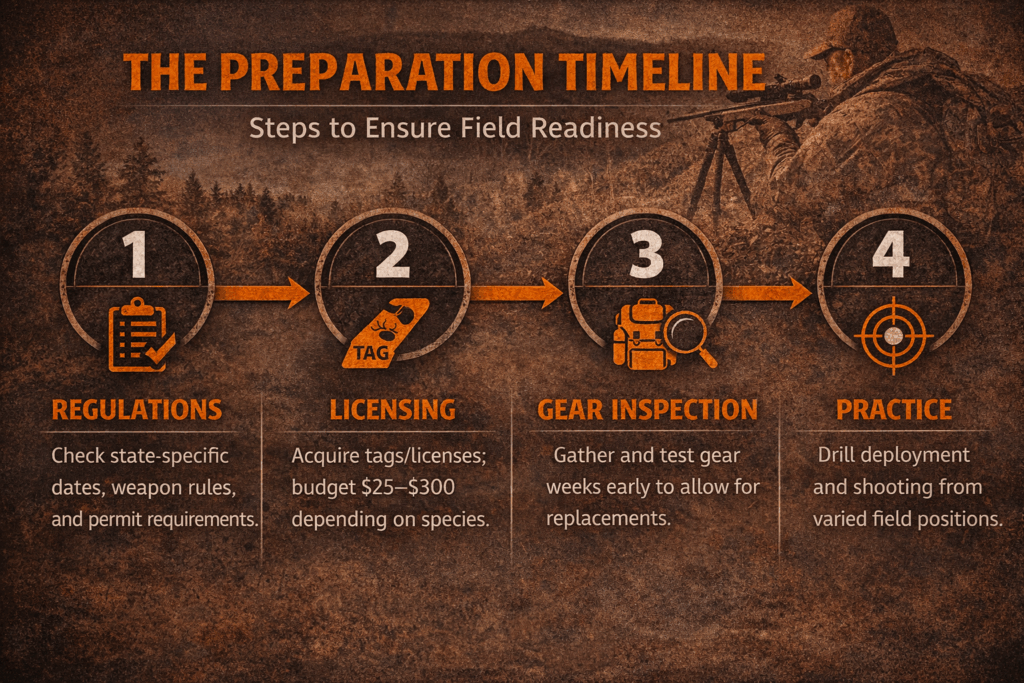
Regulations Check
Research proves that “hunting regulations vary significantly by state, including season dates, bag limits, and weapon restrictions” and “hunting regulations vary even among neighboring states.” This complexity means you can’t skip the homework.
Check state and local hunting regs well ahead of time, focusing on:
- Season dates and bag limits for your target species
- Weapon restrictions and ammo requirements
- Special permits or stamps needed for the area
- Hunter education reciprocity rules
Don’t assume your home state rules apply elsewhere. One hunter learned this the hard way when his “home state’s hunter safety course was not accepted in Kansas, requiring him to spend the first three days of his six-day hunt testing and getting certified to buy a license legally.”
License and Tag Acquisition
Getting proper licenses and tags isn’t optional. Hunting prep experts warn that “application deadlines vary by state and species, and hunters should never miss a deadline for a state or species they’re interested in.”
Budget $25–$300 for licenses and tags depending on species and state. Make a calendar with application deadlines for your target areas and submit everything as early as possible.
Scouting & Habitat: Reading the Land
Understanding your hunting area before you arrive saves valuable hunting time and boosts your success rate. Look for the universal signs: fresh tracks, rubs, scat, feeding areas, and natural travel routes between bedding and feeding spots.
Weather and terrain research matters more than you think. “If there are drastic elevation changes, weather and temperature can be tremendously different between where you are staying and where you’ll be hunting.”
Pro tip: GPS and mapping apps for pre-scouting help out-of-state hunters identify promising areas and access points before they arrive, making the most of limited hunting days.
Physical & Gear Readiness
Your physical prep should match what the hunt demands—elevation changes, hiking distances, terrain difficulty. Experienced hunters recommend that you “start gathering gear items weeks before their hunt and inspect their condition to ensure everything is in good shape and have time to replace anything that needs replacing.”
This timeline becomes even more important when you realize that reliable equipment often separates capitalizing on opportunities from watching them walk away.
The Gear Advantage: Why Shooting Supports Matter
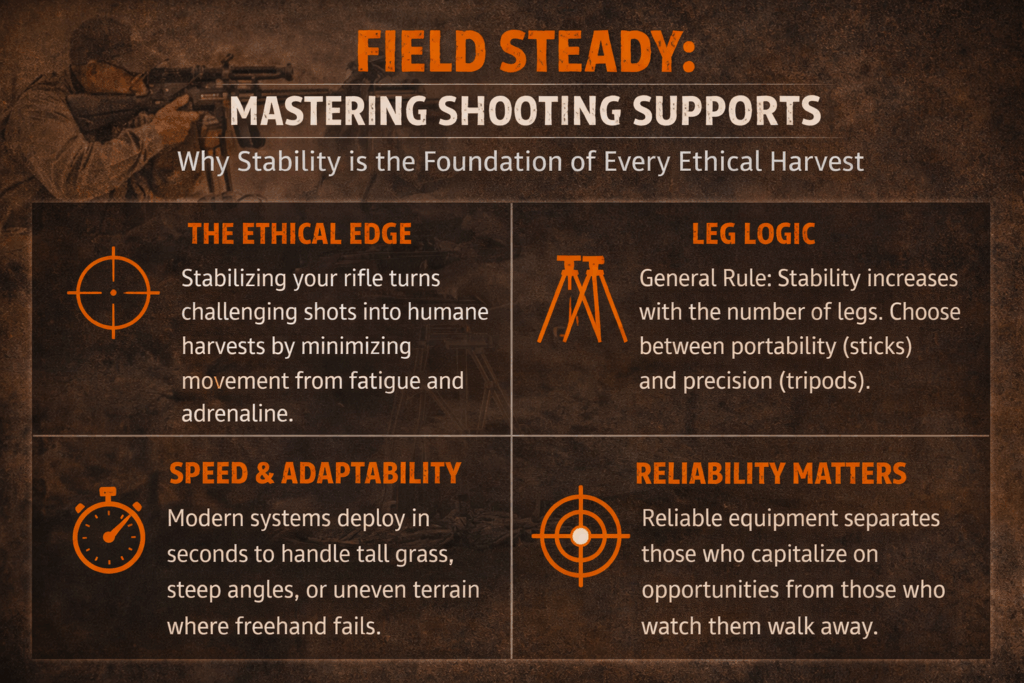
The Boone and Crockett Club nails a fundamental truth: “It’s incredibly important to stabilize your rifle if you hope to shoot with speed and accuracy.” This isn’t about convenience—it’s about ethical hunting and making the most of opportunities you’ve worked hard to create.
Hunting conditions work against freehand accuracy. Fatigue from hiking, adrenaline from spotting game, awkward shooting positions, time pressure—everything conspires to make your crosshairs dance when you need them rock steady. Even experienced shooters who nail tight groups from a bench struggle with field accuracy under hunting pressure.
The Boone and Crockett Club offers a key insight about shooting supports: “In general, stability does increase with the number of legs.” This simple concept explains why shooting supports have become must-have equipment for serious hunters—they give your rifle the stable platform it needs for consistent, ethical shot placement.
Modern shooting supports aren’t just about stability—they’re about speed and adaptability. The best systems deploy fast when opportunities show up and adapt to different shooting positions and terrain challenges. Whether you’re dealing with tall grass blocking prone positions or uneven ground making traditional rests useless, the right shooting support gives you options.
Ready to explore shooting support options? Check out our curated selection to find what fits your hunting style.
Core Gear Checklist: Our Top Recommendations
We’ve organized essential gear categories based on what experienced hunters and trusted sources recommend for successful hunts. This curated checklist goes beyond shooting supports to make sure you’re ready for everything.
Shooting Supports
Your shooting support choice should match your hunting style and typical scenarios. Browse our selection to find the stability solution that fits your approach.
Shooting Sticks: Portable Versatility
Shooting sticks are the most portable and versatile shooting supports out there. These lightweight systems shine in spot-and-stalk hunting where mobility beats maximum stability. Research backs this up: “shooting sticks or a bipod can be invested in for hunting in expansive open fields and grasslands areas.”
They come in monopod, bipod (stick-style), and tripod configurations, each offering different stability levels. Monopods give basic support with maximum portability, while tripod shooting sticks approach dedicated tripod stability while staying relatively portable.
Best for: Hunters who move frequently, spot-and-stalk scenarios, varied terrain, situations needing quick setup and breakdown.
Bipods: Rifle-Mounted Stability
Bipods attach directly to your rifle, creating an integrated stability system that’s always ready. Shooting experts note that “Bipods have become a staple in the arsenal of shooters, from casual enthusiasts to seasoned snipers.”
The key advantage? Immediate availability—no fumbling with separate equipment when game appears. They excel in prone and seated positions and work great from ground blinds or when hunting open country where you can use terrain to your advantage.
Best for: Ground blind hunters, those comfortable with prone positions, hunters preferring integrated solutions without carrying separate equipment.
Tripods: Maximum Stability
Tripods offer the highest stability level in portable shooting supports. Following that Boone and Crockett principle about stability increasing with legs, tripods provide the most solid platform for long-range precision and extended glassing sessions.
The trade-off? Weight and setup time. But for hunters pursuing long-range opportunities or spending significant time glassing before shooting, tripods deliver unmatched stability. Many modern hunting tripods pull double duty, supporting both rifles and optics.
Best for: Long-range hunters, Western open-country scenarios, hunters who glass extensively, situations where maximum accuracy trumps portability.
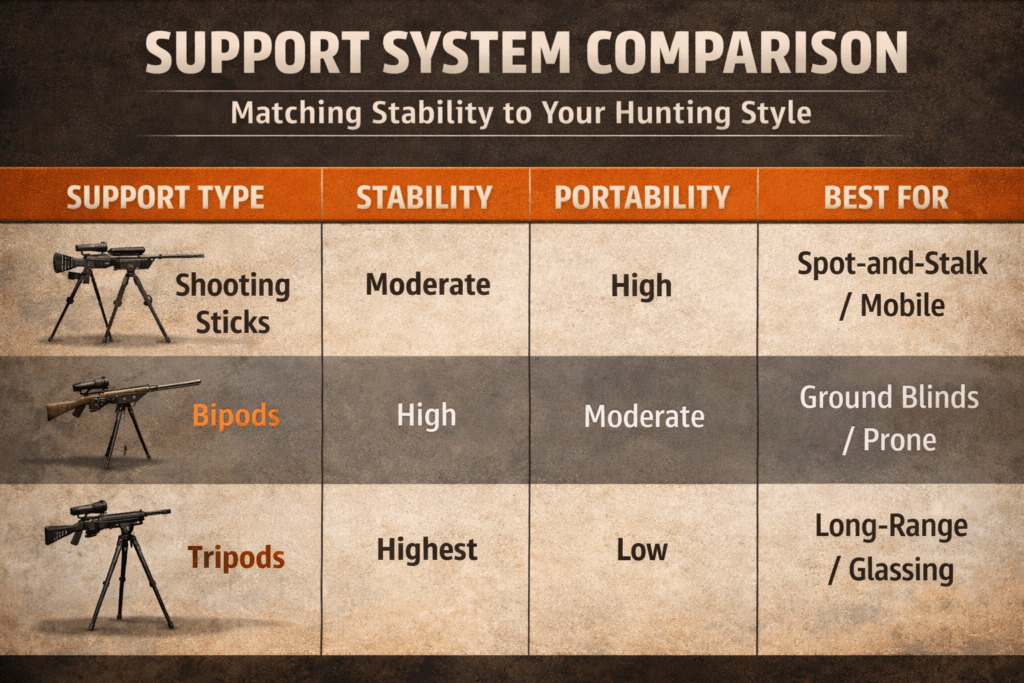
Comparison Table
| Support Type | Stability Level | Portability | Setup Speed | Best Hunting Scenarios |
|---|---|---|---|---|
| Shooting Sticks | Moderate | High | Fast | Spot-and-stalk, mobile hunting, varied terrain |
| Bipods | High | Moderate | Fast (rifle-mounted) | Ground blinds, prone positions, open fields |
| Tripods | Highest | Low | Slower | Long-range, glassing, stationary positions |
Clothing & Layering
Weather prep is critical. Experts recommend “preparing for the worst possible weather will save you in the long run, and hunters should pack extra clothes, boots, and sleeping bags/pads.”
Essential clothing checklist:
- Moisture-wicking base layers for temperature control
- Insulating mid-layers for warmth
- Weather-resistant outer layer for protection
- Quality hunting boots (insulated for cold weather)
- Gloves and head covering for your conditions
Pick camo patterns that match your hunting environment and season. Layering systems let you adapt to changing conditions throughout the day.
Weaponry & Ammunition
Equipment experts stress that “assembling the set of gear that works best for you can take time and plenty of testing.” This especially applies to your primary hunting weapon and ammo selection.
Essential weapon checklist:
- Rifle or bow appropriate for your target species
- Enough ammunition or arrows for practice and hunting
- Backup sights or optics for equipment failures
- Cleaning supplies for maintenance
Practice extensively with your chosen setup before season. Your shooting support system should work seamlessly with your weapon and optics setup.
Navigation & Safety Essentials
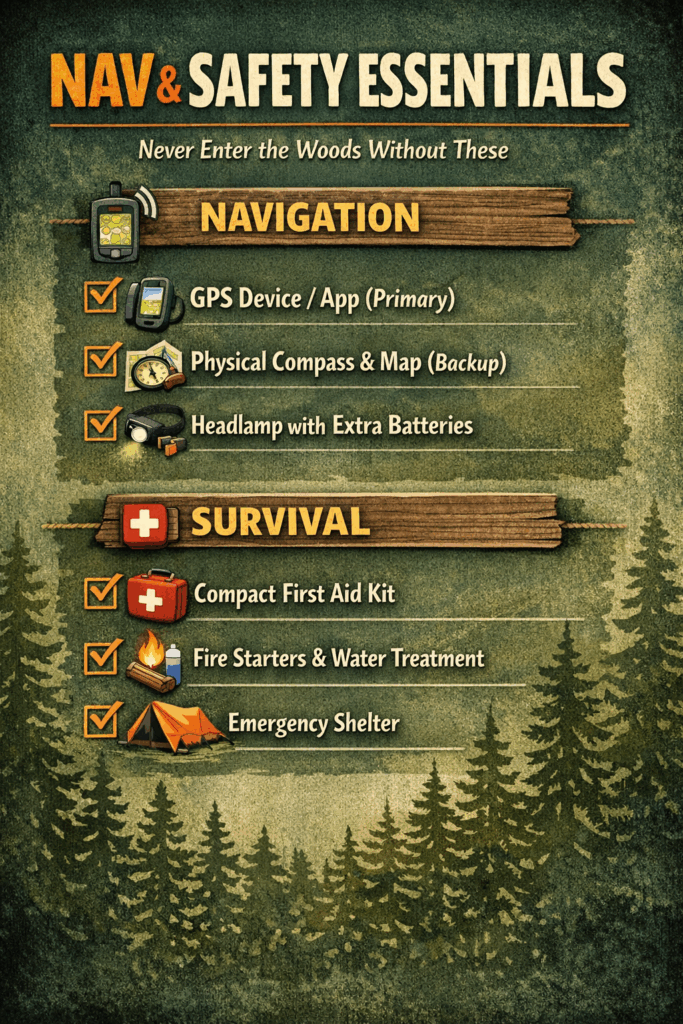
Research identifies essential items including “navigation tools (onX Hunt or offline map + compass)” and “a compact emergency kit with water treatment, food, shelter, first aid, and fire starters.”
Essential navigation and safety checklist:
- GPS device or hunting app for primary navigation
- Physical compass and map as backup
- First aid kit for emergencies
- Emergency shelter and fire starting supplies
- Headlamp or flashlight with extra batteries
Never rely only on electronic devices for navigation. Always carry backup systems and know how to use them.
Field Processing Gear
Being ready for a successful harvest is part of ethical hunting. Having proper tools ready before you take the shot shows respect for the animal and ensures meat quality.
Essential processing checklist:
- Quality hunting knife (fixed blade recommended)
- Game processing tools for field dressing
- Game bags for meat protection
- Latex gloves for sanitary processing
Don’t wait until after a successful shot to think about processing equipment. Having the right tools ready shows preparation and respect for your harvest.
Tactics & Strategy: Putting It All Together
The best shooting support equipment only works when integrated into solid hunting tactics. Understanding how stability systems fit different hunting approaches helps you make better gear decisions and field deployment choices.
Peak Activity Times
Most game species show increased activity during early morning and late evening, creating prime hunting opportunities during low-light conditions. These periods often provide the best encounter chances, but they also challenge shooting accuracy.
Low-light conditions make stability even more critical—shaky shots are harder to recover when you have limited shooting windows and reduced visibility. Your shooting support system becomes especially valuable during these peak activity periods when opportunities may be brief and lighting challenging.
Wind & Scent Control
Wind direction plays a huge role in approach planning and shot execution. Understanding prevailing wind patterns helps you position for both scent control and shooting stability. Strong winds can affect both your scent dispersal and shooting accuracy, making wind awareness essential.
Proper scent management involves both elimination and masking strategies. Wind direction influences your approach route, stand placement, and shooting position selection.
The Approach & Shot Placement
Different hunting methods need different shooting support strategies:
Stand hunting: Shooting rails or bipods work well from elevated positions, providing stability while handling the downward shooting angles common from tree stands.
Spot-and-stalk: Portable shooting sticks excel in mobile hunting where you need to adapt quickly to terrain and shooting opportunities.
Ground blinds: Bipods or tripods provide excellent stability in blind situations where you have time to set up properly and shooting positions are more predictable.
Ethical shot placement remains the ultimate goal regardless of your shooting support choice. Quality shooting supports help ensure clean, ethical shots by providing the stability needed for precise bullet or arrow placement in vital zones.
Post-Harvest Care: The Work After the Shot
A successful shot starts important post-harvest responsibilities. Proper care ensures quality meat and shows respect for the animal you’ve harvested.
Tracking & Recovery
Follow these steps for successful recovery:
- Mark your position – Note exactly where you were when you took the shot
- Wait appropriately – Allow adequate time before tracking (30 minutes for good shots, longer for questionable hits)
- Follow the blood trail – Look for blood, hair, and other sign showing the animal’s path
- Grid search if needed – If the blood trail disappears, search in expanding circles from the last sign
Field Dressing
Key steps for proper field care:
- Cool the carcass quickly – Start field dressing as soon as possible after recovery
- Work cleanly – Use sharp knives and clean techniques to prevent contamination
- Remove internal organs – Complete field dressing to allow proper cooling
- Protect the meat – Use game bags to protect from insects and debris
Transport & Processing
Plan your transport method before the hunt. Know local regulations about transporting harvested game, and have proper tags and documentation ready. Get your harvest to proper storage or processing facilities as quickly as possible to ensure meat quality.
More Resources from Hunting Locator
Expand your hunting preparation with these additional resources from our comprehensive hunting platform:
- Hunting Accessories – Complete hunting gear selection from shooting supports to field processing equipment
- Backpacks and Waist Packs – Carry systems designed for hunting applications and gear organization
- Scents and Lures – Attractant products to enhance your hunting strategy
- Face Paint – Concealment products for close-range hunting situations
- Hearing Protection – Protect your hearing while maintaining situational awareness
- Hand Warmers – Stay comfortable and maintain dexterity in cold conditions
FAQ
What’s the difference between shooting sticks and bipods for hunting?
Shooting sticks are portable, standalone supports that work with any rifle and deploy quickly for mobile hunting scenarios. Bipods attach directly to your rifle, providing integrated stability that’s always ready but adding weight to your weapon. Shooting sticks offer more versatility for different rifles and hunting situations, while bipods provide more consistent positioning since they’re rifle-mounted.
How much do shooting supports actually improve accuracy?
The Boone and Crockett Club states that “stability does increase with the number of legs,” and proper shooting supports can dramatically reduce group sizes compared to freehand shooting. The improvement varies by individual, but most hunters see significant accuracy gains, especially at longer ranges or when shooting from awkward positions common in hunting situations.
Which shooting support is best for beginners?
For hunters in “expansive open fields and grasslands areas,” both shooting sticks and bipods can be valuable investments. Beginners often benefit from shooting sticks because they’re versatile, work with any rifle, and help develop proper shooting form without the added complexity of rifle-mounted systems.
Can I use shooting supports from tree stands?
Yes, but technique matters. Shooting sticks can work from tree stands but require practice to deploy effectively in confined spaces. Some hunters prefer shooting rails designed specifically for tree stand use. The downward shooting angles from elevated positions require different support positioning than ground-level shots.
Do I need different shooting supports for different types of hunting?
Many experienced hunters carry multiple support options. Spot-and-stalk hunting favors lightweight shooting sticks, while ground blind hunting works well with bipods or tripods. Long-range hunting typically benefits from tripods, while mobile hunting scenarios call for quick-deploy shooting sticks. Consider your primary hunting style when making your first purchase, then add other options as your hunting expands.
How do I practice with shooting supports before hunting season?
Practice deploying your shooting support quickly from different positions—standing, kneeling, and prone. Practice on uneven ground and in different lighting conditions. Most importantly, practice the complete sequence: spotting a target, deploying your support, acquiring the target, and taking the shot. This builds the muscle memory you’ll need when opportunities arise in the field.
The Final Shot
Shooting accuracy in hunting situations comes down to preparation, practice, and having the right equipment when opportunities arise. Whether you choose shooting sticks for their versatility, bipods for their integration, or tripods for maximum stability, the key is matching your support system to your hunting style and practicing until deployment becomes second nature.
The investment in quality shooting supports pays off in increased confidence, improved accuracy, and more ethical shots. When combined with thorough preparation, proper gear selection, and sound hunting tactics, shooting supports become an essential part of hunting success.
Ready to gear up for your most accurate hunting season yet? Visit our store today! We stock the best shooting sticks, bipods, tripods, and complete hunting gear selection to ensure your success in the field.


