This guide breaks down everything you need to know for South Carolina feral hog hunting during 2026. We’ve pulled together the official SCDNR regulations and real-world hunting intel to give you a complete picture.
Here’s what we’ll cover:
- Licensing requirements and regulations for residents and non-residents
- Where to hunt: public lands, guided operations, and private land opportunities
- Field-tested tactics that actually work for putting hogs down
Let’s dive into the nuts and bolts every SC hog hunter should know.
Quick Overview of SC Feral Hog Hunting
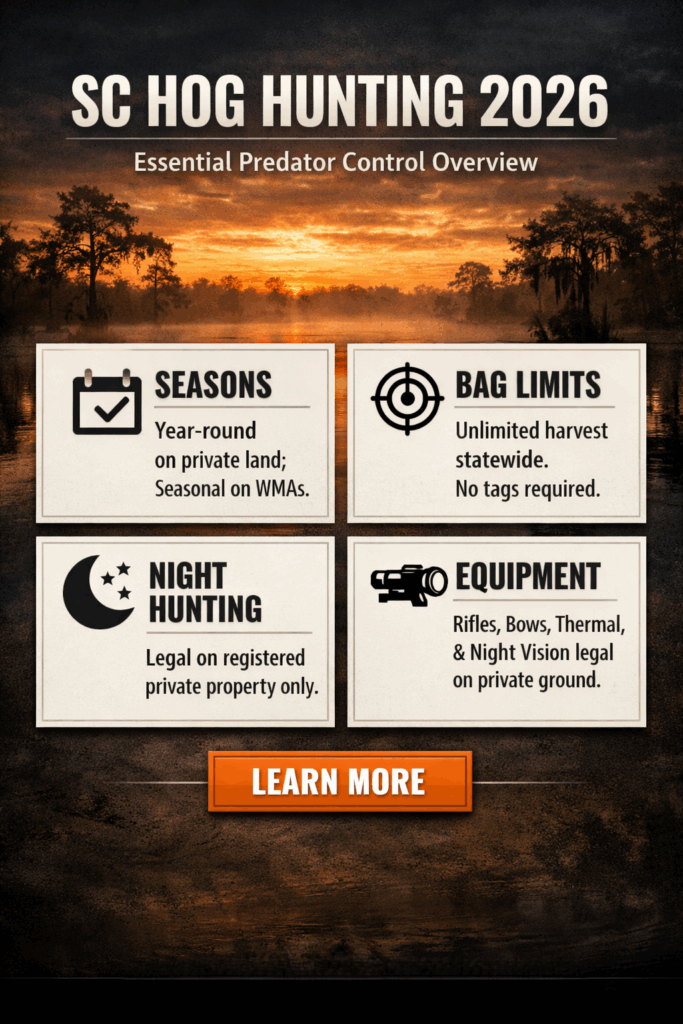
South Carolina keeps hog hunting regulations pretty simple, but private land and Wildlife Management Areas operate under totally different rules.
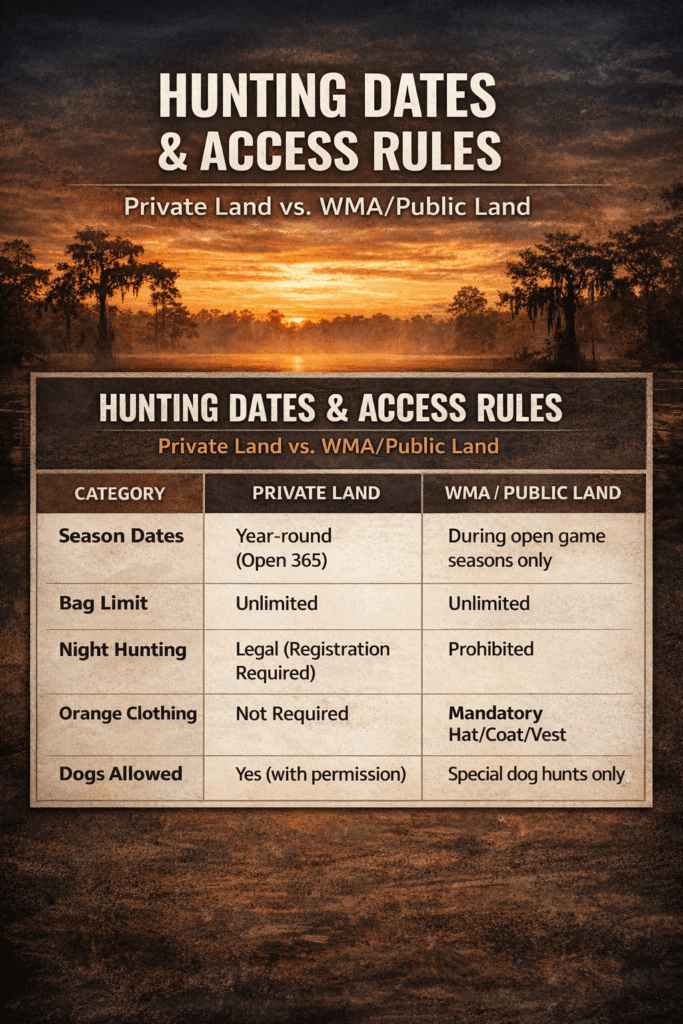
| Element | Private Land | WMAs/Public Land |
|---|---|---|
| Season Dates | Year-round (no closed season) | During open seasons for other game only |
| Bag Limit | No limit | No limit |
| Night Hunting | Legal with property registration | Not permitted |
| Weapons | Any legal firearm, bow, crossbow | Limited to weapons allowed for current open season |
| Dogs Allowed | Yes (with landowner permission) | Only during special hunts with dogs |
| License Required | Yes—valid SC hunting license | Yes—hunting license + WMA permit |
| Orange Required | No | Yes—solid international orange hat, coat, or vest |
Must-have requirements for all hog hunting in South Carolina:
- Valid SC hunting license for all hog hunting
- WMA permit for hunting on Wildlife Management Areas
- Hunter education certification if you were born after June 30, 1979
- Night hunting registration for hunting hogs after dark on private land (register annually at dnr.sc.gov/nighthunt)
- Live transport permit if you’re trapping and moving live feral hogs
Feral Hog Hunting Seasons in South Carolina
Where you hunt makes all the difference. Private land and public land might as well be different planets when it comes to regulations.
Private Land: Hunt Whenever You Want
Private land means open season all year long. No exceptions. According to SC eRegulations, “A hunting license is required, however there is no closed season on hunting feral hogs, coyotes, and armadillos on private land statewide during daylight hours.”
Night Hunting is Legal: South Carolina gets serious about hog control, which is why they allow night hunting on registered private property. The regulations state: “Feral hogs, coyotes and armadillos may be hunted at night on a registered property on which a person has a lawful right to hunt, using any legal firearm, bow and arrow, or crossbow.”
Night hunting requirements:
- Property must be registered annually at dnr.sc.gov/nighthunt
- You can use artificial lights, night vision, thermal scopes, bait, and electronic calls
- Stay 300 yards away from houses unless you have permission (or you own the place)
- Submit an annual harvest report to keep your registration active
WMAs and Public Land: Follow Other Game Seasons
Wildlife Management Areas work differently. Hog hunting is only permitted during open seasons for other game animals, as stated in the regulations: “Feral hog hunting on WMAs is permitted during any open season for game unless otherwise restricted.”
WMA restrictions you need to know:
- Weapon restrictions based on current open season (archery gear only during bow season, etc.)
- No night hunting on WMAs, period
- Orange clothing required: solid international orange hat, coat, or vest while hunting
- WMA permit required on top of your hunting license
Dog Hunts on WMAs: Dogs can be used on WMA lands to hunt feral hogs only during special hunts with dogs. During these special hunts, weapons may include archery, crossbows, centerfire rifles, muzzleloading rifles, centerfire handguns and shotguns with slugs only.
South Carolina Hog Hunting Licenses and Permits
Getting legal to hunt hogs in South Carolina is straightforward. Here’s exactly what residents and non-residents need to buy.
South Carolina Hunting Licenses
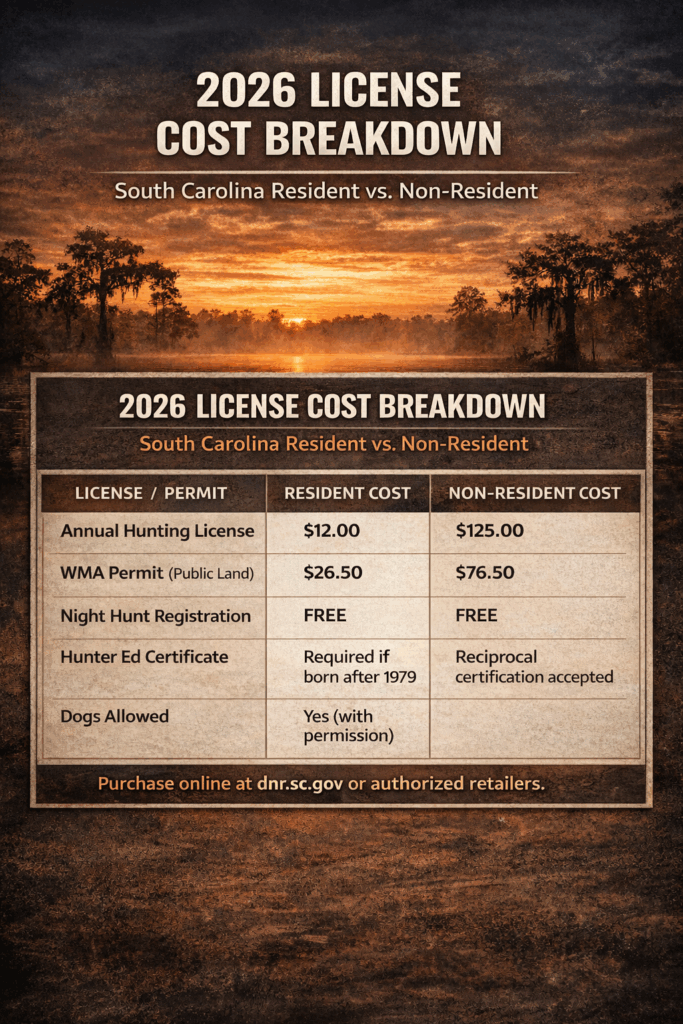
| License Type | Resident Cost | Non-Resident Cost | Notes |
|---|---|---|---|
| Annual Hunting License | $12.00 | $125.00 | Required for all hog hunting |
| WMA Permit | $26.50 | $76.50 | Required for WMA/public land hunting |
| Combination License | Varies | Varies | Check SCDNR for current packages |
Hunter Education: All hunters born after June 30, 1979 must show proof of completing a hunter education course before purchasing a South Carolina hunting license. Non-residents can use their home state certification.
Buy licenses online through SCDNR’s website, at sporting goods stores, or by phone.
Special Permits for Hog Hunting
Night Hunting Registration: Want to hunt hogs after dark on private land? You need to register the property annually through SCDNR’s online system. As noted in the regulations, “A property may be registered online on the SCDNR website (www.dnr.sc.gov/nighthunt), and must be registered annually.” It’s free but mandatory, and you have to file a harvest report each year.
Live Transport Permit: If you plan to trap and transport live feral hogs, a specific permit from SCDNR is required. This costs money and comes with strict rules about tagging and transport. Generally, you can only move hogs to permitted facilities in the same county where you caught them.
Where to Hunt Feral Hogs in South Carolina
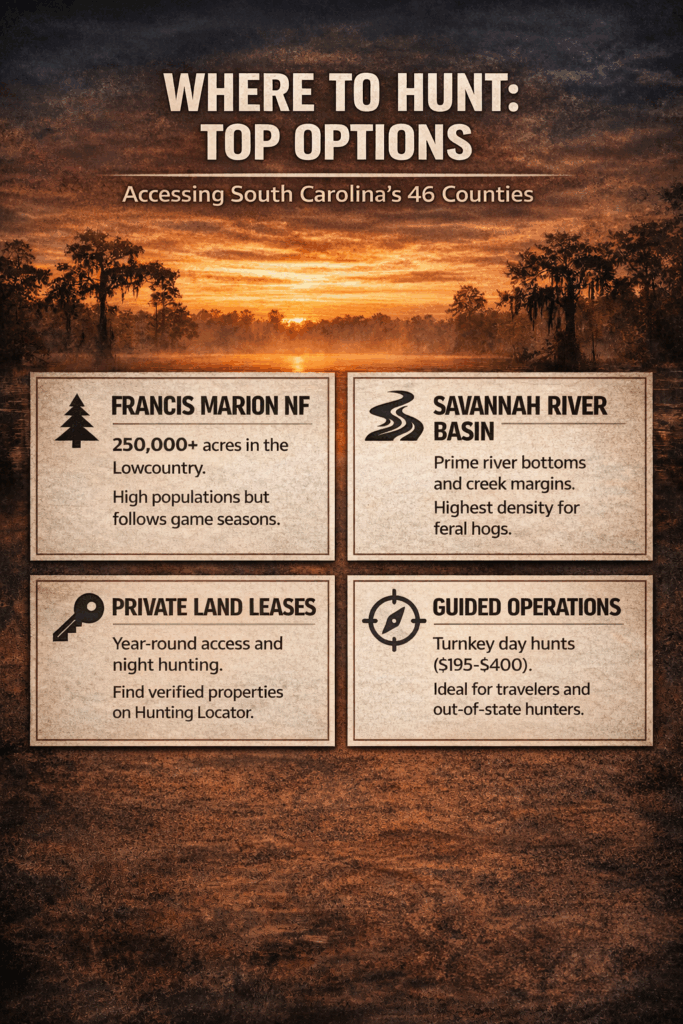
Hogs are found in all 46 of South Carolina’s counties, but counties in the Coastal Plain and Low Country generally offer the best opportunity, especially along the Savannah River drainage. Knowing your options helps you pick the right approach for your situation and budget.
For the complete picture of how hog hunting fits with other seasons, check out our South Carolina hunting season overview.
Best Public Lands for Hog Hunting
South Carolina’s Wildlife Management Areas give you free access if you’ve got the right licenses. Just don’t expect easy hunting—these places get pressure, and the seasonal restrictions make timing tricky.
- Francis Marion National Forest: Over 250,000 acres in the Lowcountry with solid hog populations. Some areas have special restrictions, so check current regs.
- Santee Coastal Reserve WMA: Coastal habitat with decent hog numbers. Need that WMA permit.
- Donnelley WMA: ACE Basin property known for wildlife diversity including feral hogs.
- Bear Island WMA: Lowcountry hunting with hog opportunities during appropriate seasons.
- Webb Wildlife Center: Multiple hunting opportunities including hogs when seasons allow.
Here’s the reality check: The odds of scoring on a DIY public pig hunt are pretty slim, as most WMAs restrict pig hunting to open hunting seasons for other game only, when the woods will be crowded with other hunters.
Guided Hog Hunts in South Carolina
Guided hunts make sense for out-of-state hunters or anyone who wants local knowledge and access to productive private ground without the hassle of finding it themselves.
What you’ll typically find:
- Day hunts run $195-$400 depending on what’s included and whether they guarantee shots
- Multi-day packages often bundle lodging, meals, and guide services
- Hunting methods vary wildly: some use feeders and blinds, others do spot-and-stalk, some run dogs
Questions worth asking outfitters:
- High-fenced or free-range property?
- What’s your actual success rate?
- What hunting methods do you use?
- What exactly is included in the price?
- Can you give me contact info for recent clients?
Private Land Hunting
Private land is where the real action happens. Year-round seasons, no limits, night hunting allowed, and way less hunting pressure than public ground.
According to hunting industry sources, “There are plenty of private-land outfitters and clubs in South Carolina where you can find a pig hunt for little pay.”
Getting Access: Lease arrangements give you consistent access throughout the year. Some outfitters have day rates where you can watch a feeder and shoot a pig or two, or hunt them via spot and stalk for a few hundred bucks. Wherever there is a wildlife management area or national wildlife refuge with hogs running wild, there are private lands surrounding them whose owners likely will welcome respectful hunters.
For more details, see our comprehensive guide to SC hog hunting.
Finding good private land access shouldn’t be a full-time job. That’s exactly why we built Hunting Locator—it connects hunters directly with landowners who have hunting properties available. Instead of endless searching, you can browse verified properties, filter for specific features like hog hunting, and connect with landowners who actually want to work with hunters. Browse South Carolina hunting properties on Hunting Locator.
Feral Hog Hunting Tips
Got your license and found a place to hunt? These tactics will help you actually connect with hogs instead of just wandering around hoping for the best.
- Hunt Near Water: Areas with dense vegetation and a nearby water source seem to have the highest hog population densities. Creek bottoms, pond edges, and swamp margins are prime real estate.
- Set Up Feeders Smart: On private land where it’s legal, put feeding stations 100-200 yards from your blind. Corn works, but sweet feed and protein pellets can be even better.
- Read the Sign: Look for wallows, tree rubs, rooted-up ground, and tracks in mud. When hogs are using an area regularly, they leave obvious calling cards.
- Hunt the Wind: Hogs have incredible noses. Always position yourself so the wind carries your scent away from where you expect hogs to appear.
- Try Night Hunting: On registered private property, thermal scopes and night vision open up prime hunting hours when hogs are most active.
- Focus on Edge Habitat: Hogs love transition zones between thick cover and open feeding areas. Set up where timber meets fields or swamps meet pastures.
- Stay Ready: Hogs can vanish into thick cover in seconds. Know your shooting lanes and keep your rifle ready before they show up.
For gear that actually works for hog hunting, check out the Hunting Locator store where we’ve selected equipment specifically for hog hunting success.
More Resources from Hunting Locator
Get the complete picture of South Carolina hunting with these detailed guides:
- South Carolina Deer Hunting — Complete whitetail seasons and regulations
- South Carolina Turkey Season — Spring and fall turkey opportunities
- South Carolina Waterfowl Hunting Season — Duck and goose regulations
- South Carolina Coyote Hunting Season — Year-round predator hunting like hogs
- South Carolina Small Game Hunting Season — Rabbit, squirrel, and upland birds
- South Carolina Bear Hunting Season — Limited bear opportunities
- South Carolina Alligator Hunting Season — Unique Lowcountry hunting
- South Carolina Migratory Bird Hunting Season — Dove, woodcock, and other migrants
FAQ
Can I hunt hogs year-round in South Carolina?
Yes, on private land there’s no closed season for feral hogs. Hunt them 365 days a year with a valid hunting license. On Wildlife Management Areas, you can only hunt hogs during open seasons for other game.
Do I need a special permit to hunt hogs at night in South Carolina?
Night hunting is legal on private land, but you must register the property annually with SCDNR at dnr.sc.gov/nighthunt. Registration is free, but you have to submit an annual harvest report to keep it active.
What’s the bag limit for feral hogs in South Carolina?
No bag limit for feral hogs anywhere in South Carolina. Some private outfitters might set their own limits, but the state doesn’t restrict you.
Can I use dogs to hunt hogs in South Carolina?
Yes, you can use dogs on private land with landowner permission. On WMAs, dogs are only allowed during special dog hunts.
Do non-residents need different licenses than residents?
Non-residents need the same license types (hunting license and WMA permit for public land), but pay more. Non-resident hunting license costs $125 vs. $12 for residents.
Can I use thermal scopes and night vision for hog hunting?
Yes, on registered private property you can use artificial lights, night vision, thermal scopes, bait, and electronic calls for night hunting.
The Final Shot
South Carolina’s hog hunting regulations are about as hunter-friendly as they get. Year-round seasons, no bag limits on private land, and legal night hunting make the Palmetto State a top destination for serious hog hunters.
Whether this is your first hog hunt or you’re tired of fighting crowds on public land, success comes down to understanding the rules and finding quality places to hunt. Get the right licenses, pick your spots strategically, and use proven tactics—that’s how you fill the freezer with wild pork.
Ready to find your South Carolina hunting property? Start browsing verified hunting leases and land for sale on Hunting Locator and connect directly with landowners who want to work with hunters. Your next hog hunting adventure is waiting.


