This article shows you why consistent target practice transforms hunting success and why every serious hunter needs accessible training right at home.
Whether you’re building foundational skills or prepping for that out-of-state adventure, here’s what you’ll learn:
- Setting up effective backyard practice (with special focus on archery accessibility)
- Essential gear that actually bridges practice to field success
- Complete trip preparation from regulations to post-harvest care
But before you start slinging arrows or squeezing triggers, let’s cover the essentials that keep your hunting legal and your conscience clear.
Know Before You Go: Essential Prep
Smart hunters know preparation starts way before that first practice shot. The foundation of any successful hunt? Understanding and following the law.
With the January 2025 signing of the EXPLORE Act (Public Law No. 118-234), federal lands are getting new assessments for shooting range locations. It’s a good reminder that regulations change, and staying current matters big time. This hits especially hard for traveling hunters, where what’s perfectly legal in your home state might require different permits in your destination state. Or be flat-out prohibited.
Regulations Check
Before you set up that first target or buy your first tag, you need to understand the legal landscape. State and local hunting regulations vary like crazy, and “I didn’t know” won’t fly when the game warden shows up.
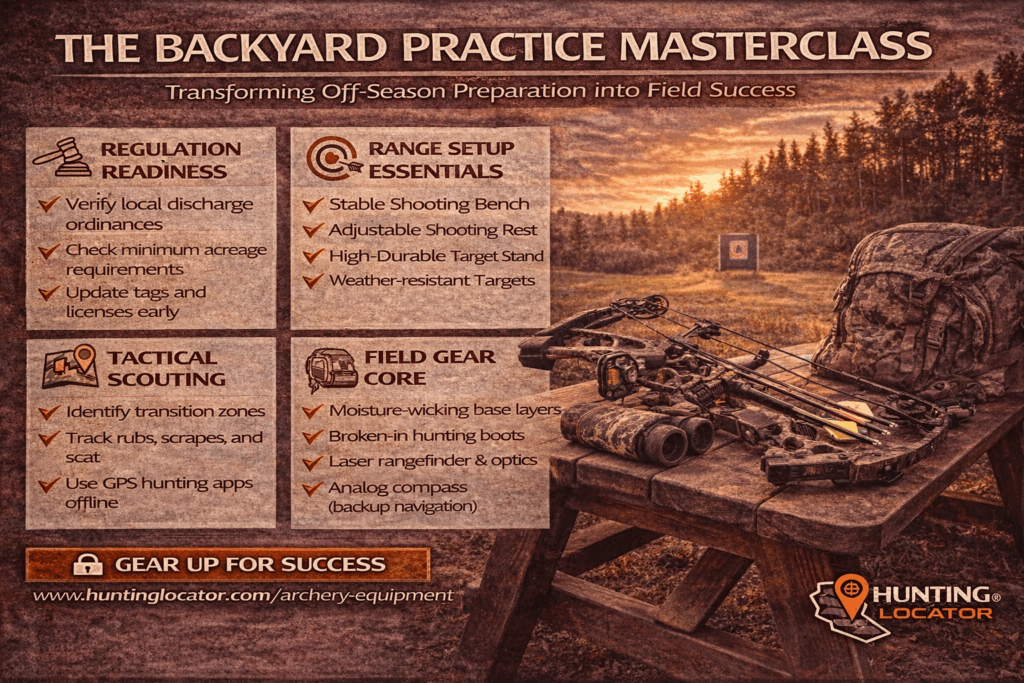
Key regulation categories you absolutely must verify:
- Season dates and bag limits for your target species
- Weapon restrictions by hunting zone (some areas ban rifles, others require specific calibers)
- Property requirements for backyard practice—noise ordinances, discharge laws, minimum acreage requirements
- Hunter orange requirements and other safety regulations
Non-resident hunters? You’re dealing with extra complexity. Regulations vary dramatically between states, and missing application deadlines means waiting another full year for limited-draw tags.
Action: License and Tag Acquisition
Hunters must always carry their ID and hunting license when out in the field, and some local or state regulations may require tagging a big game carcass or additional permits.
Essential action items:
- Research application deadlines early—especially for limited-draw tags where timing is absolutely everything
- Complete hunter safety certification if required, and verify reciprocity for out-of-state hunts
- Purchase licenses and tags early to avoid sold-out situations
- Understand tagging requirements and transport regulations for your harvest
For those coveted out-of-state tags, application deadlines vary by state and species. Miss them? You’re waiting another year.
Scouting & Habitat: Know Your Quarry
All the backyard target practice in the world won’t help if you’re set up in the wrong spot. Understanding your quarry’s habitat preferences, movement patterns, and behavior gives your practice sessions real-world context.
Successful hunters focus on transition zones where animals move between bedding and feeding areas. Look for these key signs:
- Tracks and trails showing regular use patterns
- Rubs and scrapes indicating territorial marking (deer and elk)
- Scat concentrations revealing feeding areas and travel routes
- Feeding sign like browse lines, acorn caches, or crop damage
Utilize online maps, satellite imagery, hunting forums, and hunting apps to research potential hunting areas and identify public lands, hunting units, and topography. Digital scouting tools like GPS hunting apps let you mark waypoints, study terrain features, and share intel with hunting partners before you ever set foot in the field.
For traveling hunters, remote scouting becomes absolutely critical. You’re investing serious time and money in an unfamiliar area—every advantage matters.
Physical & Gear Readiness
Hunting demands way more than just shooting skills. The physical and mental preparation you put in during the off-season directly impacts your performance when it matters most.
Physical preparation varies by hunt type, but basics include:
- Cardiovascular conditioning for mountain hunts or long tracking sessions
- Breaking in boots before the hunt—breaking in boots before the first hunt can save hunters from painful blisters
- Altitude preparation for western hunts where elevation changes affect performance
The Backyard Range Advantage
Just about anyone with a quarter-acre in a tight subdivision can set up an archery target behind their house, pace off 20 yards and fling arrows. At Hunting Locator, we’ve watched rising range costs and limited access leave hunters seriously underprepared. A backyard setup solves that problem—putting practice minutes from your back door.
The beauty of home practice? Accessibility and consistency. You really only need four things: a shooting bench, a shooting rest, a target stand, and targets, all of which could be homemade or purchased from a sporting goods retailer.
Archery offers particular advantages for backyard practice:
- Lower noise concerns than firearms, making it neighborhood-friendly
- Smaller space requirements—20-30 yards provides excellent practice
- Year-round practice potential regardless of weather
- Direct translation to hunting scenarios with identical equipment
Safety remains absolutely paramount in any backyard setup:
- Check local discharge ordinances before setting up any range
- Ensure proper backstop requirements for your projectile type
- Maintain safe shooting lanes with clear sight lines
- Consider neighbor proximity and property boundaries
Quality archery targets designed for broadhead practice help you simulate real hunting conditions, and they’ll last season after season.
Core Gear Checklist: Our Top Recommendations
The right equipment doesn’t guarantee a harvest, but the wrong gear can absolutely guarantee failure. At Hunting Locator, we focus on gear that actually matters in the field, not the latest gadgets that collect dust in your garage.
Clothing & Layering
Layering should start with moisture-wicking base layers, add insulating mid-layers, and finish with a waterproof, windproof outer layer. Temperature management can make or break a hunt, especially during early and late seasons when conditions vary dramatically.
Essential clothing considerations:
- Base layers that wick moisture away from skin
- Insulating layers appropriate for expected temperatures
- Outer shell that blocks wind and precipitation
- Camo patterns matched to your hunting terrain and season
Hunting boots can mean the difference between pressing on and calling it quits in the field; attention should be paid to fit, feel, durability, and the style of hunting and environment. Stiffer boots excel in steeper country, while lighter options work well for flat terrain and long walks.
Weaponry & Ammunition/Arrows
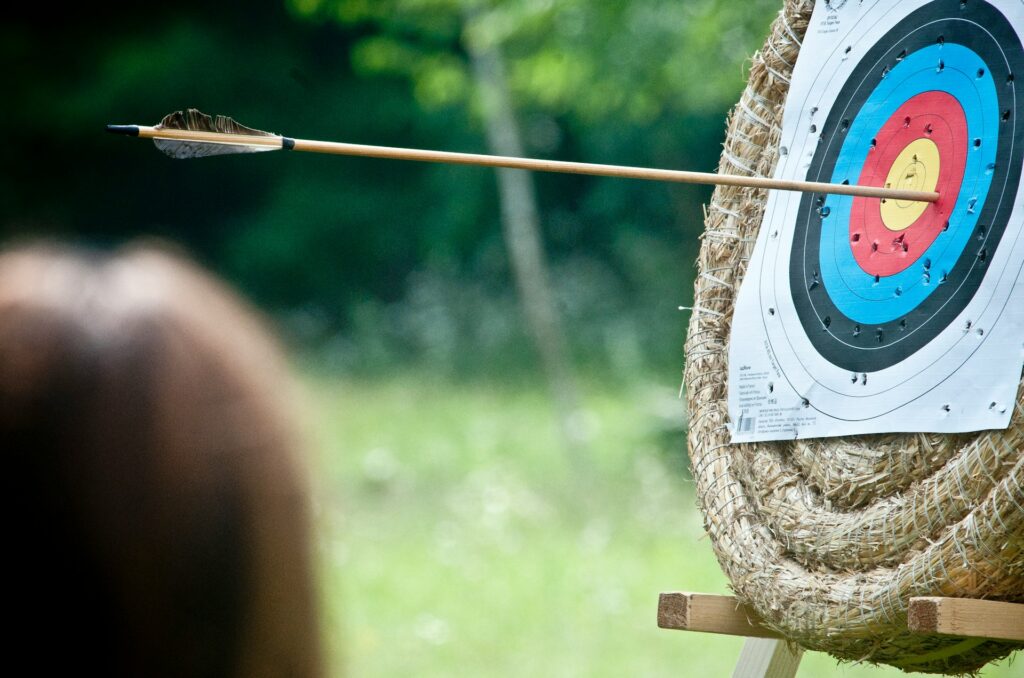
Beginners should look for a rifle that’s .270 or larger or a compound bow with draw weight within state guidelines. But caliber and draw weight are just starting points. The critical factor? Practicing with the SAME setup you’ll hunt with.
Key weapon considerations:
- Consistency is king—practice with your hunting arrows, not just field points
- Broadhead selection matters as much as arrow choice for penetration and accuracy
- Sight setup should be identical between practice and hunting configurations
- Draw weight should be manageable for multiple shots and different shooting positions
Your arrow and broadhead combination is where practice meets performance. Browse our selection of arrows, points, and broadheads to find the right match for your setup and target species.
The Essentials: Navigation & Safety
Knowing how to use both a GPS device and compass is essential for hunting in the backcountry. Technology fails, batteries die, and weather happens. Always carry analog backup navigation.
Safety and navigation essentials:
- First aid kit appropriate for your hunting environment
- Emergency communication device for remote areas
- Headlamp with extra batteries for early/late hunting and emergencies
- Fire-starting materials and emergency shelter
- Sharp knife and field dressing gloves for harvest processing
From release aids to bow-mounted accessories, the right archery accessories can make the difference between a clean release and a pulled shot.
Precision matters, especially at the moment of truth. Quality archery sights help you put your pin exactly where it needs to be.
Tactics & Strategy: From Practice to Performance
All those backyard arrows add up to one thing: confidence when the moment arrives. Here’s how to make that moment happen more often.
Peak Activity Times
Most game species follow predictable activity patterns, with peak movement during early morning and late evening hours. These transition periods—when animals move between bedding and feeding areas—offer your best shot opportunities.
Activity pattern considerations:
- Dawn and dusk remain prime time for most species
- Weather fronts can trigger midday movement
- Season timing affects activity patterns (rutting behavior vs. feeding focus)
- Hunting pressure pushes animals toward nocturnal behavior
Wind & Scent Control
Wind direction often matters more than any other single factor in hunting success. Scent control challenges happen every single hunt.
Wind and scent strategies:
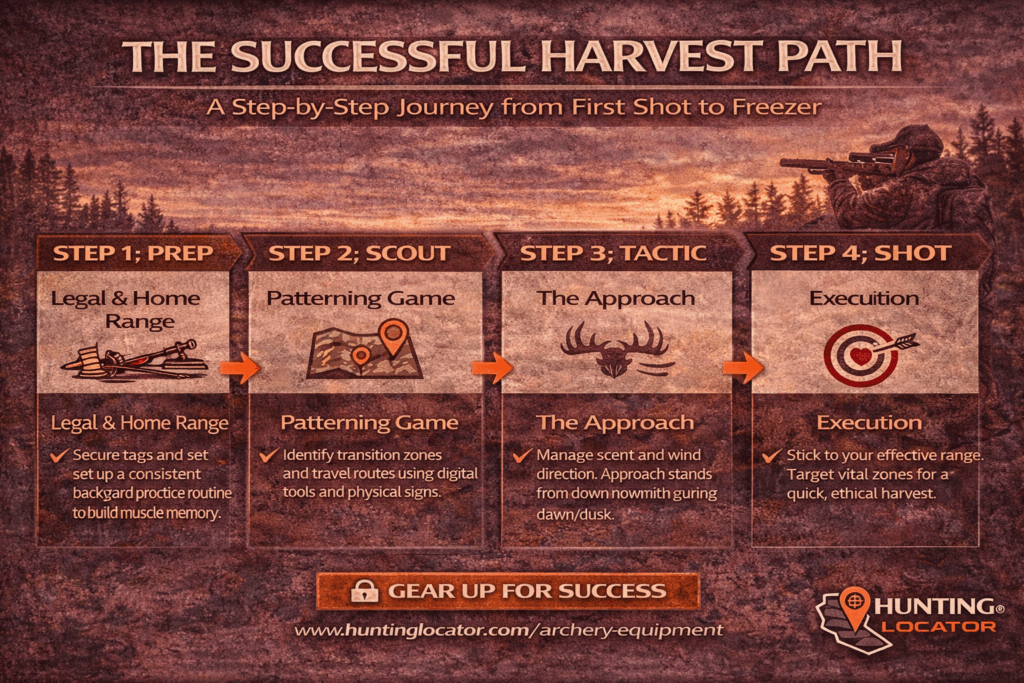
- Always approach from downwind when possible
- Check wind direction frequently using milkweed, powder, or wind indicators
- Have multiple stand/blind options based on wind direction
- Use scent-eliminating products and scent-conscious clothing storage
The Approach: Getting Close
This is where backyard practice pays off. When you’ve put in hundreds of repetitions, you can focus on the approach instead of worrying about your form.
Approach methods include:
- Stand placement using tree stands or elevated blinds
- Ground blind hunting for concealment and weather protection
- Still-hunting techniques for covering ground quietly
- Calling strategies adapted to your target species
Shot Placement
Know your effective range and stick to it. The shots you DON’T take matter as much as the ones you do. Consistent practice builds the confidence to wait for the right shot and the skill to execute it when the opportunity presents itself.
Ethical shot placement focuses on vital zones that ensure quick, clean harvests. Practice from different positions and distances, but always within your proven effective range.
Post-Harvest Care: The Work After the Shot
A successful hunt doesn’t end with the shot. It ends with quality meat in your freezer. Here’s how to get there responsibly and efficiently.
Tracking & Recovery
Even perfect shots require careful recovery. Blood trailing skills separate successful hunters from those who lose wounded animals.
Recovery essentials:
- Mark your shooting position before following blood sign
- Move slowly and methodically along the blood trail
- Grid search if blood sign disappears
- Be patient—wounded animals often bed down if not pushed
Field Dressing
Hunters need a sharp knife or a complete field dressing kit to process the game they kill. Quick cooling preserves meat quality and prevents spoilage.
Field dressing priorities:
- Cool the carcass quickly by removing internal organs
- Keep the meat clean during processing
- Protect from flies and contamination using game bags
- Maintain proper temperature throughout transport
Transport & Processing
For traveling hunters, logistics become more complex. Line up a taxidermist and/or a meat locker/butcher long before the hunt; shipping meat/a trophy home is easier than flying with all of it.
Transport considerations:
- Keep meat cold using ice or refrigeration
- Package properly for long-distance transport
- Understand regulations for crossing state lines with harvested game
- Plan processing logistics before you need them
More Resources from Hunting Locator
Your hunting success depends on more than just practice and preparation. It requires the right connections and ongoing support. Here are additional resources to enhance your hunting experience:
- Premium Hunting Maps: Access detailed property boundaries and topographic information for better scouting and hunt planning
- Lease Listings Database: Find quality hunting opportunities near you or in your destination state
- Outfitter Directory: Connect with reputable guides and outfitters for your next adventure
- Mobile App: Take your lease search and mapping tools on the go for real-time hunting decisions
FAQ
How much space do I need for a backyard archery range?
Just about anyone with a quarter-acre in a tight subdivision can set up an archery target behind their house, pace off 20 yards and fling arrows. For effective practice, 20-30 yards provides excellent training distance for most hunting scenarios.
What’s the minimum equipment needed for backyard target practice?
You really only need four things: a shooting bench, a shooting rest, a target stand, and targets, all of which could be homemade or purchased from a sporting goods retailer. Start simple and add equipment as your skills and needs develop.
How often should I practice before hunting season?
Consistency matters more than volume. He won’t hit the field without knowing for certain his muzzleloader is dead on. Therefore, he shoots — a lot. Aim for regular practice sessions rather than marathon shooting days.
Do I need special permits for backyard shooting practice?
Check local discharge ordinances before setting up any range. Archery practice typically has fewer restrictions than firearms, but noise ordinances and property boundaries still apply. Always verify local regulations first.
What’s the difference between field points and broadheads for practice?
Practice with both, but emphasize broadhead practice closer to hunting season. Broadheads fly differently than field points, and your sight settings may need adjustment. Quality broadhead-compatible targets help simulate real hunting conditions.
How do I know if my practice is translating to hunting success?
Track your shooting consistency at different distances and from different positions. If you can consistently hit a 4-inch circle at your maximum hunting range from multiple shooting positions, you’re building real hunting confidence.
The Final Shot
Target practice isn’t just about improving your shooting. It’s about building the confidence that transforms good hunters into great ones. Whether you’re setting up your first backyard range or fine-tuning your skills for that dream hunt, consistent practice creates the muscle memory and mental preparation that matter when it counts.
From understanding regulations to post-harvest care, successful hunting requires comprehensive preparation. But it all starts with that first arrow or bullet sent downrange in your own backyard, building the foundation for ethical, successful hunts.
Ready to gear up for your best hunting season yet? Visit our archery equipment section today! We stock the best targets, broadheads, and accessories to ensure your practice translates to field success.


