This Tennessee elk guide recaps the 2026 season and lays out what residents and non-residents need to prepare early. Hunting Locator organizes the rules and helps you line up land access while you wait on long draw odds.
Inside:
- 2026 and 2027 season dates, permit counts, and the Feb. 3–24 application window
- Licenses, the $12 permit fee, and who’s exempt
- Where you can legally hunt, including private land through Hunting Locator
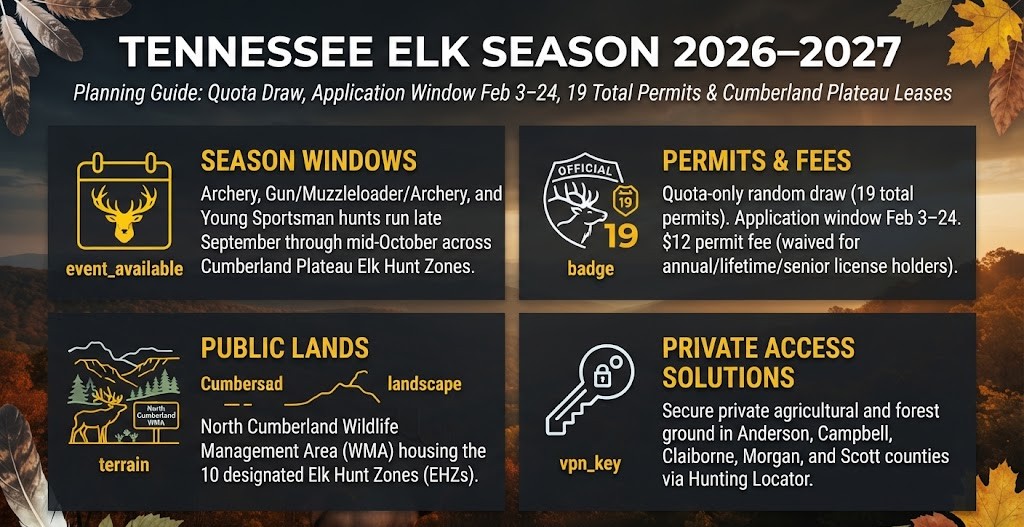
Quick Overview: Tennessee Elk Season 2026 and 2027 at a Glance
Tennessee elk hunting is quota-only, so there are no over-the-counter tags. A quota permit is awarded by random draw, and you hunt only if your name is pulled. Three hunt types are offered: archery, gun/muzzleloader/archery, and a Young Sportsman hunt for resident youth.
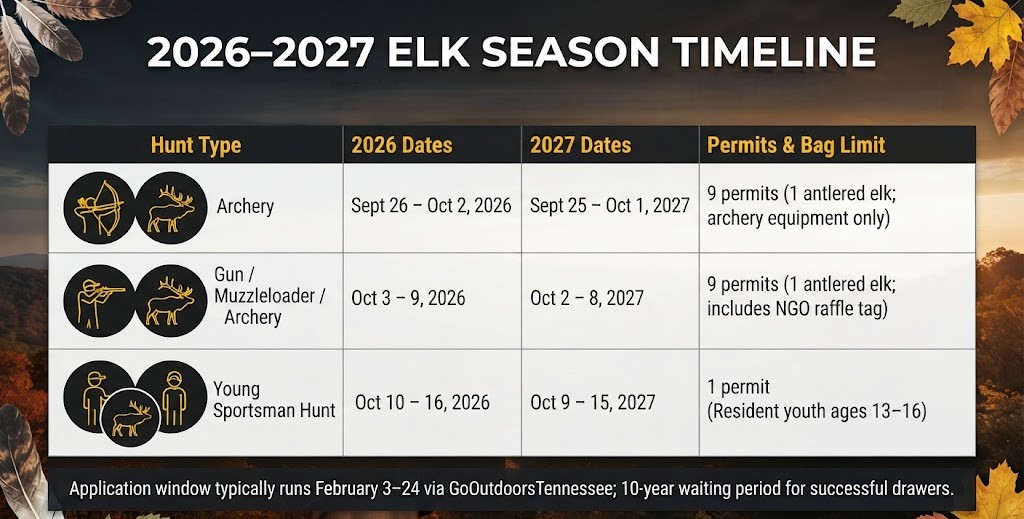
| Season | 2026 dates | 2027 dates | Permits | Bag limit | Notes |
|---|---|---|---|---|---|
| Archery | Sept. 26–Oct. 2 | Sept. 25–Oct. 1 | $9 | 1 antlered elk | Archery only |
| Gun/Muzzleloader/Archery | Oct. 3–9 | Oct. 2–8 | $9.00 | 1 antlered elk | One permit is raffled by a non-governmental organization for TWRA habitat work |
| Young Sportsman | Oct. 10–16 | Oct. 9–15 | $1.00 | 1 antlered elk | Resident youth ages 13–16 |
| Application | — | Typically Feb. 3–24, 2027 | — | — | GoOutdoorsTennessee, TWRA app, license agents, regional offices |
Before you apply, get the basics in order. Our full Tennessee hunting season guide covers every species. The elk-specific requirements are:
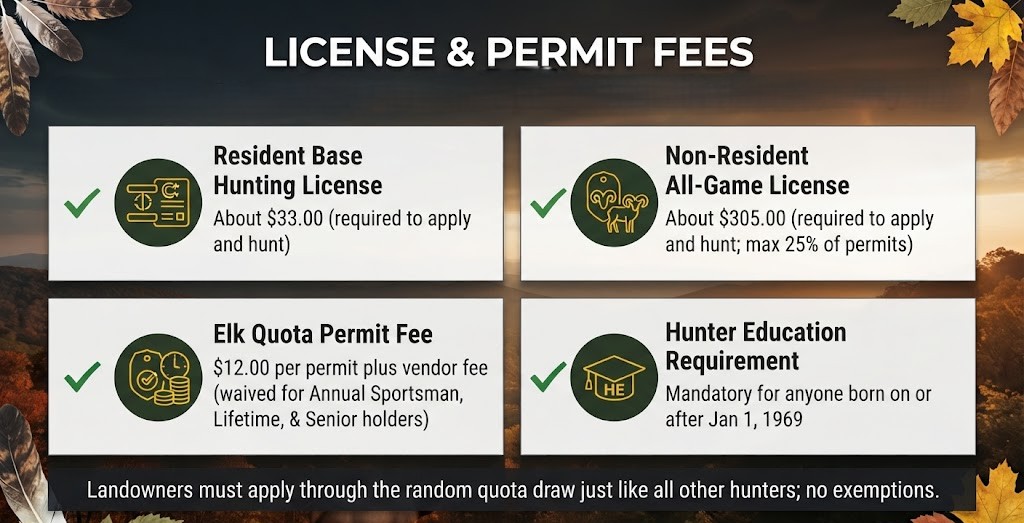
- Base license: about $33 for residents and about $305 for non-residents (all-game). You need one to apply and hunt.
- Quota permit fee: $12 plus a vendor fee, waived for Annual Sportsman, Lifetime Sportsman, and Annual Senior Citizen license holders.
- Hunter education: required if you were born on or after Jan. 1, 1969.
- Harvest reporting: immediate tagging and same-day check-in at the North Cumberland WMA office.
TWRA’s official elk hunting page confirms the quota-only structure, the 1 antlered elk bag limit, where permits are valid, and that landowners must draw like everyone else.
Regulations verified against TWRA’s 2026–27 framework. Confirm the current proclamation before you apply.
Tennessee Elk Hunting Seasons
All three seasons fall between late September and mid-October, overlapping elk rut activity on the Cumberland Plateau. Each has its own permit allotment, and you apply for a specific hunt type. For more on how the hunts fit together, see our Tennessee elk hunting season overview.
Archery Elk Season
The 2026 archery season ran Sept. 26–Oct. 2, and the 2027 season is Sept. 25–Oct. 1. Nine permits are issued, and only archery equipment is allowed. It’s the earliest of the three hunts, which suits hunters who like calling elk in close.
Gun/Muzzleloader/Archery Elk Season
The 2026 season ran Oct. 3–9, and the 2027 season is Oct. 2–8. Nine permits are issued, and one is donated to a non-governmental organization for a raffle that funds TWRA habitat work. Firearms, muzzleloaders, and archery equipment are all permitted.
Young Sportsman Elk Hunt
The 2026 Young Sportsman hunt ran Oct. 10–16, and the 2027 hunt is Oct. 9–15. A single permit is issued, for resident youth ages 13–16. Youth cannot apply for both the youth hunt and the regular quota hunt, so they have to pick one.
Incidental take: Separate from the quota draw, a legal deer hunter may take 1 elk per year as an incidental take, meaning an elk taken while legally deer hunting. This applies outside Anderson, Campbell, Claiborne, Morgan, and Scott counties, and the elk must be reported the same day to 800-831-1174. Check the Tennessee deer hunting season dates to plan around it.
Tennessee Elk Licenses and Permits
Hunting elk in Tennessee takes a base hunting license and a quota permit drawn through the application process.
Tennessee Hunting Licenses
| License | Resident | Non-resident | Notes |
|---|---|---|---|
| All-game hunting license | About $33 | About $305 | Required to apply and hunt |
| Elk quota permit fee | $12 | $12 | Per permit; waived for exempt licenses |
| Vendor fee | Applies | Applies | Added at checkout |
Who pays the $12? Take two Tennessee hunters applying on the same day. One holds an Annual Sportsman license and pays no permit fee. The other holds a standard resident license and pays $12 plus the vendor fee. That difference is a good reason to compare license options before the window opens.
Out-of-state hunters should budget about $305 for the all-game license plus $12 and the vendor fee. No more than 25% of successful applicants can be non-residents. Anyone born on or after Jan. 1, 1969 needs hunter education. Prices can change, so verify current pricing on GoOutdoorsTennessee before you buy.
Tennessee Elk Hunting Permits
Tennessee issues 19 quota permits each year: 9 archery, 9 gun/muzzleloader/archery, and 1 Young Sportsman. Hunts take place in Elk Hunt Zones (EHZs), the designated areas where quota elk hunting is permitted. There are 10 EHZs, and you can choose up to 4 on your application. Draw results come after the window closes.
How to Apply for the 2027 Tennessee Elk Draw
- Confirm your eligibility. Buy or confirm your base license, and make sure your hunter education is on file if required.
- Submit your application. During the typically Feb. 3–24 window, apply on GoOutdoorsTennessee, or use the TWRA app, a license agent, or a regional office.
- Choose your hunt. Pick your hunt type and up to 4 of the 10 EHZs.
- Pay the fee. Pay $12 plus the vendor fee, unless you hold an exempt license.
- Watch for results. Check your draw results and mark your season dates on the calendar.
A few rules to know before you apply:
- Drawn hunters must wait 10 years before applying again.
- Landowners are not exempt. They must draw like everyone else.
- Youth cannot apply for both the youth and regular hunts.
- No more than 25% of successful applicants can be non-residents.
With 19 permits and high interest, most applicants won’t draw in any given year. That’s no reason to skip the application, but it is a reason to build access and fill your seasons in other ways while you wait.
Tennessee Elk: Where to Hunt
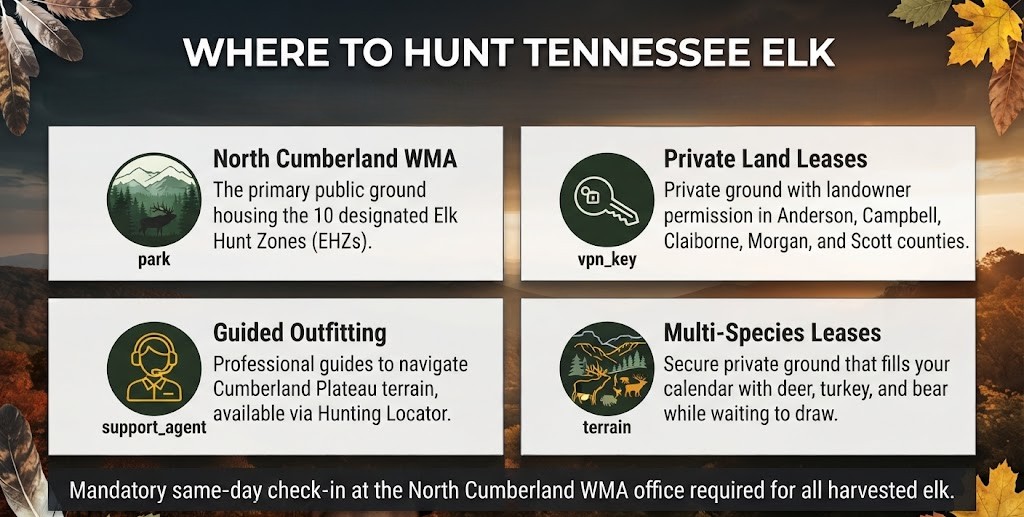
Elk permits are valid in only two places: EHZs on North Cumberland WMA, and private land with landowner permission in Anderson, Campbell, Claiborne, Morgan, and Scott counties. For long-term access in that region, start by browsing Tennessee hunting leases.
Best Public Lands
Public options are narrow, so know exactly where you can go:
- North Cumberland WMA: home to the 10 Elk Hunt Zones. Your permit is tied to the zone you draw, so learn the boundaries before opening day.
- All other public land in Tennessee is closed to elk hunting. No other WMA is an option.
- Check-in: tag immediately and complete same-day check-in at the North Cumberland WMA office. If you also use E-Check, treat it as an addition to the office check-in, not a substitute.
- Restoration context: the herd traces back to 50 elk from Elk Island National Park, Alberta, released in December 2000 on the Cumberland Plateau.
Private Land Hunting with Hunting Locator
A drawn permit is valid on private land in Anderson, Campbell, Claiborne, Morgan, and Scott counties with landowner permission. Landowners must draw like everyone else, and incidental take does not apply in these five counties.
A lease gives you flexible, seasonal access without the commitment of ownership. Owning land gives you long-term control and the freedom to manage habitat your way. Either path builds relationships and local knowledge, but neither replaces drawing a permit.
Because elk odds are long, land in this region can also fill your calendar in other seasons. You can hunt deer, and many hunters pair their access with Tennessee black bear season and Tennessee turkey hunting season, which makes the wait for an elk permit more productive.
Hunting Locator connects hunters with landowners who lease or sell hunting land. You can search by state and game type, browse leases and land for sale, and contact landowners directly. It’s meant to simplify finding access, whether you’re replacing a lost lease or securing your first piece of private ground.
Our Tennessee page lists current opportunities, and availability in the five elk counties varies. New properties appear throughout the year, so check it often. Browse Tennessee hunting leases on Hunting Locator.
Own land on the Plateau? You can list it on Hunting Locator and connect with responsible hunters who respect your property.
Guided Hunts
A guide adds local knowledge but doesn’t replace drawing a permit. Once your name is pulled, a guide can help with terrain, zones, and logistics.
A guide makes the most sense when:
- You’re a non-resident unfamiliar with the Cumberland Plateau.
- It’s your first elk hunt.
- You don’t yet know your drawn EHZ.
- You need help arranging private-land access.
Search outfitters and landowner-guided opportunities on Hunting Locator.
Tennessee Elk Hunting Tips
Elk hunting is demanding anywhere. These tips draw on general elk hunting knowledge. When you’re ready to equip yourself for an eastern elk hunt, the Hunting Locator store is a good place to start.
- Hunt the rut. Early October overlaps rut activity, so practice cow calls and bugles well ahead of time. Browse calls in the Hunting Locator store.
- Know your zone lines. Study your EHZ boundaries on maps before opening day so you always know where you can legally hunt.
- Respect the terrain. Expect steep, reclaimed-mine country on the Plateau, and bring quality optics. Find optics at the Hunting Locator store.
- Plan meat care. Early fall can be warm, so carry a pack and field-dressing kit and have a cooling plan ready. Packs and field gear are available at the Hunting Locator store.
- Prepare for check-in. Tag immediately, and map your same-day route to the North Cumberland WMA office.
- Practice with your weapon. Shoot at realistic distances so you’re confident when the moment arrives.
- Get in shape. Start physical training months ahead. Elk country is hard on hunters who aren’t fit.
More Resources from Hunting Locator
These Hunting Locator pages are grouped by what you need.
Find Land
- Hunting Locator: search leases, land for sale, outfitters, and guides in one place.
- Tennessee hunting leases: browse current Tennessee opportunities.
Tennessee Season Guides
- Tennessee hunting season guide: the master guide to every species.
- Tennessee elk hunting season: our elk season overview.
- Tennessee deer hunting season: dates and details for deer.
- Tennessee black bear hunting season: another big-game option in the region.
- Tennessee turkey hunting season: spring and fall turkey details.
- Tennessee game bird hunting season: upland and game bird dates.
- Tennessee waterfowl hunting season: ducks, geese, and more.
- Tennessee small game hunting season: a way to fill your calendar while you wait on elk.
- Tennessee furbearer hunting season: trapping and furbearer details.
Gear
- Hunting Locator store: gear for your next hunt.
FAQ
When is the 2027 Tennessee elk application period?
The application window typically runs Feb. 3–24. You can apply through GoOutdoorsTennessee, the TWRA app, license agents, or regional offices. Dates can shift from year to year, so verify current proclamations before you apply.
How many elk tags does Tennessee issue?
Tennessee issues 19 quota permits: 9 archery, 9 gun/muzzleloader/archery, and 1 Young Sportsman. One of the gun/muzzleloader/archery permits is raffled by a non-governmental organization to support TWRA habitat work.
Can non-residents hunt elk in Tennessee?
Yes. Non-residents need the required license (about $305 all-game) plus the $12 permit fee and a vendor fee. No more than 25% of successful applicants can be non-residents, so residents hold the larger share of permits.
Do landowners need a quota permit to hunt elk?
Yes. Landowners are not exempt from the permit requirement. They must apply and be drawn like every other hunter before they can take an elk on their own property.
Who is exempt from the $12 permit fee?
Holders of an Annual Sportsman, Lifetime Sportsman, or Annual Senior Citizen license don’t pay the $12 quota permit fee. Everyone else pays $12 plus the vendor fee.
Can I hunt elk on private land in Tennessee?
Yes, with a drawn permit and landowner permission in Anderson, Campbell, Claiborne, Morgan, and Scott counties. You can look for access through Tennessee hunting leases on Hunting Locator.
What is incidental elk take?
Incidental take means a legal deer hunter may take 1 elk per year while deer hunting outside the five core elk counties. It must be reported the same day to 800-831-1174.
How do I check in a harvested elk?
Tag the elk immediately, then complete same-day check-in at the North Cumberland WMA office. If you use E-Check, treat it as an addition to the office check-in, not a replacement.
Can youth apply for both the youth and regular hunts?
No. The youth permit is for resident youth ages 13–16, and youth cannot apply for both the youth hunt and the regular quota hunt.
What happens after I’m drawn?
You hunt your assigned season and zone, then wait 10 years before you can apply again, so it pays to prepare well when your name is pulled.
The Final Shot
Tennessee has 19 permits and three seasons. The 2027 hunts are set for Sept. 25–Oct. 1, Oct. 2–8, and Oct. 9–15. Permits are valid only in EHZs on North Cumberland WMA and on private land in five Plateau counties, and the $12 fee is waived for Annual Sportsman, Lifetime Sportsman, and Annual Senior Citizen license holders.
Mark Feb. 3–24 on your calendar and apply on GoOutdoorsTennessee. In the meantime, you can start building private access by browsing Tennessee hunting leases on Hunting Locator, which keeps your seasons full with deer, turkey, and bear while you wait on the draw.


