We’ve pulled together everything you need to know for the upcoming season. All the official TWRA stuff, but organized in a way that actually makes sense when you’re trying to plan your hunts. Doesn’t matter if you’re a Tennessee local or coming from out of state—this guide has what you need.
Here’s what we’re covering:
- Complete season dates for every furbearer species
- License requirements and what they’ll cost you
- Where to actually find good hunting spots
Let’s jump into the dates that matter most.
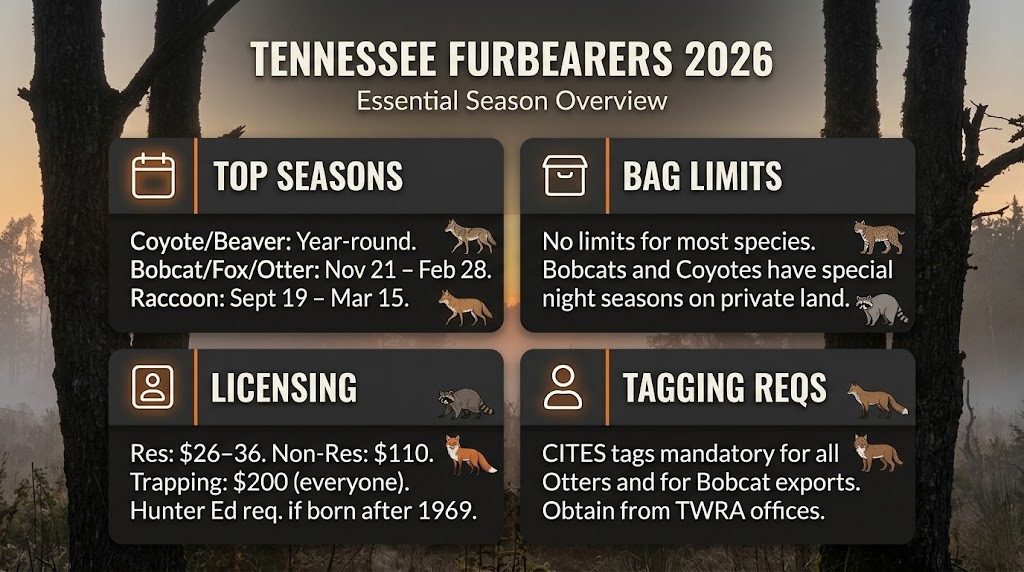
Quick Overview of Tennessee Furbearer Seasons
Here’s everything laid out so you can see the whole season at a glance. These are straight from TWRA, so you can plan your hunts around what’s actually legal and when.
| Species | Start Date | End Date | Bag Limit | Key Notes |
|---|---|---|---|---|
| Coyote | No closed season | No closed season | No limit | Year-round; special night seasons on private land |
| Beaver | No closed season | No closed season | No limit | — |
| Groundhog | No closed season | No closed season | No limit | — |
| Striped Skunk | No closed season | No closed season | No limit | Night-only hunting Nov. 28–Dec. 13, 2026 |
| Opossum | No closed season | No closed season | No limit | Night-only hunting Nov. 28–Dec. 13, 2026 |
| Raccoon/Opossum | Sept. 19, 2026 | March 15, 2027 | No limit | Extended season for taking |
| Fox (Red & Gray) | Nov. 21, 2026 | Feb. 28, 2027 | No limit | — |
| Mink | Nov. 21, 2026 | Feb. 28, 2027 | No limit | — |
| Muskrat | Nov 21, 2026 | February 28, 2027 | No limit | — |
| Otter | Nov 21, 2026 | February 28, 2027 | No limit | CITES tagging required |
| Least Weasel | Nov 21, 2026 | February 28, 2027 | No limit | — |
| Bobcat | Nov 21, 2026 | February 2027 | No limit | CITES tagging for export |
| Bobcat & Coyote | First Sat. in June | Second Sun. in August | No limit | Resumes after deer season ends |
Before you head out, make sure you’ve got your paperwork straight:
- Tennessee hunting license (resident or non-resident)
- Trapping license if you’re running traps or snares
- Hunter Education card if you were born after January 1, 1969
- CITES tags for any bobcat pelts leaving the country and every otter you harvest
- Written permission from landowners for trapping; verbal works for hunting but get it in writing anyway
Tennessee Furbearer Hunting Seasons
Tennessee doesn’t mess around when it comes to furbearer opportunities. You’ve got everything from year-round predator hunting to solid trapping seasons, and the bag limits won’t leave you wanting more.
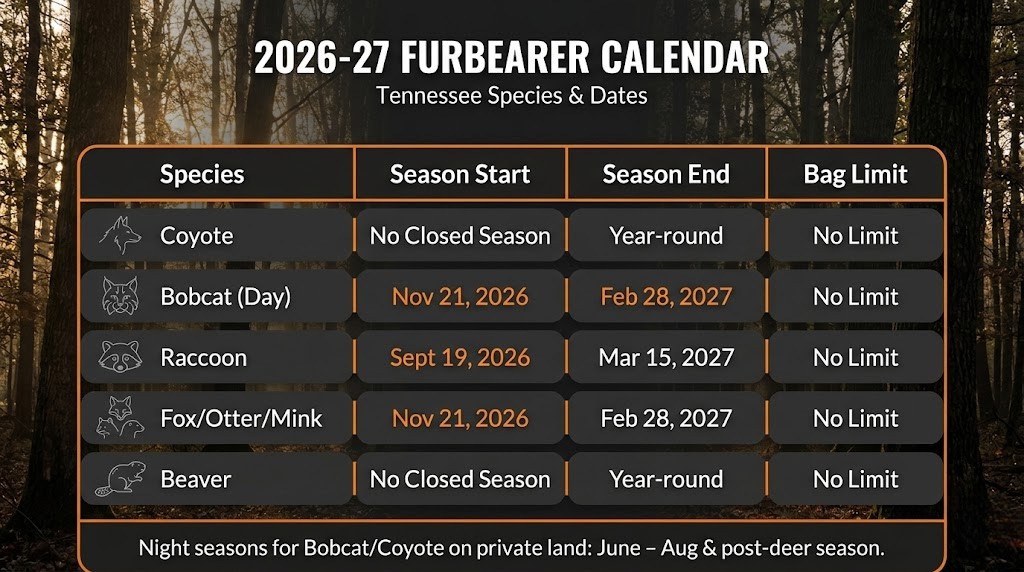
Bobcat Season
Bobcats are what most people get excited about, and for good reason. The statewide daylight season runs November 21, 2026 through February 28, 2027. That’s over three months to chase these cats, which is plenty of time if you know what you’re doing.
Night hunting on private land gets interesting. It starts the first Saturday in June, runs through the second Sunday in August, then picks back up after deer season wraps. If you’re planning to export any bobcat pelts, you’ll need those Tennessee CITES tags.
Raccoon and Opossum Season
Coon hunting runs deep in Tennessee, and the season reflects that. You get from September 19, 2026 through March 15, 2027 for the taking season. That’s almost six months to get your dogs out and work some coons.
There’s a quirky period from November 28 through December 13, 2026, where opossum and skunk hunting is night-only because of deer season overlap. No bag limits on either species, so if you find them, you can take them.
Coyote Season
This is where Tennessee really shines. No closed season, no bag limit. Hunt coyotes whenever you want, however you want. The night hunting season on private land follows the same schedule as bobcat—first Saturday in June through second Sunday in August, then back on after deer season.
Fox, Mink, Muskrat, Otter, and Weasel Seasons
All these species share the same season window: November 21, 2026 through February 28, 2027. Red fox, gray fox, doesn’t matter. Mink and muskrat are solid options if you’re working the waterways.
Here’s something important: every single otter you harvest needs a Tennessee CITES tag. Not just the ones you’re exporting. Every one.
Beaver, Groundhog, and Skunk Seasons
Year-round seasons, no bag limits. Beaver and groundhog are straightforward—hunt them whenever. Skunk follows that same night-only rule during late November through mid-December, but otherwise it’s open season.
Tennessee Furbearer Licenses and Permits
Getting licensed in Tennessee is pretty straightforward, but the costs can add up if you’re coming from out of state. Everything goes through the Go Outdoors Tennessee system.
Tennessee Hunting Licenses
You need a hunting license for any furbearer hunting. Period. Here’s what it’s going to cost you:
| License Type | Resident Cost | Non-Resident Cost |
|---|---|---|
| Annual Hunting License (Small Game/General) | $26–$36 | $110 |
| Annual Trapping License | $200 | $200 |
Hunter Education is mandatory if you were born on or after January 1, 1969. You can buy licenses online, at TWRA offices, or through license agents around the state. Notice that trapping license costs the same whether you’re a resident or not.
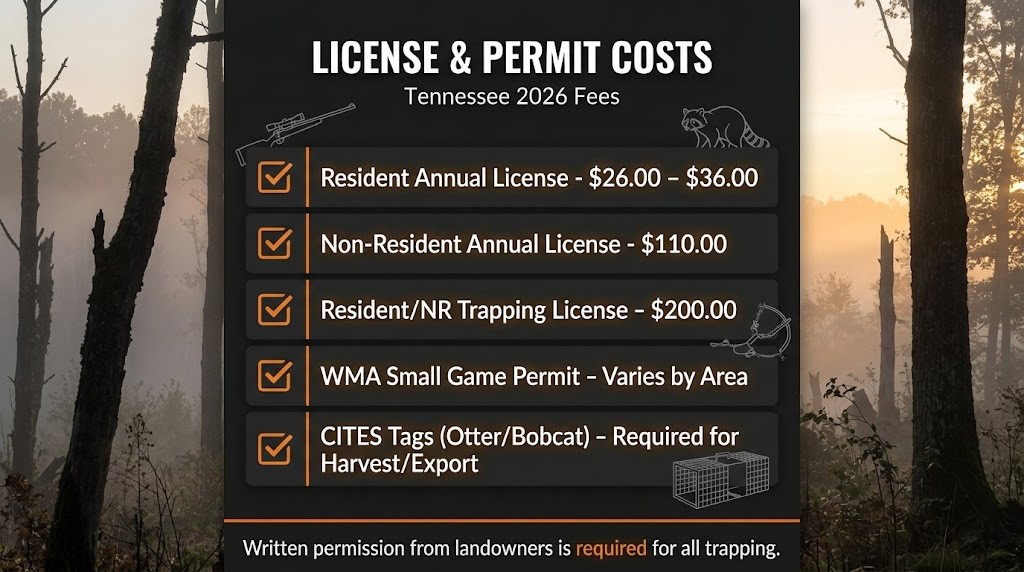
Tennessee Hunting Permits
Some furbearer activities need extra permits beyond the basic license. If you’re trapping on WMAs that require small game permits, you’ll need those too.
CITES tags are non-negotiable for otters and bobcats being exported. Get these from TWRA regional offices before you need them. Most licenses are available immediately through the online system.
Where to Hunt Furbearers in Tennessee
Finding good hunting land is half the battle. Tennessee gives you three main routes: public land through TWRA, guided hunts, or private land access.
Best Public Lands for Furbearer Hunting
Tennessee has over 100 WMAs and refuges, plus about 175,000 acres of TVA land that’s open to public hunting. That’s a lot of ground to work with.
Your best bets for furbearer hunting:
- Big WMAs with mixed habitat – Forest edges meeting agricultural areas are furbearer magnets
- TVA lands along rivers – Perfect for beaver, muskrat, and raccoon
- East Tennessee mountain WMAs – Bobcat and fox country, but you’ll work for it
- Middle Tennessee agricultural WMAs – Groundhog and coyote central
- West Tennessee wetlands – Waterfowl areas that also hold mink and muskrat
Public land comes with trade-offs. More hunting pressure, especially weekends. Some WMAs restrict certain hunting methods too.
Guided Hunts
Professional guides know the land, have the right equipment, and understand local furbearer patterns. This makes sense for non-residents or hunters targeting specific species like bobcat. You’re paying for expertise and access.
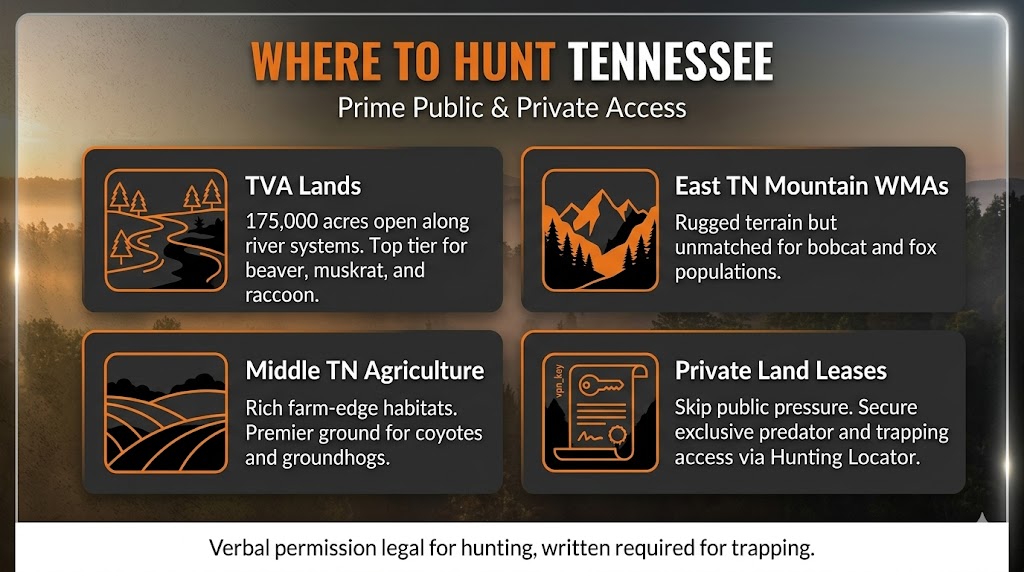
Private Land Hunting with Hunting Locator
Private land beats public every time if you can get access. Less pressure, better opportunities to pattern animals, and you can build relationships with landowners over time. Written permission is required for trapping and smart for hunting.
Hunting Locator cuts through the hassle of finding private land access. Instead of driving around knocking on doors or hoping someone knows someone, you can browse Tennessee hunting leases by what you’re actually looking for and connect with landowners who want to work with hunters.
Furbearer Hunting Tips
Furbearer hunting success comes down to understanding animal behavior, having the right gear, and putting in time where it counts. Here’s what actually works.
- Get Good with Electronic Calls – Electronic calls will bring more bobcats and coyotes than anything else. Learn rabbit distress, bird distress, and coyote vocals
- Hunt the Right Times – Dawn, dusk, and night are when furbearers move. Tennessee’s night hunting opportunities on private land are gold
- Find the Travel Routes – Furbearers use creeks, fence lines, and field edges like highways. Find these and you’ll find animals
- Control Your Scent – Furbearers smell everything. Use scent eliminators and pay attention to wind direction
- Invest in Good Optics – Night hunting demands quality binoculars and lights. Don’t cheap out here
- Read the Sign – Fresh tracks, scat, and kill sites tell you where animals are active. Learn to read what the woods are telling you
- Stay Put Longer – Most hunters move too soon. Stay in position longer than feels right
More Resources from Hunting Locator
Get the complete picture of Tennessee hunting with these guides:
- Tennessee Hunting Season Guide – Everything you need for Tennessee hunting
- Tennessee Deer Hunting – Complete deer season info including new baiting rules
- Tennessee Turkey Hunting – Spring and fall turkey opportunities
- Tennessee Waterfowl Hunting – Duck and goose seasons and zones
- Tennessee Bear Hunting – Limited draw bear hunts in East Tennessee
- Tennessee Small Game – Squirrel, rabbit, and more
- Hunting Locator – Find hunting leases and guides nationwide
FAQ
When does Tennessee bobcat season open in 2026?
Bobcat season opens November 21, 2026, for daylight hunting statewide and runs through February 28, 2027. Night hunting on private land starts the first Saturday in June, runs through the second Sunday in August, then resumes after deer season.
Do I need a special license to trap furbearers in Tennessee?
Yes. Tennessee requires a trapping license that costs $200 for residents and non-residents. This is separate from your hunting license and you must have it to use traps or snares.
Which Tennessee furbearer species require CITES tags?
Every otter you harvest needs a Tennessee CITES tag. Bobcats need CITES tags only if you’re exporting them from the United States. Get these tags from TWRA regional offices before you need them.
Can non-residents hunt furbearers on Tennessee public land?
Absolutely. Non-residents need a $110 annual hunting license plus any required WMA permits. Some WMAs have restrictions on certain hunting methods, so check the regulations for specific areas.
What are the bag limits for Tennessee coyotes?
No closed season, no bag limit. Hunt coyotes year-round as much as you want. It’s one of the most flexible hunting opportunities in the state.
Is written landowner permission required for furbearer hunting?
Written permission is required for trapping on private land. For hunting, verbal permission is legal, but get it in writing anyway to avoid problems later.
The Final Shot
Tennessee’s 2026-2027 furbearer season gives hunters serious opportunities. Year-round coyote hunting, solid bobcat seasons, generous bag limits, and extended seasons make this one of the better states for furbearer hunting.
Success starts with knowing the rules, getting proper licenses, and finding good hunting ground. Public land, guided hunts, or private access—Tennessee’s got furbearer populations that can make any of these work. Ready to lock down your Tennessee hunting spot for the season? Start looking now and connect with landowners who understand what good hunting is all about.


