This Tennessee waterfowl guide covers split dates and bag limits, licenses and permits, and where to hunt, whether you live near Reelfoot Lake or are driving in from out of state. Hunting Locator also connects hunters with private ground when public water gets crowded.
The guide includes:
- 2026–27 season dates, splits, and bag and possession limits at a glance
- Licenses, stamps, and permits for residents and non-residents, with approximate costs
- Where to hunt, from Reelfoot Lake to private ground, including Tennessee duck hunting leases
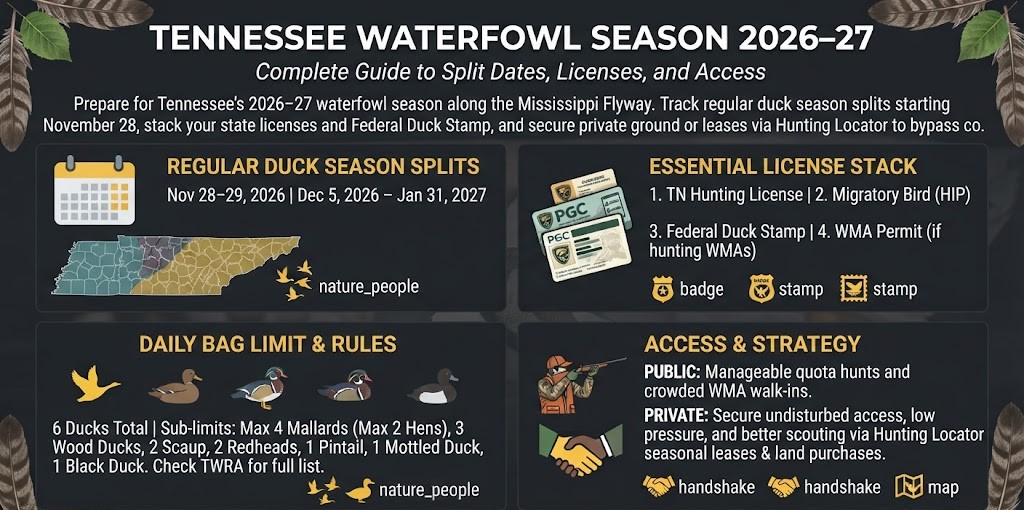
Tennessee Waterfowl Season 2026–27: Quick Overview
Tennessee’s regular duck season runs November 28, 2026 through January 31, 2027 in two segments, with a 6-duck daily bag. Late-season youth, veterans, and light goose dates follow in February and March.
For every species’ dates in one place, see our complete Tennessee hunting season guide.
| Species/Season | Dates | Bag Limit | Notes |
|---|---|---|---|
| Regular duck (incl. coot, merganser) | Nov 28–29, 2026; Dec 5, 2026 – Jan 31, 2027 | 6 ducks; 5 mergansers (≤2 hooded); 15 coots | Species caps apply; see breakdown |
| Teal/Wood Duck (early) | Sept 12–16, 2026 | 6 ducks | Closed. Plan for 2027. |
| Canada goose (early) | Sept 1–20, 2026 | $3 | Closed. Plan for 2027. |
| Geese (regular) | Confirm segment dates with TWRA | Canada 3, white-fronted 3, brant 1, light 20 | Check TWRA for segment dates |
| Sandhill crane | Dec 3, 2026 – Jan 31, 2027 | Per quota permit | Quota permit required; separate Southeast Crane Zone segments |
| Youth waterfowl days | Feb 6 & 13, 2027 | Regular limits | Ages 6–16 with adult 18+ |
| Veterans/active military days | Feb 7 & 14, 2027 | Regular limits | Verify eligibility with TWRA |
| Light goose conservation order | Feb 15 – Mar 31, 2027 | No limit | Free conservation permit required |
Most migratory game birds carry a possession limit of three times the daily bag, with exceptions on the opening and second days. Possession means every bird you have at one time, including those in your cooler or freezer.
Before you head out, check each of these:
- Tennessee hunting license: resident ~$33, non-resident ~$305
- Federal Duck Stamp: required if you’re 16 or older
- Tennessee Migratory Bird Permit/HIP certification: HIP is the Harvest Information Program, the federal survey sign-up
- Hunter education card: required unless you were born before January 1, 1969
- WMA Small Game & Waterfowl Permit: needed if you hunt WMAs (~$62 annual or ~$12.50 one-day)
- Non-toxic shot only: lead shot is prohibited for waterfowl
- Shooting hours: one-half hour before sunrise to sunset (from last season’s rules, so verify)
Regulations can change. TWRA has the final say, so confirm with TWRA before you hunt.
Tennessee Waterfowl Hunting Seasons for 2026–27
Tennessee’s waterfowl calendar has three parts: the main duck season opening November 28, the early seasons that have already closed, and the late and special hunts that run into spring. Knowing which one you’re planning for keeps your trip, paperwork, and expectations in line.
Our Tennessee waterfowl hunting season page is a useful companion reference. West Tennessee draws birds because it sits along the Mississippi Flyway, the broad migration corridor that funnels ducks and geese south each winter.
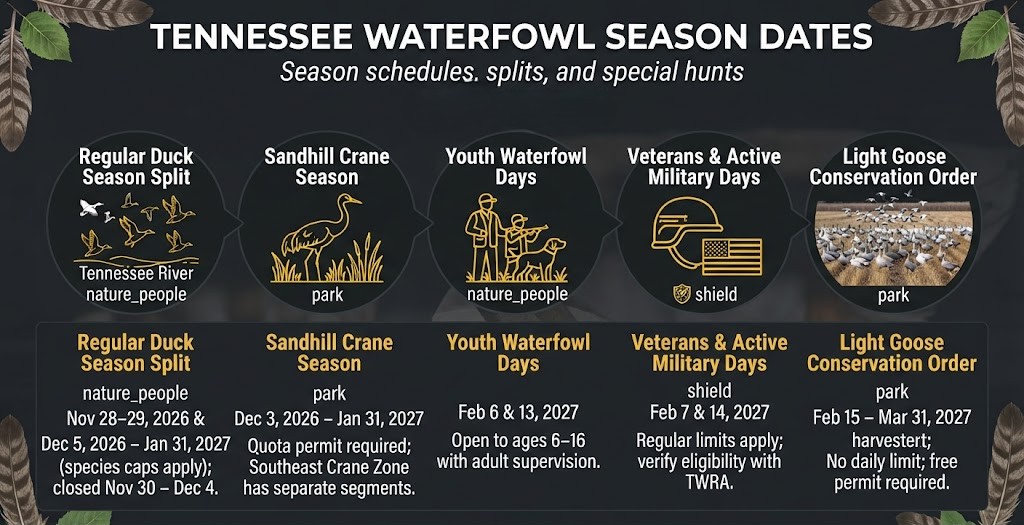
Regular Duck Season: November 28, 2026 – January 31, 2027
The regular duck season is split into two segments. A “split” means the season closes for a stretch and then reopens:
Nov 28–29 (opener) | Nov 30–Dec 4 (closed) | Dec 5 – Jan 31 (main segment)
The two-day opener followed by a five-day gap shapes trip planning. Out-of-state hunters should decide between opening weekend and the long December–January segment, while residents with flexible schedules can often do both.
The 6-duck bag is a total, and the species caps below sit inside it.
| Species | Daily Max Within the 6 |
|---|---|
| Mallards | 4 (no more than 2 hens) |
| Wood ducks | 3 |
| Canvasbacks | 2 |
| Redheads | 2 |
| Black ducks | 2 |
| Pintail | 1 |
| Mottled duck | 1 |
| Scaup (Nov 26–Dec 17) | 1 |
| Scaup (Dec 18–Jan 31) | 2 |
Mergansers have their own bag of 5, with no more than 2 hooded mergansers. Coots carry a separate daily limit of 15.
The two most common slip-ups are the hen-mallard cap and the scaup date shift, so know your species ID before you pull the trigger. Possession is three times the daily bag for most migratory birds, which matters on multi-day trips because birds in the cooler count toward your total.
During the regular goose seasons, daily limits are 3 Canada geese, 3 white-fronted geese, 1 brant, and 20 light geese. Confirm goose segment dates with TWRA.
Early Teal/Wood Duck and Early Canada Goose Seasons (Closed for 2026)
These seasons have passed. The teal/wood duck season ran September 12–16, 2026, and the early Canada goose season ran September 1–20, 2026 with a 3-goose limit. If you want to hunt them, put next September on your calendar now.
Late Season and Special Hunts: Youth, Veterans, Sandhill Crane, and Light Goose
Hunting continues after January 31 through these late seasons:
- Youth waterfowl days (February 6 & 13, 2027): Open to hunters ages 6–16. Each youth must be accompanied by an adult 18 or older who stays in a position to take immediate control of the firearm.
- Youth/Military WMA waterfowl quota application window: November 18 – December 8, 2026 (11:59 p.m. CST). This opens in under two weeks. Check TWRA for applicant eligibility.
- Veterans and active military days (February 7 & 14, 2027): Regular limits apply.
- Sandhill crane (December 3, 2026 – January 31, 2027): A quota permit is required, and the Southeast Crane Zone has separate segments. Check TWRA for application details.
- Light goose conservation order (February 15 – March 31, 2027): No daily limit, with a free conservation permit required. A conservation order is a special season designed to reduce overabundant light goose populations.
Tennessee Waterfowl Licenses and Permits
Most Tennessee waterfowl hunters need a hunting license, HIP certification, and a Federal Duck Stamp if they’re 16 or older. Add the WMA Small Game & Waterfowl Permit if you hunt a WMA. The tables and lists below cover everything so you can buy it all at once.
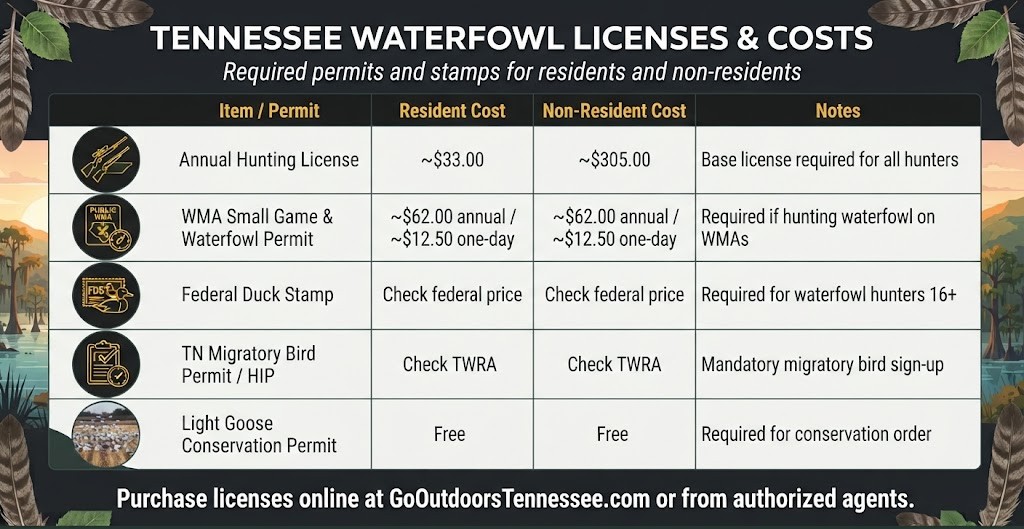
Tennessee Hunting Licenses
| Item | Who Needs It | Cost |
|---|---|---|
| Resident Annual Hunting License | Tennessee residents | ~$33 |
| Non-Resident Annual Hunting License | Out-of-state hunters | ~$305 |
| WMA Small Game & Waterfowl Permit | Anyone hunting waterfowl on WMAs | ~$62 annual / ~$12.50 one-day |
| TN Migratory Bird Permit/HIP | Migratory bird hunters (incl. snipe, rails) | Check TWRA |
| Federal Duck Stamp | Waterfowl hunters 16+ | Check current federal price |
| Light Goose Conservation Permit | Conservation-order hunters | Free |
A hunter education card is required unless you were born before January 1, 1969. Non-residents may have short-term license options, so check with TWRA. Buy before the opener-week rush so a system problem doesn’t cost you a morning in the blind.
Tennessee Hunting Permits
Permits are where many hunters get tripped up.
- WMA Small Game & Waterfowl Permit: Required for waterfowl hunting on a WMA, at ~$62 annual. The ~$12.50 one-day option fits occasional or traveling hunters. The same permit covers small game, so see our Tennessee small game seasons if you want to add a squirrel or rabbit hunt.
- Migratory Bird Permit/HIP: Required for migratory bird hunting, including certain species such as snipe and rails. For those seasons, see our guide to Tennessee snipe, rail, and game bird seasons.
- Quota permits: The sandhill crane season requires a quota permit, and the Youth/Military WMA hunts run through an application window of November 18 – December 8, 2026.
- Where to buy: Through TWRA’s licensing channels (online, by app, or at licensed agents). Confirm current options with TWRA.
Tennessee Waterfowl: Where to Hunt
Tennessee has strong public water and private flooded ground. Your budget, schedule, and tolerance for crowds will point you toward one or the other.
Best Public Lands for Tennessee Duck Hunting
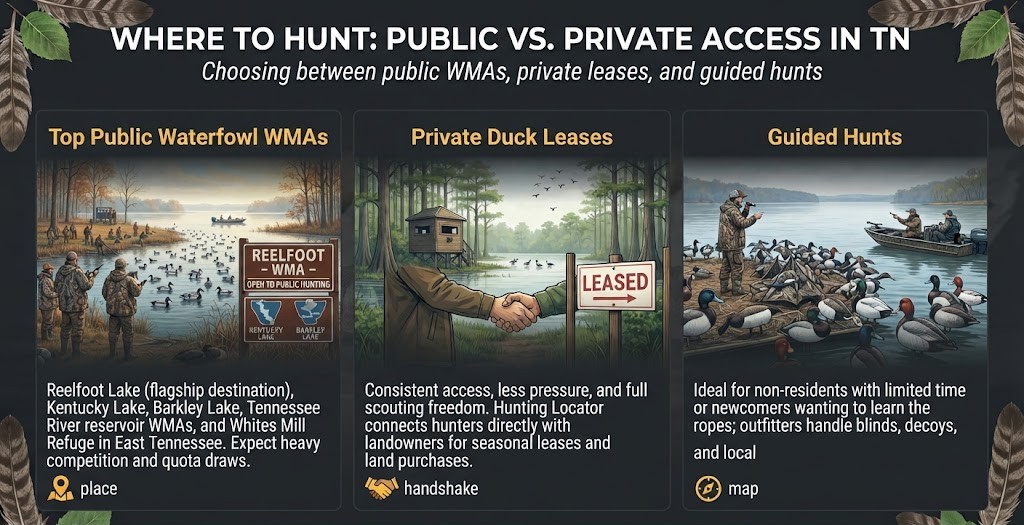
Waterfowl WMAs are typically low-elevation wetlands prone to flooding, which gives birds both land and water habitat. The best spots draw crowds and quota draws, so expect competition. If drawing blinds has worn thin, look at private duck leases in Tennessee.
Public options worth knowing:
- Reelfoot Lake (Lake and Obion counties): Tennessee’s flagship waterfowl destination in the northwest corner of the state.
- Kentucky Lake: A Tennessee River reservoir with big-water hunting opportunities.
- Barkley Lake: Reservoir water near the Cumberland River, another well-known waterfowl area.
- Other Tennessee River reservoir WMAs: Check TWRA for permit and quota rules before you go. A WMA permit applies on these areas.
- Whites Mill Refuge (East Tennessee): A 53-acre wetland managed for wintering waterfowl by TWRA in partnership with Ducks Unlimited.
Private Land Hunting with Hunting Locator
Hunters lose spots for ordinary reasons: a missed draw, a crowded ramp, birds pressured by opening weekend. Private ground avoids most of that.
A lease gives you consistent access, less pressure, and the freedom to scout and hunt on your own schedule. Common arrangements include annual recreational leases and season leases. When you evaluate a property, look at:
- Water source and reliability: Can the property flood when you need it to?
- Habitat type: Flooded timber, flooded ag fields, wetlands, and river bottoms all hunt differently.
- Distance and amenities: How far is the drive, and what’s on site?
- Acreage: Make sure it fits your group size.
Duck leases typically turn over starting in February. Start looking now for this season, and watch for 2027 listings as landowners open their properties.
Buying is the other route. Owning duck ground builds a family legacy, and if you go that way, look at water control, flooding potential, access, and drainage. Hunting Locator also connects buyers with landowners selling hunting land in Tennessee.
Hunting Locator connects you directly with landowners who lease or sell land. You can search by state, game type, and acreage to find ground that fits how you hunt. Browse Tennessee waterfowl leases or connect with Tennessee landowners on Hunting Locator to get started.
Guided Duck Hunts in Tennessee
A guided hunt suits non-residents with limited time and newcomers who want to learn the ropes. A DIY hunt or lease suits repeat hunters who want control over every detail. A guide trades flexibility for convenience, while going it alone saves money but takes more legwork.
If you book a guide, ask about:
- What’s included: blind, decoys, dogs, lodging, and bird cleaning
- Blind type: pit, timber, boat, or field
- Licensing: you’re still responsible for your own licenses and permits
- Group size: make sure the outfitter can handle your party
- Booking early: especially for prime December–January dates
- Compliance: non-toxic shot and plug requirements
- Possession limits: know what you can legally transport home
If you’d rather run your own hunt, browse leases on Hunting Locator to find landowners and opportunities that match your plans.
Tennessee Duck Hunting Tips for the 2026–27 Season
These tips cover the field side of the season:
- Scout water and food: Birds follow flooded food sources, so find where they’re feeding before you pick a setup.
- Read weather fronts during migration: Cold fronts can push new birds down the Mississippi Flyway. Watch the forecast and be ready to hunt when conditions change.
- Hide and stay still: Movement flares ducks. Use your blind and natural cover well, and check out waterfowl blinds and concealment gear to stay hidden.
- Call sparingly: Read the birds and don’t overcall. Pressured ducks get wary fast.
- Adjust your decoy spread: Leave landing holes and match the conditions. Browse decoys and calls in the Hunting Locator store to build your spread.
- Know your species ID: Watch for hen mallards and the scaup date shift to avoid over-limit mistakes.
- Dress for cold water: Waders, layers, rain gear, and warm waterproof boots make long sits bearable. See the waterfowl gear in the Hunting Locator store to get dialed in.
- Put safety first: Practice boat safety, follow the youth supervision rule, handle your gun carefully in the blind, and respect the risks of cold water.
More Resources from Hunting Locator
These pages cover every Tennessee season, plus the land and gear to go with them.
Tennessee hunting hub
- Tennessee hunting season guide: every species’ dates in one place
Waterfowl and bird pages
- Tennessee waterfowl season: the companion page for duck and goose hunters
- Tennessee game bird season: snipe, rails, and other game birds
- Tennessee small game season: squirrel, rabbit, and more
Other Tennessee seasons
- Tennessee deer hunting season: dates, limits, and tips for whitetail
- Tennessee turkey hunting season: spring and fall turkey details
- Tennessee black bear hunting season: bear regulations and seasons
- Tennessee elk hunting season: elk hunting information
- Tennessee furbearer hunting season: trapping and furbearer details
Find land and gear
- Tennessee hunting leases: browse available private ground
- Hunting Locator home: leases, outfitters, guides, and landowner tools
- Hunting Locator store: gear for the season ahead
Tennessee Waterfowl Season FAQ
When does Tennessee duck season open in 2026?
Tennessee’s regular duck season opens November 28, 2026. It runs in two segments and closes January 31, 2027. Dates can change, so confirm with TWRA before you hunt, and check the Overview above for the full split schedule.
What are the 2026–27 Tennessee duck season split dates?
The regular duck season runs November 28–29, 2026 and December 5, 2026 through January 31, 2027. Duck hunting is closed for five days between segments, November 30 through December 4. Plan trips around both segments.
What is the daily duck bag limit in Tennessee?
The daily duck bag limit is 6 ducks total, with species caps inside that total. Those caps are 4 mallards (no more than 2 hens), 3 wood ducks, 2 canvasbacks, 2 redheads, 2 black ducks, 1 pintail, and 1 mottled duck. Scaup is 1 from Nov 26–Dec 17 and 2 from Dec 18–Jan 31. Mergansers are 5 (no more than 2 hooded) and coots are 15. Possession is three times the daily bag for most migratory birds.
How many mallards can I shoot, and how many can be hens?
You can take up to 4 mallards per day, and no more than 2 may be hens. Those 4 count toward your 6-duck daily total. Confirm your species ID before shooting, because hen-mallard overages are one of the most common mistakes in the blind.
Do I need a Federal Duck Stamp in Tennessee?
Yes, if you’re 16 or older. The Federal Migratory Bird Hunting and Conservation Stamp is required to hunt waterfowl. You also need Tennessee Migratory Bird Permit/HIP certification and your state hunting license. Sign the stamp across its face before you hunt.
How much is a Tennessee non-resident hunting license?
The non-resident annual hunting license costs about $305. You’ll also need a Federal Duck Stamp if you’re 16 or older, HIP certification, and the WMA permit if you hunt public WMAs. Hunter education is required unless you were born before January 1, 1969. Short-term options may be offered, so check with TWRA.
Do I need a WMA permit to hunt ducks in Tennessee?
Yes, if you hunt on a WMA. The WMA Small Game & Waterfowl Permit costs about $62 for the annual version or about $12.50 for a one-day permit. You don’t need it on private land, which is one reason many hunters look at leases.
When are the Tennessee youth waterfowl hunt days, and who qualifies?
Youth waterfowl days are February 6 and 13, 2027, for hunters ages 6–16. An adult 18 or older must accompany the youth and stay in a position to take immediate control of the firearm. The Youth/Military WMA quota window runs November 18 – December 8, 2026, and veterans and active military days are February 7 and 14.
How does the Tennessee sandhill crane season work?
The sandhill crane season runs December 3, 2026 through January 31, 2027. A quota permit is required, and the Southeast Crane Zone has separate segments. Check TWRA for application details, as deadlines and bag specifics come from the agency.
What is the light goose conservation order?
The light goose conservation order runs February 15 through March 31, 2027, with no daily limit. A free conservation permit is required. It’s a special season designed to reduce overabundant light goose populations, and it extends your waterfowl opportunities well past the regular duck season.
Can I lease private duck land in Tennessee?
Yes. Hunting Locator connects hunters with landowners who lease or sell land, and you can browse Tennessee hunting leases on Hunting Locator by game type and acreage. Duck leases typically turn over starting in February, so start looking early and watch for new listings.
The Final Shot
The season opens November 28 and splits into two segments. The 6-duck bag is a total with species caps inside it, and your paperwork needs to be squared away before you set a decoy. Late-season youth, veterans, and light goose dates extend the season into spring.
Before the opener:
- Buy your license and Federal Duck Stamp, and complete HIP.
- Get your WMA permit or secure private ground.
- Apply in the November 18 – December 8 quota window if you’re eligible.
- Check your gear, from waders to decoys.
With about three weeks to the opener, the best ground goes first. Find your Tennessee duck lease today, or join Hunting Locator to connect with landowners, outfitters, and guides across the state. TWRA has the final say on regulations, so check their guidance as you plan.


