Getting a youngster involved in archery isn’t just teaching a skill. It’s handing down something that probably shaped who you became.
At HuntingLocator, we see this story play out constantly. Parents who grew up with bows in their hands, now watching their own kids take those first wobbly shots. The gear matters, sure. But what really matters is getting this right from the start. Rush it, pick the wrong equipment, skip the fundamentals? You might watch that spark of interest fizzle out before it ever catches fire.
Here’s what we’re covering:
- When your child is actually ready (not just when you’re excited to start)
- Safety rules that aren’t negotiable and gear that fits properly
- Building skills that stick and grow into something bigger
But first, let’s figure out if your young archer is truly ready for this step.
Is Your Child Ready? Assessing Archery Readiness
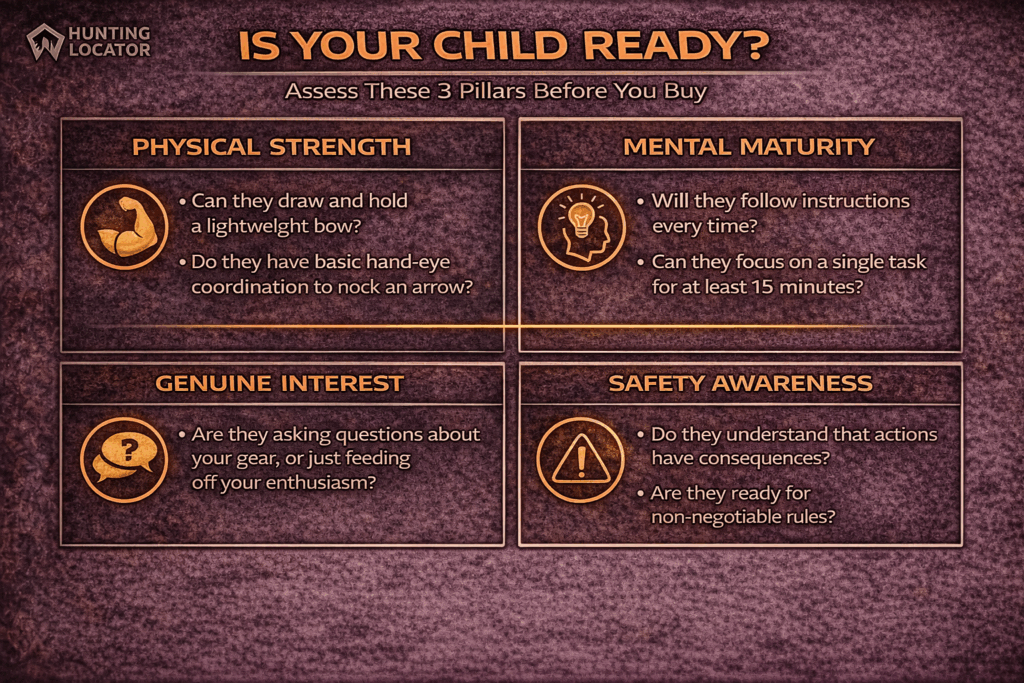
Hold up. Before you start browsing youth bows, we need to talk about readiness. If a child is strong enough to draw a bow, they’re old enough, though kids under six should stick with plastic bows and suction cup arrows. But here’s the thing—physical strength is just the beginning.
We’ve watched plenty of kids get started too early. Parents get excited, buy great equipment, then wonder why their child loses interest after a few sessions. The kids who stick with archery? Their parents waited until they were truly ready, not just physically capable. Parents should assess whether children can hold their attention span, because focus matters for both safety and success. Kids who can’t focus on the target shouldn’t be handling real archery equipment yet.
Think about these three areas before you buy anything:
- Physical readiness: Can they actually draw and hold a lightweight bow? Do they have the hand-eye coordination to nock an arrow without fumbling? Are they big enough to handle youth equipment properly?
- Mental maturity: Will they follow instructions consistently? Do they understand that actions have consequences? Can they focus on one task for 15-20 minutes without getting distracted by everything else?
- Interest level: Are they asking questions about your equipment? Do they show real curiosity about archery, or are they just feeding off your enthusiasm?
The most successful young archers we’ve equipped could demonstrate all three areas, not just hit some arbitrary age number.
Safety First: Rules, Supervision, and Protective Gear
Let’s get something straight right now. Safety isn’t just about preventing accidents—though that’s obviously crucial. It’s about building the confidence and discipline that will carry your young archer through years of outdoor adventures.
Essential Safety Rules
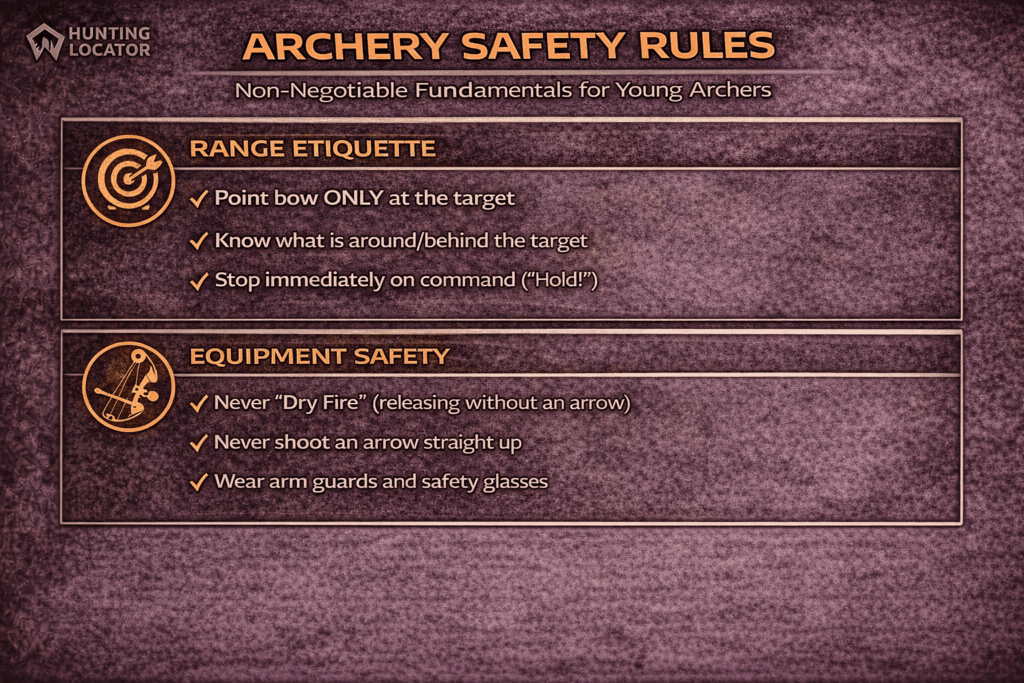
Children should only point the bow and arrow at a target, know what is around and behind the target, never release a bow without an arrow, never shoot an arrow straight up into the air, and always wear protective gear. These aren’t suggestions. They’re absolutely non-negotiable rules that must become second nature before your child ever draws their first real arrow.
Every young archer must master these fundamentals:
- Always point the bow only at the target – Never at people, animals, or property
- Know what’s around and behind the target – Arrows travel much farther than most people expect
- Never dry fire – Never release the bowstring without an arrow nocked
- Never shoot straight up – What goes up comes down somewhere
- Always wear protective gear – Arm guards and safety glasses aren’t optional
- Stop immediately on command – If anyone shouts ‘stop’ or ‘hold’ during practice, children should stop immediately, undraw their bow, and un-nock their arrow
Supervision Requirements
Most archery ranges require kids to take an intro class and a safety test before shooting at targets, and supervise them closely while they’re shooting. This professional approach should guide your home practice too. If your kid is less than 12 years old, make sure to always stay with her or him when practicing—for safety reasons.
We always tell parents to be present during practice. Not just for safety, but because these moments build memories. Consider professional instruction as well: An archery coach can make a significant difference; it’s recommended to enroll your young shooter in a class or get a few lessons.
Protective Gear Essentials
Protective gear such as arm guards, finger tabs, and chest protectors are essential safety tools in archery. An arm guard protects forearms from bowstring impact, and safety glasses provide extra protection for the eyes.
Essential protective equipment for every young archer:
- Arm guard – Protects the bow arm from string slap (painful and discouraging for beginners)
- Finger tab or glove – Protects drawing fingers from string cuts
- Safety glasses – Eye protection should never be optional
- Chest protector – Recommended for younger archers to prevent clothing interference
You can find quality youth archery accessories designed specifically for smaller hands and arms.
Ready to start building your young archer’s safety kit? Our youth-appropriate archery equipment selection includes all the protective gear needed to keep practice sessions safe and enjoyable. We focus on properly-sized equipment that fits young archers correctly—because gear that doesn’t fit properly can’t protect effectively.
Understanding Youth Archery Equipment
Before we dive into specific products, let’s cover the fundamentals that will guide every equipment decision. Understanding these basics will help you make smart choices that grow with your child instead of frustrating them.
The two most critical specs for youth archery equipment are draw weight and draw length. The amount of strength required to draw the string back is referred to as draw weight. These range from 15 to 30 pounds, and the older your kid is, the higher it should be. Draw length determines the proper bow size for your child’s arm span and ensures they can achieve proper shooting form.
At HuntingLocator, we get it—kids grow fast. That’s why we focus on helping families find adjustable equipment that won’t need replacing every season. Most bows are adjustable, allowing a youth shooter to grow with the bow.
Youth Bow Types Compared
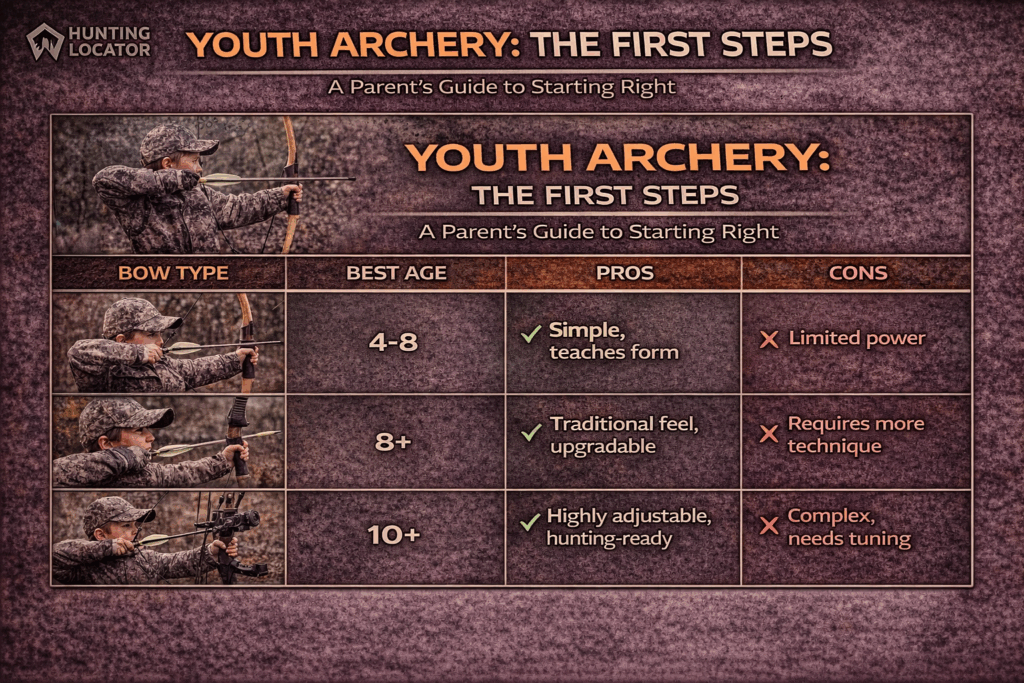
I recommend that all beginner youths should start their journey with a traditional bow and arrow set. The reasons why this is preferred over compound youth bows are: Traditional bows are far simpler in construction than compounds, so the archer can focus on shooting rather than tuning and fixing problems.
The progression typically follows this path: After the plastic stage, most children do well with a longbow, which tends to be less powerful and allows children to get a feel for the draw and release. If a child has shown aptitude and maturity with a longbow and is at least eight years old, they may be ready for a recurve or compound bow.
| Bow Type | Best For Ages | Pros | Cons | Recommended For |
|---|---|---|---|---|
| Longbow | 4-8 | Simple design, teaches fundamentals, very forgiving | Limited power, minimal adjustability | True beginners, building basic form |
| Recurve | 8+ | Traditional feel, teaches proper form, limbs can be upgraded | Requires more technique than compounds | Intermediate beginners, tradition-focused families |
| Compound | 10+ | Highly adjustable, easier to hold at full draw, hunting-ready | More complex, requires tuning and maintenance | Older youth, hunting progression path |
For 90 years, Bear Archery has proudly been America’s #1 brand in institutional and youth archery, making them a trusted choice for families starting this journey.
Sizing Your Young Archer
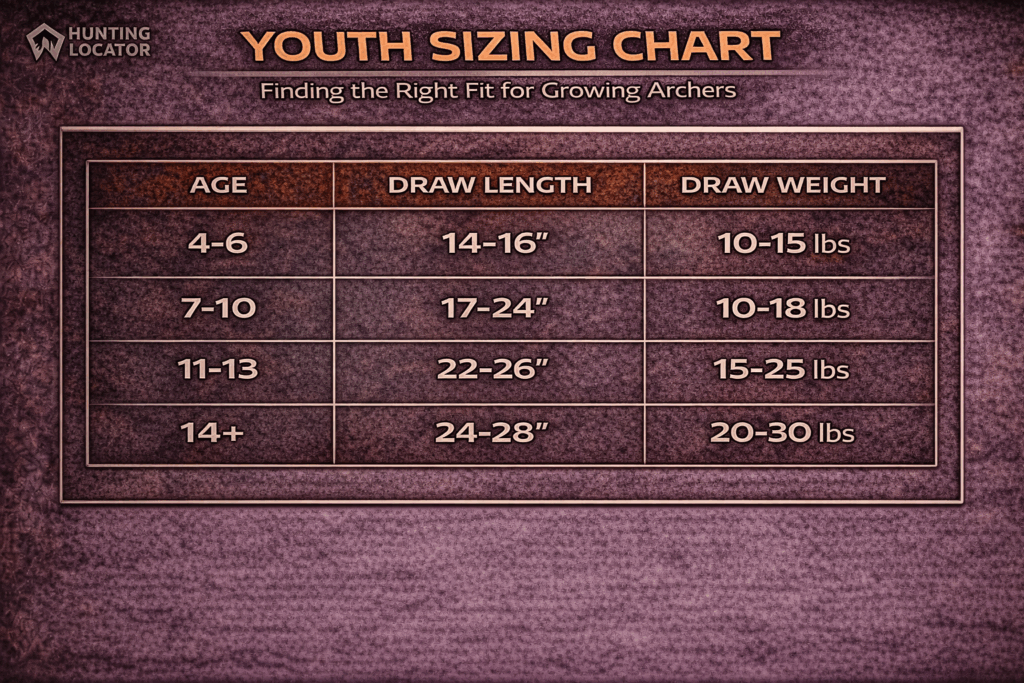
Proper sizing prevents frustration and builds confidence. A bow that is too difficult to draw or too big for a child to hold properly will prevent them from practicing good form and enjoying archery.
| Age Range | Typical Draw Length | Recommended Draw Weight | Notes |
|---|---|---|---|
| 4-6 | 14-16″ | 10-15 lbs | Plastic/foam arrow sets recommended |
| 7-10 | 17-24″ | 10-18 lbs | Adjustable bows become valuable |
| 11-13 | 22-26″ | 15-25 lbs | Can handle more sophisticated equipment |
| 14+ | 24-28″ | 20-30 lbs | Transitioning toward adult equipment |
Here’s a warning from experienced instructors: Using an old hand-me-down bow with limited adjustment capabilities can cause welts, flinching, and difficulty at full draw, causing joy to fade from the child’s eyes.
Essential Gear Checklist: What Your Young Archer Needs
We’ve helped hunting families outfit their kids for years. Here’s what actually matters for getting started—and what can wait until they’ve proven their commitment to the sport.
Beginners don’t need everything at once. Start with essentials, then add equipment as their skills and interest develop. This approach builds excitement for new gear while avoiding the overwhelm (and expense) of buying everything upfront.
The Bow: Your Foundation
The bow is your most important decision, but resist the urge to buy the most advanced option available. Focus on proper fit over impressive features. An adjustable youth bow that can grow with your child will serve them far better than a fixed-specification bow they’ll outgrow in a year.
Look for bows from established youth archery manufacturers like Bear Archery or Genesis, which are specifically designed for developing archers. You can browse youth bows from trusted brands that understand the unique needs of growing archers.
Arrows: The Often-Overlooked Essential
Arrows meant to be used with children’s bows come in different sizes, and many come with safety features like blunted ends. Don’t underestimate the importance of properly matched arrows—they’re just as critical as the bow itself.
For youth archers, prioritize safety and durability over performance. Safety glass arrows are stronger than wood arrows and feature high flexing qualities that will not break into dangerous splinters. Find youth-appropriate arrows designed to match youth bow specifications.
Targets: Where Practice Happens
Invest in a quality target that can handle repeated use. Bag targets and foam block targets work well for youth arrows and provide the stopping power needed for safe practice. Browse our selection of archery targets designed for youth practice to find options that will last through countless practice sessions.
What Beginners DON’T Need
Here’s where we build trust by recommending AGAINST certain purchases. Advanced equipment can actually hinder learning for beginners:
- Stabilizers – Add unnecessary complexity and weight for developing archers
- Advanced release aids – Learn proper finger release technique first
- Complex sighting systems – Master instinctive shooting before adding mechanical aids
There is nothing wrong with simplicity for a beginner; make it a point to hone a youth’s shooting and hunting skills before adding more complex options or equipment. Keep it simple, master the fundamentals, then add complexity as skills develop.
Finding the right fit for your young archer can feel overwhelming. Our archery equipment selection is curated specifically for hunting families, and we’re here to help you find gear that matches your child’s size and skill level. We focus on properly-sized youth equipment that grows with your archer rather than equipment they’ll quickly outgrow.
Setting Up for Practice: Building Skills Safely
Once you’ve selected the right equipment, the real journey begins. Creating positive practice experiences builds the foundation for everything that follows—from target accuracy to eventual hunting success. The key is making sure their experience is a positive one; overlook a few basic things and that shooter may put down the bow forever.
Creating Your Practice Space
Start with a safe, controlled environment where your young archer can focus on fundamentals without distractions. Your backyard can work perfectly with proper setup, but remember the safety rule: Parents should ensure they know what is around, in front of, and behind the target.
Essential practice space requirements:
- Clear shooting lane – Minimum 20 yards of clear space behind your target
- Consistent shooting line – Mark where your archer should stand for every shot
- Proper target height – Target center should be at your child’s shoulder height
- Good lighting – Avoid shooting into shadows or bright backlighting
Building Fundamental Skills
Young archers should not shoot too far too soon, with the first week, month, and even year not being the time for long-distance practice. Start close—even 5-10 yards—and focus on consistent form rather than tight groups.
The progression should emphasize:
- Proper stance and grip – Foundation for all future accuracy
- Consistent draw and anchor – Building muscle memory for repeatable shots
- Smooth release – Avoiding the flinch that ruins accuracy
- Follow-through – Maintaining form until the arrow hits the target
Remember: Make it a point to hone a youth’s shooting and hunting skills before adding more complex options or equipment, so that by the time a young hunter is ready to hunt, shooting the bow should have become second nature.
The Path from Target to Field
For hunting families, youth archery serves as preparation for future outdoor adventures. Youth are taught the fundamentals from target shooting to 3D archery, progressing from target shooting to 3D archery, which builds skills applicable to hunting scenarios.
3D Archery: The Bridge to Hunting
Three-dimensional archery courses simulate real hunting conditions with life-sized animal targets placed throughout wooded courses. This progression helps young archers:
- Practice shooting at different angles and distances
- Learn to judge range without marked yardages
- Experience shooting in natural lighting conditions
- Build confidence for eventual hunting situations
The Hunting Transition
When your young archer has mastered target fundamentals and shown maturity with equipment, the hunting transition becomes natural. You must get the youth you’re mentoring into a bow that will work for them, which often means upgrading to hunting-appropriate equipment as they develop.
More Resources from Hunting Locator
We’re committed to supporting hunting families throughout their archery journey. Here are additional resources to help you find exactly what you need:
- Archery Equipment – Our complete selection of youth and adult archery gear from trusted manufacturers
- Archery Accessories – Essential accessories including arm guards, finger tabs, and quivers sized for young archers
- Archery Targets – Durable targets designed to handle youth arrows and provide years of practice
- Arrows and Broadheads – Youth-appropriate arrows and future hunting points
- Bow Cases – Protect your investment with proper storage and transportation
FAQ
What age should my child start archery?
If a child is strong enough to draw a bow, they’re old enough, though children under six should start with a plastic bow and arrow set with suction cups. However, physical strength is just one factor. Your child should also demonstrate the ability to focus, follow multi-step instructions, and show genuine interest in archery.
Should I start my child with a recurve or compound bow?
I recommend that all beginner youths should start their journey with a traditional bow and arrow set. The reasons why this is preferred over compound youth bows are: Traditional bows are far simpler in construction than compounds, so the archer can focus on shooting rather than tuning and fixing problems. Start simple, master the fundamentals, then progress to more complex equipment.
How do I know if the bow fits my child properly?
A bow that is too difficult to draw or too big for a child to hold properly will prevent them from practicing good form and enjoying archery. Your child should be able to draw the bow smoothly to their anchor point and hold it steady for 3-5 seconds without shaking or struggling.
What’s the most important safety rule for youth archery?
Children should only point the bow and arrow at a target, know what is around and behind the target, never release a bow without an arrow, never shoot an arrow straight up into the air, and always wear protective gear. All safety rules are important, but never pointing the bow at anything except the target is fundamental.
How much should I expect to spend on a youth archery set?
Quality youth archery sets range from $100-300 depending on the bow type and included accessories. Remember that most bows are adjustable, allowing a youth shooter to grow with the bow, making adjustable equipment a better long-term investment than fixed-specification bows.
When will my child be ready to transition from target archery to hunting?
Make it a point to hone a youth’s shooting and hunting skills before adding more complex options or equipment, so that by the time a young hunter is ready to hunt, shooting the bow should have become second nature. Focus on consistent accuracy at different distances and mature handling of equipment before considering the hunting transition.
The Final Shot
Introducing your child to archery isn’t just about buying equipment—it’s about opening a door to outdoor traditions that can last a lifetime. You’re passing on something that has likely shaped who you are as a person, and seeing that fire ignite in another while watching them grow in their newfound discipline provides a level of enjoyment that is hard to match.
The memories you create during those first practice sessions, the pride in their eyes when they hit their first bullseye, the quiet moments of concentration as they learn to control their breathing and release—these experiences become the foundation for a lifelong connection to the outdoors. Whether your young archer continues with target competition, progresses to bowhunting, or simply enjoys recreational shooting, the discipline, patience, and respect for equipment they learn will serve them well beyond archery.
Ready to start your family’s archery tradition? Visit our archery equipment store today! We stock the best youth bows, arrows, targets, and safety accessories to ensure your young archer’s success. Our selection focuses on properly-sized, adjustable equipment that grows with your child—because the right gear makes all the difference in building positive memories that last a lifetime.


