Here’s something that’ll blow your mind: biologists have found that whitetails can smell certain odors hundreds, maybe thousands of times better than we can. We’re talking 297 million olfactory receptors versus our measly five million. That nose is basically a superpower—which makes scents and lures in hunting both incredibly frustrating and absolutely deadly when you nail it.
This guide breaks down everything you need to master scent-based hunting:
- Which scents actually work (and when they backfire completely)
- How to apply them without burning through your paycheck
- The regulations that could land you in serious trouble
But here’s the thing—before you spend a dime on fancy scent bottles, there’s one step that separates hunters who fill tags from those who get citations.

Know Before You Go: Essential Prep
Deer attractant laws are all over the map. What’s perfectly legal in one state can cost you your license in another. Chronic wasting disease has states cracking down hard on anything that might concentrate deer populations.
Regulations Check: State-by-State Considerations
The differences are wild:
- Vermont bans any deer lure with cervid urine, blood, gland oil, or other bodily fluids
- Minnesota just added eight more counties to their attractant ban in 2025
- Kentucky’s cool with scent attractants but prohibits all feeding and baiting on WMAs
- Washington treats both natural and synthetic cervid scents as bait
The penalties hurt. Minnesota yanks your deer license for a full year after your first baiting conviction. Get caught twice in three years? You’re done for three years.
⚠️ Check First, Buy Second: Laws change constantly, especially in CWD zones. Last year’s legal strategy might be this year’s ticket.
Action: License and Tag Acquisition
Get the paperwork sorted before you worry about scent strategies:
- Double-check your hunting license covers your target state
- Buy deer tags before they sell out
- Look up unit-specific attractant restrictions
- Print regulation summaries for your hunting area
Scouting & Habitat: Reading the Land
The most expensive scent in the world won’t help if you’re putting it where deer never go. Fall movement patterns tell you everything about where to place your attractants.
During hunting season, focus on these deer magnets:
- Fresh scrapes and rub lines showing buck territories and travel corridors
- Bedding area transitions where deer move from cover to feeding
- Natural funnels that squeeze deer movement through the landscape
- Active food sources like oak flats, field edges, and food plots
Look for these telltale signs:
- Scrapes with torn-up dirt and chewed licking branches overhead
- Rubs on bigger trees (bigger trees usually mean bigger bucks)
- Worn trails with fresh tracks showing regular traffic
- Fresh droppings indicating recent activity
Mark these spots with a good GPS unit. You’re building a roadmap of deer movement that’ll show you exactly where to place scents when season opens.
Understanding Deer Scents: Types and Timing
Getting scents right isn’t about what you use—it’s about when you use it. Timing is everything.
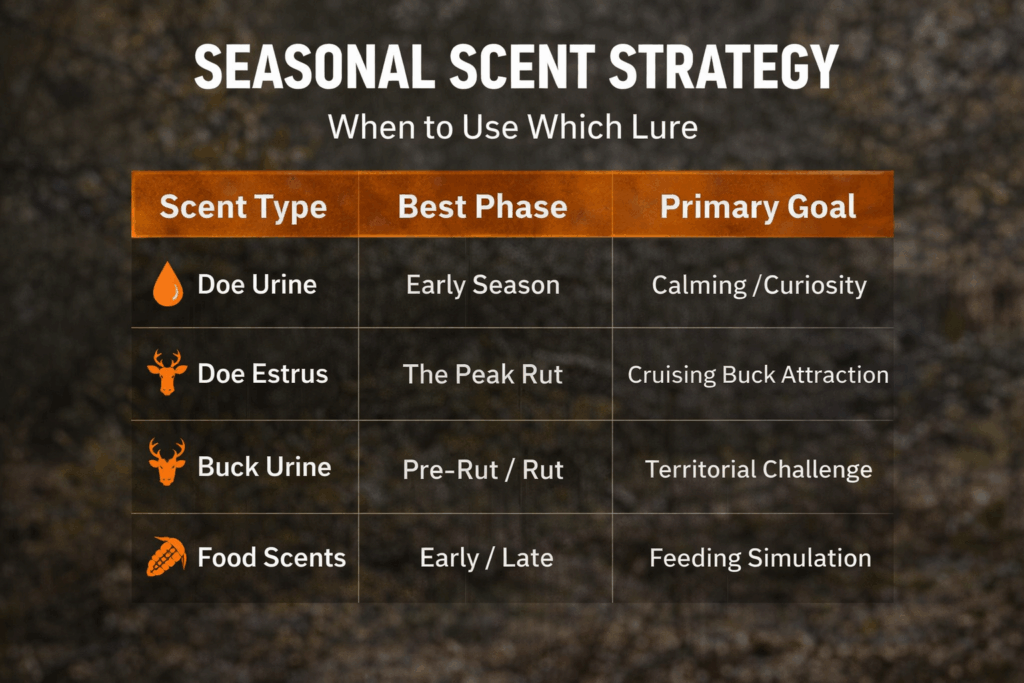
Doe Urine: The Early Season Staple
Doe urine works all season long, but it shines early when bucks are still running in bachelor groups. Early season is all about the three Cs: Curiosity, Calming, and Cover—not sex appeal.
💡 First-Timer Tip: Start with doe urine. It’s forgiving—won’t spook deer if you mess up the timing, and it works from opening day through late season.
Doe Estrus: The Rut Game-Changer
Don’t touch doe estrus until you’re within two weeks of peak rut. Once you see bucks chasing does with flagging tails, it’s time to saturate your best stand locations with estrus scent.
Think of estrus scent as a dinner bell during the rut. It tells every cruising buck within miles that there’s a hot doe nearby. In the Midwest, that magic usually starts the last week of October.
Buck Urine: Triggering the Territorial Response
Buck urine makes resident bucks think some stranger just moved into their neighborhood. Works great during pre-rut and rut when dominance battles are heating up. Combine it with tarsal gland scent in mock scrapes for maximum realism.
Curiosity and Food Scents: Year-Round Options
Early season, forget the sex scents. You want curiosity lures (Trail’s End #307, cherry extract, anise), plain urine, glandular scents, or food attractants (acorn, apple, corn scents).
Just remember—food scents might count as baiting in some states. Always check local rules before using anything apple, acorn, or corn-based.
Scent Type Comparison Table
| Scent Type | Best Season Phase | Primary Purpose | Deer Response |
|---|---|---|---|
| Doe Urine | Early season through late season | Calming presence, cover scent | Relaxed investigation |
| Doe Estrus | 2 weeks before through peak rut | Attract cruising bucks | Active searching, following |
| Buck Urine | Pre-rut through rut | Trigger territorial response | Aggressive investigation |
| Curiosity Scents | Year-round | Pique interest | Cautious approach |
| Food Scents | Early season, post-rut | Simulate food source | Feeding behavior |
Natural vs. Synthetic: Making the Choice
Natural scents fool bucks better than synthetic versions, so go natural when you can for covering human odor. But synthetic scents offer consistency, longer shelf life, and they’re legal everywhere—even in states that ban natural cervid products.
Core Gear Checklist: Scent Strategy Essentials
Knowing your scents is half the battle. You need the right delivery systems and support gear to make it all work.
Scent Delivery Systems
How you deploy scent matters as much as what scent you use:
- Scent Wicks: Two wicks to your left, one to your right—that’s all you need to catch deer passing by
- Scent Drags: The Pro-Drag holds tons of scent and gives you total control creating scent trails
- Scent Dispensers/Drippers: Perfect for mock scrapes and all-day scent release
Don’t hang them farther than you can shoot. Keep scent wicks within bow or gun range of your stand, positioned along shooting lanes or travel routes.
Check out our hunting scents and lures collection for everything you need.
Ready to stock up? We’ve got doe estrus, buck urine, curiosity scents, and all the delivery gear. Browse our scents and lures →
Scent Elimination: Your Invisibility Cloak
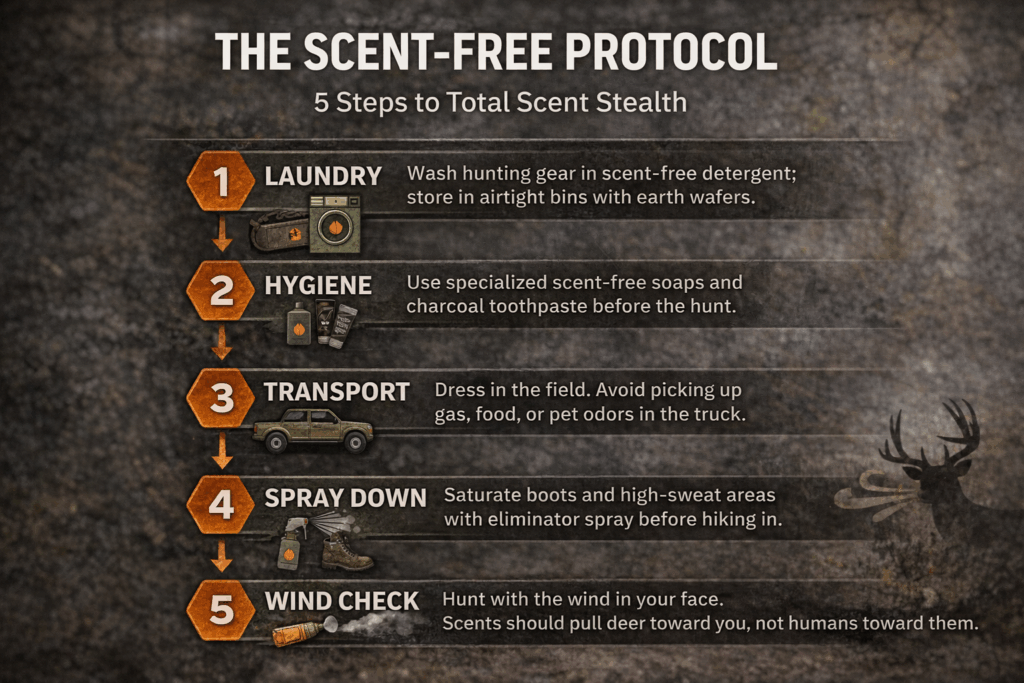
Pair strong scent elimination with cover scents for maximum advantage. Attracting deer means nothing if they wind you first.
Here’s your complete scent control routine:
- Pre-Hunt Shower: Use scent-free soaps and shampoos made specifically for hunters
- Oral Care: Scent-free toothpaste and mouthwash control odor-causing bacteria
- Laundry Protocol: Special hunting laundry products work best. On a budget? Good old Borax does the job
- Field Application: Spray down with scent eliminators before entering your hunting area
- Storage Discipline: Keep hunting clothes in scent-free containers away from household smells
Browse our scent elimination products for complete scent control.
Essential Hunting Accessories
Round out your scent strategy with these must-haves:
- Navigation/Safety: Quality GPS units for marking scent spots and first aid kits for safety
- Field Dressing Tools: Sharp hunting knives and protective gloves for processing your harvest
- Lighting: Reliable headlamps and flashlights for dark-thirty hunts
- Comfort Gear: Hand warmers for those long, cold sits when patience pays off
Tactics & Strategy: Hunting Deer with Scents
Hanging a wick and hoping won’t cut it. You need to understand deer behavior and environmental factors to make scent hunting pay off.
Peak Activity Times
Early morning and late evening are prime time for deer movement, making these your best windows for scent strategies. During the rut, bucks cruise all day long, so estrus scents can work even at noon.
Wind & Scent Control
Wind direction makes or breaks scent hunting. Always hunt with wind in your favor—attractant scents should blow toward deer approach routes while your human scent blows away from them. Check wind constantly and adjust your plan accordingly.
The Approach: Specific Techniques
Stand Placement: Set up downwind of your scent placements with shooting lanes covering areas where deer will investigate.
Mock Scrapes: Build realistic scrapes using buck urine and tarsal gland scents. Freshen them regularly throughout the season.
Scent Trails: A scent drag soaked in the right scent does double duty—covers your walking-in scent while creating an attractant trail that pulls cruising bucks closer.
Shot Placement: Wait for broadside shots on deer that have stopped to investigate your setup. Clean, ethical shots in the vitals ensure quick kills.
Post-Harvest Care: The Work After the Shot
Success with scents means being ready for what happens after you connect. Proper post-harvest care turns your hard work into quality table fare.
Tracking & Recovery
Follow blood trails methodically. Mark your last blood before moving forward, and give wounded deer time to expire before pushing them. Respect the animal and landowner with quiet, thorough recovery work.
Field Dressing
Cool that carcass fast by field dressing immediately after recovery. Sharp hunting knives and proper technique preserve meat quality. Remove all internal organs and prop the cavity open for air circulation.
Transport & Processing
Get your deer from field to freezer safely following proper transport guidelines. Consider professional processing or invest in quality game processing equipment for home butchering.
More Resources from Hunting Locator
Expand your hunting arsenal with these additional resources:
- Hunting Accessories – Complete gear selection from trusted brands
- Hunting Backpacks – Haul your scent supplies and gear efficiently
- Hunting Face Paint – Complete your concealment game
- Shooting Sticks and Bipods – Steady your shot when deer respond to scents
- Hunting Hearing Protection – Protect your ears while staying alert
- Gun Cleaning Kits – Keep your equipment running reliably
FAQ
Do deer scents actually work for attracting deer?
When used right, deer scents can boost your hunt. But scent locations work more to get passing deer to stop and investigate, giving you a better shot at a stationary, broadside target rather than making deer “come running.”
When should I start using doe estrus scent?
Don’t use doe estrus until you’re within two weeks of peak rut. Once you see bucks chasing does with flagging tails, saturate your best stand areas with estrus scent. Use it too early and you’ll actually spook deer.
How many scent wicks should I use?
Two wicks to your left, one to your right catches anything passing by. Don’t go crazy with four or five scent bombs in a circle—too much scent can overwhelm and spook deer.
Are natural or synthetic deer scents better?
Natural scents fool bucks better than synthetic, so use natural when possible for covering human odor. However, synthetic scents offer consistency and they’re legal everywhere, including states that ban natural cervid products due to CWD concerns.
What’s the biggest mistake hunters make with deer scents?
Unrealistic expectations and wrong timing. Too many hunters expect to hang scents and watch deer come running, but that’s not how it works. Scents create opportunities—they don’t guarantee deer will show up.
How do I know if deer scents are legal in my state?
Regulations change constantly and vary dramatically by state. Always check with your state wildlife agency before buying or using any deer attractants. Some states ban all natural cervid products, while others have restrictions on WMAs or CWD zones.
The Final Shot
Mastering scent-based hunting takes patience, knowledge, and quality gear. Success comes from understanding deer behavior, following regulations, and using the right products at the right times. Remember—scent strategies work best as part of a complete hunting approach including proper scouting, scent control, and ethical shooting.
Set realistic expectations. Scents won’t make deer come running, but they can give you that crucial moment when a deer stops to investigate, creating the perfect broadside opportunity you’ve been waiting for.
Ready for your best deer season yet? We’ve got everything you need! Stock up on scent elimination products, hunting scents and lures, and essential hunting accessories for guaranteed success.


