Vermont also expanded archery season, introduced an “earn-a-buck” system, and made it easier to get multiple antlerless permits. If you hunt Vermont, these changes will affect your season whether you’re chasing deer, bear, or turkey.
This guide breaks down everything you need to know for Vermont’s 2026-2027 hunting seasons. We’ve organized it so you can quickly find what matters most to your hunting plans. And if you’re looking to upgrade your gear for Vermont’s challenging terrain, check out the Hunting Locator store for equipment that can handle everything from September archery hunts to late-season rifle hunting.
Here’s what we’ll cover:
- The new 2026 rules that are changing how Vermont hunters approach deer season
- Complete license costs and season dates in easy-to-scan tables
- Where to hunt: public land options, guided hunts, and private land access
Let’s start with the basics—licenses, costs, and the season dates that’ll shape your hunting year.
Quick Overview: Season Dates, Vermont Hunting Licenses, and Regulations
Vermont keeps things simple with calendar-year licenses (January 1 through December 31). That makes trip planning easy, but the price difference between resident and non-resident licenses is substantial. Non-resident licenses generally cost approximately $90 annually, though the actual general hunting license runs $102. You can buy licenses online through Vermont Fish & Wildlife or at dealers statewide.
Vermont Hunting License Costs
| License Type | Resident | Non-Resident |
|---|---|---|
| Hunting License (General) | $28.00 | $102.00 |
| Combination (Hunt/Fish) | $47.00 | $143.00 |
| Youth License (Under 18) | $8.00 | $25.00 |
| Small Game Only | N/A | $50.00 |
| Permanent Senior (66+, One-time) | $60.00 | N/A |
Most hunting requires additional permits beyond your basic license. Archery, muzzleloader, turkey, bear, and waterfowl all need separate permits.
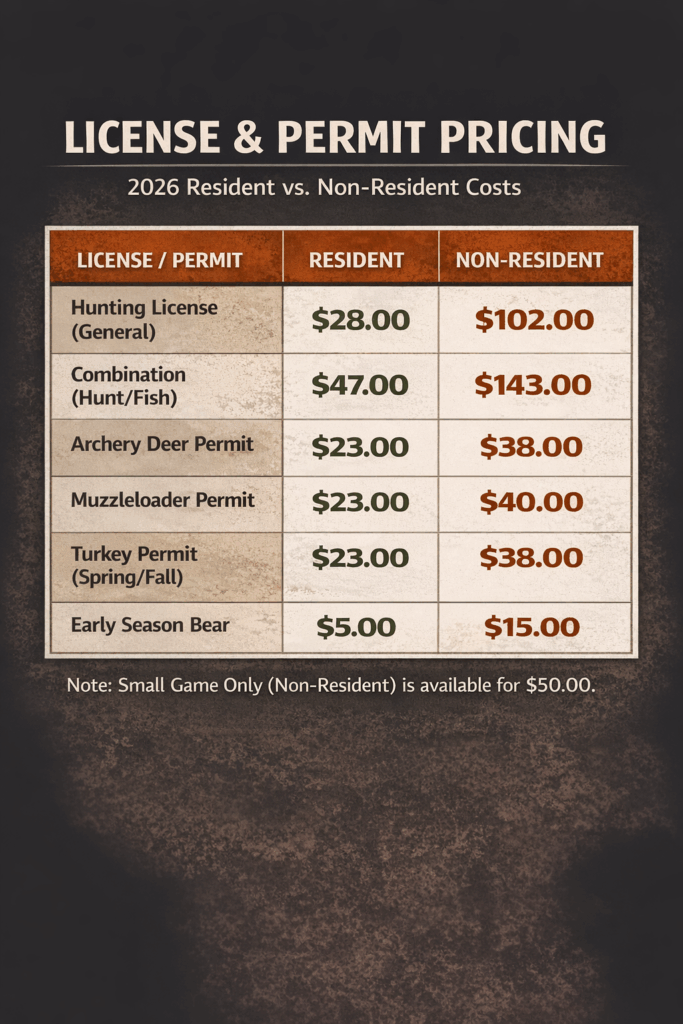
Common Add-On Permits
| Permit Type | Resident | Non-Resident |
|---|---|---|
| Archery Deer | $23.00 | $38.00 |
| Muzzleloader Deer | $23.00 | $40.00 |
| Turkey Permit (Spring & Fall) | $23.00 | $38.00 |
| Early Season Bear | $5.00 | $15.00 |
| Waterfowl Stamp (State) | $7.50 | $7.50 |
Vermont hunting runs almost year-round across different species. Dates with asterisks (*) are estimates based on previous years—always double-check with Vermont Fish & Wildlife before making final plans.
Vermont 2026-2027 Hunting Season Dates
| Species | Season Type | Start Date | End Date | Notes |
|---|---|---|---|---|
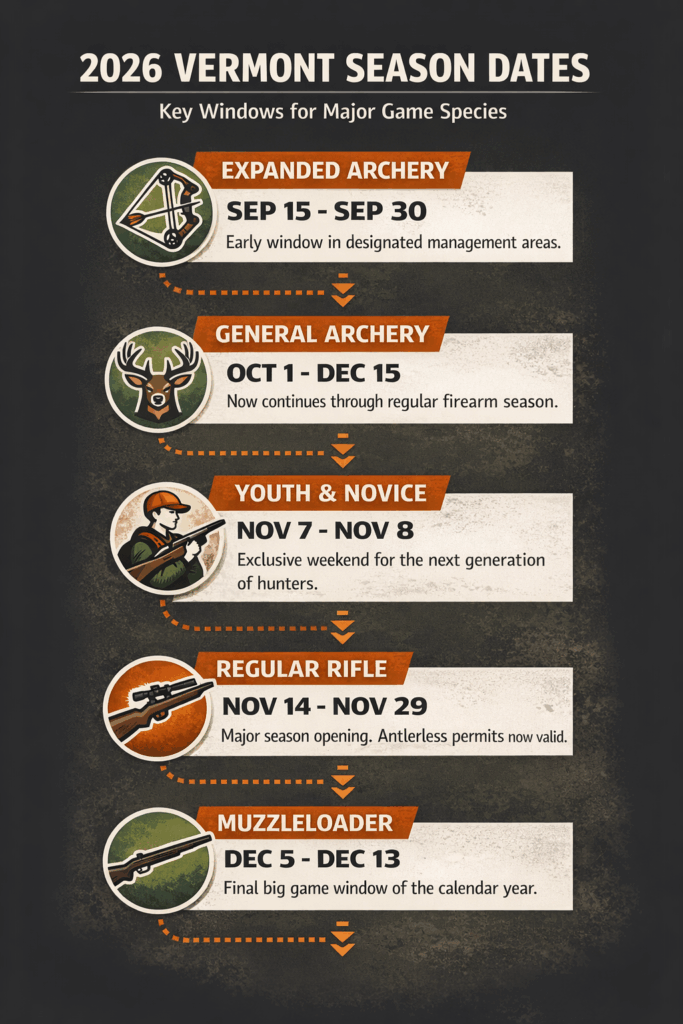
| Deer | Expanded Archery (designated areas) | Sep 15, 2026 | Sep 30, 2026 | 4 deer/year max, only 1 legal buck |
| Deer | Archery (includes crossbows) | Oct 1, 2026 | Dec 15, 2026 | 4 deer/year max, only 1 legal buck |
| Deer | Youth & Novice Weekend | Nov 7, 2026 | Nov 8 | Per general regulations |
| Deer | Regular Rifle Season | Nov 14, 2026 | Nov 29, 2026 | First year allowing antlerless deer |
| Black Bear | Early Season | Sep 1, 2026* | Nov 14, 2026* | 1 bear limit |
| Black Bear | Late Season | Nov 15, 2026* | Nov 23, 2026* | 1 bear limit |
| Turkey | Spring Youth & Novice | Apr 26, 2026* | Apr 27, 2026* | Varies by WMU |
| Turkey | Spring Regular | May 1, 2026* | May 31, 2026* | Varies by WMU |
| Turkey | Fall Archery | Oct 4, 2026* | Oct 24, 2026* | Varies by WMU |
| Moose | Archery Only | Oct 1, 2026* | Oct 7, 2026* | Lottery permit only |
| Moose | Regular | Oct 18, 2026* | Oct 23, 2026* | Lottery permit only |
| Canada Geese | Early Season (statewide) | Sep 1, 2026 | Sep. 25, 2026 | Check regulations |
| Woodcock | Regular (statewide) | Sep 27, 2026 | Nov. 10, 2026 | Check regulations |
| Gray Squirrel | Regular | Sep. 1, 2026 | Dec. 31, 2026 | Check regulations |
| Hare & Rabbit | Regular | Late Sep 2026 | Early Mar 2027 | Check zone-specific dates |
| Coyote | Regular | No closed season | No closed season | No limit |
| Bobcat | Hunting | Jan 10, 2026 | Feb 7, 2026 | Limited season |
| Bobcat | Trapping | Dec 1, 2026 | Dec 16, 2026 | Check regulations |
| Red & Gray Fox | Trapping | Oct 24, 2026 | Feb 14 | Check regulations |
New to hunting? All first-time hunters in Vermont must pass a hunter education course before getting a hunting license. You can take it online or in-person, depending on your age and preference.
Vermont Deer Hunting
In Vermont, hunters define “hunting” as deer hunting. It’s that central to the culture. Vermont was actually the first state to include constitutional language protecting the rights of citizens to hunt, making hunting a constitutional right rather than just a privilege. The four-deer annual limit with one legal buck stays the same, but 2026 brings changes that’ll reshape how you hunt.
For detailed strategies and preparation tips, check out our complete Vermont deer hunting season guide.
Vermont Deer Hunting Seasons
The new expanded archery season (September 15-30) gives bowhunters first crack at deer in designated areas. It’s a short window, but it targets areas where Vermont Fish & Wildlife wants more deer harvested. You’ll face less hunting pressure and potentially less wary deer.
Vermont’s main archery season got a major upgrade for 2026. Running October 1 through December 15, archery season will continue through the regular firearm season. That means bowhunters can keep hunting with their preferred equipment even when rifle hunters hit the woods. Crossbows count as archery equipment, opening opportunities for hunters who can’t draw traditional bows.
Youth & Novice Weekend (November 7-8) remains a cornerstone of Vermont’s hunting tradition. Young people 15 or under may also shoot an antlerless deer during the Youth Deer Weekend when accompanied by an adult supervisor. It’s how Vermont passes hunting heritage to the next generation.
Here’s the big change: Regular Rifle Season (November 14-29) now allows antlerless deer harvest. For a long time, hunters who use rifles have only been able to harvest a buck during November’s regular deer hunting season, but under the newly approved changes, in 2026, hunters will be able to harvest an antlerless deer during the regular November rifle season. This addresses wildlife management needs while giving hunters more opportunities during Vermont’s most popular season.
The new “earn-a-buck” system lets dedicated hunters take a second buck. Hunters may take a second buck if they meet certain conditions including harvesting an antlerless deer, with the order of the conditions not mattering as long as they are all met, and only one buck may be taken per season. It rewards hunters who help with herd management goals.
Vermont also made antlerless permits more flexible. Hunters may now hold two antlerless permits at one time, provided the permits are for different WMUs, with only one permit able to be acquired through the lottery, and if unallocated permits are available, a second permit for a different WMU may be purchased before filling the first permit.
Vermont Deer Hunting Regulations
These regulations keep you legal and support Vermont’s deer management goals. When in doubt, check with Vermont Fish & Wildlife.
- Annual bag limit: 4 deer max per year, only 1 legal buck (unless you meet the conditional second buck requirements)
- Antlerless permits: Can be used during muzzleloader seasons OR the regular November rifle season (new for 2026); you can hold 2 permits for different WMUs
- Legal hunting hours: Generally 30 minutes before sunrise to 30 minutes after sunset—verify current times
- Reporting requirements: Archery and muzzleloader deer can be reported online; Youth, Novice, and Regular November season deer need official reporting stations
- Hunter orange: Not legally required but strongly recommended—a New York study found that 94% of hunters involved in mistaken-for-game accidents were not wearing hunter orange
Vermont Black Bear Hunting
Vermont’s bear population is thriving, making it a solid destination for trophy hunting. Vermont has an abundant bear population. Bears can be found all over the state except the Champlain Islands. The one-bear limit and split seasons create strategic opportunities throughout fall.
For detailed bear hunting tactics, see our Vermont black bear hunting season guide.
Vermont Black Bear Hunting Seasons
Early bear season runs September 1 through November 14 (estimated dates), giving you the longest hunting window of the year. Bears are actively feeding before winter, making them more predictable. You’ll need the early season bear permit ($5 resident / $15 non-resident) plus your general license.
Late bear season (November 15-23, estimated) overlaps with deer rifle season. It’s shorter but strategic—you might encounter bears while deer hunting or specifically target them during this concentrated window.
Vermont Black Bear Hunting Regulations
Bear hunting has specific rules since you’re pursuing large, potentially dangerous game.
- Bag limit: 1 bear per year
- Early season permit: Required ($5 resident / $15 non-resident) beyond your general license
- Legal methods: Verify current regulations for approved hunting methods and equipment
- Reporting: Bears must be reported and registered per Vermont Fish & Wildlife requirements
- Baiting regulations: Check current baiting and feeding restrictions with Vermont Fish & Wildlife
Vermont Turkey Hunting
Vermont’s turkey comeback story is remarkable. Vermont’s turkey population now estimated to be greater than 45,000 birds, and Vermont has become a turkey hunting destination for hunters throughout New England. That’s a complete turnaround from near-extinction decades ago.
For comprehensive turkey hunting strategies, visit our Vermont turkey hunting season guide.
Vermont Turkey Hunting Seasons
Spring Youth & Novice Weekend (April 26-27, estimated) introduces new hunters to turkey hunting under supervised conditions. It’s a controlled environment that builds confidence and skills.
Spring Regular Season (May 1-31, estimated) is Vermont’s premier turkey hunting opportunity. Spring gobblers are vocal and responsive during breeding season, creating classic turkey hunting experiences. Bag limits vary by Wildlife Management Unit, so know your area’s specific rules.
Fall Archery Season (October 4-24, estimated) offers archery-only turkey hunting for bowhunters or those wanting additional opportunities beyond spring. Fall birds are less vocal and more focused on feeding, presenting different challenges.
Vermont Turkey Hunting Regulations
Turkey hunting needs specific permits and attention to location-based regulations.
- Turkey permit required: $23 resident / $38 non-resident, covers both spring and fall seasons
- Bag limits: Vary by Wildlife Management Unit—check your specific WMU regulations
- Legal hunting hours: Typically half-hour before sunrise to sunset; verify current regulations
- Shot restrictions: Check regulations for legal shot sizes and equipment requirements
- Reporting: Turkey harvest must be reported per Vermont Fish & Wildlife requirements
Vermont Moose Hunting
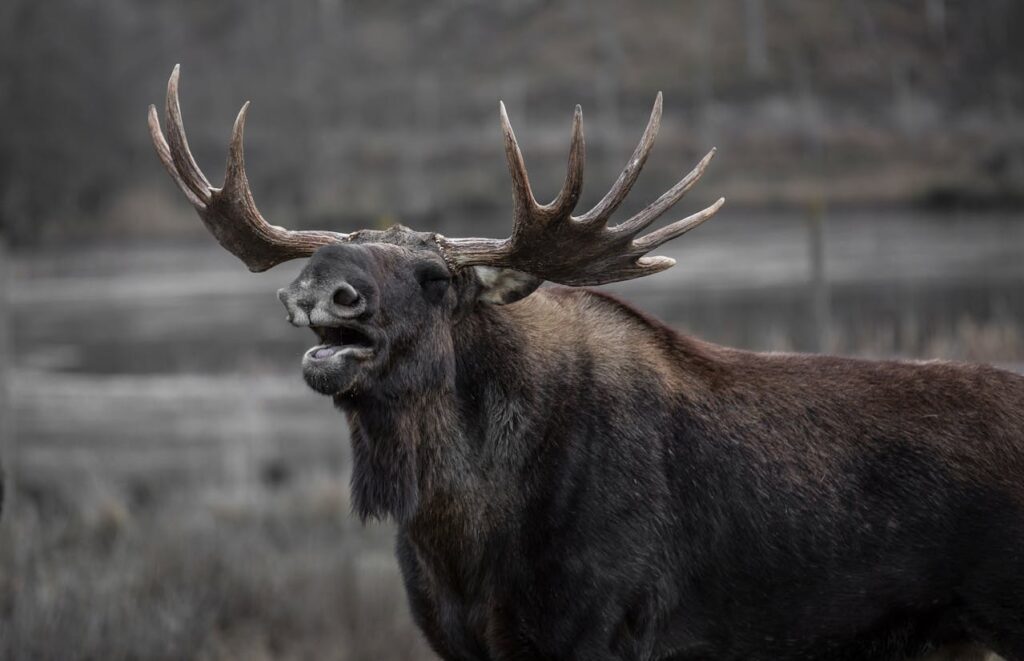
Moose hunting in Vermont is a lottery-controlled, once-in-a-lifetime opportunity. Moose are managed through a permit lottery system, by management unit, allowing the department to limit or expand the harvest numbers annually. This ensures sustainable harvest while providing incredible experiences for lucky permit holders.
Vermont Moose Hunting Seasons
Archery Only season (October 1-7, estimated) requires lottery permits and archery equipment. You need advanced archery skills and equipment capable of taking large game cleanly.
Regular Moose Season (October 18-23, estimated) allows all legal hunting methods for lottery permit holders. This brief but intensive season concentrates effort during peak fall conditions when moose are most active.
Vermont Moose Hunting Regulations
Moose hunting operates under strict lottery systems requiring advance planning.
- Lottery permit required: All moose hunting requires successful lottery application
- Limited permits: Permits issued by Wildlife Management Unit with specific quotas
- Application deadlines: Check Vermont Fish & Wildlife for annual lottery application periods
- Reporting requirements: Successful moose hunters must comply with mandatory reporting and registration
- Guide recommendations: Consider professional guides for this specialized hunting opportunity
Vermont Minor Game Species Hunting
Vermont’s wildlife diversity provides year-round hunting opportunities beyond big game. These species offer accessible hunting for beginners and additional opportunities for experienced hunters.
Vermont Small Game Hunting Information
Small game hunting includes gray squirrels, rabbits, hares, and upland birds that provide excellent training opportunities. You’ll find a wide range of animals to hunt and seasons for hunting year-round, making Vermont attractive for hunters with diverse interests.
Gray squirrel season (September 1 – December 31) provides four months of hunting opportunity. Squirrel hunting teaches essential skills like woodcraft, marksmanship, and game processing without the pressure of big game hunting. For detailed information, see our Vermont small game hunting season guide.
Vermont Waterfowl Hunting Information
Vermont’s waterfowl hunting focuses on Canada geese, woodcock, and other migratory birds using the state’s wetlands and flyways. Early Canada goose season (September 1-25) provides excellent hunting before migration shifts birds south.
Woodcock hunting (September 27 – November 10) offers unique upland bird hunting in Vermont’s thick cover. These challenging birds require quick reflexes and provide excellent wing shooting practice. All hunters age 16 or older must purchase the Vermont Waterfowl Stamp and the Federal Duck Stamp when hunting migratory waterfowl, plus participate in the Harvest Information Program (HIP). For comprehensive strategies, visit our Vermont waterfowl hunting season guide.
Vermont Predator Hunting Information
Coyote hunting operates with no closed season and no bag limit, providing year-round opportunities. This reflects coyotes’ abundant population and their impact on other wildlife.
Bobcat hunting offers limited opportunities with specific seasons for hunting (January 10 – February 7) and trapping (December 1-16). These brief seasons require specialized skills and knowledge of bobcat behavior. Fox trapping (October 24 – February 14) provides additional winter predator hunting. For complete information, see our Vermont predator hunting season guide.
Where to Hunt in Vermont
Vermont offers outstanding hunting access through extensive public lands, quality guides, and unique private land opportunities. There are more than 800,000 acres of state and federal land available to hunt, making Vermont one of New England’s most accessible hunting states. The terrain ranges from mountain forests to agricultural valleys, providing habitat for all major game species.
Best Public Lands
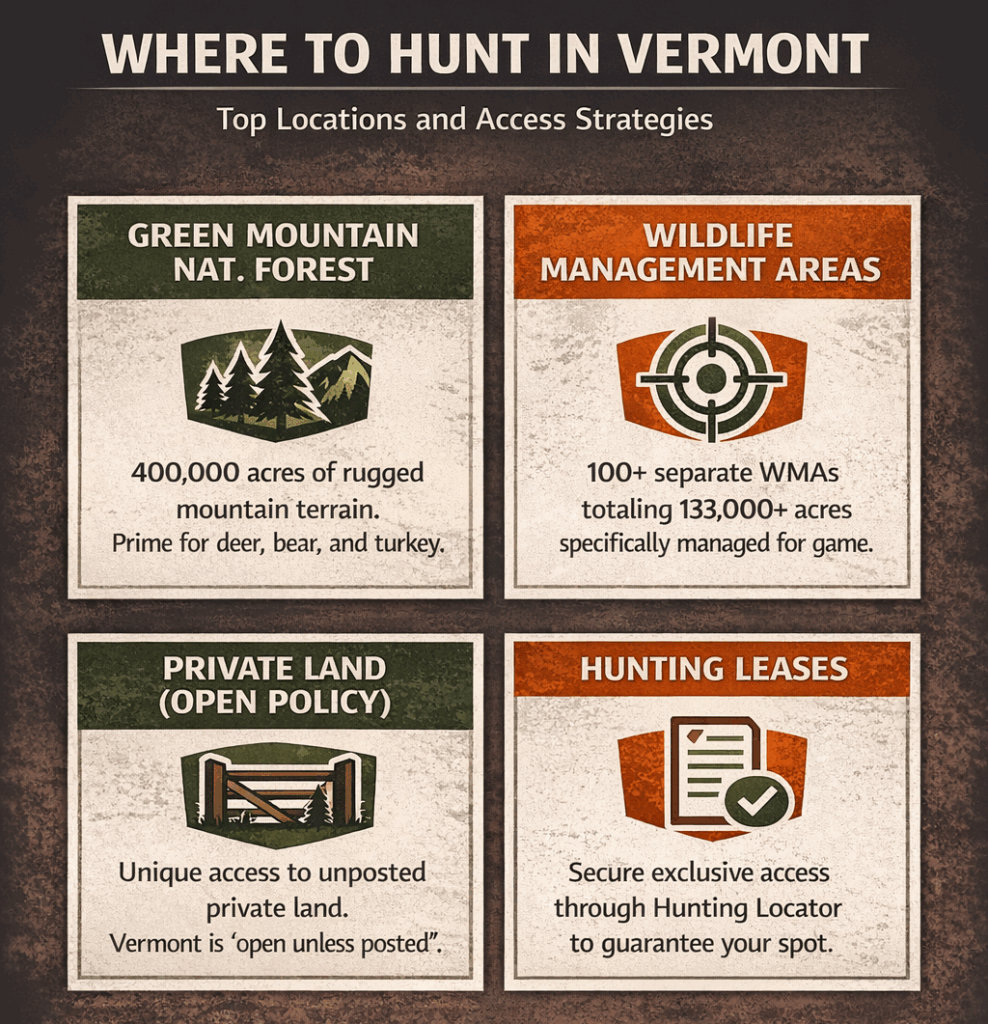
Vermont’s public hunting lands provide free access to quality opportunities statewide. Wildlife Management Areas (WMAs) in Vermont comprise about 130,000 acres. There are 100 separate WMAs across Vermont, offering everything from small woodlots to large forest blocks.
- Green Mountain National Forest: 400,000 acres in central and southern Vermont provide extensive hunting for deer, bear, turkey, and small game across diverse mountain terrain
- Wildlife Management Areas: Over 100 separate WMAs totaling 133,000+ acres offer hunting access specifically managed for wildlife habitat
- State Forests: Multiple state forest properties provide additional public hunting access with varying terrain and game opportunities
- National Wildlife Refuges: Federal refuges offer specialized hunting opportunities with specific seasons designed to complement wildlife management
Guided Hunts
Professional guides provide valuable services for non-resident hunters unfamiliar with Vermont terrain and conditions. Experienced guides offer local knowledge, equipment, and expertise that can dramatically improve success rates.
Vermont’s guide services specialize in different species and hunting styles. Bear hunting guides provide essential knowledge of feeding patterns, den locations, and hunting strategies. Turkey hunting guides excel at locating birds and calling expertise during spring and fall seasons. Deer hunting guides offer property access and local knowledge invaluable for non-resident hunters.
Many outfitters provide comprehensive packages including lodging, meals, and equipment, making Vermont hunting accessible for traveling hunters. These services are particularly valuable for moose hunting, where the brief season and specialized requirements benefit from professional guidance.
Private Land Hunting
Vermont offers unique private land hunting through its “open unless posted” policy. All private land in the state is open to hunters unless the landowner posts against hunting, creating extensive access not available in most states. This reflects Vermont’s hunting traditions and landowner relationships built over generations.
Permission from the landowner is not required for hunting on privately owned lands in Vermont, except during the Youth Hunting Weekends, when special permission requirements apply. Always respect private property, follow ethical hunting practices, and maintain positive relationships with landowners.
For guaranteed access or exclusive opportunities, private land leases provide security and quality experiences. Hunting Locator connects hunters with landowners offering lease opportunities throughout Vermont. Our platform provides access to verified properties with detailed information about terrain, game species, and lease terms. Whether you want a small woodlot for deer hunting or a large property for diverse opportunities, browse available Vermont hunting leases to find your perfect hunting property.
Purchasing hunting land represents the ultimate investment for dedicated hunters. Hunting Locator’s property listings include recreational land suitable for hunting, from small parcels to large estates. Our platform connects serious hunters with landowners ready to sell, providing detailed property information and direct contact with sellers.
FAQ
What are the biggest changes to Vermont hunting regulations for 2026?
The most significant change allows antlerless deer harvest during the regular November rifle season for the first time. Vermont’s 2026 deer hunting changes include allowing hunters to harvest antlerless deer during the regular November rifle season, plus archery season will continue through the regular firearm season. There’s also a new “earn-a-buck” program allowing hunters to take a second buck if they meet specific conditions including harvesting an antlerless deer.
How much does it cost for a non-resident to hunt deer in Vermont?
Non-residents need a general hunting license ($102) plus an archery deer permit ($38) for bowhunting or muzzleloader permit ($40) for muzzleloader seasons. Non-resident licenses generally cost approximately $90 annually, though the actual general hunting license is $102. Total costs range from $140-142 depending on hunting method, not including antlerless deer permits.
Do I need hunter education to hunt in Vermont?
Yes, all first-time hunters in Vermont must pass a hunter education course before getting a hunting license. Hunters under 18 must take the online course and then complete an in-person class to fulfill hunter education requirements. Vermont offers both online and in-person options to accommodate different learning preferences.
Can I hunt on private land in Vermont without permission?
Vermont has a unique “open unless posted” policy where all private land in the state is open to hunters unless the landowner posts against hunting. Permission from the landowner is not required for hunting on privately owned lands in Vermont, except during the Youth Hunting Weekends. Always respect posted signs and practice ethical hunting behavior on private property.
When is Vermont’s youth hunting weekend for 2026?
Vermont’s Youth & Novice Weekend is November 7-8, 2026. Young people 15 or under may also shoot an antlerless deer during the Youth Deer Weekend when accompanied by an adult supervisor. This weekend provides safe, supervised hunting opportunities for introducing young people to hunting traditions.
How do I get an antlerless deer permit in Vermont?
Under the new 2026 system, hunters may now hold two antlerless permits at one time, provided the permits are for different WMUs, with only one permit able to be acquired through the lottery, and if unallocated permits are available, a second permit for a different WMU may be purchased before filling the first permit. Antlerless permits may now be used during the regular season, with hunters able to use them during the muzzleloader seasons as in previous years, or during the regular season.
The Final Shot
Vermont’s 2026-2027 hunting seasons mark a turning point for the state’s hunting community. These regulatory changes—especially allowing antlerless deer harvest during rifle season—will reshape how hunters approach deer season while maintaining the traditions that make Vermont hunting special. The expanded archery opportunities and new “earn-a-buck” provisions show Vermont Fish & Wildlife’s commitment to adaptive management that serves both wildlife and hunters.
Whether you’re planning your first Vermont hunt or adapting to new regulations as a longtime resident, success starts with understanding your opportunities and securing access to quality hunting locations. Vermont’s abundant public lands, unique private land access policies, and professional guide services provide options for every hunter and budget.
Ready to secure your Vermont hunting access for 2026-2027? Explore Hunting Locator’s Vermont hunting leases to find exclusive properties that guarantee access and improve your chances of success. From small woodlots perfect for deer hunting to large properties offering diverse game species, our platform connects you directly with landowners ready to lease their hunting rights. Don’t leave your 2026 Vermont hunting season to chance—find your perfect hunting lease today.


