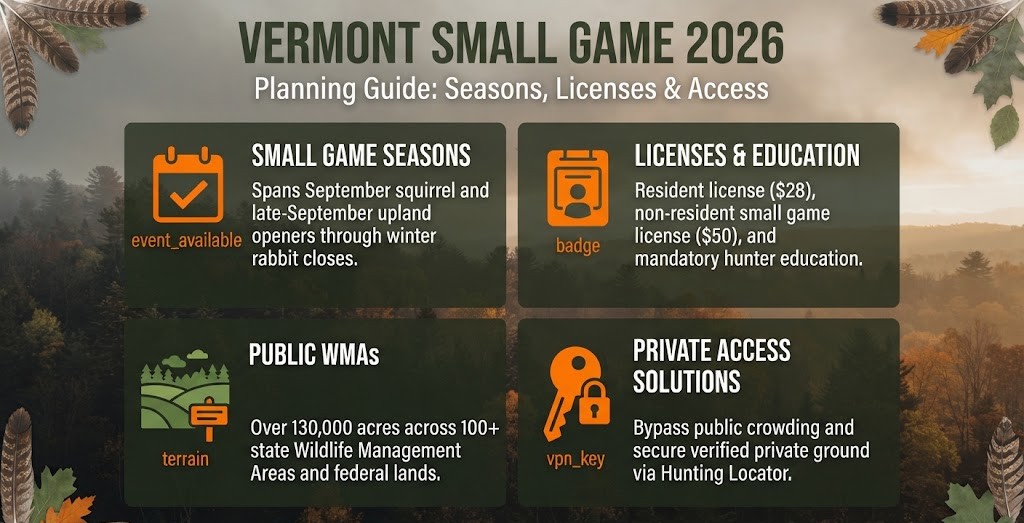
This Vermont small game season guide covers what you need to plan a legal, productive season: confirmed 2026 dates, license costs, and places to hunt, whether you’re a Vermont resident or planning a trip from out of state. Here’s what’s below:
- Confirmed 2026 season dates and bag limits for every small game species
- License and permit requirements and costs for residents, non-residents, and youth
- Where to hunt legally — public WMAs, private leases, and guided options
If you need gear before opening day, browse Vermont hunting gear at Hunting Locator’s store. Start with the dates and limits below.
Quick Overview: Vermont Small Game Seasons at a Glance
Your daily bag limit is how many animals you can take in a single day. Your possession limit is the total you can have on hand at once. You’ll also see references to Wildlife Management Units (WMUs) — geographic zones that govern certain season extensions across the state.
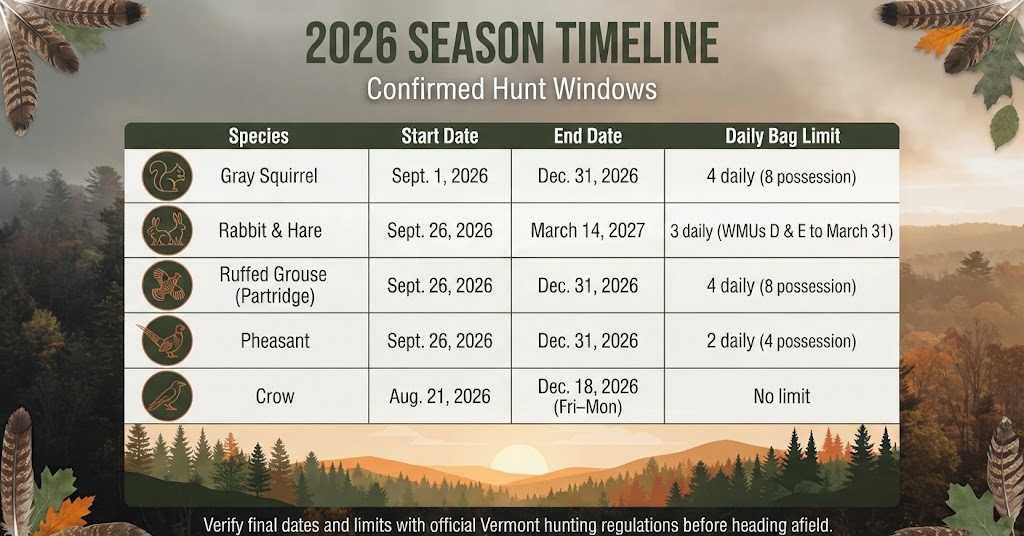
| Species | Season Dates (2026) | Daily Bag | Possession | Notes |
|---|---|---|---|---|
| Gray Squirrel | Sept 1 – Dec 31, 2026 | $4 | 8 | Four full months of opportunity |
| Rabbit & Hare | Sept 26, 2026 – Mar 14, 2027 | 3 | 6 | WMUs D & E open through Mar 31, 2027 |
| Ruffed Grouse (Partridge) | Sept 26 – Dec 31, 2026 | $4 | 8 | Vermont’s signature upland bird |
| Pheasant | Sept 26 – Dec 31, 2026 | 2 | 4 | Stocked species |
| Crow | Aug 21 – Dec 18, 2026 (Fri–Mon) | No limit | No limit | Split season; see Crow section below |
Crow season only runs Fridays through Mondays, August 21 through December 18, 2026, so plan hunts around those days specifically.
These dates reflect Hunting Locator’s compiled 2026 data. Confirm final dates and limits with the official Vermont hunting regulations before you hunt.
Basic requirements before you buy a license or head afield:
- Must be 16 or older and have completed a Hunter Education Course to buy a license
- Courses completed in other states are accepted
- A basic Vermont hunting license covers small game — no separate small game permit needed for residents
- Non-residents can choose a small game-specific license or a standard hunting license
- Carry your license afield and present it on request from a warden
Vermont Small Game Hunting Seasons
Most of Vermont’s small game seasons open together on September 26, with gray squirrel getting an early start on September 1. Here’s the breakdown by species.
Gray Squirrel Season
Gray squirrel season runs September 1 through December 31 — four months, the longest window of any small game species in Vermont. Daily bag limit is 4, possession limit is 8. It’s a good entry point for new hunters: it teaches woodcraft, marksmanship, and game processing without the pressure of big game hunting.
Rabbit & Hare Season
The general rabbit and hare season runs September 26, 2026 through March 14, 2027, with a daily bag limit of 3 and a possession limit of 6. Wildlife Management Units D and E stay open through March 31, 2027, giving hunters in those areas extra weeks afield. Whether you chase cottontails with a beagle and shotgun or stalk them with a .22 rifle, this is one of Vermont’s more versatile small game hunts.
Ruffed Grouse (Partridge) Season
Ruffed grouse — known locally as partridge — run September 26 through December 31, 2026, with a daily bag limit of 4 and possession limit of 8. This is Vermont’s signature upland bird and a common target for weekend hunters filling out a fall calendar.
Pheasant Season
Pheasant season runs September 26 through December 31, 2026, with a daily bag limit of 2 and possession limit of 4. Pheasant is stocked in Vermont, which makes it a reliable option for hunters — including those traveling from out of state — looking for a dependable trip target.
Crow Season
Crow season’s open window runs August 21 – December 18, 2026, Fridays through Mondays only, with no bag limit. Vermont splits crow season into two windows each year; the other window (January 16 – April 10) belongs to a separate cycle and has already passed as of this guide’s publication.
Vermont Small Game Licenses and Permits
Here’s what a license costs and what it takes to get one for the 2026 season.
Vermont Hunting Licenses
License fees vary by residency and age, and the right choice depends on what else you’re hunting this year.
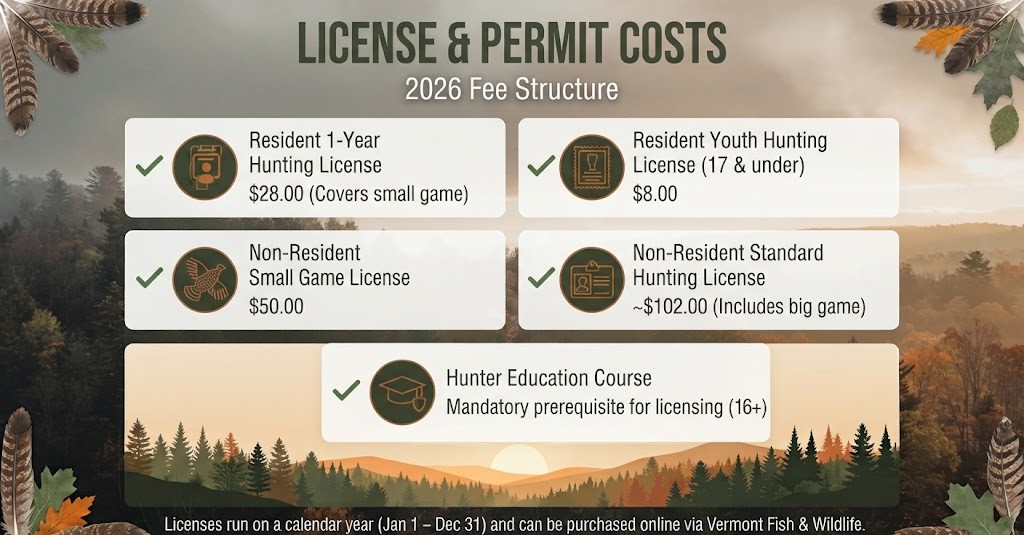
| License Type | Residency | 2026 Fee |
|---|---|---|
| 1-Year Hunting License | Resident | $28 |
| Youth Hunting License (age 17 & under) | Resident | $8.00 |
| Small Game License | Non-Resident | $50 |
| Standard Hunting License | Non-Resident | ~$102.00 |
A resident’s basic hunting license already covers small game — no need to buy anything extra. Non-residents choose between the $50 small game-only license, which makes sense if small game is the sole target, and the roughly $102 standard license, worth it if you’re also pursuing deer, bear, or turkey on the same trip. Vermont hunting licenses run on a calendar-year basis, valid January 1 through December 31, and can be purchased online directly through the state. The $8 resident youth license keeps the cost of introducing a new hunter low.
Vermont Hunting Permits
Vermont’s core small game species — squirrel, rabbit and hare, grouse, pheasant, and crow — don’t require any additional species-specific permits or stamps, unlike turkey or waterfowl hunting. The main prerequisite is completing a Hunter Education Course before you buy your license. Check with Vermont Fish & Wildlife for current course offerings and the online license application process.
Where to Hunt Small Game in Vermont
Vermont offers a wide mix of access options, from large public Wildlife Management Areas to leased private ground with fewer crowds. Here’s how to think through the options for 2026.
Best Public Lands
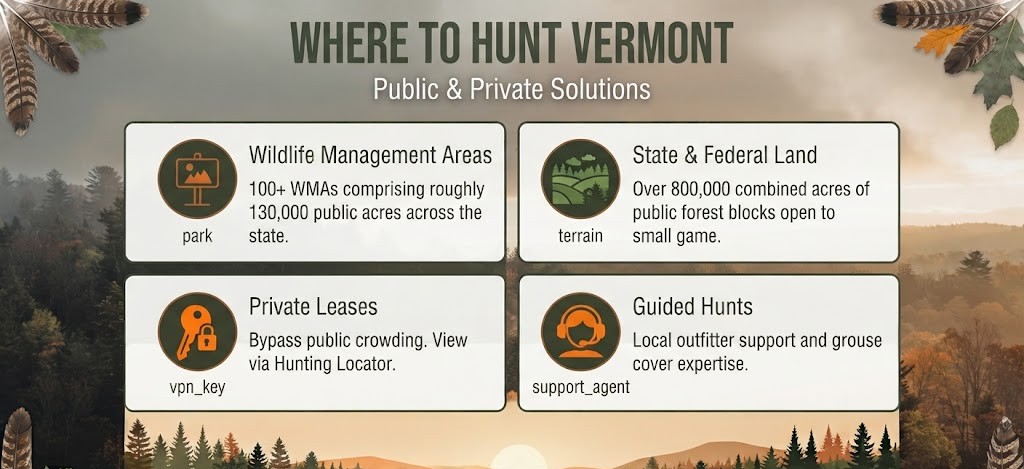
Vermont’s Wildlife Management Areas comprise about 130,000 acres across 100 separate WMAs, ranging from small woodlots to large forest blocks. Combined with federal holdings, hunters have access to a large footprint of legal, huntable ground.
- 100+ Wildlife Management Areas (WMAs) — roughly 130,000 acres, ranging from small woodlots to large forest blocks
- 800,000+ acres of combined state and federal public land
- Open private land — all private land in Vermont is open to hunters unless posted, though asking permission first is still the respectful move
These public options tend to be beginner-friendly, so WMAs are a solid starting point if you’re new to small game hunting or exploring a new part of the state.
Private Land Hunting with Hunting Locator
Public land works well, but leasing private ground offers something public access can’t guarantee: consistency. Less pressure from other hunters, the ability to scout the same cover season after season, and clarity on exactly where you stand — legally and literally — before opening day.
Some hunters lease a property year-to-year, keeping flexibility while building a relationship with the landowner. Others, especially those looking to make Vermont a long-term hunting destination, look at buying private land outright. Both approaches solve the same problem: reliable, exclusive access to good ground.
This is where the Hunting Locator platform comes in. It provides access to verified properties with detailed information about terrain, game species, and lease terms, so you can browse available Vermont hunting leases and find a property that fits — without cold-calling landowners or guessing at property lines.
Browse current Vermont lease listings to secure access before the September opener — especially useful if you’re traveling from out of state and want confirmed access locked in ahead of time.
Guided Hunts
Guided hunts make sense if you’re unfamiliar with Vermont’s terrain, traveling from out of state, or want an experienced hand while building confidence in the field. A good guide can shorten the learning curve, especially for grouse in unfamiliar cover or navigating a new WMU.
Guided hunt availability and pricing vary from season to season, so it’s worth researching current outfitters before booking. For most hunters, the more dependable starting points are the verified private leases and public WMAs covered above — both give clear, confirmed access without the guesswork.
Small Game Hunting Tips
Once your license and land access are settled, these tips apply in the field:
- Match Your Tool to the Target: Squirrels are a real challenge when stalked with a .22 rifle, while cottontails and upland birds often call for a shotgun. Choose based on your quarry and the cover you’re hunting.
- Hunt the Right Hours: Small game is most active during cooler early-morning and late-afternoon windows — plan outings around these periods.
- Work the Edges: Grouse and rabbits favor cover transitions — brushy edges, old orchards, and forest-field borders are consistently productive.
- Bring a Dog for Uplands: A beagle for rabbits or a flushing/pointing dog for grouse improves your success rate and adds another dimension to the hunt.
- Gear Up Before You Go: A reliable shotgun or .22, blaze orange for safety, sturdy boots, and quality ammunition are the small game essentials for any Vermont trip.
Find a shotgun, .22, and field gear for the season at the Hunting Locator store.
More Resources from Hunting Locator
Small game is one part of Vermont’s hunting calendar. These resources cover the rest of the year:
- Vermont Hunting Season Guide — the parent guide covering every Vermont season in one place
- Vermont Small Game Hunting Season — the companion deep-dive to this guide
- Vermont Turkey Hunting Season — plan spring and fall turkey hunts
- Vermont Deer Hunting Season — dates and rules for Vermont’s marquee big game species
- Vermont Black Bear Hunting Season — bear season dates and regulations
- Vermont Waterfowl Hunting Season — duck and goose season planning
- Vermont Predator Hunting Season — coyote and other predator opportunities
Frequently Asked Questions
When does gray squirrel season open in Vermont for 2026?
Gray squirrel season runs September 1 – December 31, 2026, with a daily bag limit of 4 and a possession limit of 8. It’s the earliest-opening small game season in Vermont, giving hunters a head start before the rest of the small game seasons begin. Confirm final dates with Vermont Fish & Wildlife before heading out.
How much does a non-resident Vermont small game license cost?
A non-resident small game license costs $50.00, while a standard non-resident hunting license starts around $102.00. If small game is your only target for the trip, the small game license is the more economical choice — weigh it against what else you plan to hunt.
Do you need hunter education to hunt small game in Vermont?
Yes. You must be 16 or older and have completed a Hunter Education Course to purchase a hunting license in Vermont. Courses completed in other states are accepted, so out-of-state hunters don’t need to retake a course they’ve already finished elsewhere.
Are there extended rabbit and hare seasons in any Vermont WMUs?
Yes. While the general rabbit and hare season runs September 26, 2026 – March 14, 2027, Wildlife Management Units D and E stay open through March 31, 2027. WMUs are geographic zones that govern certain season extensions and regulations across the state.
What is the daily bag limit for ruffed grouse in Vermont?
The ruffed grouse (partridge) daily bag limit is 4, with a possession limit of 8. The season runs September 26 – December 31, 2026. Confirm final limits with Vermont Fish & Wildlife before your hunt.
How can I find private hunting land to lease in Vermont?
Browse verified Vermont lease listings on Hunting Locator, which connects you directly with landowners offering detailed terrain, game, and lease-term information. It’s worth booking ahead of the September opener to lock in access before the season starts.
The Final Shot
Vermont’s 2026 small game season offers four months of squirrel hunting, a long rabbit and hare run with WMU extensions, and upland action on grouse and pheasant, backed by accessible licensing for residents, non-residents, and youth. Combined with the state’s mix of public WMAs and leasable private ground, there’s a lot of ground to cover this fall.
Confirm your dates, secure your license, lock down your land, and gear up. Take a final pass through Vermont Fish & Wildlife’s official regulations before you head afield, since dates and limits can shift from year to year.
Hunting Locator can help close the gap between planning and hunting by connecting you with land access. Check the current Vermont lease listings and the rest of our resources to get the 2026 small game season locked in.


