I’ve put together everything you need to crush it in Wisconsin this season. Whether you’ve been hunting these woods for decades or you’re just getting started, this guide cuts through the noise and gives you what actually matters.
Here’s what we’re covering:
- Every 2025 season date and bag limit you need to know
- License costs and requirements that won’t surprise you at checkout
- The best hunting spots, from public gems to private lease opportunities
Ready to make 2025 your best Wisconsin hunting season yet? Let’s get into it.
Quick Overview: Season Dates, Wisconsin Hunting Licenses, and Regulations
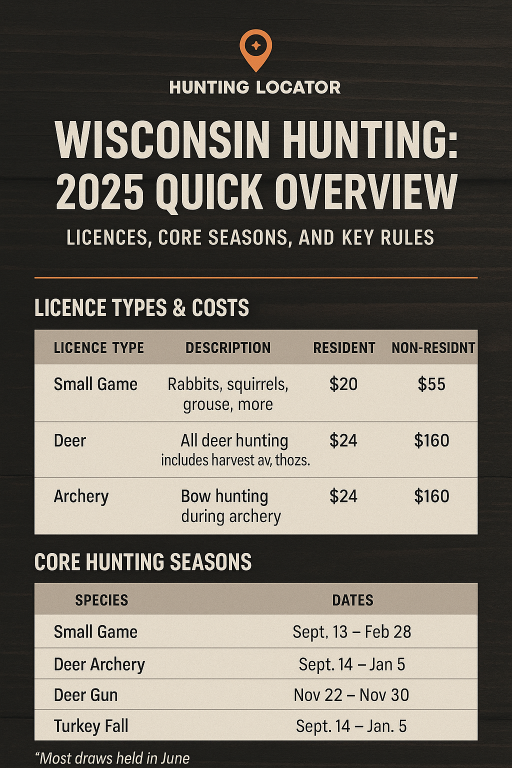
Bottom line – you need a license to hunt anything in Wisconsin. The requirements change based on what you’re hunting, how old you are, and what weapon you’re using. Good news? Wisconsin’s Go Wild system makes buying licenses pretty painless, whether you do it online or hit up a local retailer.
| License Type | Description | Resident Cost | Non-Resident Cost |
|---|---|---|---|
| Small Game License | Rabbits, squirrels, grouse, and other small game | $20 | $55 |
| Deer License | All deer hunting, includes harvest authorizations | $24 | $160 |
| Archery License | Bow hunting during archery seasons | $24 | $160 |
| Turkey License | Spring and fall turkey hunting | $15 | $70 |
| Waterfowl Stamp | Duck, goose, and other waterfowl hunting | $7 | $7 |
| Bear License | Black bear hunting permit (lottery system) | $49 | $350 |
| Crossbow License | Crossbow use during archery seasons | $24 | $160 |
Wisconsin manages its hunting seasons smart. They balance giving hunters great opportunities while keeping wildlife populations healthy. Just remember – some species like elk, bobcat, spring turkey, and bear require winning a draw before you can legally hunt them.
| Species | Season Type | Season Dates | Bag Limit | Weapon Type |
|---|---|---|---|---|
| White-tailed Deer | Archery | September 14 – January 5 | Varies by DMU | Bow/Crossbow |
| White-tailed Deer | Gun | November 23 – December 1 | Varies by DMU | Firearm |
| White-tailed Deer | Muzzleloader | December 7 – 15 | Varies by DMU | Muzzleloader |
| Wild Turkey | Spring | April 17 – May 26 | 1 bearded bird | Any legal weapon |
| Wild Turkey | Fall | October 5 – November 8 | 1 bird either sex | Any legal weapon |
| Black Bear | General | September 4 – October 8 | 1 bear | Any legal weapon |
| Ruffed Grouse | General | September 21 – January 31 | 5 daily | Firearm/Archery |
| Waterfowl | Duck Season | October 5 – December 8 | Varies by species | Shotgun only |
| Rabbit | General | September 21 – February 28 | 5 daily | Any legal weapon |
| Squirrel | General | September 21 – January 31 | 6 daily | Any legal weapon |
Wisconsin Deer Hunting
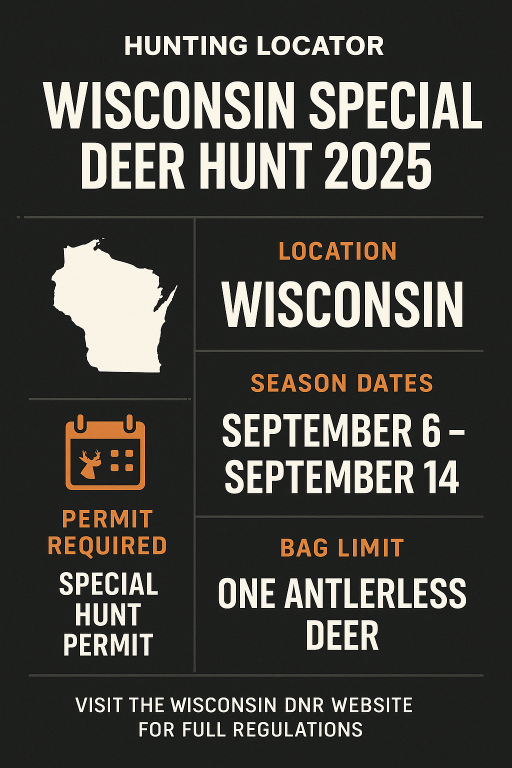
Let’s talk numbers that matter. Wisconsin ranks in the top three states for both Boone and Crockett and Pope and Young record book entries. That’s not luck – that’s consistently producing monster whitetails. Buffalo County sits at #1 nationally for trophy buck production, backed by over a million whitetails statewide.
Here’s what makes Wisconsin special: residents and non-residents can buy deer licenses over-the-counter with no draw system and buck tags work statewide. No waiting, no lottery stress, just buy your tag and go hunt.
The landscape gives you everything. Up north, you’ve got heavily forested country with mixed hardwood and coniferous forests scattered with thousands of small lakes. The rest of the state? Rich farmland that grows big deer.
Wisconsin Deer Hunting Seasons
Wisconsin splits deer hunting into three main seasons, each with its own personality. Archery season runs the longest – mid-September through early January – and gives you the best chance to hunt without bumping into other hunters, especially on weekdays.
The nine-day gun season? That’s Wisconsin’s Super Bowl. Runs over Thanksgiving week and draws more hunters than any other time. You’ll have company, but the action can be incredible when deer movement peaks.
Muzzleloader season hits the sweet spot between archery and gun seasons. Less crowded than gun season, better weather than late archery season, and deer are still moving well before the deep winter sets in.
Wisconsin Deer Hunting Regulations
Know these rules before you head out:
- Each harvest authorization gets you one deer of the type specified
- Kids aged 12 and 13 must hunt with an adult
- Bows can’t exceed 80% letoff for archery hunting
- Crossbows are legal in archery seasons with the right license or upgrade permit
- Register your deer within 24 hours through GameReg – no exceptions
Wisconsin Turkey Hunting
Turkey hunting ranks second in popularity behind deer, and for good reason. Wisconsin gives you both spring and fall seasons to chase birds. Turkey hunting includes an annual draw, but there are multiple weekly spring seasons and later seasons almost always have tags available over the counter.
Spring season delivers the classic gobbler experience when birds are fired up and vocal during breeding season. Fall seasons let you hunt either sex birds and often provide better opportunities for beginners who want to learn without the pressure of peak season competition.
Wisconsin Turkey Hunting Seasons
Spring turkey operates on a preference point system with multiple time periods from April through May. Period A has the most demand and toughest draw odds, but later periods often have leftover tags you can buy without the lottery.
Fall turkey season runs early October through early November. Perfect weather, active birds, and you can harvest either sex. It’s often the better choice for new turkey hunters who want to focus on learning rather than dealing with spring season pressure.
Wisconsin Turkey Hunting Regulations
Key rules to remember:
- Spring season: bearded birds only
- Fall season: either sex allowed
- One bird daily during open season
- Legal hours: 30 minutes before sunrise to sunset
- Hunter orange required when fall season overlaps with gun deer season
Wisconsin Bear Hunting
Wisconsin’s black bear hunting is exclusive – you need to win a preference point lottery to get your shot. Some Wisconsin hunting opportunities are managed through a draw system utilizing a preference point system, including spring turkey and black bear.
Bear hunting demands patience. Most hunters wait several years to draw a tag, so you better be serious about it. Private land access can make or break your hunt since bears love agricultural areas and established bait sites.
Wisconsin Bear Hunting Seasons
Bear season typically runs early September through early October, with different zones having specific dates. The timing hits peak bear activity before they start thinking about winter dens.
| Zone | Season Dates | Quota |
|---|---|---|
| Zone A | September 4 – October 8 | 1,850 |
| Zone B | September 4 – October 8 | 1,200 |
| Zone C | September 4 – October 8 | 950 |
| Zone D | September 4 – October 8 | 800 |
Wisconsin Bear Hunting Regulations
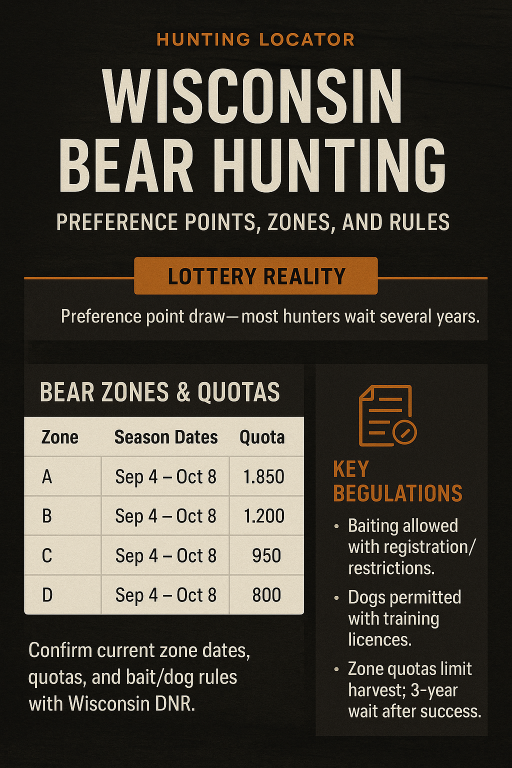
Bear hunting rules focus on safety and fair chase:
- Baiting allowed with proper registration and restrictions
- Dogs permitted with proper training licenses
- Zone quotas limit total harvest
- Successful hunters sit out three years before applying again
- Register all bears within 24 hours of harvest
Wisconsin Minor Game Species Hunting
Wisconsin offers hunting for black bears, wild turkeys, waterfowl, and upland game in addition to deer, giving you plenty of variety throughout the seasons. Big news: The Wisconsin DNR recently announced that a sharp-tailed grouse hunt will be held this fall in the state, the first since 2018. That’s exciting stuff for upland bird hunters.
Wisconsin Waterfowl Hunting Information
Wisconsin waterfowl hunting benefits from prime real estate along the Mississippi Flyway migration route. You’ll need federal and state waterfowl stamps plus your small game license.
Peak migration hits in October and November. Mallards, wood ducks, and Canada geese give you the most consistent action. Wisconsin’s lakes, rivers, and wetlands offer everything from big water boat hunting to small pothole jump shooting.
Wisconsin Small Game Hunting Information
Small game hunting is perfect for beginners and hunters wanting to extend their seasons. Squirrel and rabbit hunting only requires a small game license and provides action all fall and winter.
Ruffed grouse in Wisconsin’s northern forests will test your wing shooting skills. Pheasant hunting in farm country offers more predictable bird encounters and easier shooting opportunities.
Where to Hunt in Wisconsin
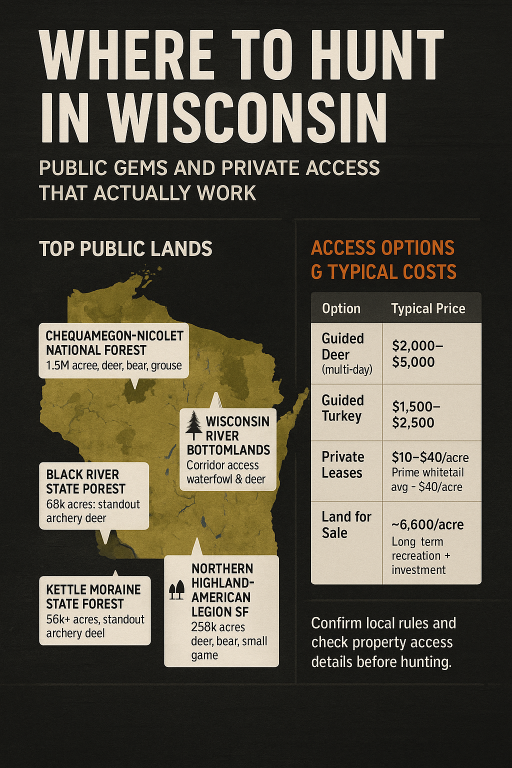
Here’s the reality: Wisconsin offers 6 million acres of public access land for hunting, but finding quality spots without dealing with crowds is still tough. Wisconsin’s terrain is diverse, with hunters traveling through farmlands and forests depending on the species they hunt.
Best Public Lands
Wisconsin’s public hunting lands offer incredible diversity for hunters willing to scout and work harder than the weekend warriors:
- Chequamegon-Nicolet National Forest – 1.5 million acres of mixed forest habitat perfect for deer, bear, and grouse
- Black River State Forest – 68,000 acres of diverse habitat with solid deer populations and turkey opportunities
- Kettle Moraine State Forest – Multiple units totaling over 56,000 acres with outstanding archery deer hunting
- Wisconsin River Bottomlands – Extensive public access along the Wisconsin River corridor for waterfowl and deer
- Northern Highland-American Legion State Forest – 235,000 acres of pristine wilderness hunting for deer, bear, and small game
Explore all Wisconsin public hunting lands for detailed maps, access points, and species information to plan your next hunt.
Guided Hunts
Professional outfitters solve the access problem while providing expert guidance. Multi-day deer hunts typically run $2,000-$5,000, with turkey hunts averaging $1,500-$2,500.
Guided hunts make particular sense for non-residents who don’t know Wisconsin’s terrain and hunting patterns. Find experienced Wisconsin hunting outfitters and clubs through our platform to connect with reputable guides offering the species and experience you want.
Private Land Hunting
Hunting lease prices in Wisconsin range from $10-40 per acre, with prime whitetail areas averaging $40 per acre. Private land access eliminates hunting pressure while often providing superior habitat management and facilities.
For hunters considering permanent solutions, hunting land for sale in Wisconsin averages around $6,000 per acre. Recreational properties offer long-term investment potential alongside hunting opportunities.
Hunting Locator connects Wisconsin hunters directly with landowners offering hunting leases and land for sale. With thousands of private properties listed across the state, hunters can search by location, species, and budget to find their perfect hunting spot – solving Wisconsin’s #1 hunting challenge of finding quality, accessible hunting land.
Frequently Asked Questions
Do I need hunter education to hunt in Wisconsin?
Yes, if you were born on or after January 1, 1973, Wisconsin requires you to take a state-approved hunter education course before getting a hunting license. Kids under 12 can participate through Wisconsin’s Mentored Hunting Program without completing hunter education first.
Can non-residents hunt elk in Wisconsin?
No, elk have been reintroduced in the state and a very limited number of tags is available through a draw to residents only. Non-residents can’t apply for Wisconsin elk hunting permits.
How much does a Wisconsin non-resident deer license cost?
Non-resident deer licenses cost $160 compared to $24 for residents. The good news? Wisconsin treats residents and nonresidents the same in the draw system, with no allocation limit to nonresidents, and licenses are available over-the-counter.
What is the best county for deer hunting in Wisconsin?
Buffalo County ranks #1 nationally for Boone and Crockett entries, making it the top destination for trophy whitetail hunting. Other standout counties include Pepin, Pierce, and Trempealeau in the Mississippi River corridor.
When should I apply for Wisconsin bear hunting permits?
Bear hunting applications are typically due in early February for the following fall season. The preference point system means most hunters wait 3-5 years before drawing a tag, so start applying early to build points.
Can I use a crossbow during Wisconsin’s archery season?
Yes, crossbows are allowed in archery seasons through purchase of a crossbow license or Archery to Crossbow upgrade permit. This gives you additional opportunities if you can’t draw a traditional bow.
The Final Shot
Wisconsin delivers some of the best hunting in America. Period. From the nation’s top-producing whitetail counties to 6 million acres of public hunting access, this state provides hunting experiences that are tough to match anywhere else.
Your success formula is straightforward: get proper licenses through the Go Wild system, scout locations using both public and private options, and time your hunts around peak seasons for your target species. Whether you’re working Wisconsin’s vast public lands or securing exclusive access through private property, everything starts with solid planning and the right resources.
Make 2025 count. Wisconsin’s waiting for you.


