This guide covers the 2026–27 regulatory year for residents and non-residents planning a hunt. Season dates, bag limits, and fees vary by Game Management Unit (GMU), and getting those details right up front is what separates a smooth trip from a wasted tag. Hunting Locator tracks the regulations and connects you to the land and gear you need for the 2026 season.
Here’s what’s ahead:
- Confirmed 2026–27 season dates for every relevant Game Management Unit (GMU)
- License, tag, and permit costs broken down by residency — resident, non-resident, and non-resident alien
- Where to hunt — public land, private leases through Hunting Locator, and guided hunt options
Here’s the fast version first.

Quick Overview: 2026 Alaska Black Bear Season at a Glance
Alaska is divided into 26 Game Management Units, and both season dates and bag limits shift depending on which one you’re hunting. Alaska tracks bag limits by regulatory year, which runs July 1 through June 30, not the calendar year. That distinction matters if a unit has a one-bear limit and you’re deciding between a fall or spring hunt. For the broader statewide picture across every species, see Hunting Locator’s Alaska hunting season guide.
Here’s the season breakdown for 2026–27:
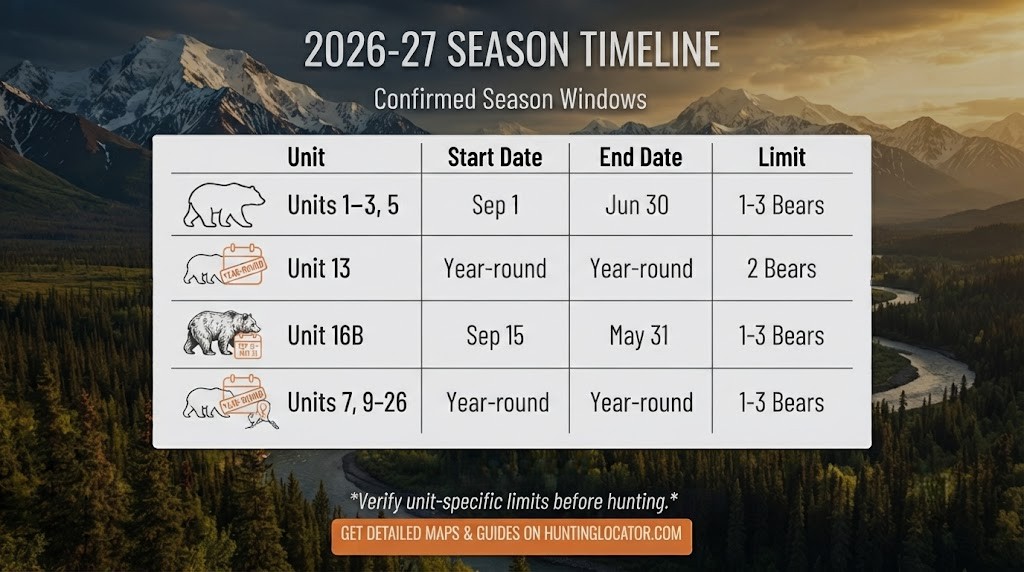
| GMU / Season Type | Start Date | End Date | Notes |
|---|---|---|---|
| Unit 1 (Non-Residents Only) | 01 Sep 2026 | 30 Jun 2027 | Non-resident opportunity |
| Unit 2: Option 1 | 01 Sep 2026 | 30 Jun 2027 | — |
| Unit 2: Option 2 | 01 Jan 2027 | 30 Jun 2027 | Alternate window |
| Units 3, 5, 6A/B/C (Res & Non-Res) | 01 Sep 2026 | 30 Jun 2027 | — |
| Unit 6D (Res & Non-Res) | 10 Sep 2026 | 10 Jun 2027 | — |
| Units 7, 9–15, 17–26 | No Closed Season | — | Year-round opportunity |
| Unit 16B (Wolverine Creek) | 15 Sep 2026 | May 31, 2027 | Dated season |
Bag limits generally run 1 to 3 bears per regulatory year depending on the unit. Units 1 through 7 typically allow 1 to 3 bears, Unit 8 is usually capped at 1, and Units 9 through 26 usually range from 1 to 3 as well. Confirm your specific unit’s limit before heading out.
Before you hit the field, cover these basics:
- Everyone age 16 and older needs a valid Alaska hunting license.
- Non-residents must purchase a black bear locking tag — residents do not need one.
- Some hunts also require harvest tickets or permits in addition to your license and tag.
- Alaska protects cubs and sows with cubs statewide, with no exceptions regardless of unit or residency.
Alaska Black Bear Hunting Seasons by Unit
Because black bear seasons depend entirely on your GMU, start by identifying your unit, then confirm its exact dates and bag limit. For a deeper unit-by-unit breakdown, see Hunting Locator’s black bear hunting season details.
One update for 2026: Unit 13’s bag limit increased to two bears per regulatory year. It’s a meaningful change for hunters in that area and a reminder that Alaska’s regulations shift from year to year.
Black bear also differs from brown bear in an important way. Many black bear units have no closed season at all, while brown bear hunting is far more restricted, and black bear doesn’t require a guide for non-resident U.S. hunters. If you’re weighing species options, Hunting Locator’s brown bear hunting season guide covers how that hunt compares.
Fall Season (September Openers)
The 2026–27 season opens September 1 in Units 1, 2 (Option 1), 3, 5, and 6A/B/C. Unit 6D opens September 10, and Unit 16B (Wolverine Creek) opens September 15. These fall openers give residents and non-residents a clear, predictable start date to build a trip around.
Late September into early October is a popular stretch for combining hunts. Many hunters pair black bear with a deer tag on the same trip — Hunting Locator’s Alaska deer hunting season guide can help plan both.
Spring Season & Extended Windows
Several units run well into spring and early summer. Unit 6D closes June 10, while most of the September-opening units (1, 2 Option 1, 3, 5, 6A/B/C) stay open through June 30. Unit 16B closes earlier, on May 31. Unit 2 also offers a separate Option 2 window running January 1 through June 30, 2027.
Spring hunting can be productive, since bears emerge from hibernation hungry and actively moving. Keep the regulatory-year bag limit in mind: a fall harvest in a one-bear unit closes out your opportunity for a spring hunt in that same July-to-June cycle.
Year-Round (No Closed Season) Units
Units 7, 9–15, and 17–26 have no closed season for black bear, giving residents and traveling hunters the longest and most flexible windows in the state. That flexibility is especially useful if your schedule doesn’t line up with a fixed opener.
No closed season doesn’t mean no bag limit, though. You’re still working within the same July 1–June 30 regulatory year, so a bear taken in the fall in a one-bear unit still counts against your limit heading into spring.
Alaska Black Bear Licenses and Permits
Your total cost to hunt black bear in Alaska depends heavily on residency status and the type of hunt you’re planning. Here’s the breakdown by tier.
Alaska Hunting Licenses
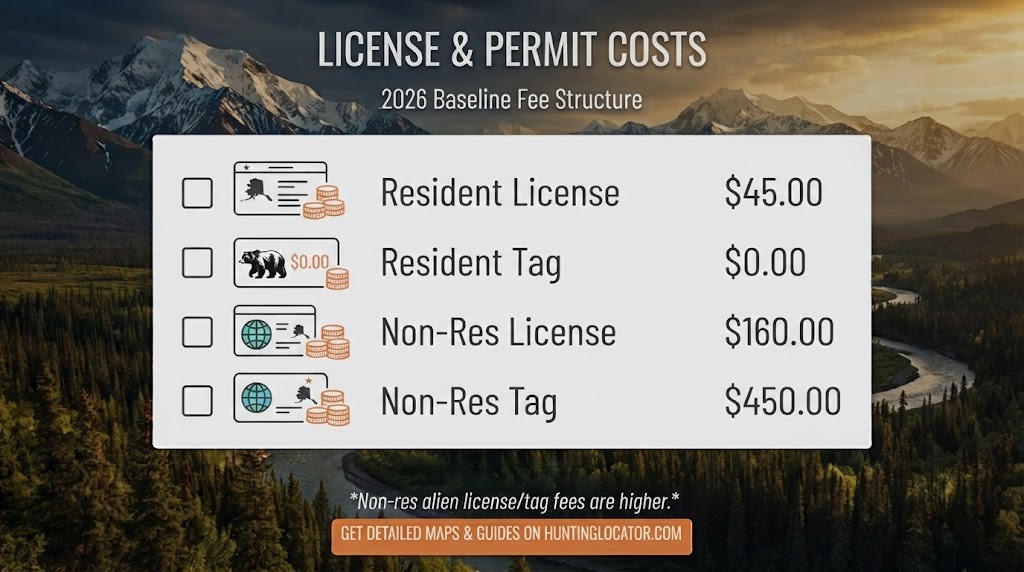
| Residency Tier | Hunting License | Black Bear Tag |
|---|---|---|
| Resident | $45 | $0 (no fee) |
| Non-Resident | $160 | $450 |
| Non-Resident Alien | $630 | $600 |
Residents don’t need a locking tag to hunt black bear, but non-residents do. Non-resident aliens face an additional requirement beyond the higher fees: they must be personally accompanied by an Alaska-licensed guide for any big game hunt, including black bear. That guide requirement doesn’t apply to non-resident U.S. citizens, who can hunt black bear unguided in most units.
Alaska Hunting Permits
Beyond your license and tag, a few more pieces of Alaska’s credential system are worth understanding before you hit the field:
- Hunting License: Your basic legal credential to hunt in Alaska, required for everyone age 16 and older.
- Locking Tags: Numbered metal tags you must purchase before hunting and lock onto your bear immediately upon harvest. Required for non-residents; not required for residents.
- Harvest Tickets: Free general-season permits that you validate at the kill site rather than purchase in advance.
Licenses, tags, and harvest tickets are sold through Alaska Department of Fish and Game offices and authorized license vendors statewide. If you’re a non-resident planning to hunt unguided, check your specific unit before booking — a few Southeast Alaska units require unguided non-residents to apply for and draw a permit, since those hunts are managed to limit non-resident pressure and preserve opportunity for local outfitters.
Where to Hunt Black Bear in Alaska
Once your dates and license are settled, the next question is where you’ll actually hunt. Alaska hunters generally have three paths: public land, private leased or purchased land, and guided hunts. The right choice depends on your experience level, budget, and how much time you have to scout on your own.
Best Public Lands
Public land access is broad across Alaska, and the state’s year-round units (7, 9–15, 17–26) offer some of the most flexible public-land opportunity in the country. That said, public land comes with real trade-offs.
- National forest access: Hunting occurs on Chugach National Forest lands, which cover most of Prince William Sound in Unit 6D — a solid option for boat-based or drop-camp hunts.
- Year-round flexibility: The no-closed-season units give you the most freedom to plan around weather, work, and travel schedules.
- Logistics and terrain: Public land in Alaska tends to be remote, and hunters need to be genuinely conditioned and prepared for tough hikes, high altitudes, and extreme weather before committing to a DIY trip.

Private Land Hunting with Hunting Locator
Public land isn’t the only way in, and for many hunters — especially non-residents unfamiliar with Alaska’s terrain — it isn’t the best way. Leasing or buying private land gives you dedicated, less-crowded access without competing for the same drainage as every other hunter working from the same public-land forum thread. Leasing means paying for seasonal or annual access rights; buying means owning the ground outright, a bigger commitment that pays off for hunters planning to return year after year.
This is the gap Hunting Locator was built to close. As a hunting-access platform, Hunting Locator connects you directly with landowners across Alaska who are ready to lease or sell their property to hunters. Instead of cold-calling landowners or hoping a lease listing hasn’t already been snapped up, you can browse verified opportunities and connect directly with the people who control the land. That matters most when you’re planning a trip from out of state and can’t afford a wasted season.
Browse Alaska hunting land leases and secure your access before the season fills up.
Guided Hunts
A guided hunt is a legitimate option if you’d rather not navigate unfamiliar terrain alone, even though black bear doesn’t require a guide for non-resident U.S. hunters the way brown bear does. Guides bring local knowledge of bear activity, terrain, and access that can shortcut months of scouting into a single well-planned trip.
Quality outfitters often book two or more years in advance, so if a guided hunt is part of your plan, start reaching out now rather than next spring. Costs vary widely depending on species, location, and outfitter, so get specifics early and budget accordingly. For non-resident aliens, the guide isn’t optional — Alaska law requires it for any big game hunt, black bear included.
Whether you go guided or DIY, land access remains the deciding factor in how your hunt unfolds, which is why many hunters pair a guided trip with a private lease as a backup plan or home base.
Black Bear Hunting Tips
Black bear hunting rewards solid fundamentals more than expensive gear or years of experience. These tips apply whether you’re chasing your first bear or your fifteenth.
- Scout Before You Go: Study maps, satellite imagery, and local reports before your boots hit the ground. Look for riverbanks and berry patches — prime feeding areas where bears spend real time.
- Master Spot-and-Stalk: This is the go-to method for Alaska black bear, especially given the long September-through-June season window. Spot-and-stalk hunting means glassing dense forest edges and shorelines from a distance, then closing the gap once you’ve spotted your bear.
- Invest in Quality Optics: You’ll spend far more time glassing hillsides and shorelines than actually stalking, so good glass pays for itself in bears found. Hunting Locator’s black bear hunting gear selection is a solid place to start building out your kit.
- Choose the Right Rifle: Recommended bear hunting calibers for black bear include high-caliber options like the .338 Winchester Magnum or .375 H&H Magnum, both known for reliable stopping power.
- Pack for Alaska Conditions: Reliable packs, layered clothing, and gear that can handle wet weather and rough terrain matter more than almost anything else you bring.
- Know Salvage and Sealing Timing: From January 1 through May 31, you must salvage the hide, skull, and meat. From June 1 through December 31, you must salvage either the hide and skull, or the skull and meat, in units where sealing is required. Staying compliant protects your harvest and keeps you legal.
- Respect Cub and Sow Protections: Never take cubs or sows with cubs; this rule applies statewide, with no exceptions. If your schedule allows, consider combining your fall bear hunt with a deer tag for a more efficient trip.
Gear up with the right optics and packs before your hunt — a few smart purchases now save frustration in the field later.
More Resources from Hunting Locator
Planning to add another species to your Alaska trip, or want to go deeper on access and gear before you head north? Start here.
- Hunting Locator home base — Your starting point for leases, gear, and guides across every state.
- Alaska hunting land leases — Secure private access across Alaska before the season fills up.
- Hunting Locator store — Optics, packs, and field gear built for Alaska’s conditions.
- Alaska hunting season guide — A statewide season overview covering every species.
- Alaska black bear hunting season — Our full black bear deep-dive companion piece.
- Alaska brown bear hunting season — For hunters considering the guide-required big-bear pursuit.
Planning to add another species to your trip?
- Alaska caribou hunting
- Alaska deer hunting season
- Alaska moose hunting
- Alaska mountain goat hunting season
- Alaska wolf hunting
- Alaska small game hunting season
- Alaska bison hunting season
- Alaska muskox hunting season
- Alaska furbearer trapping season
Frequently Asked Questions
What are the 2026 non-resident black bear license and tag costs in Alaska?
Non-resident hunters pay $160 for a hunting license plus $450 for a black bear locking tag. Non-resident aliens pay more — $630 for a license and $600 for the tag — and must hunt with an Alaska-licensed guide. Residents pay $45 for a license with no tag fee required.
Which Alaska units have no closed season for black bear?
Units 7, 9–15, and 17–26 have no closed season, offering year-round black bear opportunity for both residents and non-residents. Other units, like 1, 2, 3, 5, and 6A/B/C, run on set September-through-June windows instead of staying open all year.
Do non-residents need a guide to hunt black bear in Alaska?
No. Black bear is not a guide-required species for non-resident U.S. hunters, unlike brown or grizzly bear, which Hunting Locator covers in its brown bear hunting season guide. Non-resident aliens, however, must be accompanied by an Alaska-licensed guide, and a few Southeast units require unguided non-residents to draw a permit before hunting.
What are the black bear bag limits in Alaska?
Bag limits generally run 1 to 3 bears per regulatory year (July 1 through June 30), depending on the GMU. For 2026, Unit 13’s limit increased to two bears per regulatory year — worth factoring into your planning if you’re hunting that unit.
What are the season dates for Unit 16B (Wolverine Creek)?
Unit 16B runs from September 15, 2026 through May 31, 2027. It’s one of the more distinctly dated seasons in the state, falling outside the typical September 1 to June 30 window used in several neighboring units.
How can beginners find land to hunt black bear in Alaska?
Beginners generally have three options: public land, which offers broad access but demands more scouting and physical preparation; private leased land, which offers dedicated access with less competition; or a guided hunt, which trades cost for local expertise. For private access, browsing Alaska hunting land leases is one of the fastest ways to skip the guesswork and start hunting sooner.
The Final Shot
Planning a successful 2026–27 Alaska black bear hunt comes down to three things: knowing your unit’s exact season dates, budgeting for the right license and tag based on your residency, and locking in your land access before the season gets underway. Get those three pieces right, and gear, tactics, and timing fall into place around them.
This guide reflects Alaska’s official 2026–27 regulations, including the Unit 13 bag limit increase to two bears per regulatory year, so you’re working from current information rather than last season’s numbers. When the rules shift again, Hunting Locator will track them while connecting you to the land and gear that turn a plan into an actual hunt.
Start planning your hunt with Hunting Locator today.


