Alaska’s hunting regulations read like tax code written by caffeinated bureaucrats. Different units, different seasons, different rules. Miss one detail and your dream hunt becomes an expensive lesson in paperwork.
This guide cuts through all that noise. We’ve done the heavy lifting on regulations, costs, and logistics so you can focus on what matters—planning an incredible hunt.
Here’s what you’ll find:
- 2026 season dates broken down by unit (some run 25 days, others stretch nearly eight months)
- Real costs: residents pay $45 total, non-residents drop $960 minimum
- Where to actually hunt, from public land strategies to private access that eliminates the guesswork
Alaska divides its territory into 26 Game Management Units, each with completely different rules. Let’s start with what you need to know right now.
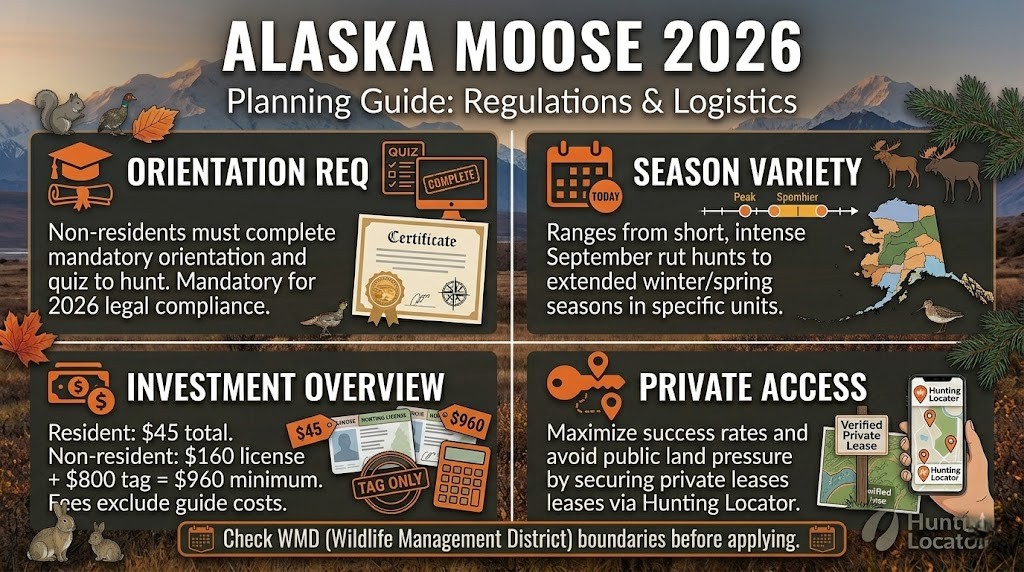
Quick Overview: 2026 Alaska Moose Season at a Glance
Alaska’s 26 Game Management Units each tell their own story. Some focus on short, intense rut hunts. Others offer extended seasons that run from summer into spring. Understanding your target unit isn’t just helpful—it’s everything.
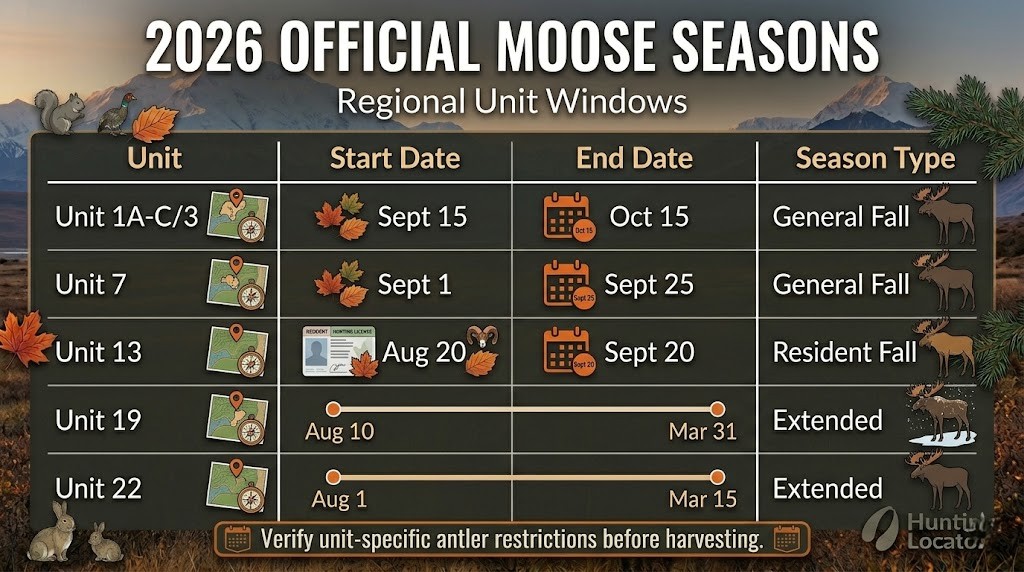
| Game Management Unit | Season Dates | Notes |
|---|---|---|
| Units 1A–C & Unit 3 | Sep 15 – Oct 15, 2026 | Southeast Alaska |
| Unit 7 (General) | Sep 1 – Sep 25, 2026 | Kenai Peninsula |
| Unit 13 (Residents) | Aug 20 – Sep 20, 2026 | Option 1 |
| Unit 16B (Residents) | Dec 15, 2026 – Mar 31, 2027 | Winter season |
| Unit 18 (Residents) | Dec 1, 2026 – Apr 30, 2027 | Zone 2 Spring |
| Unit 19 (Res & Non-Res) | Aug 10, 2026 – Mar 31, 2027 | Extended season |
| Unit 22 (Res & Non-Res) | Aug 1, 2026 – Mar 15, 2027 | Extended season |
What You’ll Pay in 2026:
- Alaska Resident: $45 hunting license (moose tags are free, but you still need a harvest ticket)
- Non-Resident: $160 license + $800 moose tag = $960 minimum
- Hunter Education: Mandatory if born after January 1, 1986
- NEW for 2026: Non-resident orientation requirement including videos and a 16-question quiz (need 15 correct)
That orientation isn’t busy work. It covers meat care, shot placement, and legal harvest identification—mistakes that can ruin your hunt and empty your wallet.
Alaska Moose Hunting Seasons
Alaska’s moose seasons range from concentrated September rut hunts to marathon winter seasons lasting into spring. Most units offer over-the-counter tags, though some require draw permits or registration permits you’ll need to secure months ahead.
General Fall Seasons (September–October)
Fall seasons target the rut when bulls lose their minds chasing cows. Units 1A–C, 3, 7, and 13 offer prime rut hunting during peak activity periods. This is classic Alaska moose hunting—what you see in the magazines.
Key Fall Season Details:
- Units 1A–C & 3: September 15 – October 15, 2026 (Southeast regions)
- Unit 7: September 1 – September 25, 2026 (Kenai Peninsula)
- Unit 13: August 20 – September 20, 2026 (Residents only)
Timing matters huge here. The rut typically peaks during the first week of September. Bulls that normally ghost through thick cover suddenly start grunting, thrashing brush, and responding to calls. It’s like someone flipped a switch in their brain.
Extended Seasons (August–March)
Units 19 and 22 offer Alaska’s longest hunting windows. These extended seasons work for hunters who want to avoid September crowds or prefer hunting when weather and logistics align better with their schedule. Both residents and non-residents can hunt these units.
Extended Season Details:
- Unit 19: August 10, 2026 – March 31, 2027
- Unit 22: August 1, 2026 – March 15, 2027
The lower Yukon River drainage holds some of Alaska’s best moose habitat, with these extended seasons giving you flexibility to hunt when conditions are right rather than fighting calendar pressure.
Winter and Spring Seasons (December–April)
Alaska extends seasons for resident hunters in southwestern regions, primarily supporting subsistence hunters in rural communities. These extensions help manage populations in specific areas where traditional fall hunting doesn’t provide adequate harvest.
Winter/Spring Season Details:
- Unit 16B: December 15, 2026 – March 31, 2027 (Residents only)
- Unit 18: December 1, 2026 – April 30, 2027 (Residents only, Zone 2)
Winter moose hunting involves serious challenges—extreme cold, difficult access, and weather that can strand you for days. But for experienced hunters comfortable with Alaska winter conditions, these seasons offer unique opportunities.
Alaska Moose Licenses and Permits
Getting your paperwork right isn’t optional. Alaska takes wildlife violations seriously, with penalties that’ll make your head spin. The cost difference between resident and non-resident hunting is substantial—plan accordingly.
Alaska Hunting Licenses
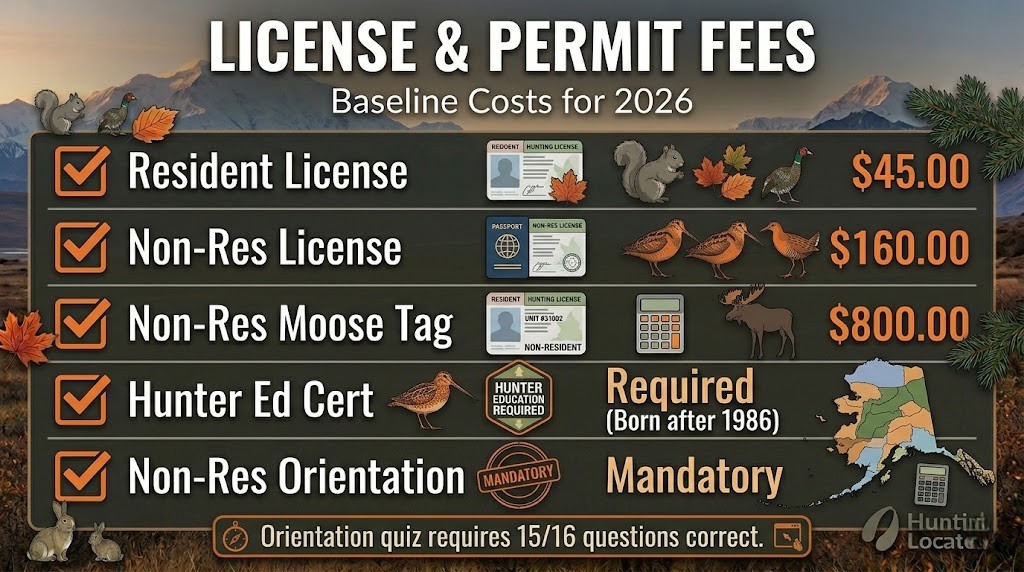
| License Type | Resident Cost | Non-Resident Cost |
|---|---|---|
| Annual Hunting License | $45.00 | $160.00 |
| Moose Tag | Free (harvest ticket required) | $800.00 |
| Total Minimum Cost | $45.00 | $960 |
Hunter Education: Born after January 1, 1986? You need hunter education. No exceptions, residents or non-residents.
Critical 2026 Change: Non-residents must complete orientation materials including “Is This Moose Legal” and “Field Care of Big Game” videos, then pass a 16-question quiz with 15 correct answers. This requirement addresses common mistakes with meat care, preparedness, and legal requirements.
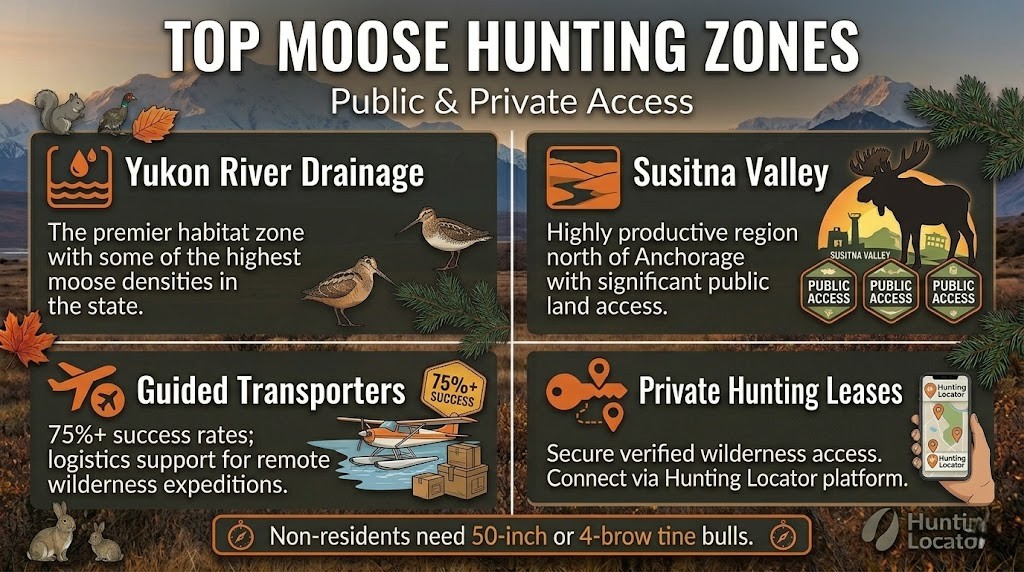
Non-residents face specific antler restrictions: one bull with 50-inch antlers OR 4+ brow tines. Field identification mistakes carry serious consequences, so study those orientation materials carefully.
Alaska Moose Permits
Alaska uses three permit types to manage hunting pressure and harvest:
Harvest Tickets (GM000): Over-the-counter permits for most units. These give you the most flexibility and cover standard moose hunting opportunities.
Registration Permits: Required for specific units with limited capacity. Registration permits RM781 and RM749 replace general season hunts in certain units. First-come, first-served basis—they can close when harvest objectives are met.
Draw Permits: Lottery system for high-demand areas. Draw hunts require application fees and lottery selection, with some units having terrible odds.
Applications for 2026-2027 open November 1, 2025. Miss that window and you’re waiting another year.
Where to Hunt Moose in Alaska
Location choice matters as much as understanding regulations. Alaska offers everything from vast public lands to premium guided experiences to private access that eliminates competition and often boosts success rates significantly.
Best Public Lands for Moose Hunting
Alaska’s public lands provide extensive opportunities, though success varies wildly based on location, access, and your experience level.
Top Public Land Areas:
- Yukon River Drainage: Lower Yukon River regions hold some of Alaska’s best moose habitat and highest concentrations
- Susitna Valley and Alaska Range: Conditions improve dramatically north of Anchorage into the Susitna Valley and over the Alaska Range into GMUs 19, 17, and 21
- Western Alaska Remote Areas: Remote areas within six thousand square miles of western Alaska contain exceptional moose habitat
- BLM Lands: Bureau of Land Management areas offer hunting opportunities, though some federal lands restrict non-local hunters
Reality check: statewide success rate averages around 20%. Public land hunting demands serious preparation, excellent physical conditioning, and realistic expectations about the challenges involved.
Guided Moose Hunts
Professional guides charge premium prices because they deliver expertise, logistics support, and dramatically higher success rates compared to DIY approaches.
Quality guided operations report 75%+ success rates versus the 20% statewide average. One transporter reported over 75% success for their self-guided packages, showing how professional logistics support improves outcomes.
Investment Levels:
- Self-guided packages with licensed transporters: $8,000–$15,000 per hunter (logistics, fuel, transportation)
- Fully guided hunts: $28,000–$45,000 (complete service including guide, meals, lodging, field care)
Smart hunters start planning years ahead. Quality outfitters book years in advance, especially for prime September rut hunts.
You don’t need a guide for moose—only for brown/grizzly bear, sheep, and mountain goat. But many hunters choose guides for logistical support and local expertise.
Private Land Hunting with Hunting Locator
Public land hunting presents real challenges: crowded access points, uncertain success rates, complex logistics that can derail well-planned hunts. Private land hunting offers key advantages—exclusive or limited access reduces hunter pressure, landowners often manage habitat specifically for wildlife, and you gain certainty about hunting locations rather than competing for public spots.
Hunting Locator connects hunters directly with Alaska landowners offering hunting leases and land sales, eliminating uncertainty and competition that characterizes public land hunting. Instead of hoping to find productive public ground, you secure confirmed access to quality properties before your season begins.
Browse Alaska hunting leases to explore private land opportunities matching your budget and hunting goals. The platform provides direct landowner contact, detailed property information, and transparent pricing—giving you confidence in hunting access before investing in travel and logistics.
Moose Hunting Tips for Success
Success in Alaska moose hunting requires more than showing up with license and tag. These strategies consolidate insights from experienced hunters, professional guides, and wildlife biologists who understand what separates successful hunts from expensive learning experiences.
Essential Success Strategies:
- Time Your Hunt for Peak Rut: Target the first week of September when bulls are most active. Bulls abandon typical caution during peak rut, becoming more responsive to calling and less concerned about human presence.
- Master Moose Calling: Effective calling combines cow calls with brush raking. Learn different behaviors throughout rut progression and adapt your calling accordingly.
- Glass from High Ground: Glass from higher vantage points while watching swampy or low ground and beaver bogs. Moose frequent these areas for feeding and cover.
- Plan Float Hunts: River float hunting is the most popular method for non-residents. Use OnX beforehand and really dig into river topography. Plan two-week hunts with four primary locations plus two backup spots.
- Know Legal Bulls Cold: Get really comfortable with accurately identifying legal bulls. For non-residents: 50-inch antlers or 4+ brow tines. Field mistakes carry serious legal consequences.
- Prepare for Meat Care: Alaska’s orientation videos emphasize proper field care because moose provide massive amounts of meat that spoils quickly without proper handling. Plan your meat processing and preservation strategy before pulling the trigger.
More Resources from Hunting Locator
Expand your Alaska hunting knowledge with these comprehensive resources designed to help you plan successful hunts across multiple species and seasons:
- Alaska Hunting Season Guide – Complete overview of all Alaska hunting seasons and regulations
- Alaska Caribou Hunting – Combine moose hunts with caribou opportunities
- Alaska Brown Bear Season – Alaska’s premier big game opportunity
- Alaska Black Bear Season – Spring and fall bear seasons
- Alaska Wolf Hunting – Year-round predator hunting opportunities
FAQ
When do Alaska moose draw applications open for 2026?
Applications for 2026-2027 open November 1, 2025. Alaska doesn’t accept late applications for draw hunts. Submit early to avoid technical issues or last-minute problems.
What’s the difference between harvest tickets and registration permits?
Harvest tickets (GM000) are over-the-counter permits for most units. Registration permits RM781 and RM749 replace general season hunts in specific units and are issued first-come, first-served with limited availability.
Do I need a guide to hunt moose in Alaska?
You don’t need a guide for moose—only for brown/grizzly bear, sheep, and mountain goat. However, many hunters choose guides or transporters for logistical support and local expertise.
What are antler restrictions for non-resident moose hunters?
Non-residents can take one bull with 50-inch antlers or 4+ brow tines. The mandatory orientation includes an “Is This Moose Legal” video specifically designed to help hunters make accurate field identifications.
How much meat can I expect from an Alaska moose?
A mature bull typically yields 400-700 pounds of processed meat, depending on size and field care. Plan your meat processing, preservation, and transportation strategy before your hunt—improper handling can result in significant meat loss.
What’s the success rate for DIY moose hunting in Alaska?
Statewide success rate averages around 20%, though this varies significantly by unit, hunting method, and hunter experience. Quality guided operations report 75%+ success rates.
The Final Shot
Alaska moose hunting represents one of North America’s premier big game opportunities, but success demands thorough preparation, realistic expectations, and proper planning. From understanding unit-specific regulations to securing quality hunting access, every detail matters when you’re investing significant time and money in an Alaska adventure.
The 2026 season brings new requirements—particularly the mandatory non-resident orientation—that underscore Alaska’s commitment to ethical, successful hunting experiences. Whether you choose public lands, guided hunts, or private land access, your preparation and planning will largely determine your success.
Ready to secure your Alaska moose hunting access? Explore quality hunting leases that give you the competitive advantage of confirmed access in Alaska’s vast wilderness. Your trophy bull adventure starts with securing the right hunting ground—let Hunting Locator connect you with landowners who share your passion for ethical, memorable hunts.


