You know that feeling when you’re staring at Alaska’s hunting regulations and your brain starts to fog over? Game Management Units blur together, license types multiply like rabbits, and suddenly you’re wondering if you need a PhD just to figure out when hare season opens.
Once you cut through the regulatory jargon, you’ll find some of the most hunter-friendly seasons in North America. We’re talking 8-month seasons, no bag limits, and enough public land to keep you busy for several lifetimes.
This Alaska small game guide cuts straight to what matters for your 2026 hare hunting plans:
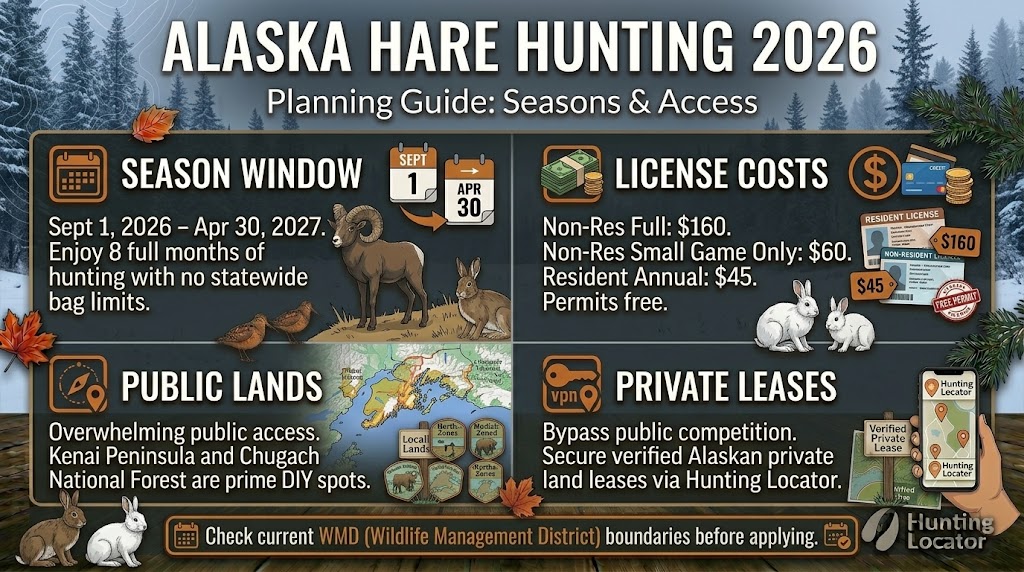
- Season runs September 1, 2026 through April 30, 2027 (that’s right, 8 full months)
- Licensing is straightforward: $45 for residents, $160 for non-residents (or $60 if you’re only chasing small game)
- Public land access is incredible, plus private options through quality hunting leases
Want the bigger picture on Alaska hunting? Check out our Alaska hunting overview that covers everything from moose to ptarmigan.
Quick Reference Facts
Sometimes you just need the basics without wading through pages of text. Alaska’s small game regulations are refreshingly simple compared to most states, with long seasons and generous bag limits that make trip planning much easier.
| What You Need to Know | The Details |
|---|---|
| Target Species | Snowshoe Hare, Arctic Hare (Alaska Hare) |
| When to Hunt | September 1, 2026 – April 30, 2027 (All areas) |
| How Many | No statewide limit (check your specific unit) |
| Legal Weapons | Shotgun with nontoxic shot (T size max), .22 rifle/handgun |
| Resident Cost | $45 for the year |
| Non-Resident Cost | $160 full license OR $60 small game only |
| Special Permits | Only needed in Anchorage Coastal Wildlife Refuge and Eagle River area |
| Education Requirement | Must have hunter safety if born after January 1, 1986 |
Before you head out, make sure you’ve got these boxes checked:
- Valid Alaska hunting license (required for anyone 16+)
- Hunter safety certification if you were born after 1986
- No tags needed (unlike big game hunting)
- Registration permit only for specific areas near Anchorage
Hare Hunting Seasons Breakdown
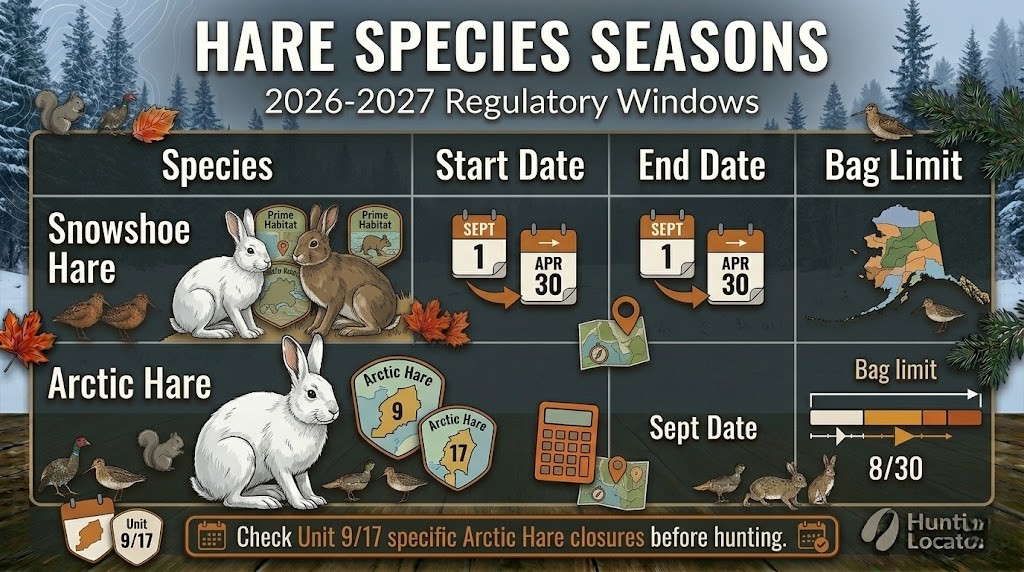
Alaska gives you two different hare species to chase, and while they share the same season dates, they live in completely different neighborhoods. ADF&G notes that snowshoe hares are your typical 3-4 pound forest dwellers, while their Arctic cousins are bigger and prefer coastal areas.
Snowshoe Hare Hunting
These are the hares you’ll encounter most often. They’re everywhere there are trees in Alaska, which is saying something.
The Season Breakdown:
- Open Season: September 1, 2026 – April 30, 2027
- Bag Limit: No statewide limit
- Where They Live: Pretty much any forested area in the state
Here’s something cool: hare populations go through major cycles, so some years you’ll find them everywhere, other years not so much. The beauty of that 8-month season? You can time your hunt for when conditions look best, whether that’s early fall or deep winter when they’re sporting those thick white coats.
Arctic Hare Season
Arctic hares (Lepus othus) are the bigger, less common cousins. According to ADF&G, these guys hang out in groups along western coastal areas and the Alaska Peninsula.
Season Info:
- Open Season: September 1, 2026 – April 30, 2027
- Bag Limit: Check current regs for your area
- Range: Western coast and Alaska Peninsula
Heads up: The Board of Game closed Arctic hare season in Units 9 and 17. Always double-check your specific GMU before making plans.
Licenses and Permits Made Simple
Alaska’s licensing system is pretty straightforward once you know your options. Everyone 16 and older needs a license, but the good news is you’ve got choices that won’t break the bank.
License Options
Pick the license that matches your hunting plans and budget.
| Your Situation | License Type | Cost | What It Covers |
|---|---|---|---|
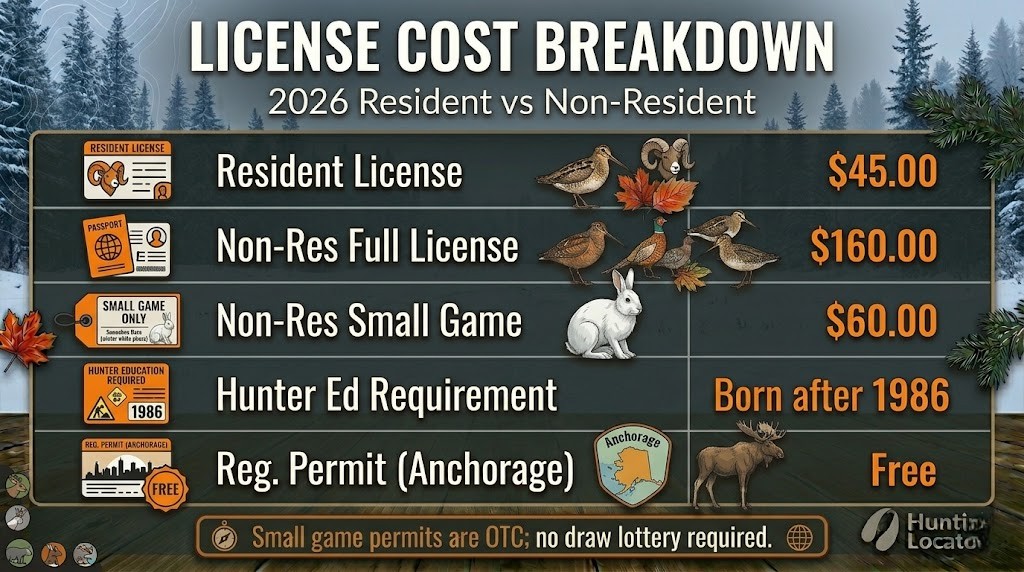
| Alaska Resident | Resident License | $45.00 | Everything that’s legal to hunt |
| Visiting Hunter (multiple species) | Non-Resident Full | $160 | All game species statewide |
| Visiting Hunter (small game focus) | Non-Resident Small Game | $60 | Hares, grouse, ptarmigan only |
Money-saving tip for visitors: That $60 small game license is perfect if you’re only after hares and upland birds. But if there’s any chance you’ll spot a nice deer or decide to try for other species, the full license pays for itself quickly.
Hunter Education: Born after January 1, 1986? You need hunter safety certification. Most other states’ certifications work fine in Alaska, or you can knock out the online course before your trip.
When You Need Permits
Good news: most small game hunting doesn’t require permits. There are just two exceptions, both near Anchorage.
Permit Required Areas:
- Anchorage Coastal Wildlife Refuge: Registration permit needed
- Eagle River Management Area: Registration permit for certain sections
- How to Get Them: ADF&G office or online
- Cost: Usually free registration
Where to Find Great Hunting
Alaska’s got more public hunting land than most hunters could explore in a lifetime. The state and feds own most of Alaska, and the vast majority is open to hunting, including National Wildlife Refuges, National Forests, and BLM lands.
Top Public Land Areas
Alaska’s public lands offer some of the best small game hunting in North America, with minimal competition and excellent habitat.
Prime Hunting Spots:
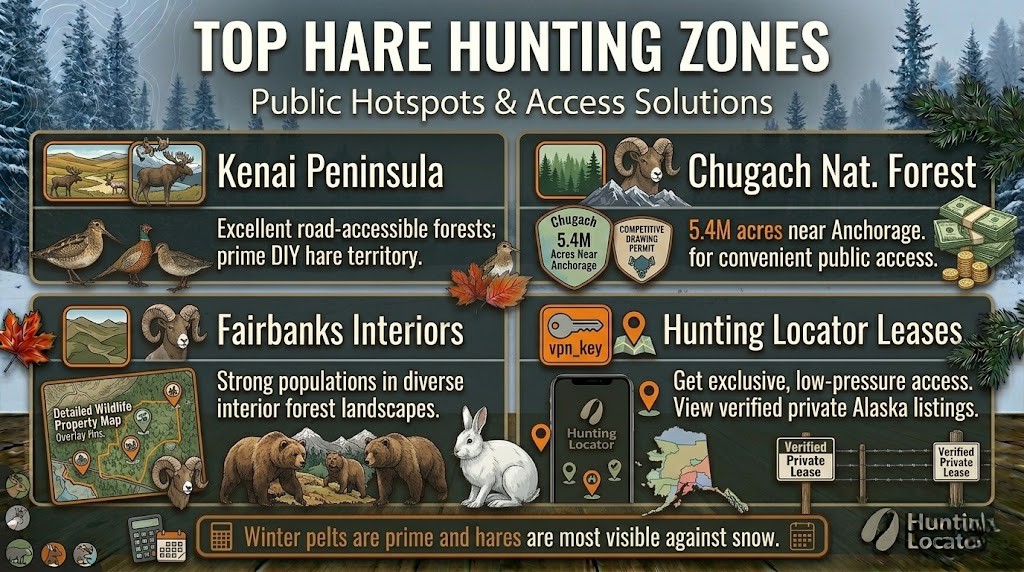
- Kenai Peninsula: Excellent snowshoe hare hunting with decent road access. The forests around major highways give you good hunting without needing a bush plane.
- Chugach National Forest: 5.4 million acres of hunting opportunities right in Anchorage’s backyard. Perfect for hunters who want convenience without sacrificing quality.
- Fairbanks Area: Interior forests with strong hare populations, especially during peak cycle years. Multiple road access points make this area great for DIY hunters.
- Mat-Su Valley: Close to Anchorage with good mix of state and federal lands. Solid small game habitat with reasonable access for most hunters.
Guided vs. DIY Hunting
You don’t need a guide for small game in Alaska, but that doesn’t mean guides aren’t available. Some hunters prefer the local knowledge and logistics support, especially if they’re combining small game with upland bird hunting.
Most successful small game hunters go the DIY route. Alaska’s road system gives you access to plenty of good hunting areas, and basic camping gear is all you need for most trips.
Private Land Through Hunting Locator
While Alaska is famous for public land, private hunting can offer less crowded experiences with known game populations.
Alaska’s Private Land Reality: Native corporations and private landowners control significant acreage, especially along the road system. Many excellent hunting areas are privately owned, and you need advance permission to hunt them.
Why Consider Private Land: Exclusive or limited access, known game populations, better road access than remote public areas, and way less hunting pressure than popular public spots.
Finding Private Access: Hunting Locator connects you directly with landowners offering hunting leases throughout Alaska. Browse current Alaska leases to see what’s available for your hunting dates.
Hunting Strategies That Work
Alaska hare hunting has its own rhythm. The terrain, weather, and game behavior all require adjustments from what works in the Lower 48.
Proven Tactics:
- Slow Down: Move slowly through habitat, stop frequently. Hares rely on camouflage and often hold tight until you’re almost on top of them. Rushing through cover means missed opportunities.
- Time It Right: Late fall and winter provide the best hunting when pelts are prime and visibility improves with snow cover. Plus, winter hares in white coats are easier to spot against dark backgrounds.
- Gear Up Properly: Shotgun with nontoxic shot (T size or smaller) or .22 rifle/handgun. Remember, only nontoxic shot is legal for shotgun hunting.
- Hunt the Edges: Focus where forest meets openings, creek bottoms, and brushy feeding areas. These transition zones concentrate hares and give you better shooting opportunities.
- Stay Alert for Disease: Watch for tularemia signs like sluggish behavior and liver/spleen spots during field dressing. When in doubt, don’t take the animal.
- Prepare for Weather: Alaska weather changes fast. Pack cold-weather gear, emergency supplies, and communication devices, especially in remote areas.
More Alaska Hunting Resources
Ready to expand beyond small game? These guides cover Alaska’s full hunting opportunities:
- Complete Alaska Hunting Guide – All species, all seasons, all regulations
- Alaska Caribou Hunting – Chase the great herds
- Alaska Moose Hunting – The ultimate Alaska trophy
- Alaska Black Bear Season – Spring and fall opportunities
- Alaska Brown Bear Season – The apex hunting experience
- Alaska Wolf Hunting – Predator hunting strategies
- Alaska Deer Hunting – Southeast Sitka blacktails
- Alaska Trapping Season – Furbearer opportunities
Common Questions
When does small game season open in Alaska for 2026?
Small game season for hares opens September 1, 2026 and runs through April 30, 2027. That’s a full 8 months of hunting opportunity, giving you plenty of flexibility for trip planning around weather and personal schedules.
What does a non-resident hunting license cost?
You’ve got two choices: $160 for a full hunting license (covers everything legal to hunt) or $60 for small game only (hares, grouse, ptarmigan). If you’re only after small game, the $60 license saves you money.
Do I need special permits for small game hunting?
Nope, not for most areas. The only exceptions are the Anchorage Coastal Wildlife Refuge and part of the Eagle River Management Area, which require free registration permits from ADF&G.
Are there bag limits on hares in Alaska?
Alaska has no statewide bag limit for hares, which is pretty amazing compared to most states. Just verify your specific GMU doesn’t have special restrictions, and note that Arctic hare season is closed in Units 9 and 17.
Can out-of-state hunters go solo for small game?
Absolutely. Unlike some big game species that require guides for non-residents, you can hunt small game on your own with proper licensing. Many successful hunts are DIY affairs using public land access.
What’s the best time to hunt hares in Alaska?
Late fall through winter typically offers the best conditions. Hares have their thick winter coats, they’re more visible against snow, and you avoid the worst of Alaska’s bug season. The long season lets you pick your timing based on conditions.
Wrapping Up Your Alaska Adventure
Alaska’s small game hunting is about as hunter-friendly as it gets. Eight-month seasons, no bag limits, and more public land than you could hunt in several lifetimes. Whether you’re a resident looking for close-to-home action or a visitor planning the trip of a lifetime, Alaska delivers.
The key is keeping it simple. Get your license, understand the basic regulations, and focus on finding good habitat. Whether you stick to public lands or secure private access through hunting leases, Alaska’s hare populations can provide incredible hunting experiences.
Don’t overthink it. Alaska’s been welcoming hunters for generations, and the small game opportunities are some of the best you’ll find anywhere. Ready to start planning? Check out available Alaska hunting leases and start turning those hunting dreams into concrete plans.


