This isn’t just another minor regulation tweak. Connecticut’s Department of Energy and Environmental Protection calls these changes the biggest expansion of hunting opportunities the state has seen in decades. We’re talking about a complete game-changer for how you plan your hunting season.
Here’s what you need to know right now:
- Every 2026 season date, bag limit, and regulation for gray squirrel, cottontail rabbit, snowshoe hare, and woodchuck
- License costs and requirements that won’t surprise you at the checkout
- Where to actually hunt—public spots that produce, plus how to get private land access
No fluff, no outdated info. Just the complete breakdown so you can start planning your best Connecticut small game season yet.
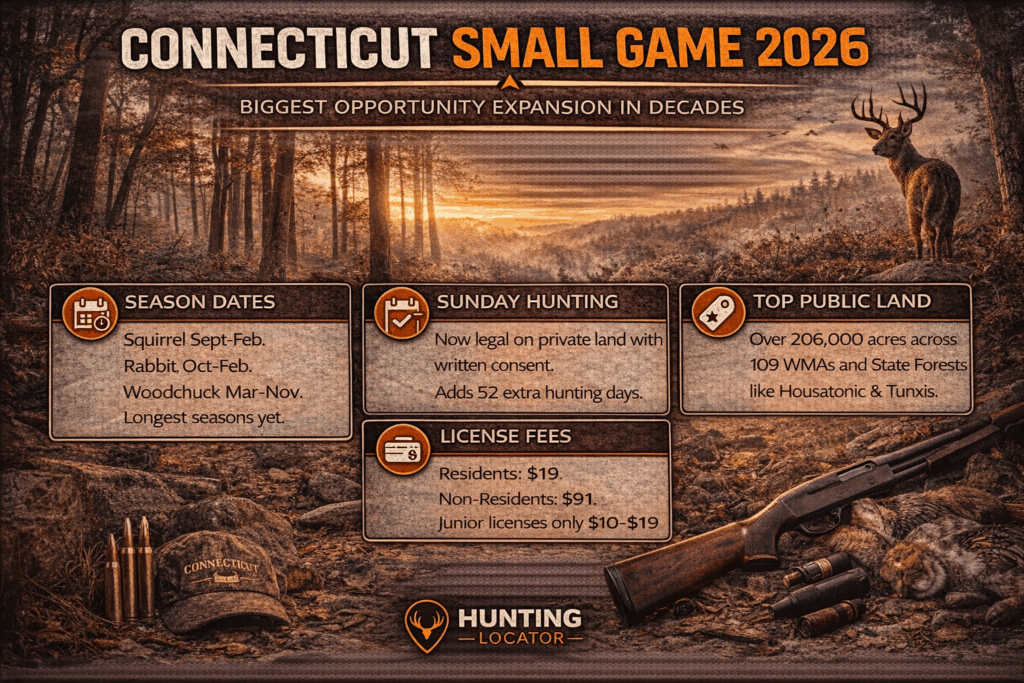
Quick Overview of Connecticut Small Game Seasons
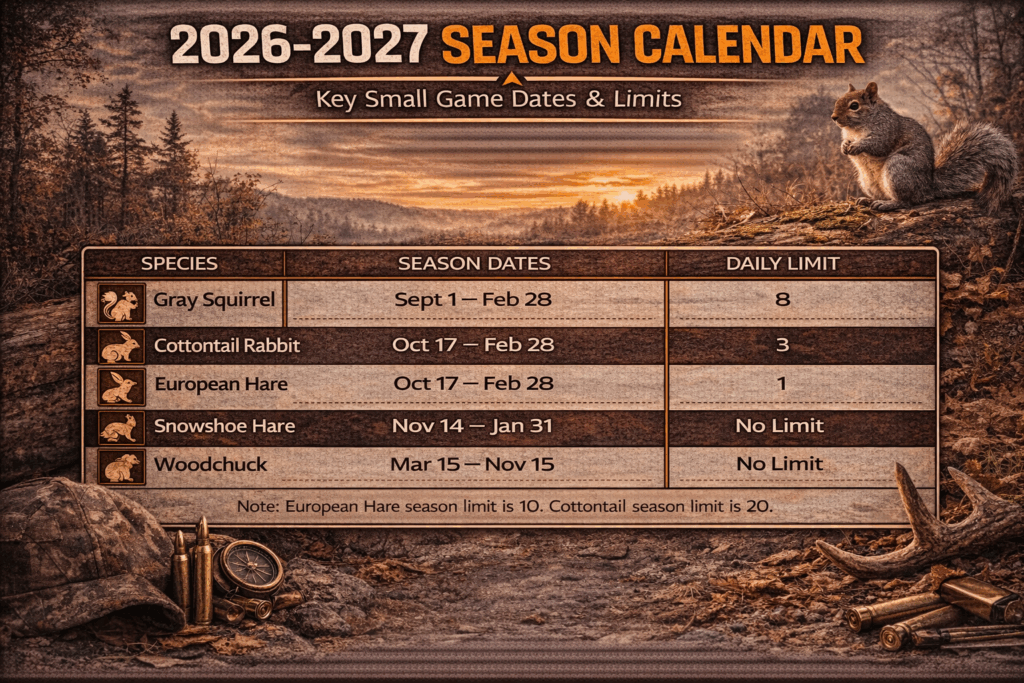
Here’s everything at a glance. Connecticut’s 2026-2027 seasons pack more opportunity than ever before thanks to Sunday hunting on private land.
| Species | Season Type | Start Date | End Date | Daily Limit | Season Limit |
|---|---|---|---|---|---|
| Gray Squirrel | Fall Season | Sept. 1, 2026 | Dec. 31, 2026 | $8.00 | $40.00 |
| Gray Squirrel | Winter Season | Jan. 1, 2027 | Feb. 28, 2027 | $8.00 | $40.00 |
| Cottontail Rabbit | Fall Season | Oct. 17, 2026 | Dec. 31, 2026 | $3.00 | $20.00 |
| Cottontail Rabbit | Winter Season | Jan. 1, 2027 | Feb. 28, 2027 | 3 | 20 |
| European Hare | Fall Season | Oct. 17, 2026 | Dec. 31, 2026 | 1 | 10 |
| European Hare | Winter Season | Jan. 1, 2027 | Feb. 28, 2027 | 1 | 10 |
| Snowshoe Hare | Fall Season | Nov. 14, 2026 | Dec. 31, 2026 | No limit | No limit |
| Snowshoe Hare | Winter Season | Jan 1, 2027 | Jan 31, 2027 | No limit | No limit |
| Woodchuck | General Season | Mar 15, 2027 | Nov 15, 2027 | No limit | No limit |
Don’t head out without these basics:
- Valid Connecticut hunting license
- Hunter education certificate if you’re a first-timer
- Right permits for your hunting method
- Written landowner permission for Sunday hunting on private property
Want the full Connecticut hunting picture beyond small game? Check out our complete Connecticut hunting guide.
Gray Squirrel Hunting Seasons
Gray squirrels are your bread and butter in Connecticut. Eight per day, 40 for the season, and they’re everywhere in the state’s hardwood forests. You get nearly six months to chase them between the fall and winter seasons.
Fall Season
Season Details: September 1, 2026 – December 31, 2026
September and October are prime time. Squirrels are frantically gathering acorns and hickory nuts, which makes them predictable and active. Hit the hardwood ridges early in the morning when they’re working the nut trees hardest. Legal hunting hours run from 30 minutes before sunrise to 30 minutes after sunset.
Winter Season
Season Details: January 1, 2027 – February 28, 2027
Winter squirrel hunting is a different animal entirely. They’re less active but way easier to spot in bare trees. Focus on den trees during cold snaps—that’s where they hole up. Sunday hunting is now legal on private land with written permission, so you can finally hunt those weekend-only properties.
Cottontail Rabbit and European Hare Hunting Seasons
Rabbit hunting ranks second in popularity for Connecticut small game, but here’s where hunters mess up: cottontail and European hare have different bag limits. Cottontail gets you 3 daily and 20 for the season. European hare? Just 1 daily and 10 total. Learn the difference or risk a violation.
Fall Season
Season Details: October 17, 2026 – December 31, 2026
The later start gives rabbit populations time to finish their breeding cycles. Look for thick, brushy cover—overgrown fields, fence rows, and edge habitat where different cover types meet. Remember: cottontail = 3 daily, European hare = 1 daily. Don’t mix them up.
Winter Season
Season Details: January 1, 2027 – February 28, 2027
Snow changes everything for rabbit hunting. Fresh tracks tell the whole story, and rabbits stand out against white backgrounds. They stay active all winter, unlike some other small game that goes semi-dormant.
Snowshoe Hare Hunting Seasons
Snowshoe hare hunting is for specialists. These aren’t your typical rabbits—they need specific habitat and you’ll find them mainly in northern Connecticut’s conifer forests.
Fall Season
Season Details: November 14, 2026 – December 31, 2026
The late start reflects how specialized this hunting is. You need dense conifer stands, swamps with thick cover, and the patience to hunt habitat that looks empty but isn’t. No bag limits, but finding them is the real challenge.
Winter Season
Season Details: January 1, 2027 – January 31, 2027
Notice the winter season ends in January, not February like other species. Snowshoe hare turn white in winter, which makes them nearly invisible in snow but obvious when the ground is bare.
Woodchuck Hunting Season
Woodchuck season fills the gap when everything else is closed. March through November gives you warm-weather hunting that doubles as valuable pest control for landowners.
General Season
Season Details: March 15, 2027 – November 15, 2027
No bag limits, no season limits, and landowners actually want you to shoot these things. Woodchucks are most active in early morning and late afternoon during warmer months. This is your foot-in-the-door hunting—help a farmer with his woodchuck problem and you might get invited back for deer season.
Connecticut Small Game Licenses and Permits
You need a valid license before you hunt, period. Buy them 24/7 through CT DEEP’s online system. First-time hunters must complete hunter safety before getting a license—no exceptions.
Connecticut Hunting Licenses
Resident vs. non-resident pricing is dramatically different. License fees hit non-residents hard, so factor that into your hunting budget.
| License Type | Resident | Non-Resident | Notes |
|---|---|---|---|
| Firearms Hunting (Small Game) | $19 | $91 | Small game only |
| Archery Deer/Small Game | $65-$84 | $135 | Permit dependent |
| Small Game/Marine Fishing Combo | $25.00 | N/A | Residents only |
| Junior License (under 16) | $10 | $19 | Requires adult supervision |
| Senior License (65+) | Free | N/A | Connecticut residents only |
Licenses run by calendar year. Carry your license while hunting—game wardens check. Hunter education is mandatory for first-timers. Connecticut doesn’t automatically accept out-of-state hunter education—contact CT DEEP first to transfer your credentials.
Connecticut Hunting Permits
Different hunting methods need different permits. Small Game and Deer Archery Permits cost $41 for residents, $135 for non-residents if you’re bow hunting. Planning to hunt pheasant, grouse, quail, partridge, or turkey too? Add the Game Bird Conservation Stamp ($28). Migratory species require the Connecticut Migratory Bird Conservation Stamp ($16).
Buy permits through CT DEEP’s online system, outdoor retailers, some town halls, or DEEP offices.

Where to Hunt Small Game in Connecticut
Connecticut doesn’t have Montana’s wide-open spaces, but it makes up for size with accessibility. Over 206,000 acres of public land are open for small game hunting, plus Sunday hunting on private land just opened up thousands more opportunities.
Best Public Lands for Small Game
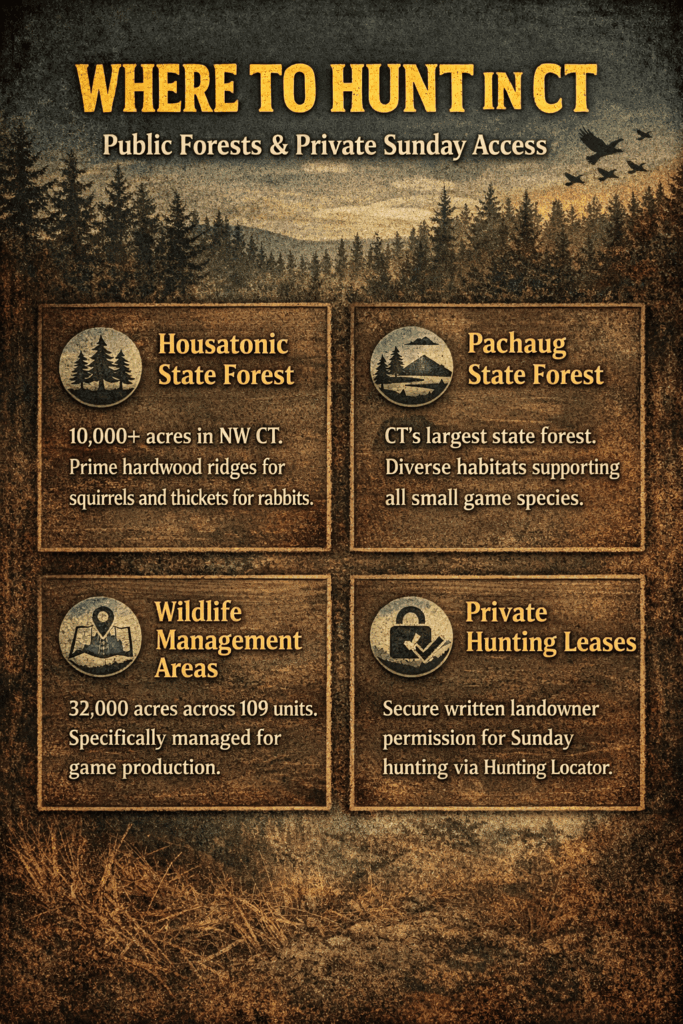
Connecticut manages 109 Wildlife Management Areas covering 32,000 acres, plus extensive state forests with diverse small game habitat.
- Housatonic State Forest – Over 10,000 acres in northwestern Connecticut with prime gray squirrel and rabbit habitat in mixed hardwoods
- Tunxis State Forest – Another 10,000+ acre property supporting multiple small game species across varied terrain
- Pachaug State Forest – Connecticut’s largest state forest with diverse habitat and solid small game populations
- Natchaug State Forest – Excellent hardwood habitat that’s perfect for squirrel hunting
- Stewart B. McKinney National Wildlife Refuge – Expanded hunting opportunities for 2026
CT DEEP provides maps and specific regulations for each area. Need gear for Northeast small game hunting? Check out the Hunting Locator store.
Guided Hunts
Small game guides aren’t as common as deer or turkey guides, but they exist—especially for rabbit hunting with dogs. Guide services must register annually with CT DEEP. Guides make sense for non-residents who don’t know Connecticut’s terrain and regulations. Contact local sporting clubs and outfitters for referrals. Many guides offer combo hunts that include small game plus upland birds.
Private Land Hunting
Private land beats public land every time. Less pressure, better habitat management, and now you can hunt Sundays with Public Act 25-138.
Building Relationships: The old-school approach is asking landowners for permission. Woodchuck hunting opens doors because farmers actually want help controlling these pests.
Leasing Land: More hunters are paying for guaranteed access through hunting leases. You get consistent access, can improve habitat, and have the written permission required for Sunday hunting.
Sunday hunting on private land requires signed written consent from the landowner using an official CT DEEP form for the current season.
Finding quality private land in Connecticut is tough—that’s exactly why Hunting Locator exists. Instead of cold-calling farms or hoping someone says yes, browse verified Connecticut hunting leases with detailed property info, photos, and direct landowner contact. Whether you want a small woodlot for squirrels or bigger acreage for multiple species, Hunting Locator cuts through the hassle and gets you the written permission documentation you need for legal Sunday hunting.
Small Game Hunting Tips
Connecticut’s terrain demands different tactics than western hunting. These strategies work in the Northeast’s thick cover and varied habitat.
- Get Up Early – Small game is most active in the first two hours after sunrise. Sleep in and you’ll miss the best action of the day
- Hunt the Edges – Transition zones between cover types hold the most game. Look where hardwoods meet fields or thick cover borders open areas
- Watch the Weather – Hunt during stable weather periods. Animals move more before weather fronts and hunker down during storms
- Move Slow, Stop Often – Small game freezes when they detect movement. Pause frequently and scan thoroughly before taking your next steps
- Learn the Sounds – Squirrels chatter and rustle leaves differently than rabbits moving through brush. Your ears are as important as your eyes
- Know the Food Sources – Squirrels hit acorns hard in fall. Rabbits prefer brushy areas near food plots year-round. Hunt where they eat
More Resources from Hunting Locator
Maximize your Connecticut hunting with these specialized guides covering every season and species the state offers.
- Connecticut Coyote Hunting – Year-round predator hunting with no bag limits
- Connecticut Turkey Hunting – Spring and fall seasons with calling strategies and public land spots
- Connecticut Deer Hunting – Complete guide to archery, firearm, and muzzleloader seasons
- Connecticut Waterfowl Hunting – Duck and goose hunting along the coast and inland waters
- Connecticut Upland Game Hunting – Pheasant, grouse, and woodcock opportunities
- Connecticut Migratory Bird Hunting – Specialized seasons for woodcock, snipe, and other migrants
FAQ
When can I hunt small game on Sundays in Connecticut?
Sunday hunting is legal on private land only for all small game species, but you must have signed written consent from the landowner using an official CT DEEP form. No Sunday hunting on public lands, and no Sunday hunting for migratory birds anywhere.
Do I need hunter education to buy a Connecticut hunting license?
Yes. Connecticut requires all first-time hunters to complete state-approved hunter safety before purchasing a license. Online coursework must include a field day component.
What’s the difference between cottontail rabbit and European hare bag limits?
Cottontail rabbits: 3 daily, 20 seasonal. European hares: 1 daily, 10 seasonal. You need to identify these species correctly in the field because the penalties for exceeding bag limits are serious.
Can non-residents use their home state hunter education in Connecticut?
Connecticut doesn’t automatically accept out-of-state hunter education. Contact CT DEEP to transfer your credentials to your Connecticut Conservation ID account before trying to buy a license online.
What are the hunting hours for small game in Connecticut?
30 minutes before sunrise to 30 minutes after sunset for all small game species. These times change throughout the season, so check current sunrise/sunset tables for your hunting dates.
Where can I find the best private land hunting opportunities?
Browse verified Connecticut hunting leases on Hunting Locator. View detailed property information, contact landowners directly, and secure the written permission required for Sunday hunting.
The Final Shot
Sunday hunting just changed Connecticut small game hunting forever. You now have 52 extra days to hunt private land, plus generous seasons that run from September through February for squirrels and extended opportunities for rabbits, hares, and woodchucks.
But here’s the thing: all those extra days don’t mean much if you don’t have anywhere to hunt. Public land is great, but private land with Sunday access? That’s where the real opportunities lie.
The hunters who capitalize on 2026’s changes are the ones securing private land access right now. While everyone else is still figuring out the new regulations, smart hunters are already locking down leases and building landowner relationships for the season ahead.
Ready to make 2026 your best Connecticut small game season yet? Browse Connecticut hunting leases on Hunting Locator and connect with landowners who want responsible hunters on their property. Your Sunday hunting opportunities are waiting.


