This Indiana waterfowl guide covers all three: zones, dates, licenses, bag limits, and where to hunt, all in one place, so you don’t have to waste time going to multiple places just for information.
Indiana’s migratory seasons are coordinated by the U.S. Fish & Wildlife Service alongside Indiana DNR, and the state’s position on the Mississippi Flyway migratory seasons puts Hoosier hunters in the middle of some of the best duck and goose action in the country. Regulations shift from year to year, so confirm current dates with Indiana DNR before you head out.
Here’s what’s covered below:
- Confirmed 2026 season dates by zone — North, Central, and South, plus early teal and youth weekends.
- Every license, stamp, and permit you need — with exact costs for residents, non-residents, and youth hunters.
- Where to hunt — top public FWAs, private leases through Hunting Locator, and what to expect from a guided hunt.
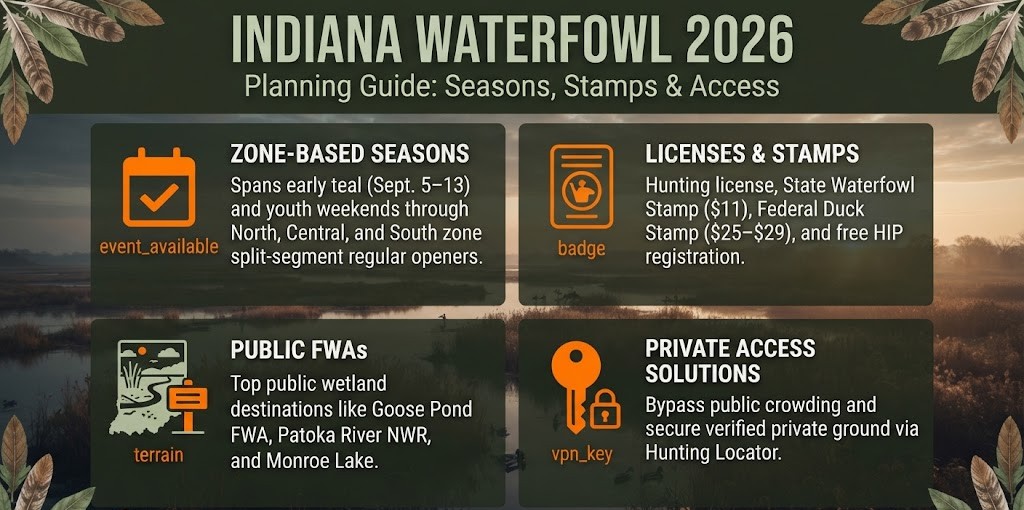
Quick Overview: Indiana Waterfowl Season at a Glance
The daily duck bag limit in Indiana is 6. Early teal season runs Sept. 5–13, 2026, and zone-based regular seasons open between late October and early November. Here’s how the full 2026 season breaks down:
| Season/Species | Dates (by Zone) | Daily Bag Limit | Notes |
|---|---|---|---|
| Early Teal Season | Sept. 5–13, 2026 (statewide) | Part of duck limit | Early September opportunity |
| Youth Waterfowl Weekend — North | Oct. 17–18, 2026 | Same as regular limits | Ages 17 & under |
| Youth Waterfowl Weekend — Central | Oct. 24–25, 2026 | Same as regular limits | Ages 17 & under |
| Youth Waterfowl Weekend — South | Oct. 31–Nov. 1, 2026 | Same as regular limits | Ages 17 & under |
| Regular Duck & Goose — North | Opens Oct. 24, 2026 (split segments) | Ducks: 6 | Split season |
| Regular Duck & Goose — Central | Opens Oct. 31, 2026 (split segments) | Ducks: 6 | Split season |
| Regular Duck & Goose — South | Opens Nov. 7, 2026 (split segments) | Ducks: 6 | Split season |
| Coots | Within season | 15 daily | — |
| Mergansers | Within season | 5 daily | Max 2 hooded |
| Canada Geese & Brant | Within season | 5 aggregate daily | — |
| White-Fronted Geese | Within season | 2 daily | — |
| Light Geese (Snow, Blue, Ross’s) | Within season | 20 daily | No possession limit |
Everything above is drawn from Indiana DNR and U.S. Fish & Wildlife Service frameworks — verify current dates before you hunt.
Before heading to the field, make sure you have the full licensing stack in place:
- Valid Indiana hunting license (resident or non-resident)
- Indiana Waterfowl Stamp Privilege ($11)
- Federal Duck Stamp ($25–$29, required age 16+)
- HIP registration (free, mandatory for all migratory bird hunters)
- Hunter education for those born after Dec. 31, 1986
Each of these is broken down below. For the full picture of how waterfowl fits into Indiana’s broader migratory bird framework, see Indiana’s migratory bird seasons.
Indiana Waterfowl Hunting Seasons by Zone
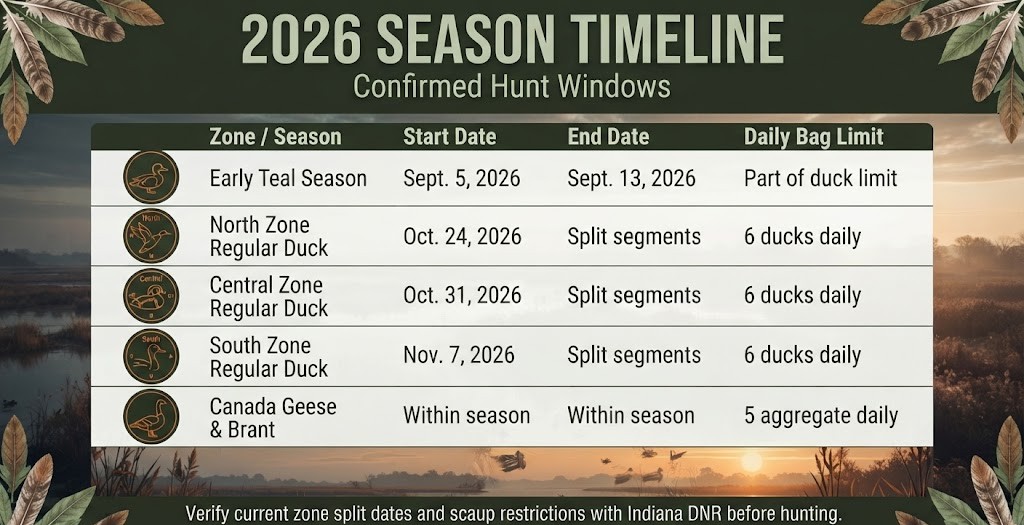
Indiana divides its waterfowl season into three geographic zones — North, Central, and South — each with opening dates timed to Mississippi Flyway migration, so opportunity lines up with when birds are actually moving through that part of the state. Every zone runs split segments rather than one continuous season, so it’s worth knowing exactly which days are open in your area. These dates are confirmed against DNR frameworks — double-check before you load the truck.
North Zone
The North Zone regular duck season opens Oct. 24, 2026. Before that, the North Zone Youth Waterfowl Weekend runs Oct. 17–18, 2026, giving young hunters a head start. The North Zone opens earliest of the three, so hunters up north should have licensing and land access squared away well before mid-October.
Central Zone
The Central Zone regular duck and goose season opens Oct. 31, 2026, with split segments throughout. The Central Zone Youth Waterfowl Weekend falls the weekend prior, Oct. 24–25, 2026 — exactly one week behind the North Zone opener.
South Zone
The South Zone regular season opens Nov. 7, 2026, the latest of the three zones, with its own split segments. The South Zone Youth Waterfowl Weekend runs Oct. 31–Nov. 1, 2026. The later opener suits hunters chasing later-migration birds or wanting a hunt that lines up with the holiday window. South Zone dates were also adjusted under a newer multi-year framework, so verify current dates with Indiana DNR before planning around them.
Fine print trips up even experienced hunters. Scaup restrictions apply on a sliding scale — 1 per day early in the season, 2 per day later, depending on the zone and date — so know exactly where that line falls before you shoot. Mergansers run a separate 5-daily limit, with no more than 2 allowed to be hooded mergansers. Given Indiana’s spot on the flyway, snow goose flocks and other light geese often show up mixed in with more common species, so a field guide in the blind bag is worth carrying.
Indiana Waterfowl Licenses and Permits
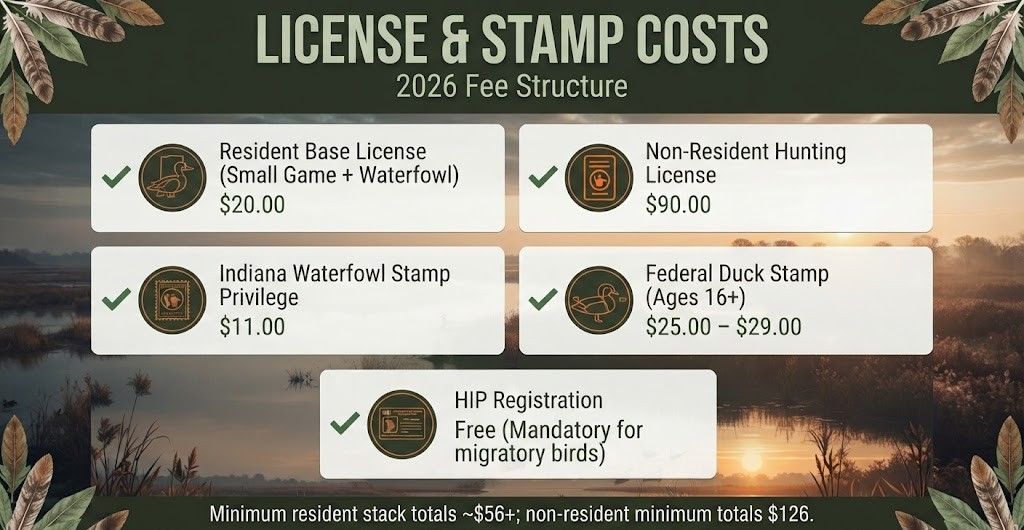
To hunt waterfowl in Indiana, you need a hunting license, the Indiana Waterfowl Stamp Privilege ($11), a Federal Duck Stamp (age 16+), and free HIP registration. The order is straightforward: license first, then the state waterfowl stamp, then the federal duck stamp, then HIP registration.
Indiana Hunting Licenses
Here’s how the costs break down by hunter type:
| Hunter Type | Base License | Waterfowl Stamp | Federal Duck Stamp | HIP | Minimum Total |
|---|---|---|---|---|---|
| Resident (adult) | $20 (covers small game + waterfowl) | $11 | $25–$29 | Free | ~$56+ |
| Non-Resident (adult) | $90 | $11.00 | $25 | Free | $126 minimum |
| Youth (resident, 17 & under) | $12 (all-inclusive hunt/trap license) | Exempt from state stamp | Required age 16–17 | Free | $12+ (add federal stamp if 16–17) |
A non-resident waterfowl hunter’s minimum cost is $126 — a $90 license, $11 waterfowl stamp, and $25 federal duck stamp. That’s the number to budget around if you’re traveling in for a Hoosier hunt.
Anyone born after Dec. 31, 1986 must complete a DNR-approved hunter education course before purchasing a license, regardless of residency. Note that the resident base license isn’t waterfowl-only — the $20 covers both small game and waterfowl, so hunters also chasing rabbits or quail this fall are already covered.
Indiana Hunting Permits & Stamps
Beyond the base license, here’s the permit and stamp stack, step by step:
- Indiana Waterfowl Stamp Privilege — $11, added directly onto your license through the Indiana DNR licensing system.
- Federal Duck Stamp — $25–$29, required for hunters 16 and older; available through the U.S. Fish and Wildlife Service and many retailers and post offices.
- HIP Registration — free and mandatory for all migratory bird hunters; complete it at the same time you purchase your license.
Requirements shift slightly by age for younger hunters. Youth 15 and under need only a license and HIP registration. Youth 16–17 need a youth license, HIP registration, and the Federal Duck Stamp — but they’re exempt from the state waterfowl stamp either way.
As with the season dates, confirm current fees and requirements with Indiana DNR before you buy, since costs and rules can shift year to year.
Where to Hunt Waterfowl in Indiana
Indiana waterfowl hunters have three paths — public Fish & Wildlife Areas, private leased land, and guided hunts. Public land is accessible but crowded. Private leases give you room to hunt and the ability to pattern birds all season without competing for a spot. Guided hunts remove most of the planning burden. Here’s how each stacks up.
Best Public Lands for Waterfowl
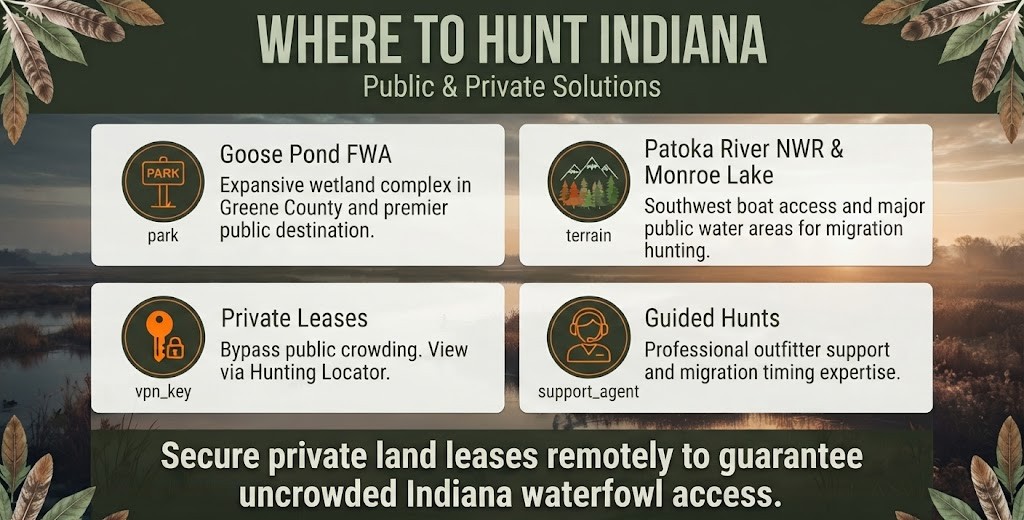
Indiana’s top public areas include Goose Pond FWA, Patoka River NWR, and Monroe Lake — each peaking at a different point in the season depending on migration timing and water conditions.
- Goose Pond FWA — an expansive wetland complex in Greene County and one of Indiana’s premier public waterfowl destinations.
- Patoka River NWR — located in southwest Indiana, with boat access opening up water that shore-bound hunters can’t reach.
- Monroe Lake — a large public water area where timing your hunt to migration matters as much as anywhere in the state.
Many of Indiana’s best public waterfowl spots sit on or near navigable water, so a boat significantly expands your options. The trade-off is pressure — popular public spots fill up fast on good weather days, which is where private land starts to look more appealing.
Private Land Hunting with Hunting Locator
Public land is free, but it’s pressured — you’re competing with every other hunter who read the same forecast you did. Private leased land means more space, less competition, and the ability to pattern birds across a full season instead of hoping for an open spot. Whether you’re looking to lease for a season or buy hunting ground outright, private access changes what your season looks like.
This is where Hunting Locator comes in, connecting hunters directly with land. Browse quality Indiana waterfowl land, connect directly with landowners, and lock in your spot before opening day — no middlemen, just direct access to landowners who are ready to lease or sell.
Take a few minutes to browse Indiana hunting leases and see what’s available near your zone. Listings are updated regularly with specific acreage and location details, so you can compare options against your zone’s opener and find ground that fits your season plans.
Guided Hunts: What to Expect
Guided hunts suit non-residents, first-timers, and anyone short on time to scout before the season opens. A good guide brings local knowledge of migration timing and water conditions, provides much of the gear, and takes most of the scouting burden off your shoulders.
When evaluating a guided hunt, keep a few things in mind:
- Book early — the best outfitters and blind setups fill up well before opening day, especially around peak migration windows.
- Budget realistically — costs vary based on location, group size, and what’s included, so ask for a full breakdown up front.
- Ask the right questions — What’s included in the price? Do they help with licensing? What does a typical hunt day look like? What’s their historical success rate for your target species?
- Confirm blind and land access — make sure you know exactly where you’ll be hunting and how it’s set up before you commit.
If a guided hunt isn’t the right fit, or you want more control over your own ground, Hunting Locator’s ecosystem still has you covered — from leases to gear to everything in between.
Indiana Waterfowl Hunting Tips
A little preparation before opening day makes the difference between a slow morning and a full strap.
- Master species ID — Indiana’s Mississippi Flyway location means you’ll see ducks you don’t hunt every year, and scaup identification alone trips up even veteran hunters. Carry a field guide, and when in doubt, pass on the shot.
- Scout water and migration — Different FWAs and zones peak at different times based on water conditions and migration timing, so don’t assume last year’s hot spot is this year’s.
- Set a realistic decoy spread — Match your spread to the species you’re targeting and the water you’re hunting; overdoing it can spook wary birds just as easily as underdoing it.
- Know your bag limits cold — Six ducks daily with sub-limits on species like scaup and mergansers; verify current details before every hunt, not just at the start of the season.
- Gear up before opening day — Reliable waders, calls, blinds, decoys, and the right non-toxic shot load make for a legal, ethical, and more successful hunt.
When it’s time to stock up, the Hunting Locator store has waders, decoys, blinds, calls, and more to get you ready before the first flight works your spread.
More Resources from Hunting Locator
Planning more than just a duck hunt this year? Indiana’s seasons are organized species by species below, so you can plan your whole year in one place.
- Indiana Waterfowl Hunting Season — our full Indiana waterfowl guide goes deeper on species-specific strategy and regulations.
- Indiana Migratory Bird Hunting Season — see how waterfowl fits into Indiana migratory bird seasons alongside dove, woodcock, and snipe.
- Indiana Hunting Season Guide — the complete Indiana hunting guide covering every species and season in the state.
- Indiana Turkey Hunting Season — planning a spring hunt too? Check Indiana turkey season dates to plan your full year.
- Indiana Small Game Hunting Season — remember, your resident license already covers small game — see what’s in season with the Indiana small game season guide.
- Indiana Deer Hunting Season — get the dates and details in our Indiana deer season guide.
- Indiana Furbearer Hunting & Trapping Season — extend your season with Indiana furbearer and trapping opportunities.
- Indiana Hunting Leases — browse current Indiana hunting leases to find your own ground this season.
- Hunting Locator Store — shop waterfowl gear to get outfitted before opening day.
Frequently Asked Questions
What are the 2026 Indiana duck season dates by zone?
The North Zone opens Oct. 24, the Central Zone opens Oct. 31, and the South Zone opens Nov. 7, 2026, each running split segments through the winter. Early teal season runs statewide Sept. 5–13, 2026. These zones follow Mississippi Flyway migration patterns as coordinated by Indiana DNR and the U.S. Fish & Wildlife Service — always verify current dates before heading out.
What is the daily duck bag limit in Indiana?
The daily duck bag limit in Indiana is 6, with species-specific sub-limits including restrictions on scaup (1 or 2 per day depending on timing and zone). Coots run a separate 15-daily limit, and mergansers are capped at 5 daily with no more than 2 hooded. These limits come from Indiana DNR and U.S. Fish & Wildlife Service frameworks.
How much does a non-resident Indiana waterfowl license cost in 2026?
A non-resident waterfowl hunter’s minimum cost is $126 — a $90 non-resident license, $11 Indiana Waterfowl Stamp, and $25 Federal Duck Stamp. HIP registration is required but free. Budget a bit above the minimum to account for potential price variation in the federal stamp.
What are the 2026 Indiana youth waterfowl weekend dates?
Youth Waterfowl Weekends run Oct. 17–18 in the North Zone, Oct. 24–25 in the Central Zone, and Oct. 31–Nov. 1 in the South Zone. Youth must be 17 or under and accompanied by a licensed adult, and bag limits match the regular season.
Do I need a Federal Duck Stamp to hunt waterfowl in Indiana?
Yes — hunters age 16 and older need a Federal Duck Stamp ($25–$29), on top of the $11 Indiana Waterfowl Stamp and free HIP registration. Youth 17 and under are exempt from the state waterfowl stamp specifically, though 16- and 17-year-olds still need the federal stamp. This is coordinated between the U.S. Fish & Wildlife Service and Indiana DNR.
What are the best public places to hunt ducks in Indiana?
Goose Pond FWA, Patoka River NWR, and Monroe Lake are Indiana’s top public waterfowl areas, each peaking at different points in the season depending on migration and water conditions. Boat access at areas like Patoka River and Monroe Lake opens up water shore-bound hunters can’t reach.
The Final Shot
This season comes down to three things: knowing your zone’s confirmed 2026 dates, having your full license, stamp, and HIP stack in order, and having a solid place to hunt. The basics: a 6-duck daily limit, early teal running Sept. 5–13, and regular seasons opening in staggered waves from late October in the North Zone through early November in the South Zone. Confirm your zone’s exact dates, get licensed, and lock in your land — in that order.
Before heading out, take one more pass at Indiana DNR’s current regulations to confirm nothing has shifted since this guide was written. It’s a small step that keeps your season legal and stress-free from the first morning to the last.
This guide covers the planning — zones, dates, licenses, and public-land options — but finding the right ground matters just as much. Head over and connect with a landowner through Hunting Locator’s Indiana lease listings to line up your own water for this season.


