Here’s the kicker: bears are already moving at the end of February, which is way earlier than the usual early April timeline. With Oregon’s black bear population and more tags up for grabs, 2026 looks like it could be one hell of a year for both spring controlled hunts and fall general season opportunities.
This guide breaks down everything you need to plan your best bear hunt yet. First-timer to Oregon or seasoned local updating your knowledge? We’ve pulled together official ODFW regulations and real-world hunting strategies to help you nail both seasons.
Here’s what we’re covering:
- Critical 2026 season dates and that make-or-break February 10 application deadline for spring hunts
- Complete cost breakdown: residents pay $16.50 for tags, non-residents $25.50
- Best public lands, guided hunt options, and how to score private land access for Oregon bear hunting
Let’s jump into a quick overview of everything you need to know, then get into the details that’ll make your 2026 Oregon bear hunt count. Planning to chase multiple species? Check out our complete Oregon hunting season guide to coordinate your trips.
Quick Overview: Oregon Black Bear Season 2026
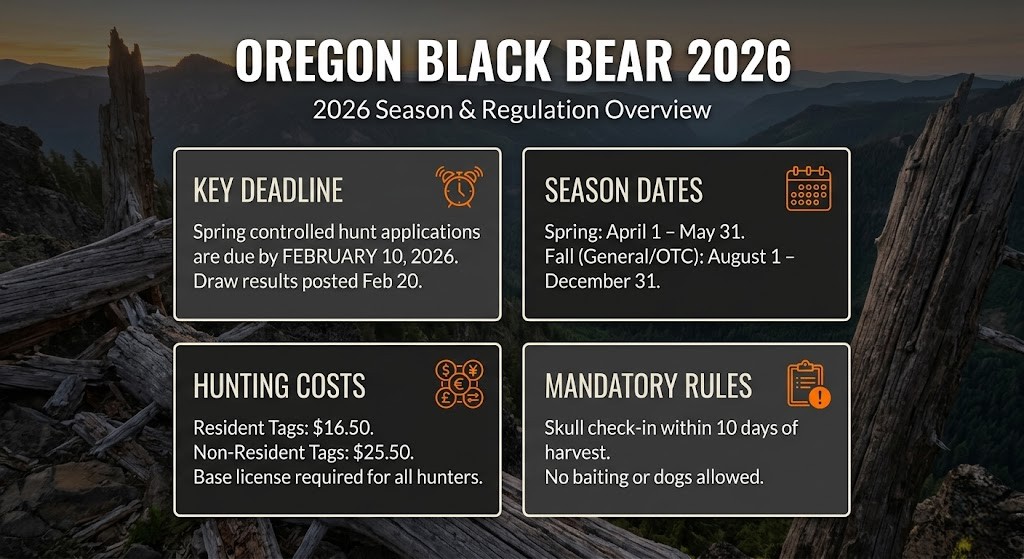
Oregon runs both spring controlled hunts and fall general season opportunities. That’s a crucial distinction every bear hunter needs to understand. Here’s your essential 2026 Oregon black bear season info at a glance.
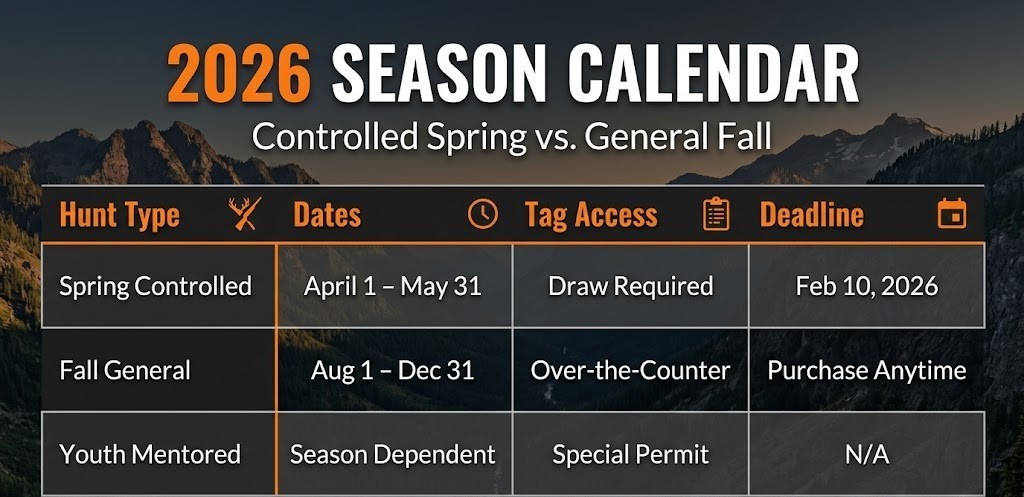
| Element | Spring Season (Controlled Hunt) | Fall Season (General/OTC) |
|---|---|---|
| Dates | April 1 – May 31, 2026 | August 1 – December 31, 2026 |
| Tag Type | Controlled hunt (application required) | Over-the-counter |
| Application Deadline | February 10, 2026 | N/A – purchase anytime |
| Bag Limit | 1 bear per tag | 1 bear per tag |
| Resident Tag Cost | $16.50 + $10 application fee | $17 |
| Non-Resident Tag Cost | $25.50 + $10 application fee | $26 |
| Key Restriction | Cubs <1 year and sows with cubs prohibited | Cubs <1 year and sows with cubs prohibited |
| Mandatory Requirement | Skull check-in within 10 days | Skull check-in within 10 days |
The difference is straightforward: spring requires winning a controlled hunt draw, while fall tags are available over-the-counter with a valid hunting license.
License, Permit, and Education Requirements:
- Valid Oregon hunting license required (resident $39, non-resident $193)
- Bear tag required for either season
- Hunter education certificate required for first-time license buyers (all ages, residents and non-residents)
- Hunters 17 and younger must have hunter education certificate in possession unless enrolled in Mentored Youth Hunter Program
- Mandatory harvest reporting required before January 31 following the hunt year
- Skull must be presented to ODFW office within 10 days of harvest for check-in and marking
Oregon Black Bear Hunting Seasons
Oregon splits bear hunting into two completely different seasons with different access methods. Spring offers controlled hunts in specific units with limited tags, while fall gives you statewide general season opportunity.
Spring Bear Season (Controlled Hunt)
Season Dates: April 1 – May 31, 2026 (and anticipated 2027)
This controlled hunt requires a successful application and offers 11,067 tags across 19 hunts—that’s 70 more than last season. Big increases include 605 tags for hunt 731A South Central and 242 tags for 754A Mt. Emily-Walla Walla hunt.
Application Process:
- Applications due by February 10, 2026
- Apply through ODFW’s online licensing system, license sales agent, or ODFW office
- Application fee: $10 (in addition to tag cost if drawn)
- Results posted February 20, 2026
- 75% of tags awarded to applicants with most preference points; 25% awarded randomly among all first-choice applicants
Oregon caps non-resident allocations at 5% for controlled deer, elk, and bear tags, with 2.5% allocated to guides before general draw. This makes spring controlled hunts pretty competitive for out-of-state hunters.
2026 Conditions: ODFW biologists expect earlier bear activity than previous years unless April weather conditions are colder and wetter than normal. Focus on glassing south-facing slopes at low and mid-elevations, focusing on areas with signs of early green up.
Fall Bear Season (General Season)
Season Dates: August 1 – December 31, 2026 (statewide)
Fall offers general season with over-the-counter tags. No application or draw required. Tags are available with valid hunting license and give you nearly 5 months of hunting opportunity that overlaps with deer and elk seasons for multi-species trip planning.
Important Regulation: To hunt bears with a centerfire rifle during rifle deer or elk season, you need to have a rifle deer or elk tag. This regulation trips up hunters during overlapping seasons, so don’t forget it.
In 2025 hunters checked-in 1,937 black bears in Oregon – 831 during the spring season and 1,106 in the fall. Use bait to attract black bear and using dogs to hunt or pursue black bear is prohibited.
Oregon Black Bear Licenses and Permits
Oregon requires both a hunting license AND a bear tag. Here’s the cost breakdown for residents and non-residents, plus the controlled hunt application process.
Oregon Hunting Licenses
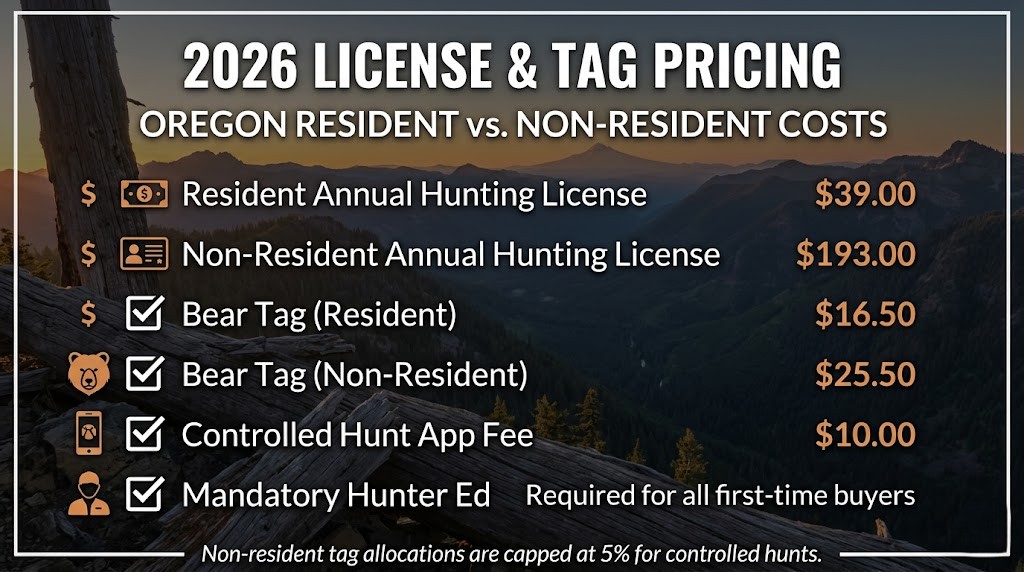
You need the base license before any tags can be purchased. Here’s the complete cost breakdown for 2026:
| License Type | Resident Cost | Non-Resident Cost |
|---|---|---|
| Annual Hunting License | $39.00 | $193.00 |
| Bear Tag | $16.50 | $25.50 |
| Controlled Hunt Application | $10 | $10 |
| Total for Spring Hunt (if drawn) | $66 | $228.50 |
| Total for Fall Hunt (OTC) | $56 | $219 |
To qualify as Oregon resident, you must physically reside in Oregon for not less than six consecutive months immediately prior to applying for license, tag, or permit. Oregon requires all first-time hunting license buyers to complete hunter education course, regardless of age or birth year.
Oregon Bear Hunting Permits
Controlled Hunt Permit Process:
- Only required for spring season (fall is OTC)
- Application deadline: February 10, 2026
- Application fee: $10 (non-refundable)
- Results posted: February 20, 2026
75% of tags awarded to first-choice applicants with most preference points, with the remaining 25% awarded randomly amongst all first-choice applicants. Maximum 5% of controlled bear tags available to non-residents, with 2.5% allocated to guides before general draw.
Where to Hunt Black Bear in Oregon
Oregon gives you everything from coastal rainforests to high desert canyons for bear hunting. Let’s cover public land options, guided hunt services, and private land access strategies.
Best Public Lands
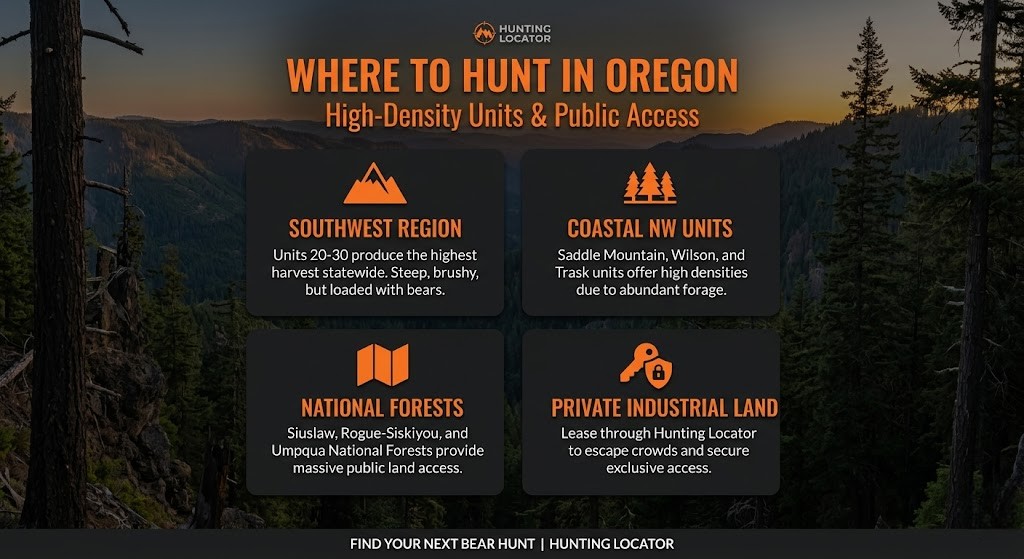
Oregon provides massive public land access for bear hunters, with the highest densities in the southwest and coastal regions.
Top Public Land Options:
- National Forests: Siuslaw, Rogue-Siskiyou, and Umpqua National Forests offer prime bear habitat with extensive road systems
- BLM Land: Significant acreage throughout western Oregon provides additional hunting opportunities
- Elliott State Forest: State-managed property with established bear hunting access
- Coastal NW Oregon Units: Saddle Mountain, Wilson, and Trask Units have higher bear densities due to abundant food sources
- SW Oregon (Hunt 722A area): Units 20-30 produce the highest bear harvest statewide
- Umpqua National Forest and Rogue River areas: Excellent SW Oregon options with diverse terrain
Most areas where bears are hunted in spring and fall are very steep and brushy, with terrain and habitat varying greatly in a short distance. Plan accordingly with proper gear and get yourself in shape.
Guided Hunts
For non-residents or hunters wanting local expertise, guided hunts provide valuable knowledge of productive areas and handle complex logistics.
All Oregon Bear Hunts include food, lodging, trophy preparation, guide service, and transportation while in camp, airport pickup can be arranged for an additional charge. Tags and licenses must be purchased separately through ODFW.
Guided Hunt Advantages:
- Outfitters operate in Oregon’s highest-density bear units
- Both spring and fall hunts available
- Preferred methods include calling, spot and stalk, and glassing feeding areas
- Good optics and a lot of time spent using them is a very important element
Professional guides understand that Applegate and Hells Canyon/Gate are both very steep hunting areas with some monster animals if you can get to them.
Private Land Hunting
Experienced hunters often seek private land access to avoid public land pressure and access exclusive hunting opportunities.
Some private industrial forestland owners allow spring bear hunting as well, usually on a walk-in or mountain bike-in basis. However, hunters are reminded to contact private industrial forestland managers or go online to determine access policies before hunting, as policies vary by company and change seasonally.
Private Land Advantages:
- Way less hunting pressure compared to public land
- Often better-maintained road access
- Exclusive or limited hunter access
- Potential for higher success rates
Leasing gives you guaranteed access without the uncertainty of public land crowding. Costs vary by region, acreage, and exclusivity, but long-term relationships with landowners can provide consistent hunting opportunities.
Connecting with landowners who offer hunting leases can be challenging, but platforms like Hunting Locator specialize in connecting hunters with verified landowners throughout Oregon. This platform gives you direct access to landowners willing to lease or sell hunting rights, eliminating the guesswork and cold-calling that traditionally comes with securing private land access.
Black Bear Hunting Tips
Success in Oregon’s diverse bear country requires understanding bear behavior, terrain challenges, and effective hunting techniques.
Essential Bear Hunting Success Tips:
- Master Your Optics: Good optics and a lot of time spent using them is a very important element to a successful bear hunting trip. Quality binoculars and spotting scopes aren’t optional for glassing feeding areas and distant slopes.
- Focus on Early Green-Up: Glass south-facing slopes at low and mid-elevations, focusing on areas with signs of early green up. Bears emerge from dens seeking fresh vegetation and concentrate in areas with the earliest plant growth.
- Time Your Hunts Right: Bears are most active during the first and last hour of daylight. Plan your positioning accordingly and avoid midday movement when bears seek shade and cover.
- Target Food Sources: Early season bears focus on newly emerged grasses in open areas like clearcuts and meadows. This predictable behavior makes early season hunting highly patternable.
- Learn Effective Calling: Calling brings the bears to you. Once deer and elk fawning seasons begin, bears can be very responsive to distress calls. Practice predator calls and fawn distress sounds before your hunt.
- Prepare for Steep Terrain: Oregon bear country is notoriously challenging. Build your physical conditioning well before the season and invest in quality boots and trekking poles for safety and endurance.
- Scout Clearcuts and Logging Roads: Industrial forestland provides excellent bear habitat. Focus on recent clearcuts with emerging vegetation and use logging roads for access and glassing points.
More Resources from Hunting Locator
Expand your Oregon hunting knowledge and opportunities with these comprehensive resources from Hunting Locator:
- Oregon Hunting Season Guide: Complete overview of all Oregon hunting seasons for trip planning and multi-species hunts
- Oregon Elk Hunting Season: Detailed guide to Oregon’s premier elk hunting opportunities and unit recommendations
- Oregon Deer Hunting Season: Comprehensive coverage of Oregon’s diverse deer hunting options across multiple zones
- Oregon Cougar Hunting Season: Expert insights into Oregon’s challenging but rewarding cougar hunting opportunities
- Oregon Turkey Hunting Season: Spring and fall turkey hunting strategies for Oregon’s diverse terrain
- Oregon Waterfowl Hunting Season: Waterfowl hunting guide covering Oregon’s prime duck and goose hunting areas
- Oregon Game Bird Hunting Season: Upland bird hunting opportunities throughout Oregon’s varied landscapes
- Oregon Antelope Hunting Season: High desert pronghorn hunting in Oregon’s eastern regions
FAQ
When is the application deadline for Oregon spring bear hunts in 2026?
Spring bear controlled hunt applications are due by February 10, with results posted on February 20, 2026. Miss this deadline and you’re waiting until the following year or pursuing fall general season tags.
How much does it cost for non-residents to hunt black bear in Oregon?
Non-residents pay $193 for a hunting license plus $25.50 for a bear tag. For spring controlled hunts, add a $10 application fee, bringing the total to $228.50 if drawn. Fall general season costs $218.50 total since no application is required.
Can I hunt bears in Oregon without winning a controlled hunt draw?
Absolutely. Fall bear season runs from August 1 to December 31 with tags available over-the-counter. You just need a valid hunting license and can purchase your bear tag anytime during the season.
What hunting methods are prohibited for Oregon black bear hunting?
Using bait to attract black bear and using dogs to hunt or pursue black bear is prohibited. Thermal imaging devices are also prohibited. Legal methods include spot-and-stalk, calling, and glassing.
Do I need a deer or elk tag to hunt bears with a rifle during fall season?
To hunt bears with a centerfire rifle during rifle deer or elk season, you need to have a rifle deer or elk tag. This regulation trips up hunters all the time but it’s essential for compliance during overlapping seasons.
What are the bag limits and restrictions for Oregon bear hunting?
One bear per tag, except it is unlawful to take cubs less than one year old or sows with cubs less than one year old. The skull must be presented to an ODFW office within 10 days of harvest for mandatory check-in and marking.
The Final Shot
Oregon’s 2026 black bear season offers some seriously good opportunities for both spring controlled hunt enthusiasts and fall general season hunters. With increased tag availability, healthy bear populations, and diverse hunting terrain from coastal forests to high desert canyons, Oregon provides some of the West’s most accessible bear hunting experiences.
Whether you’re drawn to the strategic challenge of spring controlled hunts or prefer the flexibility of fall’s extended general season, success comes down to understanding regulations, securing quality hunting access, and applying proven hunting techniques. From public land adventures to guided experiences and exclusive private land opportunities, Oregon’s bear hunting landscape has something for every hunter’s preferences and budget.
Ready to secure your access to Oregon’s best private bear hunting opportunities? Explore verified hunting leases on Hunting Locator and connect directly with landowners offering exclusive access to prime bear habitat. Your next trophy bear hunt starts with the right hunting ground. Let Hunting Locator help you find it.


