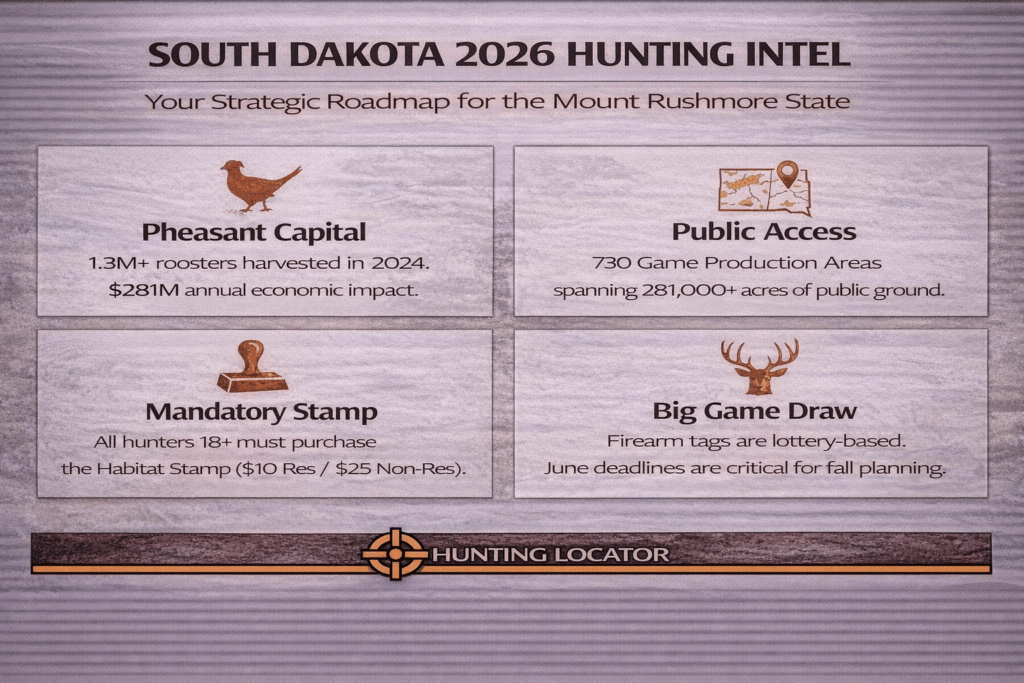
You’re looking at the most complete planning resource for South Dakota hunting, built from official SDGFP regulations for 2026-2027. Every date, every bag limit, every license cost comes straight from the source. Whether you’re chasing roosters through rolling prairie or tracking elk in the Black Hills’ rugged country, South Dakota delivers. The state gives you access to approximately 730 Game Production Areas covering more than 281,000 acres of public hunting ground.
What you’ll find in this guide:
- License costs broken down for residents and non-residents, plus that mandatory Habitat Stamp everyone needs
- Season dates and bag limits for everything from deer to ducks
- Where to actually hunt: public land breakdowns, guided hunt tips, and private land access solutions
Let’s dive into the numbers that matter before you pack your gear.
Quick Overview: Season Dates, South Dakota Hunting Licenses, and Regulations
South Dakota’s licensing system is straightforward once you know the basics. Your residency status and target species determine what you need. That Habitat Stamp ($10 resident / $25 non-resident) isn’t optional—every hunter 18 and older needs one. Big game tags for deer and antelope? Usually lottery-based with applications due months ahead. Small game licenses? Available over-the-counter.
Here’s something non-resident pheasant hunters love: your small game license gets you two separate 5-day hunting periods. Perfect for planning focused trips without wasting days. Residents get the sweet deal with the Combination license at $60—small game, fishing, and habitat stamp all rolled together.
South Dakota Hunting License Costs
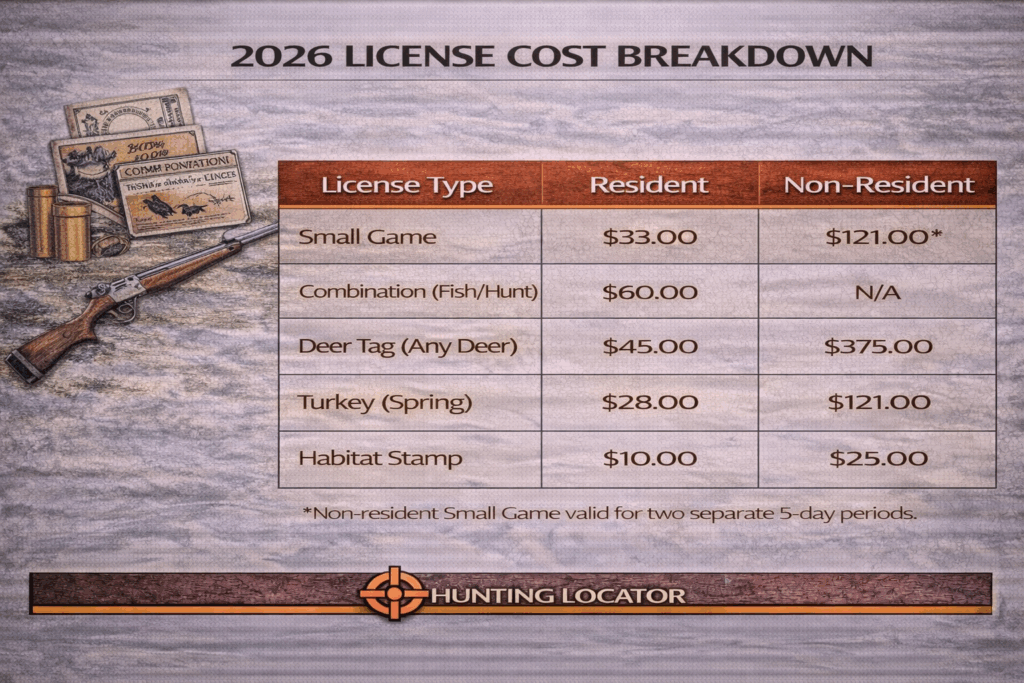
| License Type | Resident | Non-Resident | Notes |
|---|---|---|---|
| Small Game | $33.00 | $121.00* | *Non-resident valid for two 5-day periods |
| Combination | $60.00 | N/A | Includes Small Game, Fish, & Habitat Stamp |
| Youth Small Game | $5.00 | $36.00 | Ages 12-15 |
| Deer (Any Deer Tag) | $45.00 | $375.00 | Per tag; firearms are lottery-issued |
| Antelope Tag | $45.00 | $375.00 | Per tag |
| Turkey (Spring) | $28.00 | $121.00 | Per bird (1-male tag) |
| Habitat Stamp | $10.00 | $25.00 | Mandatory for hunters 18+ |
South Dakota Hunting Seasons Overview
September through January keeps you busy in South Dakota, though coyote and mountain lion hunters can go year-round. Most big game seasons run by unit and lottery, so plan ahead and get those applications in early.
| Species | Season Type | 2026-2027 Dates | Bag Limit/Notes |
|---|---|---|---|
| Deer | Archery | Sept 1 – Jan 1 | 1 deer per tag; includes Municipal/Non-Res options |
| Deer | Youth/Mentored | Sept 12 – Jan 1 | For young and apprentice hunters |
| Deer | Black Hills Firearm | Nov 1 – Nov 30 | High-demand lottery tags |
| Deer | West River Firearm | Nov 14 – Nov 29* | *Gregory Co (30A) has split dates |
| Deer | East River Firearm | Nov 21 – Dec 6 | Followed by Antlerless (Dec 12-20) |
| Deer | Muzzleloader | Dec 1 – Jan 1 | Statewide tag |
| Turkey | Spring Prairie | Apr 11 – May 31 | 2 bearded birds; Black Hills starts April 25 |
| Turkey | Fall Prairie | Nov 1 – Jan 31 | 1 bird of either sex |
| Antelope | Archery | Aug 15 – Oct 30 | Closed during firearm season |
| Antelope | Firearms | Oct 3 – Oct 18 | Limited lottery |
| Mountain Lion | Statewide | Year-round | Outside Black Hills protection district |
| Pheasant | Resident-Only | Oct 10 – Oct 12 | 3 roosters daily |
| Pheasant | Traditional | Oct 17 – Jan 31 | 3 roosters daily |
| Grouse | Prairie/Ruffed | Sept 19 – Jan 31 | Check current regulations |
| Ducks | High Plains | Oct 10 – Jan 14 | Zone-specific limits |
| Ducks | Low Plains North/Mid | Sept 26 – Dec 8 | Zone-specific limits |
| Coyote | Statewide | No closed season | No limit |
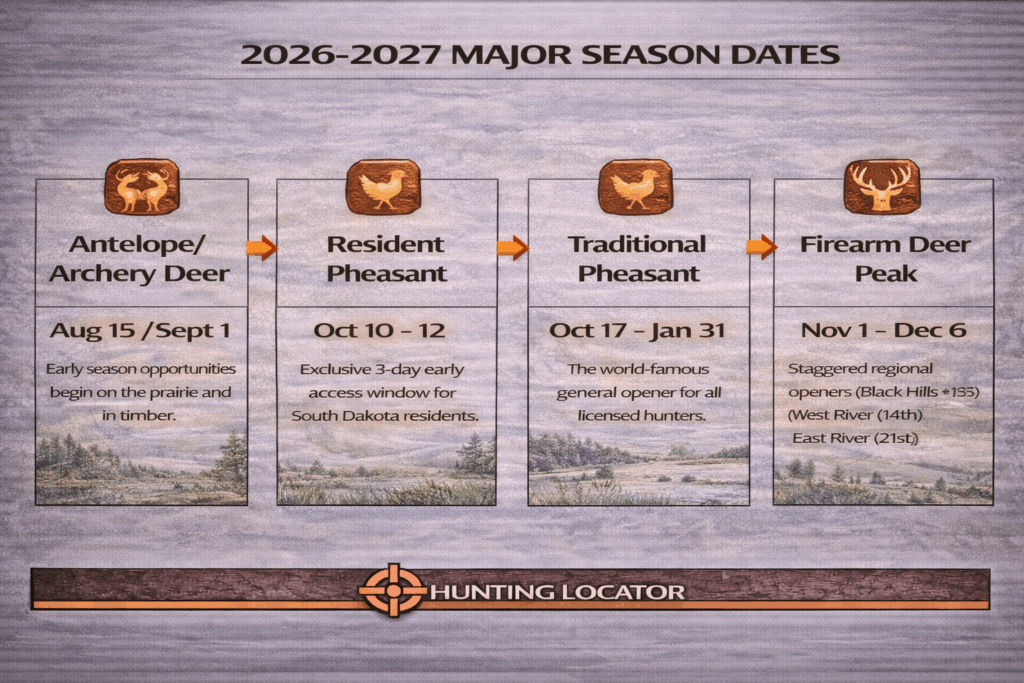
Those big game firearm seasons? You’re looking at lottery applications due months early, often with June deadlines. Don’t mess around with timing. For the complete breakdown on specific units, application strategies, and detailed regulations, check out our comprehensive South Dakota hunting seasons guide.
South Dakota Deer Hunting
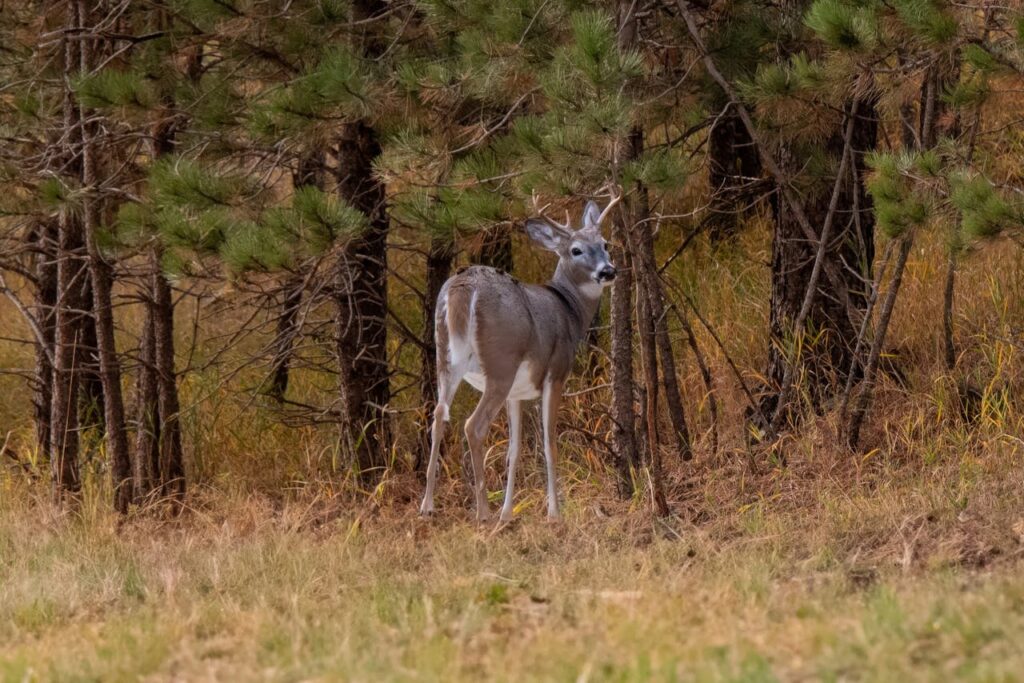
Deer hunting drives South Dakota’s big game scene, pulling hunters into everything from Black Hills timber to East River farm country to West River prairie breaks. You’ll find excellent shots at both whitetail and mule deer, but here’s the catch: recent management decisions slashed available tags hard. SDGFP cut antlerless deer licenses by 4,120 for West River (40% reduction) and 3,550 for East River (50% reduction) in 2025 and 2026. Translation? Drawing tags just got way more competitive.
South Dakota Deer Hunting Seasons
Archery Season (Sept 1 – Jan 1) gives you the longest hunting window with tags usually available over-the-counter. No lottery stress, just guaranteed opportunity. Early season hits pre-rut activity perfectly, while late season can be money when harsh weather pushes deer to predictable food sources.
Youth/Mentored Season (Sept 12 – Jan 1) gets young hunters and newcomers extended opportunities with proper supervision. Hunter safety certification and appropriate licenses required.
Firearm Seasons break into three regional systems. Black Hills season (Nov 1-30) offers those highly coveted lottery tags in mountainous terrain loaded with both whitetail and mule deer. West River season (Nov 14-29) covers prairie and breaks country that’s mule deer heaven, though Gregory County (Unit 30A) runs split dates. East River season (Nov 21 – Dec 6) targets agricultural lands packed with whitetails, followed by antlerless-only hunting (Dec 12-20).
Muzzleloader Season (Dec 1 – Jan 1) provides statewide opportunity for traditional method hunters or those who struck out on firearm tag draws.
Chronic Wasting Disease (CWD) reality check: it’s been detected in Lawrence, Pennington, Custer and Fall River Counties, Custer State Park and Wind Cave National Park. Hunt in affected areas? You’ll deal with carcass transport restrictions and mandatory testing.
South Dakota Deer Hunting Regulations
- Bag Limit: Generally 1 deer per tag; multiple tags possible through different season types
- Blaze Orange: Required during firearm seasons—verify current requirements for specific coverage
- Legal Shooting Hours: Half hour before sunrise to half hour after sunset
- CWD Compliance: Mandatory testing and carcass transport restrictions in affected counties
- Tagging Requirements: Tag deer immediately upon harvest; check-in requirements vary by unit
South Dakota Turkey Hunting
South Dakota turkey hunting delivers quality opportunities through both spring and fall seasons with different regulations and hunting experiences. All turkey licenses run through lottery systems requiring advance applications.
South Dakota Turkey Hunting Seasons
Spring Season (Apr 11 – May 31) is the main event, with prairie areas opening April 11 and Black Hills starting April 25. That 2 bearded bird limit lets successful hunters take multiple gobblers throughout the extended season. Spring hunting capitalizes on breeding behavior when gobblers respond aggressively to calling.
Fall Season (Nov 1 – Jan 31) offers 1 bird of either sex with mentored hunters sharing the same dates. Fall turkey hunting demands different strategies—typically breaking up family groups and calling birds back to your setup.
South Dakota Turkey Hunting Regulations
- Spring Bag Limit: 2 bearded birds for the season
- Fall Bag Limit: 1 bird of either sex
- Legal Methods: Shotgun, archery, or crossbow (verify current requirements)
- Calling Regulations: Electronic calls prohibited during spring season
- Licensing: Lottery-based; one tag per bird
South Dakota Antelope Hunting
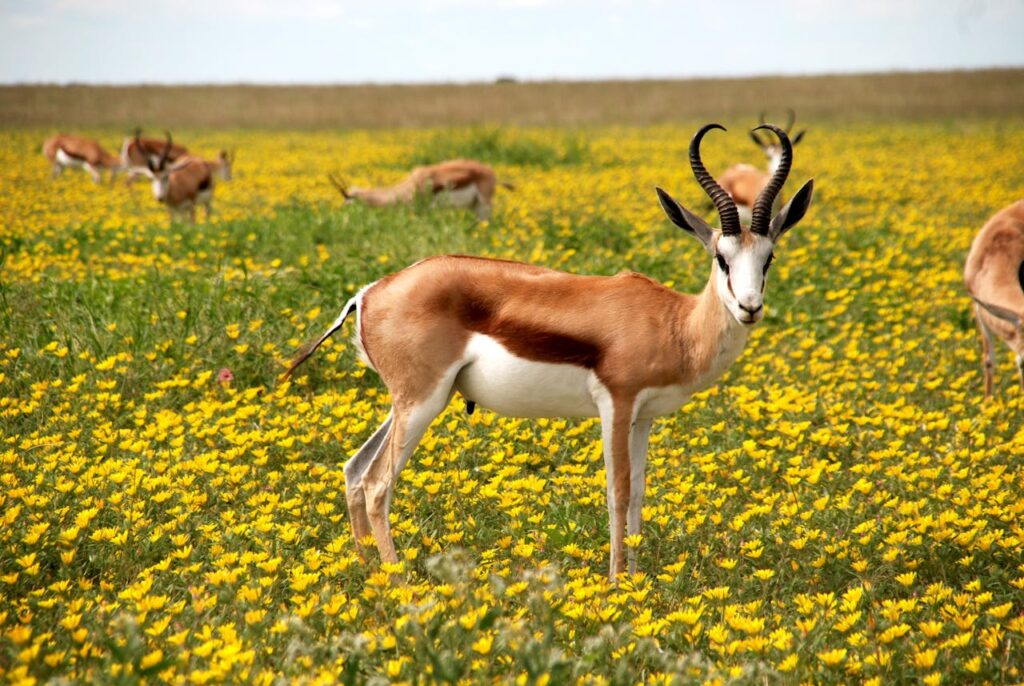
Antelope hunting offers a unique prairie experience in western South Dakota, but extremely limited tag numbers make drawing licenses brutally competitive. The lottery system means successful applicants often wait multiple years between opportunities.
South Dakota Antelope Hunting Seasons
Archery Season (Aug 15 – Oct 30) provides the longest antelope hunting window, though it closes during firearm dates. Archery tags might offer better draw odds than firearm options. Early season means hot weather hunting when antelope hit water sources regularly, while late season brings cooler conditions.
Firearm Season (Oct 3 – Oct 18) represents South Dakota’s most competitive draw. That short 16-day window combined with limited tags creates extremely low draw odds. Successful hunters often wait 5-10 years between opportunities.
South Dakota Antelope Hunting Regulations
- Bag Limit: 1 antelope per tag
- Tag Cost: $45 resident / $375 non-resident
- Lottery Required: Both archery and firearm tags are limited-draw
- Legal Weapons: Centerfire rifle, muzzleloader, or archery depending on season
- Unit Restrictions: Tags are unit-specific; hunt only in designated area
South Dakota Pheasant and Upland Game Hunting
South Dakota earned its “Pheasant Capital of the World” title honestly. Over 1.3 million roosters harvested in 2024—the highest in 13 years. This incredible hunting opportunity pumps an estimated $281 million economic impact into the state annually.
Non-resident hunters need to understand their small game license covers two 5-day hunting periods. The possession limit is 15 roosters during Traditional and Youth seasons (accrued at 3 per day), and 9 during the Resident-Only season.
South Dakota Pheasant Hunting Seasons
Resident-Only Opener (Oct 10-12) gives South Dakota residents an exclusive three-day early season before traditional opener. This special season allows residents first crack at birds that haven’t experienced hunting pressure.
Traditional Season (Oct 17 – Jan 31) is the main pheasant hunting opportunity, opening to all licensed hunters including non-residents. The extended season lets you experience different phases of pheasant behavior, from early season when birds hold tight in cover to late season when harsh weather concentrates birds in predictable locations.
South Dakota Pheasant Hunting Regulations
- Daily Bag Limit: 3 roosters daily during all seasons
- Possession Limit: 15 roosters (Traditional/Youth), 9 roosters (Resident-Only)
- Legal Shooting Hours: Half hour before sunrise to sunset
- Hunter Orange: Recommended for safety, especially on public lands
- License Requirements: Valid small game license plus mandatory Habitat Stamp
South Dakota Minor Game Species Hunting
Beyond premier big game and pheasant opportunities, South Dakota offers excellent hunting for minor game species that provide additional opportunities throughout extended seasons.
South Dakota Grouse Hunting Information
Prairie grouse hunting in South Dakota targets sharp-tailed grouse and prairie chickens from September 19 through January 31—one of the longest hunting seasons in the state. These birds live in native grasslands and CRP fields, often in the same areas that hold pheasants. The Fort Pierre National Grasslands and other large public grassland complexes provide excellent grouse hunting opportunities.
South Dakota Waterfowl Hunting Information
South Dakota’s Central Flyway position makes it an excellent waterfowl destination, with seasons varying by zone. High Plains zone runs October 10 through January 14, while Low Plains North and Mid zones operate September 26 through December 8. The Missouri River reservoir system provides exceptional waterfowl hunting, particularly during migration periods. South Dakota has 1,000 WPAs totaling nearly 150,000 acres, many specifically managed for waterfowl production and hunting access.
South Dakota Small Game Hunting Information
Small game hunting in South Dakota extends well beyond pheasants, with coyotes available year-round with no bag limits. Cottontail rabbits, squirrels, and other small game provide additional opportunities, particularly for hunters introducing youth to the sport. Many small game species live in the same areas as pheasants, allowing hunters to pursue multiple species during single outings.
Where to Hunt in South Dakota
South Dakota’s hunting landscape offers diverse opportunities across varied terrain. With South Dakota being approximately 80 percent privately owned, successful hunting often requires strategic planning to secure access. However, the state provides substantial public land access through multiple programs.
Best Public Lands
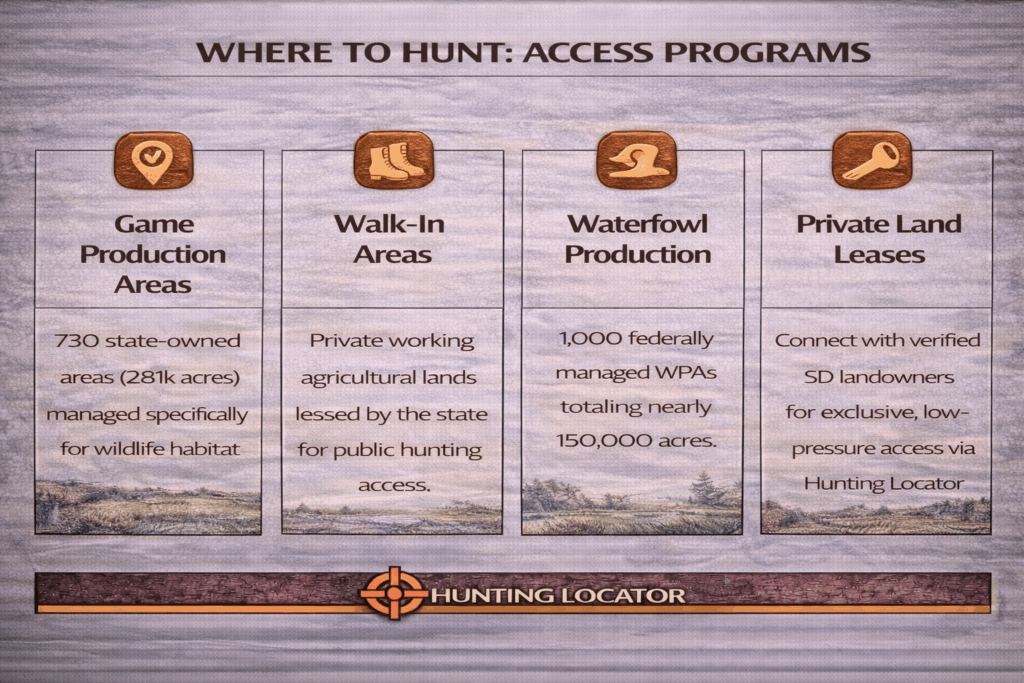
South Dakota provides extensive public hunting access through multiple programs and land management agencies. The state manages approximately 730 Game Production Areas totaling more than 281,000 acres, specifically designed and managed for wildlife habitat and hunting access.
- Game Production Areas (GPAs): State-owned lands managed specifically for wildlife habitat and hunting access
- Walk-In Areas: Private lands leased by the state for public hunting access on working agricultural lands
- Waterfowl Production Areas (WPAs): 1,000 WPAs totaling nearly 150,000 acres managed by the U.S. Fish and Wildlife Service
- National Forest Lands: The U.S. Forest Service manages more than 2 million acres open to hunting in South Dakota, primarily in the Black Hills region
- Fort Pierre National Grasslands: Over 116,000 acres of native grassland habitat excellent for prairie grouse, pheasants, and deer hunting
Guided Hunts
Professional guided hunts provide access to private lands, local expertise, and often higher success rates—particularly valuable for non-resident hunters unfamiliar with South Dakota hunting conditions. Quality outfitters provide trained hunting dogs, knowledge of current game populations, and access to prime private lands. When selecting guided hunts, consider factors like group size accommodations, dog availability, land access quality, and guide experience levels.
Private Land Hunting
Private land hunting often provides the highest success rates and least crowded hunting experiences, but requires securing landowner permission or lease agreements. Private land leases typically range from day-use fees to seasonal agreements, with costs varying based on game populations, property size, and exclusive access provisions.
Hunting Locator serves as the nation’s most reputable platform connecting hunters with private landowners offering hunting leases and land sales. Our comprehensive database includes verified properties across South Dakota, from prime pheasant ground to big game ranches. Whether you’re seeking a weekend pheasant hunt or a long-term big game lease, Hunting Locator connects you directly with landowners ready to provide hunting access.
For exclusive access to South Dakota hunting leases, visit Hunting Locator’s South Dakota hunting leases to browse current opportunities and connect with landowners.
FAQ
What licenses do I need as a non-resident to hunt pheasants in South Dakota?
Non-residents need a Small Game License ($121) valid for two 5-day hunting periods, plus the mandatory Habitat Stamp ($25). Total cost is $146 for non-resident pheasant hunting. Youth ages 12-15 can purchase a Youth Small Game License for $36 plus the habitat stamp.
When should I apply for South Dakota big game tags?
Big game applications typically open in spring with June deadlines for fall hunting seasons. Deer, antelope, and turkey tags require lottery applications submitted months before seasons open. Miss application deadlines? You’re waiting another full year for opportunities.
Can I hunt on public land without a guide in South Dakota?
Absolutely. South Dakota offers extensive public hunting access through Game Production Areas, Walk-In Areas, Waterfowl Production Areas, and National Forest lands. No guide required for public land hunting, though success rates may be lower than guided hunts on private land due to hunting pressure.
What is Chronic Wasting Disease and how does it affect my hunt?
Chronic Wasting Disease (CWD) is a fatal brain disease affecting deer, elk, and moose. In South Dakota, CWD has been detected in Lawrence, Pennington, Custer, and Fall River Counties. Hunters in affected areas must comply with carcass transport restrictions and mandatory testing requirements.
How competitive are South Dakota deer tag draws?
Draw odds vary significantly by unit and season type. Black Hills firearm tags are highly competitive, often requiring multiple years of preference point accumulation. East and West River units have varying draw odds depending on specific areas. Archery tags are generally available over-the-counter.
What’s the difference between East River and West River hunting?
East River refers to areas east of the Missouri River, characterized by agricultural lands with high whitetail deer densities and excellent pheasant habitat. West River covers areas west of the Missouri River, featuring prairie and badlands terrain better suited for mule deer and antelope.
The Final Shot
South Dakota stands as America’s premier hunting destination, offering unmatched diversity from world-class pheasant hunting to challenging big game opportunities across varied terrain. With proper planning using this guide’s season dates, licensing information, and access strategies, your 2026-2027 South Dakota hunting adventure can exceed expectations.
Success in South Dakota hunting comes down to understanding the state’s unique opportunities and challenges. Public lands provide accessible options for DIY hunters, while private land access through leases or guided hunts often yields higher success rates. Start planning early, especially for limited-draw big game tags, and consider multiple approaches to land access for the best hunting experience.
Ready to secure your South Dakota hunting access? Explore exclusive hunting leases and connect with landowners on Hunting Locator – the nation’s most trusted platform for finding premium hunting opportunities. Join thousands of successful hunters who’ve found their perfect South Dakota hunting lease through our comprehensive database of verified properties and responsive landowners.


