This Texas javelina guide is meant to help residents and non-residents plan a legal 2026 javelina hunt without hunting down scattered sources. Texas is one of few states with a dedicated javelina season, and TPWD sets the season dates and open counties, so we’ll point you there when it matters. Hunting Locator built this as a planning hub for your Texas season — from our homepage you can browse leases, guides, and gear, and you can check out the store before digging into the details below.
Here’s what’s covered:
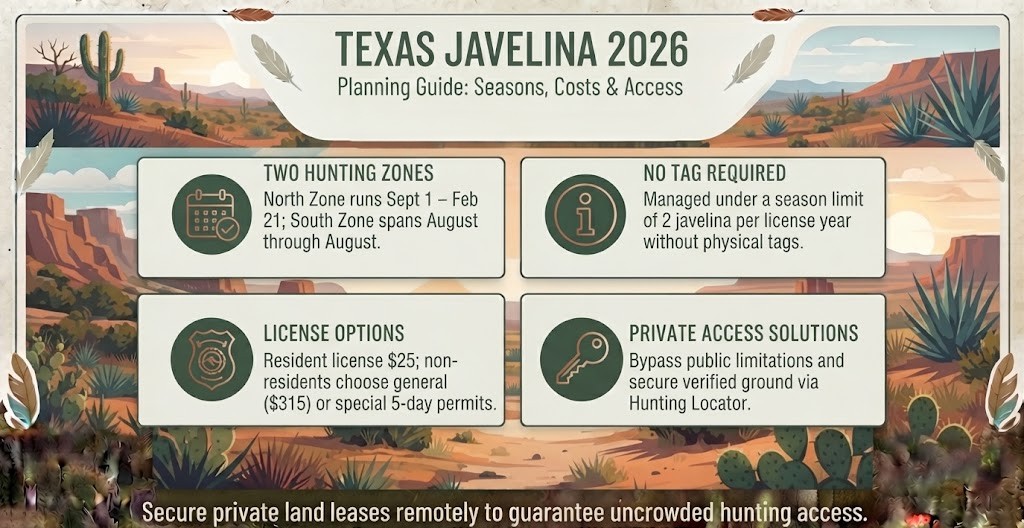
- Exact 2026 season dates by zone, bag limits, and the “no tag required” rule
- Resident vs. non-resident licensing — costs and which to choose
- Where to hunt: public land, private leases through Hunting Locator, and guided hunts
Start with the fast facts below.
Quick Overview: Texas Javelina Season at a Glance
This table covers the numbers you need before doing anything else. Texas manages javelina under a season limit, not a daily limit, which keeps the rules simpler than they might first appear.
| Species | Season Type | Start Date | End Date | Bag Limit | Notes |
|---|---|---|---|---|---|
| Javelina | General — North Zone | Sept. 1, 2026 | Feb. 21, 2027 | 2 per license year | No physical tag required |
| Javelina | General — South Zone | Aug. 1, 2026 | Aug. 31, 2027 | 2 per license year | No physical tag required |
No physical tag or permit needs to be punched or attached — javelina are managed under the regular bag limit with a standard hunting license.
Confirm current dates and county eligibility with the official TPWD javelina regulations before you head out — regulations can change.
A few licensing basics apply to every javelina hunter in Texas:
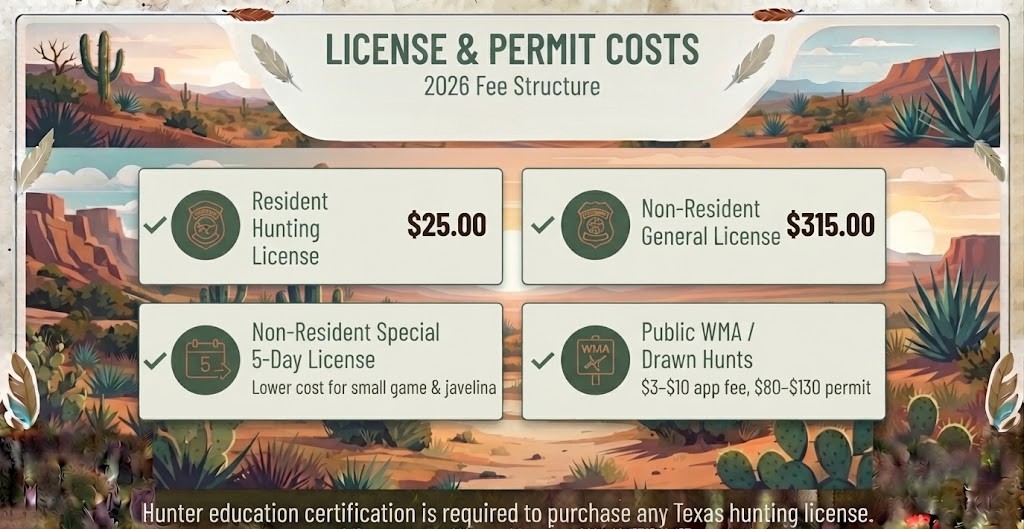
- Resident hunting license: $25
- Non-resident general hunting license: $315
- Non-resident special 5-day license: covers small game and javelina, at a lower cost than the general license
- Hunter education certification required to purchase a license
- Public/drawn hunts: application fees $3–$10, with special permit fees of $80–$130 if drawn
Javelina season is one piece of the calendar — for the bigger picture, see our full Texas hunting seasons guide to see how it lines up with deer, turkey, and waterfowl seasons. With both zones defined and the bag limit set at two per year, you have what you need to start planning.
Texas Javelina Hunting Seasons
Texas splits javelina hunting into two geographic zones, each with its own season window. Knowing which zone you’re in is step one. TPWD publishes the county-by-county breakdown, so confirm your target county falls within an open zone before you scout a spot. For more on the regulatory history, our deeper dive on javelina season covers it in full.

North Zone Season
The North Zone runs September 1, 2026 through February 21, 2027, with a bag limit of 2 javelina per license year. The fall-through-winter window lines up with cooler weather, which makes spot-and-stalk hunting through brushy terrain more comfortable — and often more productive, since javelina move more when temperatures drop.
South Zone Season
The South Zone runs August 1, 2026 through August 31, 2027, also with a bag limit of 2 javelina per license year. That near-year-round window is a big part of why South Texas Brush Country has such a strong reputation for javelina hunting — there’s more time on the calendar to get it done.
Understanding the Zones & Bag Limit
No matter which zone you’re hunting, the Texas javelina bag limit works the same way: 2 javelina per license year, with a possession limit of 2. It’s a season limit, not a daily limit, so the count that matters is your annual total, not how many you take in a single outing. Some Texas counties have no open javelina season at all, which is why checking your county against TPWD’s list matters before you plan a trip. And again — no physical tag needs to be punched or attached; your standard license and the bag limit cover it.
Texas Javelina Licenses and Permits
Licensing for javelina is straightforward once you know your residency status and what you’re trying to accomplish on the trip.
Texas Hunting Licenses
Here’s how the main license options compare:
| License Type | Cost | Coverage | Best For |
|---|---|---|---|
| Resident Hunting License | $25 | All legal game including deer and javelina | Texas residents |
| Non-Resident General Hunting License | $315.00 | All legal game including deer and javelina | Non-residents combining javelina with other big game |
| Non-Resident Special 5-Day License | Lower than general | Small game and javelina, 5 consecutive days | Non-residents on a short, focused javelina trip |
Per TPWD’s non-resident license details, the General Non-Resident Hunting license is the only license available to non-residents who also want to hunt deer — worth knowing if you’re planning to combine species during your trip.
For non-residents, the choice mostly comes down to trip length and goals: the 5-day special is the more budget-friendly pick if javelina is your only target and the trip is short, while the general license makes more sense for a longer stay or a combined javelina-and-deer hunt.
You can typically buy your license online before setting foot in Texas, but hunter education certification has to be completed first. Confirm the latest fees and requirements with TPWD before you buy, since costs and rules can shift year to year.
Texas Hunting Permits
For regular javelina hunting, no special tag or permit is required — just a valid hunting license and adherence to the bag limit. No punch cards, no physical tags to attach.
The exception is public compartment or drawn hunts through TPWD. These carry an application fee of $3–$10, and a special permit fee of $80–$130 applies if you’re drawn. Many public-land opportunities also run through the Annual Public Hunting permit, which opens access to a range of Texas WMA javelina hunts and other drawn-hunt options without requiring a draw for a specific unit.
Where to Hunt Javelina in Texas
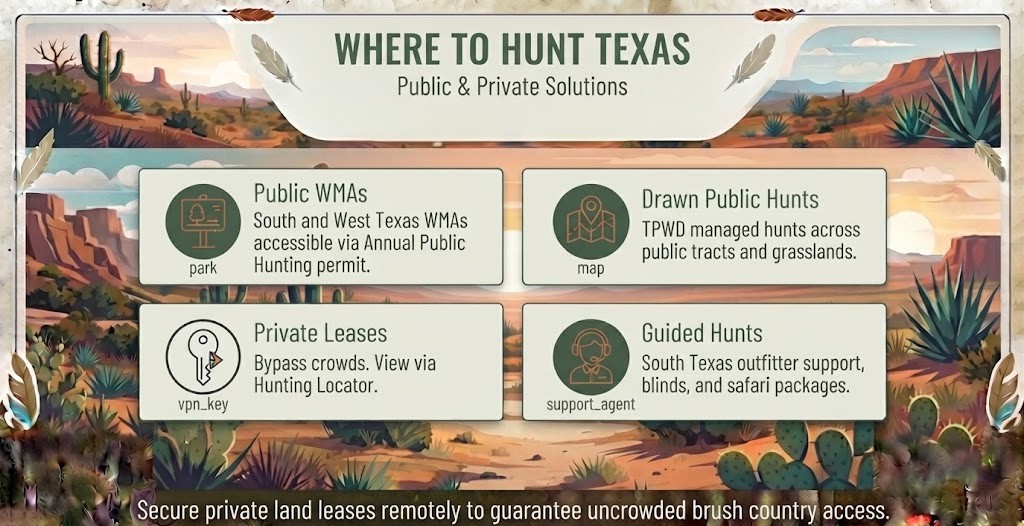
There are three main paths to legal javelina access in Texas: public land, private leases, and guided hunts.
Best Public Lands
TPWD manages a network of Wildlife Management Areas (WMAs) and public hunting lands across the state, many accessible through the Annual Public Hunting permit or a drawn-hunt application. Here’s where to start looking:
- WMAs with javelina populations — several South and West Texas WMAs support huntable javelina numbers alongside other game
- National grasslands — some units allow public hunting access under state and federal regulations
- Drawn-hunt applications — apply through TPWD for a shot at a managed public hunt, with fees running $3–$10
- Annual Public Hunting permit — one of the more affordable ways to access dozens of public hunting units statewide
These options work well if you’re budget-conscious or just starting out, since entry costs are low and the application process is straightforward.
Private Land Hunting with Hunting Locator
Public land works, but many hunters prefer the consistency of a private lease: less competition, better-managed habitat, and a spot you can return to season after season. Leasing or buying private land is often the more reliable route to a dependable javelina hunt, especially if you’re targeting the South Zone’s long season.
That’s where Hunting Locator comes in. We connect hunters directly with landowners across the state who are ready to lease or sell hunting land, cutting out the cold calls and wasted weekends driving out to properties that don’t pan out. Browse Texas hunting leases by acreage, region, and game type to find a match for your season and budget.
If you’re a non-resident worried about locking down access before setting foot in the state, you can browse listings, contact landowners, and secure your spot for the 2026 season entirely from out of state.
Guided Javelina Hunts
If you’d rather leave the scouting and logistics to someone else, a guided hunt is a reasonable option. Guided javelina hunts commonly take place in the South Texas Brush Country and the mountains of West Texas, with outfitters using tactics ranging from spot-and-stalk to hunting from blinds over feeders, or safari-style approaches depending on the terrain and ranch. Many guided packages bundle in lodging, meals, and field care of the animal, which cuts down on the trip-planning burden.
Non-residents should book well ahead of their target season — good outfitters fill up fast heading into the South Zone’s August opener. For hunters new to javelina, a guided hunt is one of the lower-pressure ways to learn the process while still coming home with a good outcome. Hunting Locator connects you with guides and outfitters across the state to help find the right fit for your experience level and budget.
Javelina Hunting Tips
These are the field-tested fundamentals that make the difference between a slow day and a successful one.
- Hunt the cooler hours — Morning and evening movement is common, since cooler temperatures increase activity and javelina tend to bed down once the heat sets in.
- Read the sign — Javelina shred prickly pear pads and knock over small cacti to get at the fleshy insides, so reading javelina feeding sign is one of the fastest ways to confirm a herd is working an area.
- Stay downwind and move slow — Javelina have a sharp nose even with limited eyesight, so patient, wind-aware spot-and-stalk tactics pay off.
- Pick the right caliber or bow setup — Legal methods include rifle, pistol, and bow, and a modest caliber handles javelina cleanly in thick brush without over-penetrating.
- Glass the brush and water sources — Javelina stay close to water in dry country, so focus your glassing on cactus flats, mesquite brush, and washes near reliable water.
Once your gear list is set, it’s worth dialing it in — optics, calibers, a field-dressing kit — and you can browse hunting gear to round out your setup before opening day.
More Resources from Hunting Locator
Javelina season is one part of a full Texas hunting calendar. Here’s where to go next to plan the rest of your year.
Start Here
- Texas Hunting Seasons Guide — the full statewide season calendar.
- Texas Javelina Hunting Season — the deep-dive companion to this guide.
- Texas Hunting Leases — browse private land access across the state.
Other Texas Big Game
- Texas White-Tail Deer Season — often paired with javelina under the same license.
- Texas Mule Deer Season — good for combining a West Texas trip.
- Texas Pronghorn Season — another West Texas big-game option.
Small Game & Birds
- Texas Small Game Season — covered by the 5-day special license alongside javelina.
- Texas Turkey Season — plan a spring or fall add-on.
- Texas Game Bird Season — quail, dove, and more.
Waterfowl & Alligator
- Texas Waterfowl Season — for the duck and goose crowd.
- Texas Alligator Season — also covered by the non-resident 5-day special license.
Frequently Asked Questions
When is javelina season in Texas in 2026?
Texas runs two zone-based seasons: the South Zone opens August 1, 2026 and runs through August 31, 2027, while the North Zone opens September 1, 2026 and closes February 21, 2027. Confirm which zone your target county falls under with TPWD before you head out.
Do you need a tag for javelina in Texas?
No. Javelina hunting in Texas doesn’t require a physical tag or permit to be punched or attached — you’re covered under the regular bag limit with a standard hunting license. This trips up a lot of new hunters, so it’s worth remembering.
What is the javelina bag limit in Texas?
The bag limit is 2 javelina per license year, with a possession limit of 2. It’s a season limit rather than a daily limit, so you’re tracking your annual total, not a per-day count.
How much is a javelina hunting license in Texas?
Residents pay $25 for a standard hunting license, while non-residents pay $315 for the general license. Non-residents on a shorter trip can opt for the special 5-day license, which costs less and still covers javelina. Hunter education certification is required before you can buy any license.
What’s the difference between a javelina and a wild pig?
A javelina is a collared peccary — a social, pig-like animal that’s biologically distinct from a true wild pig. It gets its name from the pale band of hair around its neck that resembles a collar.
Is javelina good to eat?
Yes. The meat is pork-like but noticeably tougher, and hunters typically get the best results slow-cooking or pressure-cooking it for a pulled-pork-style dish, or grinding it into sausage.
How do I find legal land to hunt javelina in Texas?
There are three main routes: public land through TPWD’s Annual Public Hunting permit or drawn hunts, private leases, or a guided hunt through an outfitter. For a dependable private option, browse Texas hunting leases to find land that matches your zone and budget.
The Final Shot
Know your zone and your dates — North Zone opens September 1, South Zone opens August 1 — get the right license for your residency and trip length, and remember that no tag is required beyond your standard bag limit. From there, it’s about locking in land access: confirm your county’s zone with TPWD, buy your license, and secure your spot before opening day.
Treat this guide as a starting point rather than the final word — TPWD’s regulations are the official source, and it’s worth a quick check before you load up the truck. Hunting Locator has done the legwork to connect you with the land, gear, and guides you need for the season. When you’re ready, browse Texas hunting leases to lock down your spot, and gear up at the store to round out your kit.


