This Virginia small game guide covers the confirmed 2026–2027 season dates, license costs, and where to find land, with the Virginia Department of Wildlife Resources (DWR) as the reference point for any detail that needs official verification. Before you head out, it’s also worth looking at gear options for Virginia hunting so you’re ready on opening day.
Here’s what’s covered below:
- When & what you can hunt — 2026–2027 season dates and bag limits for squirrel, rabbit, and bobcat.
- Getting legal — resident vs. non-resident license costs, the 3-day option, and Virginia’s hunter education requirement.
- Where to hunt — public WMAs, private-land leases through Hunting Locator, and guided hunt options.

Quick Overview: Virginia Small Game Seasons at a Glance
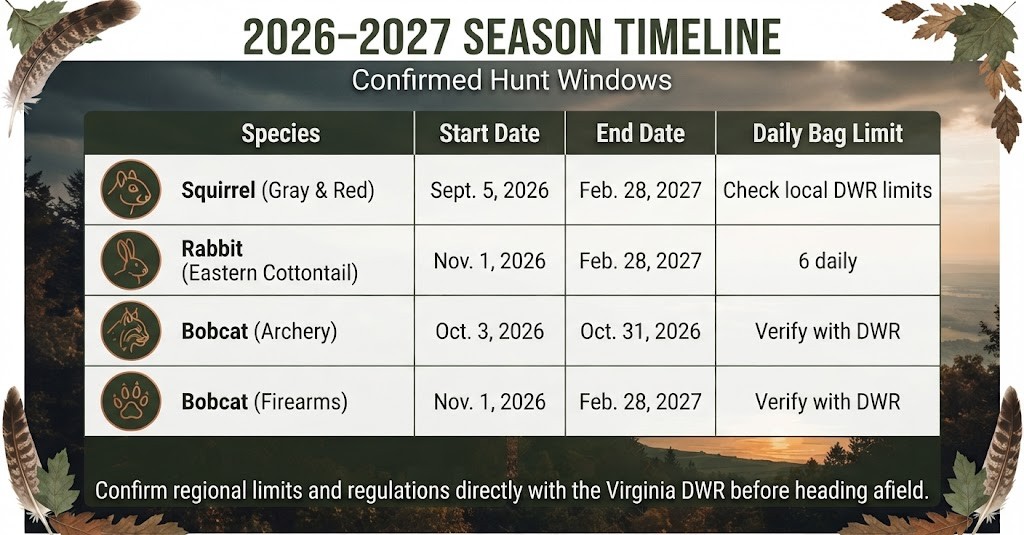
Squirrel season is one of the longest small game seasons in the state, running from early fall through late winter. The table below covers the basics.
| Species | Season Type | Dates (2026–2027) | Daily Bag Limit | Notes |
|---|---|---|---|---|
| Squirrel (Gray & Red) | General | Sept 5 – Feb 28 | Check local daily limits (Virginia DWR) | One of the longest small game seasons in VA |
| Rabbit | General | Nov 1 – Feb 28 | 6 per day | Eastern cottontail statewide |
| Bobcat (Furbearer) | Archery | Oct 3 – Oct 31 | Verify with DWR | Classified as a furbearer |
| Bobcat (Furbearer) | Firearms | Nov 1 – Feb 28 | Verify with DWR | Classified as a furbearer |
Dates and daily limits can vary by region and year, so confirm specifics with the Virginia DWR small game regulations page before you head out. For a deeper species-by-species breakdown, see our Virginia small game hunting season guide.
Three things to check before you load up the truck:
- Hunter education certificate — required for first-time hunters and all hunters ages 12–15.
- A valid Virginia hunting license — resident base ($23) or non-resident base ($111); covers small game.
- Local regulation check — confirm regional dates and squirrel daily limits with the Virginia DWR.
Virginia Small Game Hunting Seasons
Virginia’s small game lineup centers on three main pursuits: squirrel, rabbit, and bobcat. Together, these seasons span from early fall through the end of February. Below are the confirmed 2026–2027 dates for each species.
Squirrel Season
Squirrel season runs September 5 through February 28, covering both gray and red squirrels — one of the longest windows of any game species in the state. Daily bag limits vary by region, so check current local limits on the Virginia DWR Small Game Regulations page before you hunt.
Squirrel hunting is widely considered one of the best entry points into the sport for new hunters. It’s affordable, accessible, and forgiving for anyone still learning to read the woods.
Rabbit Season
Rabbit season runs November 1 through February 28, with a daily bag limit of 6 per day. The Eastern cottontail is found statewide, from the coastal plain to the mountains.
Running rabbits with beagles is a long-standing Virginia tradition, though a dog isn’t required — a slow, deliberate walk through good cover works fine, especially for hunters just getting started.
Bobcat Season
Bobcats are classified as a furbearer in Virginia rather than strictly a small game species, but they’re commonly pursued alongside rabbits and squirrels and belong in any small game plan. The season splits into two methods: archery runs October 3 through October 31, and firearms season runs November 1 through February 28. Bag and possession limits should be verified directly with the Virginia DWR, since the research behind this guide didn’t turn up an exact bobcat limit.
Virginia Small Game Licenses and Permits
Before you can legally chase squirrels, rabbits, or bobcats in Virginia, you need the right credentials in hand. Here’s what residents and non-residents need, in the order you’ll actually deal with it.
Virginia Hunting Licenses & Costs
The base hunting license covers small game, so there’s no separate add-on required if rabbits, squirrels, or bobcats are your target.
| License Type | Cost (2026) | Best For |
|---|---|---|
| Resident Base Hunting License | $23 | Virginia residents (covers small game) |
| Non-Resident Base Hunting License | $111 | Out-of-state hunters, full season |
| Non-Resident 3-Day Hunting Option | $60.00 | Short trips / weekend hunts |
Fees and requirements can change year to year, so confirm current pricing and rules with the Virginia DWR before you buy.

Virginia Hunter Education & Permit Requirements
Getting legal in Virginia comes down to a few clear steps, especially if you’re new to the sport:
- Complete hunter education if you’re a first-time hunter or between the ages of 12 and 15 — this must be a Virginia DWR–approved course.
- Take advantage of the full-online option — Virginia offers a hunter education course that adults can complete entirely online.
- Bring proof from out of state if needed — hunter education certification from any U.S. state or Canadian province is accepted.
- Consider an apprentice license if you want to hunt before completing formal education — Virginia allows this under the direct supervision of a licensed adult.
- Know the supervision rule for young hunters — anyone under 12 must be accompanied and directly supervised by a licensed adult at all times.
The Virginia DWR remains the official channel for purchasing licenses and confirming your hunter education certification.
Where to Hunt Small Game in Virginia
Once you’re legal, the next question is where to go. Virginia small game hunters generally choose between public land, free and open to everyone, and private land, accessed through a lease or ownership for more consistent, lower-pressure hunting. Both have a place in a season plan.
Best Public Lands (WMAs)
Virginia’s Wildlife Management Areas (WMAs) offer substantial free hunting opportunity across the state, open to residents and non-residents alike. A few things to keep in mind as you plan a public-land hunt:
- Statewide WMA access — Virginia’s WMA system spans mountains to coastal plain, with small game opportunity throughout the state.
- Check regional regulations — seasons and rules can vary between the western mountains and the eastern coastal plain, so confirm specifics for your target WMA with the Virginia DWR.
- Know the access rules — review any WMA-specific requirements, such as parking, check-in, or seasonal closures, before you go.

Private Land Hunting with Hunting Locator
Public land gets you into the woods, but private-land access often means less competition, more consistent game, and the freedom to hunt on your own schedule. There are two main routes: leasing for the season, or buying land outright for long-term access.
Leasing is the more accessible option for most hunters — dedicated ground without the long-term commitment of a purchase, and a good fit whether you’re local or traveling in from out of state. Buying is the longer play, suited to hunters who want a permanent home base for seasons to come. Either way, the usual challenge is finding a landowner willing to work with you.
That’s what the Hunting Locator platform is built for. We connect hunters directly with landowners across Virginia who are ready to lease or sell hunting ground, so you can secure access instead of cold-calling landowners or chasing dead-end listings.
When you’re ready to look at what’s available, browse Virginia hunting leases and see what’s currently open across the state.
Guided Small Game Hunts
A guided hunt isn’t for everyone, but it’s a good fit for two kinds of hunters: non-residents unfamiliar with Virginia terrain, and newer hunters who want a mentored first outing. A good guide handles land access, local knowledge, and day-of logistics, which cuts out much of the guesswork that comes with hunting unfamiliar ground.
If a guided experience sounds appealing, connecting with landowners and outfitters through Hunting Locator is a solid starting point — it puts you in touch with people who know the land and can help plan a trip that fits your timeline and goals.
Virginia Small Game Hunting Tips
Virginia’s long small game season gives you plenty of time to get it right. Whether you’re new to this or you’ve been at it for years, these tips should help over the months ahead.
- Hunt the early hours — squirrels are most active in the first hours after dawn, so still-hunting slowly through hardwoods early in the day tends to pay off.
- Bring the right gear — a reliable .22 rifle or small-gauge shotgun, decent optics, and comfortable field clothing set you up for success. It’s worth checking the Hunting Locator store before the season gets rolling.
- Consider a dog for rabbits — running cottontails with beagles is a Virginia tradition that boosts success, though beginners can hunt rabbits successfully without one.
- Wear blaze orange when required — check current Virginia DWR requirements for your season and location before heading out, since rules can vary.
- Scout before opening day — knowing where game concentrates ahead of time saves valuable hours once the season opens.
- Verify local limits and rules — confirm squirrel daily limits and any regional variations with the Virginia DWR so you’re not caught off guard.
More Resources from Hunting Locator
If you’re building out a full Virginia hunting season and not just a small game trip, these Hunting Locator resources cover the rest:
- Full Virginia season overview — the complete rundown across all species and seasons → hunting season in Virginia
- Virginia small game deep dive — more detail on squirrel, rabbit, and small game strategy → Virginia small game hunting season
- Browse Virginia hunting leases — secure private-land access for your season → Virginia hunting leases
- Virginia deer hunting season — dates and details for the state’s most popular big game species → Virginia deer hunting season
- Virginia turkey hunting season — spring and fall turkey season information → Virginia turkey hunting season
- Virginia black bear hunting season — season structure for pursuing Virginia’s black bears → Virginia black bear hunting season
- Virginia waterfowl hunting season — duck and goose season details for wetland and river hunters → Virginia waterfowl hunting season
- Explore the Hunting Locator platform — leases, land, and resources all in one place → Hunting Locator platform
Frequently Asked Questions
When does Virginia squirrel season open in 2026?
Squirrel season runs September 5 through February 28. Both gray and red squirrels are legal to hunt during this window. Because daily bag limits can vary by region, check current local limits on the Virginia DWR Small Game Regulations page before you head out.
What are Virginia’s small game bag limits?
Rabbit hunters can take 6 per day. Squirrel daily limits vary by region, so confirm the current number with the Virginia DWR. Bobcats are classified as a furbearer, and their limits should also be verified directly with the DWR before your hunt.
How much does a Virginia hunting license cost in 2026?
A resident base hunting license costs $23, while a non-resident base license costs $111. Non-residents planning a short trip can opt for the 3-day option at $60. The base license covers small game for both residents and non-residents, though it’s worth confirming current fees with the Virginia DWR.
Do non-residents need extra permits to hunt small game in Virginia?
No extra species permit is typically needed — the base non-resident license covers small game like rabbit, squirrel, and bobcat. You will need valid ID and, in most cases, proof of hunter education certification. Confirm current requirements with the Virginia DWR before your trip.
Is hunter education required to hunt in Virginia?
Yes. Hunter education is required for first-time hunters and for all hunters ages 12 through 15, completed through a Virginia DWR–approved course. A full-online option exists for adults, and certification earned in another U.S. state or Canadian province is accepted.
Where can I find private hunting land in Virginia?
Hunting Locator connects hunters directly with Virginia landowners offering leases and land for sale, giving you a more consistent, private alternative to public land. Take a look at current Virginia hunting leases to see what’s available for the upcoming season.
The Final Shot
Planning a Virginia small game season comes down to three things: know your seasons, get legal, and secure your ground. Squirrel season runs September 5 through February 28, rabbit season runs November 1 through February 28 with a 6-per-day limit, and bobcat hunters have both an archery window (October 3–31) and a firearms window (November 1–February 28) to work with. From there, it’s a matter of confirming any regional detail with the Virginia DWR, picking up the right license, and locking in access before opening day arrives.
We’ve done our best to provide accurate, current information here, but the Virginia DWR remains the final word on any date, limit, or rule that changes from year to year. At Hunting Locator, our job is to handle the parts that slow hunters down, so you can spend your time hunting instead of digging through regulations.
When you’re ready to lock in your spot, browse Virginia hunting leases and check the Hunting Locator store for gear ahead of the season.


