This Virginia waterfowl guide collects the dates, limits, and license requirements for the waterfowl season in one place. If you need gear before the next split opens, you can shop decoys, calls, and waders built for Virginia marshes.
The guide is written for residents and non-residents alike. The Virginia Department of Wildlife Resources (DWR) is the official source for licenses, HIP, and permits, so use this article for planning and DWR for final answers. Hunting Locator helps with the part regulations don’t cover: finding a place to hunt.
This article covers:
- Season dates and bag limits for ducks, geese, and tundra swans in 2026–27.
- The license, stamp, HIP, and permit requirements for residents and non-residents.
- Where to hunt: public marshes, private leases, and guided hunts, plus tips and gear.
Quick Overview of the Virginia Waterfowl Season
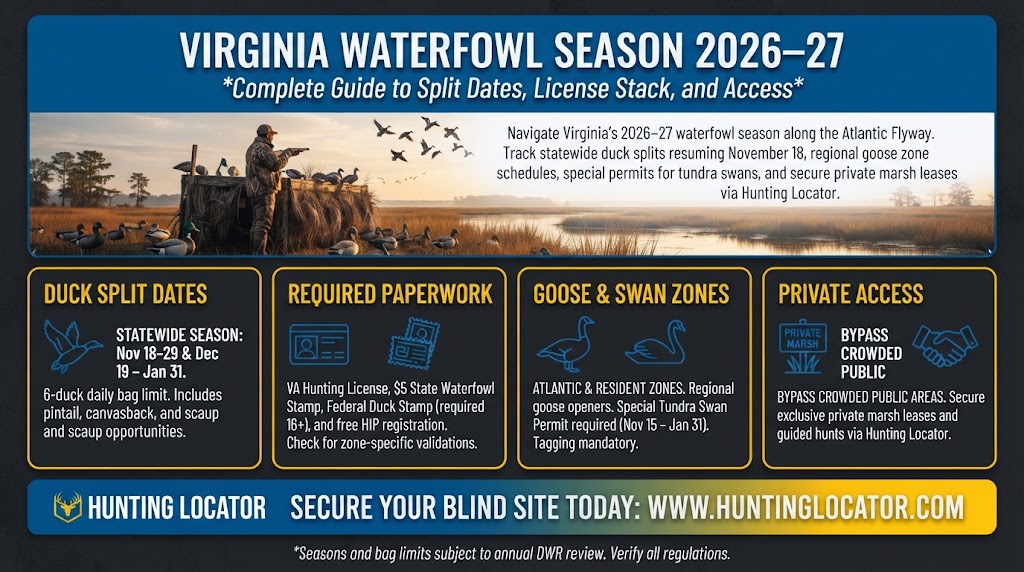
Virginia runs a single statewide duck season in splits, while geese are managed by zone. Shooting hours are one-half hour before sunrise to sunset, and the possession limit is three times the daily bag. The table below gives the essentials.
| Species | Season Dates (2026–27) | Daily Bag | Notes |
|---|---|---|---|
| Ducks | Oct 9–12 (closed); Nov 18–29; Dec 19–Jan 31 | $6 | Statewide; species sub-limits apply (confirm in DWR digest) |
| Mergansers | Same splits as ducks | $5 | Follows duck splits |
| Coots | Follows duck season (confirm in DWR digest) | $15 | — |
| Canada Geese – September (Resident) | Sept 1–25 (closed) | $10 | Season complete for 2026 |
| Canada Geese – Atlantic Population Zone | Nov 24–29; Dec 24–Jan 31 | 2 | Late Nov–Jan splits |
| Canada Geese – Resident Population Zone | Nov 18–29; Dec 19–Feb 21 | $5 | Confirm in DWR digest |
| Light Geese (snow/Ross’s) | Nov 25–Mar 10 | $25 | See possession note below |
| Tundra Swan | Nov 15–Jan 31 | By permit | DWR permit required |
| Brant | Dec 19–31; Jan 15–31 | 1 | Confirm in DWR digest |
| Youth & Veterans Days | Oct 24 (past); Feb 6, 2027 | — | Youth 15 & under, veterans, active-duty military |
Possession limit = 3x daily bag (for example, 6 ducks/day = 18 in possession). Check the DWR digest for species-specific possession exceptions.
Requirements build in layers: a license, then the state stamp, the Federal stamp, HIP, and any special permit. For every game species in one place, see our full Virginia hunting season overview.
Your waterfowl checklist:
- Hunter education completion (required for first-time hunters before buying a license)
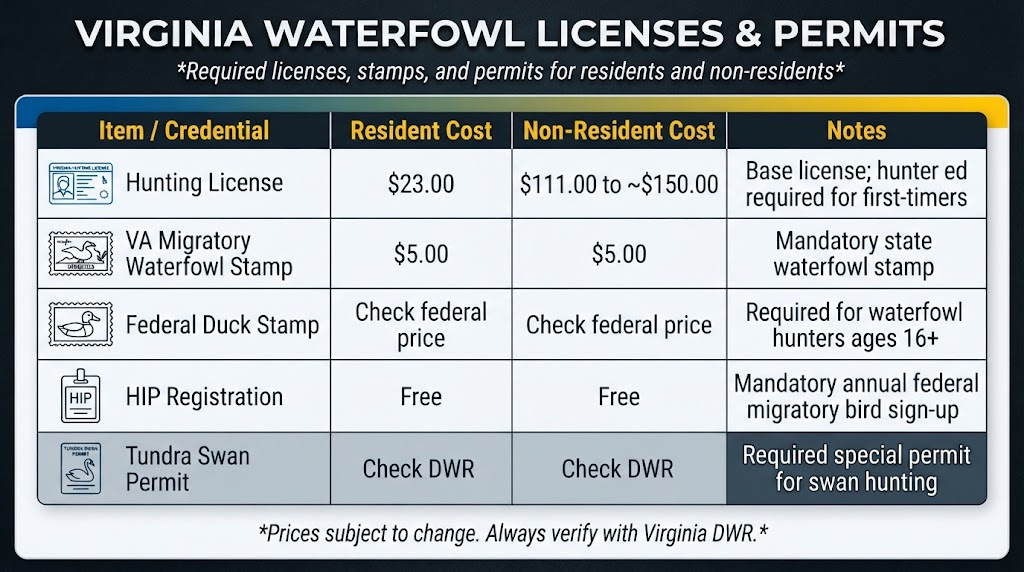
- Virginia hunting license (resident $23; non-resident $111 to ~$150 depending on category)
- Virginia Migratory Waterfowl Conservation Stamp ($5)
- Federal Duck Stamp (ages 16+)
- HIP registration (free, required every year)
- Tundra swan permit (swans only; apply through DWR)
- Non-toxic shot and a plugged shotgun
Common mistake: Renewing your license but forgetting HIP. It’s free and required annually, so register through DWR each season.
Virginia Waterfowl Hunting Seasons
Virginia splits its seasons into windows, closing between them so birds can rest and redistribute. Because the state sits on the Atlantic Flyway, fresh migration pushes drive much of the late-season action. For more detail, read our Virginia waterfowl hunting season breakdown, and keep the DWR migratory game bird regulations open as the official reference for final dates and limits.
Ducks, Mergansers & Coots
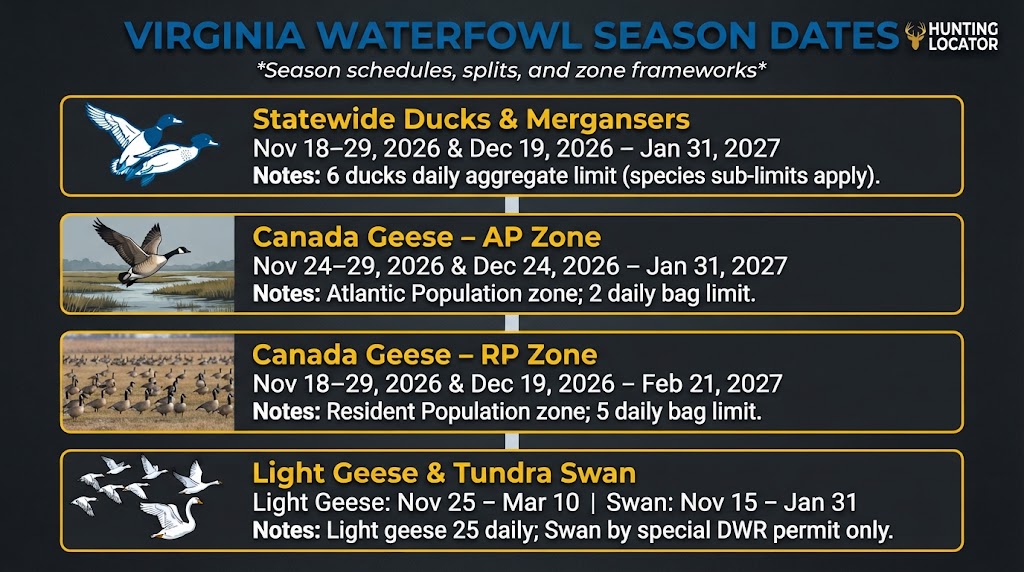
Virginia runs one statewide duck season, with these windows:
- Oct 9–12: Closed for 2026 (black duck was closed in this split)
- Nov 18–29: The next opener and the first late-season chance at freshly migrated birds
- Dec 19–Jan 31: The long late-season run
Daily limits are 6 ducks, 5 mergansers, and 15 coots. Possession is three times the daily bag, so 6 ducks a day means 18 in possession. Ducks carry species sub-limits. For example, scaup is reported at 1 per day for the first 40 days, then 2 per day Jan 12–31. Confirm all sub-limits in the DWR digest before you hunt.
Sea ducks and divers are a coastal draw along the Chesapeake Bay and the Eastern Shore. September teal ran Sept 19–27 east of I-95 and Sept 22–27 west of I-95 (confirm in the DWR digest), and that window has closed.
Canada Geese
Virginia manages Canada geese in three zones:
- September Resident: Sept 1–25, 10 per day. This season is closed for 2026.
- Atlantic Population (AP): Nov 24–29 and Dec 24–Jan 31, 2 per day. This is the late-November-through-January framework.
- Resident Population (RP): Nov 18–29 and Dec 19–Feb 21, 5 per day. Confirm in the DWR digest.
Common mistake: Hunting AP limits in an RP zone, or the other way around. Check which zone your county falls in before you set out decoys, and use the DWR zone maps to confirm.
Light Geese & Tundra Swan
Light geese (snow and Ross’s) run Nov 25 through Mar 10 with a 25-per-day limit. The general possession rule is three times the daily bag, so check DWR for species-specific possession exceptions. The light goose conservation order also allows unplugged shotguns and electronic calls in areas and at times when other waterfowl seasons are closed.
Tundra swan season runs Nov 15 through Jan 31 by special permit only. Swan permit holders may also take 1 swan on Youth & Veterans Days.
Seasons this long make Virginia a strong trip destination for traveling hunters. Brant is a smaller opportunity: Dec 19–31 and Jan 15–31, 1 per day (confirm in the DWR digest).
DWR also publishes avian influenza (HPAI) guidance for waterfowl hunters. Read it, and handle and clean your birds accordingly.
Virginia Waterfowl Licenses and Permits
Everyone needs the same set of licenses and stamps, but cost depends on residency. Every purchase goes through DWR.
Virginia Hunting Licenses
| License Type | Who It’s For | Cost | Notes |
|---|---|---|---|
| Resident Hunting License | Virginia residents | $23/year | Base license |
| Non-Resident Hunting License | Out-of-state hunters | $111 to ~$150 depending on category | A 3-day trip option exists (check DWR for price) |
| VA Migratory Waterfowl Conservation Stamp | Waterfowl hunters | $5 | State duck stamp |
| Federal Duck Stamp | Hunters 16 and older | See current federal price | Required in addition to state stamp |
| HIP Registration | All migratory bird hunters | Free | Renew every year |
A traveling hunter’s costs add up as follows: a non-resident license ($111 to ~$150), the $5 state stamp, the Federal Duck Stamp, and free HIP.
Hunters 16 or older need the Federal Duck Stamp in addition to the Virginia stamp.
First-time hunters must complete hunter education before buying a license. DWR mails physical stamps to your designated address, so buy early.
Virginia Hunting Permits
The tundra swan permit is the main waterfowl permit. Apply through DWR, and check deadlines and quotas well before the Nov 15 opener. DWR also runs pre-season quota hunts that require an application and a non-refundable fee, so plan ahead if one interests you.
Common mistake: Assuming your license covers swans. It doesn’t; you need the swan permit.
Virginia Waterfowl Where to Hunt
Busy boat ramps, pressured birds, and drawn blinds are part of Virginia waterfowling. The options below range from public ground to private access.
Best Public Lands
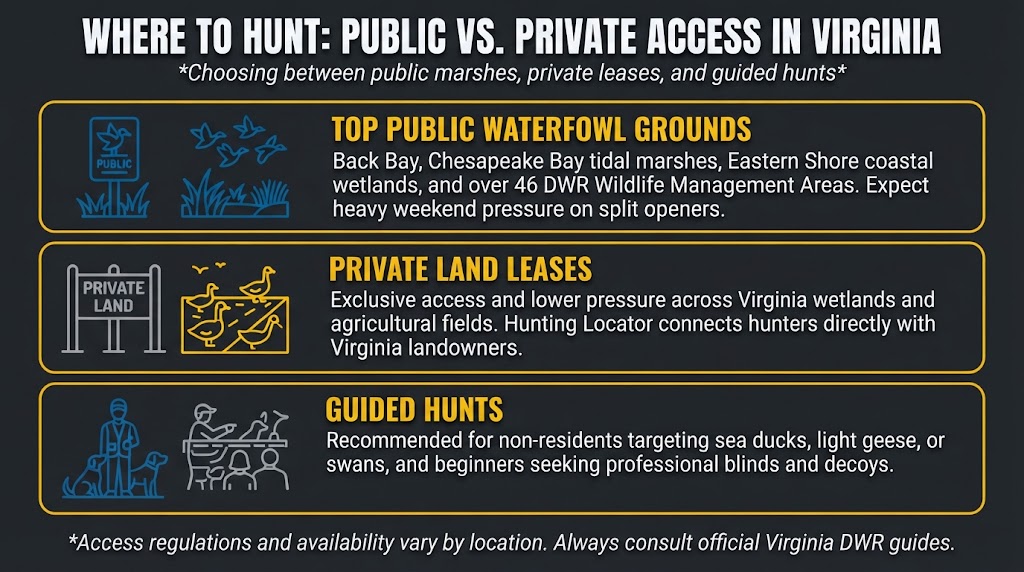
Public ground offers real opportunity if you scout and hunt midweek:
- Back Bay: A Tidewater classic for puddle ducks and divers. Expect pressure on weekends.
- Chesapeake Bay tidal marshes: Expansive marsh and open water that hold divers, sea ducks, and geese.
- Eastern Shore: Coastal wetlands on the Atlantic Flyway that draw black ducks, pintails, teal, and sea ducks.
- DWR Wildlife Management Areas: 46 WMAs cover more than 216,000 acres statewide. Check each WMA’s rules with DWR.
Pressure peaks on split openers, which is why many hunters start looking at private ground.
Private Land Hunting with Hunting Locator
Private ground means less pressure, a consistent spot, and control over who hunts and when. The main decision is whether to lease or buy:
- Lease: Lower upfront cost, flexible season to season, and a good way for a club to test a property.
- Buy: Long-term control, the ability to manage water and food, and a heritage asset. It’s also a bigger commitment.
When you evaluate any waterfowl property, look at:
- Flyway location and proximity to roosts and feeding areas
- Water control (pumps, levees, or reliable flooding versus rain-dependent)
- Food sources (crops, submerged vegetation, tidal flats)
- Access, group size, and liability terms in the agreement
- Your own paperwork: a lease grants access, but you still need your license, stamps, and HIP
You can browse Virginia leases to see current listings. Availability changes often, so check the page for the latest properties, acreage, and game types before you commit to a plan.
Hunting Locator connects hunters directly with Virginia landowners who lease or sell land. Browse listings, then create your free account to contact landowners.
Guided Hunts
Guides make sense for non-residents chasing sea ducks, light geese, or swans, and for beginners who want to learn the ropes. Before you book, ask:
- What species and water types do you hunt (marsh, open bay, fields)?
- Is a boat included, and what safety gear is aboard?
- Are decoys, blinds, and dog work provided?
- What licenses, stamps, HIP, and permits must I bring?
- What is the group size and cancellation policy for weather?
- Do you handle bird cleaning and HPAI-safe handling?
To explore outfitter and lease access in the state, start with Hunting Locator’s Virginia listings.
Waterfowl Hunting Tips
These habits matter most in Virginia, and you can find matching gear in the Hunting Locator store.
- Scout between splits: Use closed windows to locate roosts and feeding areas before Nov 18 and Dec 19.
- Hide well: Late-season birds are blind-shy, so use brushed blinds and matching cover.
- Match your decoy spread to the water: Run smaller spreads for marsh potholes and larger spreads for open-bay divers.
- Call sparingly: Pressured birds flare at loud, constant calling, so keep it simple.
- Use legal, effective non-toxic loads: Non-toxic shot is required, so pattern your shotgun before the opener.
- Respect cold water: Wear waders with a belt, carry a PFD on boats, and check tide and wind. DWR also links to duck boat safety tips.
- Know your birds: Species ID keeps you within sub-limits, which matters most for scaup and black ducks.
- Watch the clock: Shooting hours end at sunset, so stop then.
New to waterfowling? A starter kit is waders, a single call, a dozen decoys, camo, and non-toxic shells. You can find the basics in the Hunting Locator store.
More Resources from Hunting Locator
These pages cover the rest of your Virginia season.
- Virginia hunting seasons hub: every Virginia season at a glance.
- Virginia lease listings: current private land opportunities.
- Hunting Locator home: create a free account to connect with landowners.
- Hunting Locator store: decoys, calls, waders, and blinds.
Plan the Rest of Your Virginia Season
- Small game hunting season: rabbits and squirrels between splits.
- Deer hunting season: deer dates and limits.
- Black bear hunting season: bear seasons.
- Turkey hunting season: fall and spring turkey.
FAQ
When does Virginia duck season open for 2026–27?
Virginia’s statewide duck splits are Oct 9–12, Nov 18–29, and Dec 19–Jan 31. The October window has closed, so the next opener is Nov 18. Confirm species sub-limits and any restrictions in the DWR digest before you head out.
What is the daily duck limit in Virginia?
Ducks are 6 per day with species sub-limits, mergansers are 5 per day, and coots are 15 per day. Possession is three times the daily bag. Check the DWR digest for the sub-limits that apply to species such as scaup and black ducks.
Do non-residents need a Virginia state duck stamp?
Yes. Non-residents need the $5 Virginia Migratory Waterfowl Conservation Stamp, plus the Federal Duck Stamp if they’re 16 or older. HIP registration is also required, and it’s free. Buy early, since DWR mails physical stamps.
How much is a Virginia non-resident hunting license?
A non-resident hunting license runs $111 to about $150 depending on category. A 3-day trip option exists, but the price isn’t confirmed here, so check DWR for current pricing before you buy.
Do I need a permit to hunt tundra swans in Virginia?
Yes. Tundra swan season runs Nov 15–Jan 31 by special permit only. Apply through DWR, and check deadlines and quotas before the Nov 15 opener. Your regular license and stamps do not cover swans.
What are waterfowl shooting hours in Virginia?
Shooting hours run from one-half hour before sunrise to sunset. Stop at sunset, and plan your setup so you’re ready when legal light begins.
Is HIP registration free in Virginia?
Yes. HIP registration is free, required every year, and handled through DWR. Many hunters forget it after renewing their license, so add it to your pre-season checklist.
Can I lease private waterfowl land in Virginia?
Yes. Browse Virginia listings on Hunting Locator’s leases page, then create a free account to contact landowners who lease or sell. Between waterfowl splits, you can also check our small game season guide for more days afield.
The Final Shot
The dates to remember: swans Nov 15, ducks Nov 18, AP geese Nov 24, and light geese Nov 25. The requirements are a license, the $5 state stamp, the Federal stamp, free HIP, and a permit if you’re after swans. Confirm final details with DWR before every hunt.
If you want a less-pressured spot before the Nov 18 split and the Nov 24 AP opener, browse Virginia waterfowl leases on Hunting Locator and contact landowners directly.


