This guide breaks down everything you need to know for Washington’s 2026 bear season. The Washington Department of Fish and Wildlife’s 2026 Big Game Hunting Seasons and Rules pamphlet shows multiple season options running from spring clear through late fall. Before you start planning your hunt, make sure you’re equipped for Washington’s challenging terrain—our gear recommendations can help you get sorted.
Here’s what we’re covering:
- All 2026 season dates and bag limits for every hunting method
- License costs for residents and non-residents, plus combo deals that’ll save you money
- Top public and private land spots across Washington’s incredible landscape
Let’s jump into what every Washington bear hunter needs to know.
Quick Overview: 2026 Washington Black Bear Season at a Glance
Need the basics fast? Here’s your quick reference for the 2026 season.
| Season Type | Start Date | End Date | Bag Limit |
|---|---|---|---|
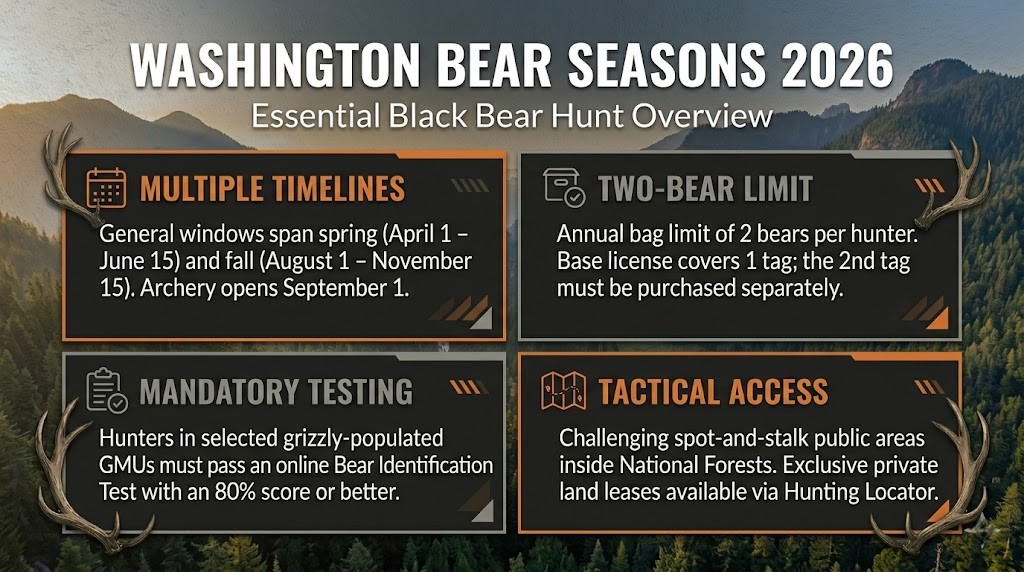
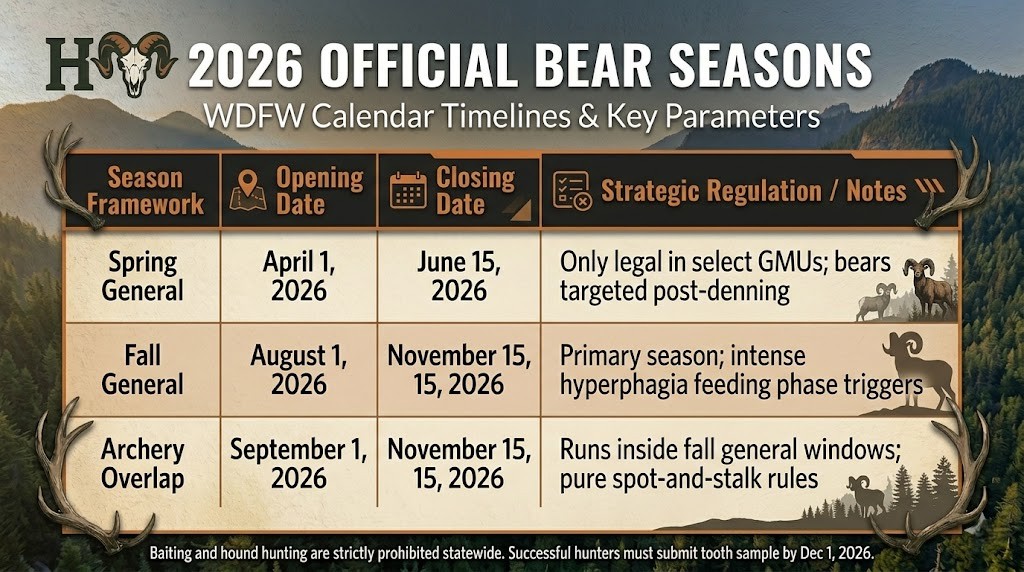
| Spring General (select GMUs) | April 1, 2026 | June 15, 2026 | 2 bears per year |
| Fall General | August 1, 2026 | November 15, 2026 | 2 bears per year |
| Archery | September 1, 2026 | November 15, 2026 | 2 bears per year |
The archery season overlaps with fall general—it’s not separate time. That two-bear limit applies across everything you do all year. Thinking about chasing other species too? Check out our complete Washington hunting guide for deer, elk, and more.
What You Must Have:
- Valid Washington hunting license with black bear species option
- Black bear transport tag (you get one with your license; buy the second separately)
- Bear identification test completed for certain GMUs
- Hunter education certification
- Report your harvest by January 31, 2027
- Submit tooth sample by December 1, 2026 if you’re successful
Washington Black Bear Hunting Seasons
Washington gives you several chances at bears throughout the year. Each season has its own personality and specific GMU availability, so you’ll want to match your hunting style with the right opportunity.
Spring General Season (April 1 – June 15, 2026)
This one’s only available in select GMUs—not everywhere. Double-check with WDFW on which units are open because they adjust these annually based on bear population data.
Bears are coming out of their dens hungry and active, which means they’re more visible in open areas as they search for food after months of dormancy. Washington discontinued their spring permit seasons, but you can still hunt the spring general in approved GMUs.
Fall General Season (August 1 – November 15, 2026)
This is your main event. Longest season, most GMUs open, and when most Washington bear hunters do their thing. Early season can be brutally hot, so plan on hunting dawn and dusk.
Your strategy needs to change as the season progresses. Start August in timberland areas. End of August into September, head for high country as bears follow ripening berries uphill.
Fall hyperphagia is when things get really interesting. Bears might feed 20 hours a day, with big males packing on over 100 pounds in just weeks. They get less cautious when they’re focused on eating, which creates your best opportunities.
GMU Heads Up: GMUs 157, 410-417, 419-424, 490, 522, and 655 are closed for fall bear hunting. GMU 485 requires a special deer or elk permit to hunt bear. Good outfitters regularly see shot opportunities in the 70-80% range during fall general season.
Archery Season (September 1 – November 15, 2026)
The archery season runs inside the fall general dates—it’s not additional time. If you’re shooting a bow, you can hunt during the overlap period when both seasons are running.
Archery hunters are stuck with spot-and-stalk since Washington prohibits dogs and bait for recreational bear hunting. It takes more skill and patience, but it’s incredibly rewarding during the fall feeding frenzy.
Washington Black Bear Licenses and Permits
License structure depends on whether you’re a resident and what else you want to hunt. WDFW sets these fees and they can change, so verify current costs at their official licensing site before you buy.
Washington Hunting Licenses
You need a valid hunting license with black bear as a species option, plus transport tags for each bear you plan to harvest. A valid big game hunting license with black bear as a species option is required. One transport tag comes with your license.
| License Type | Resident | Non-Resident |
|---|---|---|
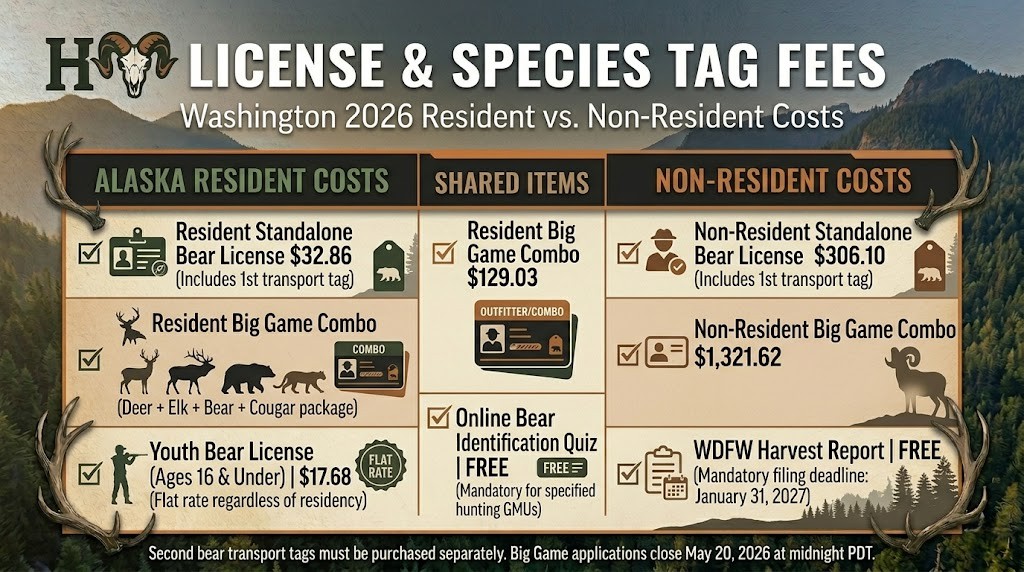
| Black Bear License (Standalone) | $32.86 | $306.10 |
| Big Game Combo (Deer + Elk + Bear + Cougar) | $129.03 | $1,321.62 |
| Youth Bear License (16 & Under) | $17.68 | $17.68 |
Planning to hunt multiple species? The Big Game Combo is a no-brainer. For residents, it’s less than $100 more than the standalone bear license but includes deer, elk, and cougar opportunities.
You have to buy a second transport tag separately to take your second bear since your license only includes one. The equal youth pricing regardless of residency makes Washington great for family hunting trips.
Washington Hunting Permits and Requirements
MANDATORY BEAR ID TEST: If you’re hunting GMUs 101, 105, 108, 111, 113, 117, 121, 203, 204, 209, 215, 218, 224, 231, 242-244, 418, 426, 437, or 450, you must pass WDFW’s online bear identification test with 80% or better.
This exists because grizzlies are federally and state protected and absolutely cannot be shot. The test makes sure you can tell black bears from grizzlies, which gets tricky since black bears can be brown colored, making it tough to distinguish a chocolate black bear from a small grizzly at distance.
Other Requirements:
- Washington requires hunter education for everyone
- Big-game applications close May 20, 2026, at midnight PDT for any permit hunts
- Handle all applications and testing through WDFW’s official website
Where to Hunt Black Bear in Washington
Washington’s terrain diversity is incredible—coastal rainforests to eastern mountains, all holding bears. The state estimates roughly 30% of Washington’s black bears are color-phase (brown, cinnamon, blonde), making it a destination for hunters wanting unique trophies.
Best Public Lands for Bear Hunting
National forests, state lands, and WDFW areas are open for bear hunting with proper licenses. The Discover Pass opens three million acres of DNR trust lands, though WDFW lands are free with a valid hunting license.
Top Regional Spots:
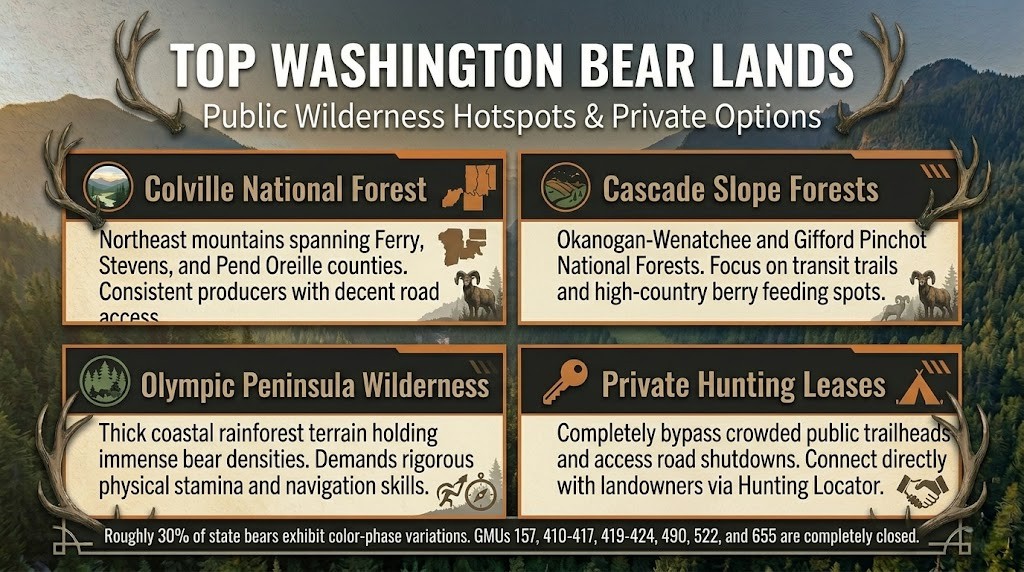
- Colville National Forest (Northeast Washington): Ferry, Stevens, and Pend Oreille counties consistently produce bears. Decent road access and varied habitat make this region hunter-friendly.
- Olympic Peninsula: Thick rainforest with solid bear numbers. Tough terrain that rewards hunters willing to work hard for their chances.
- North Cascades: Remote wilderness with excellent bear density. Best for experienced backcountry hunters comfortable with rugged country and self-sufficient camping.
- Gifford Pinchot National Forest: South Cascades with mixed old-growth and managed forest. Good fall berry production draws bears to predictable feeding spots.
- Okanogan-Wenatchee National Forest: Eastern Cascade slopes with transition habitat. Bears follow berry crops from valleys to alpine areas through the season.
Popular public spots get hammered, especially opening weeks of fall season. Plan accordingly and consider less accessible areas for better odds.
Guided Hunts
Guides make sense for non-residents unfamiliar with Washington terrain and hunters short on scouting time. Quality outfitters regularly report 70-80% shot opportunity rates during fall general season.
What Good Guides Provide:
- Local knowledge of current bear activity and feeding patterns
- Access to private land or exclusive areas
- Field dressing help and meat processing connections
- Equipment and transportation in remote country
Guided bear hunts vary wildly in price based on length, amenities, and success guarantees. Book early, especially for fall season—quality outfitters fill up fast.
Private Land Hunting with Hunting Locator
Crowded public land and limited access can make Washington bear hunting frustrating. Private land offers an alternative: less pressure, more predictable hunting, and often better access roads and facilities.
Leasing vs. Buying:
- Leasing: Lower cost, seasonal access, good for testing areas before bigger investments
- Buying: Long-term investment, complete control over pressure and land management, building a family hunting legacy
Hunting Locator connects hunters directly with Washington landowners ready to lease or sell hunting access. Instead of cold-calling strangers or hoping for word-of-mouth leads, browse verified properties, filter by acreage and game type, and connect with landowners who get what hunters need.
Browse available Washington hunting land and find your next spot with landowners who welcome responsible hunters.
Black Bear Hunting Tips
Washington’s ban on baiting and hounds means spot-and-stalk is your only legal method. Success depends on understanding bear behavior, reading terrain, and having patience.
What Actually Works:
- Hunt Dawn and Dusk: When it’s hot early season, bears move in early morning and just before dark. Time your glassing sessions around these windows and skip midday when bears seek shade.
- Follow the Food: Bears chase ripening food through the season. Early August means lower timber areas. Late August and September, move to high-country berry patches as alpine crops ripen. Understanding this progression is everything.
- Glass First, Walk Second: Best hunting involves spotting bears from distance and planning stalks based on wind, terrain, and visibility. Quality binoculars and patience beat rushing into likely habitat.
- Watch Your Wind: Bears have incredible noses. Always approach downwind and be ready to bail when wind shifts. Know where to shoot a bear—their heart sits lower than you think, and poor shot placement just angers a large predator.
- Hunt with Someone: Biggest advice for bear hunting is hunt with a partner, always have someone watching your back. Improves safety and gives you extra eyes for spotting.
- Read Bear Sign: A bear track tells you three things: general size, how long ago he was here, and which direction he traveled. Fresh sign means recent activity and helps focus your efforts.
More Resources from Hunting Locator
Expand your Washington hunting with these guides covering multiple species and seasons:
- Washington Elk Hunting Guide – Complete elk opportunities, general seasons to premium limited-entry hunts
- Washington Deer Hunting Guide – Blacktail and mule deer seasons, GMU recommendations, hunting strategies
- Washington Cougar Hunting Guide – Mountain lion seasons and hunting methods
- Washington Turkey Hunting Guide – Spring and fall turkey opportunities
- Washington Waterfowl Guide – Ducks, geese, and waterfowl in the Pacific Flyway
- Washington Small Game Guide – Upland birds, rabbits, and small game
- Washington Mountain Goat Guide – Premium mountain hunting for challenging species
- Washington Bighorn Sheep Guide – Once-in-a-lifetime sheep opportunities
- Washington Moose Hunting Guide – Limited moose hunting in select areas
FAQ
When do I need to complete the bear identification test?
Hunters in GMUs 101, 105, 108, 111, 113, 117, 121, 203, 204, 209, 215, 218, 224, 231, 242-244, 418, 426, 437, or 450 must pass WDFW’s online bear identification test with 80% or higher. Complete this before hunting these GMUs and it’s required every year.
What are the harvest reporting requirements?
All hunters must report by January 31st of the following year, even if you didn’t get a bear. Successful hunters must submit the required tooth by December 1, 2026. These help WDFW manage bear populations.
Can I use bait or dogs for bears in Washington?
Nope. Dogs and bait for recreational bear hunting are prohibited statewide. Washington hunters must use spot-and-stalk methods, making scouting and bear behavior knowledge essential.
How many bears can I harvest in 2026?
Two bears per year across all seasons combined. Your license includes one transport tag, but you must buy a second transport tag to take a second bear. This limit covers spring, fall, and archery seasons.
Which areas are closed to bear hunting?
GMUs 157, 410-417, 419-424, 490, 522, and 655 are closed for fall bear hunting. GMU 485 requires a special deer or elk permit to hunt bear. Always verify current GMU status before planning.
What’s the difference between resident and non-resident costs?
Non-residents pay significantly more. Standalone bear license costs $32.86 for residents versus $306.10 for non-residents. Youth hunters (16 and under) pay the same reduced rate of $17.68 regardless of residency.
The Final Shot
Washington’s 2026 bear season offers incredible opportunities for hunters willing to learn the regulations, scout productive areas, and master spot-and-stalk techniques. With a generous two-bear limit, multiple season options, and chances at color-phase bears, Washington should be on your radar for your next bear adventure.
Success here requires preparation, patience, and access to quality hunting areas. Whether you go with public lands, guided hunts, or private access, match your hunting style and experience with the right opportunity.
Ready to lock down access to prime Washington bear country? Browse hunting leases and properties and connect directly with landowners who understand what serious bear hunters need. Your next great hunting story starts with finding the right place to make it happen.


