This Washington small game guide pulls together season dates, license fees, and regulations in one place, all aligned with the Washington Department of Fish & Wildlife, the state’s governing authority on hunting rules. It’s also worth checking your gear before the season starts — the right equipment for your specific hunt makes a difference once you’re in the field.
This is a planning resource for residents and non-residents alike, covering what you can hunt, when, what license you need, and where to find ground worth hunting.
Here’s what’s covered below:
- Species seasons, dates, and bag limits at a glance — a quick-reference table for planning in minutes
- License, permit, and hunter-education requirements for residents and non-residents
- Where to hunt — public land options and private-land leases through Hunting Locator
Start with the fast facts below.

Quick Overview: Washington Small Game Seasons at a Glance
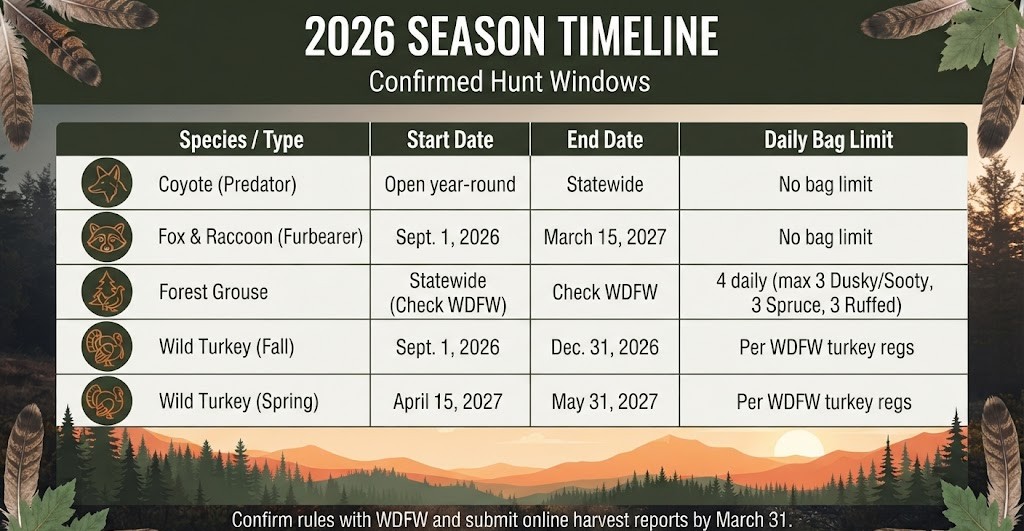
This table summarizes the major small game seasons for 2026, drawn from the most current WDFW data, so you can confirm dates and bag limits quickly.
| Species | Season Type | Dates | Bag Limit | Notes |
|---|---|---|---|---|
| Coyote | Predator | Open year-round, statewide | No bag limit | Valid big game or small game license required |
| Fox | Furbearer | Sept 1, 2026 – Mar 15, 2027 | No bag limit | Statewide |
| Raccoon | Furbearer | Sept 1, 2026 – Mar 15, 2027 | No bag limit | Statewide; dog-use restrictions apply during firearm deer/elk seasons |
| Forest Grouse | Upland bird | Statewide, check current dates | 4 per day (max 3 Dusky/Sooty combined, 3 Spruce, 3 Ruffed) | Valid big game or small game license required |
| Wild Turkey (Fall) | Upland bird | Sept 1 – Dec 31 | Per WDFW turkey regulations | Fall season |
| Wild Turkey (Spring) | Upland bird | Apr 15 – May 31 | Per WDFW turkey regulations | Spring season |
A bag limit is the maximum number of animals you’re legally allowed to harvest in a single day. Keep this table handy as a reference through the season.
Before heading out, get your licensing sorted. The short version:
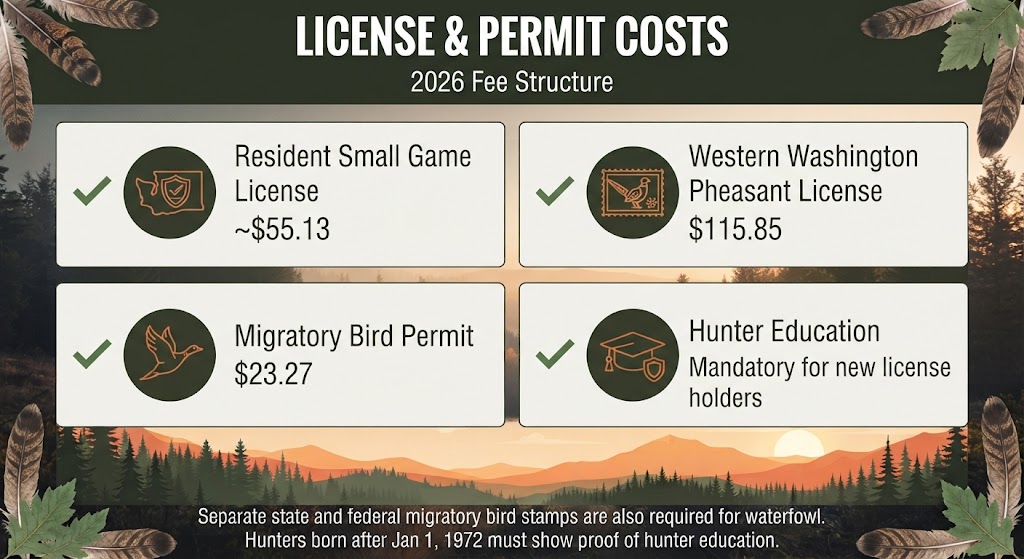
- Small game license required for most species (~$55.13 for residents)
- Western Washington Pheasant License for pheasant hunters ($115.85 resident / $55.13 resident disabled or 3-day permit)
- Migratory Bird Permit ($23.27) required for migratory species
- Hunter education is mandatory for anyone born on or after January 1, 1972 — see the hunter education requirement set by WDFW
- Online harvest reporting is due by March 31 — report your harvest online through the state’s system
Regulations change from year to year, so confirm current rules with WDFW before you hunt. For more detail species by species, see our full Washington small game hunting breakdown.
Washington Small Game Hunting Seasons by Species
Below is a closer look at each season, starting with the year-round predator options and moving through the seasonal furbearers, grouse, and turkey.
Washington’s small game eligibility rules come from the state’s codified Washington hunting regulations, which specify that forest grouse, coyote, and crow may all be hunted with either a valid big game license or a small game license. That’s useful if you’re already carrying a big game tag this fall.
Coyote: Year-Round, No Bag Limit
Coyote hunting in Washington is open year-round, statewide, with no bag limit, making it one of the more flexible small game options in the state. You can hunt them any time your schedule allows, from a crisp October morning to the dead of winter, and either a big game or small game license covers you.
Fox & Raccoon: September Through March
Fox and raccoon season runs September 1, 2026, through March 15, 2027, statewide, with no bag limit, giving you plenty of room to work these species into fall and winter plans. One note for hunters running dogs: it’s unlawful to hunt raccoons with dogs during modern firearm deer or elk general seasons in October and November, so plan around that if hounds are part of your strategy.
Forest Grouse: The 4-Bird Daily Limit
Washington’s forest grouse season carries a statewide daily bag limit of 4 grouse per day — a maximum of 3 Dusky/Sooty combined, 3 Spruce, and 3 Ruffed. Your possession limit, the total number of birds you’re allowed to have at once, builds from that daily limit, so keep track as the season progresses. If you’re new to grouse hunting, review species identification before opening day; telling legal grouse apart from protected birds is a basic skill worth having down cold.
Wild Turkey: Fall and Spring Seasons
Washington runs two turkey seasons: fall from September 1 through December 31, and spring from April 15 through May 31. Spring turkey regulations cover the period from April 1, 2026, through March 31, 2027, so make sure you’re referencing the right year’s rules. Turkey hunting is generally one of the more beginner-friendly hunts in the state, especially in eastern Washington. For more on tactics, units, and timing, see our full Washington turkey guide.
Washington Small Game Licenses and Permits
Before chasing any of the species above, you need the right paperwork. This section covers what you need, what it costs, and how to get it.
Washington Hunting Licenses
Here’s a breakdown of the core licenses and permits depending on what you’re hunting:
| License / Permit | Who It’s For | Cost | Notes |
|---|---|---|---|
| Resident Small Game License | Resident hunters | ~$55.13 | Standard annual fee; varies slightly by package or vendor fees |
| Western Washington Pheasant License | Pheasant hunters (Western WA) | $115.85 resident / $55.13 resident disabled / $55.13 3-day permit | Required in addition to your small game license for pheasant |
| Migratory Bird Permit | Migratory bird hunters | $23 | Required add-on for migratory species |
Non-residents aged 16 and older must also carry a valid small game license to hunt small game species in Washington. Non-resident fees and packages vary and can change year to year, so verify current pricing through the official WDFW licensing portal before buying.
Washington Hunting Permits
Beyond the base small game license, a couple of specific permits may apply. The Western Washington Pheasant License is required for anyone hunting pheasant in Western Washington on top of the standard small game license, and it’s also required for training dogs on pheasants in that region. The Migratory Bird Permit applies if you’re targeting migratory species like doves or waterfowl.
Getting licensed is straightforward:
- Complete hunter education if required (anyone born on or after January 1, 1972, must show proof of completion before their first license purchase)
- Create or log in to your WDFW account through the official licensing system
- Purchase your license and any required permits online, in person, or through the MyWDFW mobile app
- Tag and report your harvest as required for your species
The MyWDFW mobile app is worth downloading before your trip. It lets you purchase licenses, view current tags, electronically tag game, and submit harvest reports whether you’re online or offline in the backcountry.
All small game hunters must submit harvest activity online by March 31, regardless of whether you were successful in the field.
Where to Hunt Small Game in Washington
Knowing your seasons and having your license sorted is only half the job. Finding quality ground is often the harder part, especially without long-established local connections or if you’re traveling in from out of state. Here’s a look at the options, from public land to private access.
Best Public Lands
Washington offers a solid range of public hunting opportunities for small game, particularly through WDFW wildlife areas and designated pheasant release sites. A pheasant release site is a stocked public location where pheasants are periodically released for hunter harvest — a good option if you don’t have private land access lined up.
Known public access points and categories include:
- WDFW Wildlife Areas — managed public lands open to small game hunting across both eastern and western Washington
- National forest lands — large public acreage offering grouse and predator hunting, particularly in more remote regions
- Western Washington pheasant release sites, including Belfair, Mason Lake, JBLM, Kosmos, Lincoln Creek, Scatter Creek, Skookumchuck, and Whidbey Island
Nontoxic shot is required for all upland bird hunting on pheasant release sites statewide, so check your ammunition before heading out.

Private Land Hunting with Hunting Locator
Public land has its advantages, but it also means shared pressure and more competition, especially on peak weekends. Private land access changes that: whether you’re leasing a property for the season or considering purchasing land outright, it gives you more control over the hunt and often better success rates.
At Hunting Locator, we connect you directly with Washington landowners who are ready to lease or sell hunting land. Instead of cold-calling property owners or relying on word of mouth, you get a straightforward way to browse real opportunities and reach out directly, which helps if you’ve lost access to a familiar spot or are struggling to find new ground.
Browse Washington leases and secure your access to see what’s currently available across the state. Whether you’re a longtime resident looking to expand your options or a non-resident planning a first Washington trip, this is a starting point for building reliable access to good hunting ground.
Guided Hunts
A guided small game hunt is worth considering if you’d rather have local expertise and gear already sorted, particularly for non-residents unfamiliar with the terrain or newer hunters still building confidence in the field. Guides typically bring established land access, knowledge of bird patterns and habitat, and the right equipment for your target species, which can shorten the learning curve considerably.
That said, guided hunts aren’t the only path to a good season. Browsing available leases is a solid self-guided alternative if you’d rather have direct, ongoing access to your own ground without working around someone else’s schedule.
Small Game Hunting Tips for Washington
A little preparation goes a long way. Here are some practical tips for the season, whether you’re chasing grouse in the timber or working pheasant cover in the west.
- Scout Before Opening Day: Confirm your season dates and understand the rules for your specific GMU (Game Management Unit) before you step into the field. Regulations vary by region, so a quick check ahead of time saves headaches later.
- Match Your Shotgun to the Bird: A lighter gauge shotgun often works well for grouse and pheasant, especially if you’re newer to upland hunting and want something manageable to carry and swing all day.
- Carry Water and Layer Up: Early-season hunts can still run hot, and small game hunting typically means a lot of walking. Staying hydrated and dressed in layers keeps you comfortable and focused.
- Know Your Nontoxic-Shot Zones: Nontoxic shot is required on all pheasant release sites statewide, so double-check your ammunition before heading to one of these locations.
- Report Your Harvest On Time: Log your activity online by March 31 — a simple step that keeps you compliant and supports the state’s wildlife management efforts.
- Gear Up Right: The right equipment makes every hunt smoother. Check out the Hunting Locator store for gear suited to your species and hunting style, from footwear to optics to ammunition.
More Resources from Hunting Locator
Here are additional Hunting Locator resources to help round out your Washington hunting season:
- Washington Hunting Season Guide — the master hub covering all Washington seasons in one place
- Washington Small Game Hunting Season — our companion small game deep-dive
- Washington Turkey Hunting Season — full fall and spring turkey breakdown
- Washington Waterfowl Hunting Season — migratory bird seasons and permits
- Washington Leases — browse private-land leases across Washington
- Hunting Locator Store — gear up for the season
Planning to hunt more than small game this year? These guides cover Washington’s other popular species:
- Black Bear — seasons and units for WA black bear
- Elk — plan your Washington elk hunt
- Cougar — cougar seasons and rules
- Deer — Washington deer season guide
- Mountain Goat — limited-permit mountain goat info
- Bighorn Sheep — bighorn sheep hunt planning
- Moose — Washington moose season overview
Frequently Asked Questions
What is the daily bag limit for grouse in Washington?
The statewide daily bag limit is 4 grouse per day, with a maximum of 3 Dusky/Sooty combined, 3 Spruce, and 3 Ruffed. This limit applies uniformly across the state, so track your combined harvest carefully throughout the day.
Is coyote hunting open year-round in Washington?
Yes. Coyote hunting is open year-round, statewide, with no bag limit. Coyote may be hunted with either a valid big game license or a small game license, so you’re covered regardless of which one you’re carrying.
Do non-residents need a hunter education certificate to hunt in Washington?
Yes. Anyone born on or after January 1, 1972, must show proof of completing a hunter education program before buying their first Washington hunting license. This applies equally to residents and non-residents.
What license do I need to hunt small game in Washington?
A small game license (approximately $55.13 for residents) covers most small game species. Pheasant hunters need the additional Western Washington Pheasant License, and anyone hunting migratory species needs the $23.27 Migratory Bird Permit as well.
When is Washington’s fall turkey season in 2026?
Fall turkey season runs September 1 through December 31. Spring turkey season runs separately from April 15 through May 31, so check that you’re referencing the right dates for the season you’re hunting.
How do I report my small game harvest in Washington?
You’re required to report your small game hunting activity online by March 31 each year. The MyWDFW mobile app makes this easy, letting you submit harvest reports whether you’re connected online or working offline in the field.
The Final Shot
Planning a successful Washington small game season comes down to three things: know your seasons and bag limits, get the right license and permits in order, and lock in your access before opening day. With coyote open year-round, fox and raccoon running through mid-March, and grouse and turkey offering their own windows, there’s a lot of season to work with in 2026.
Regulations shift from year to year, so confirm current rules with WDFW before you head out. And on the access side, Hunting Locator can help you find quality ground, whether through a private lease or the right gear for the hunt ahead.
Browse available Washington leases to start securing access for the season, or stop by the store to make sure your gear is ready for opening day.


