Here’s what we’re covering in this complete West Virginia hunting season guide:
- Every important date for deer, bear, turkey, and small game
- Exactly what licenses and stamps you need (and what they cost)
- Your best bets for public land, guides, and private access
Let’s get you ready for what could be your best season yet.
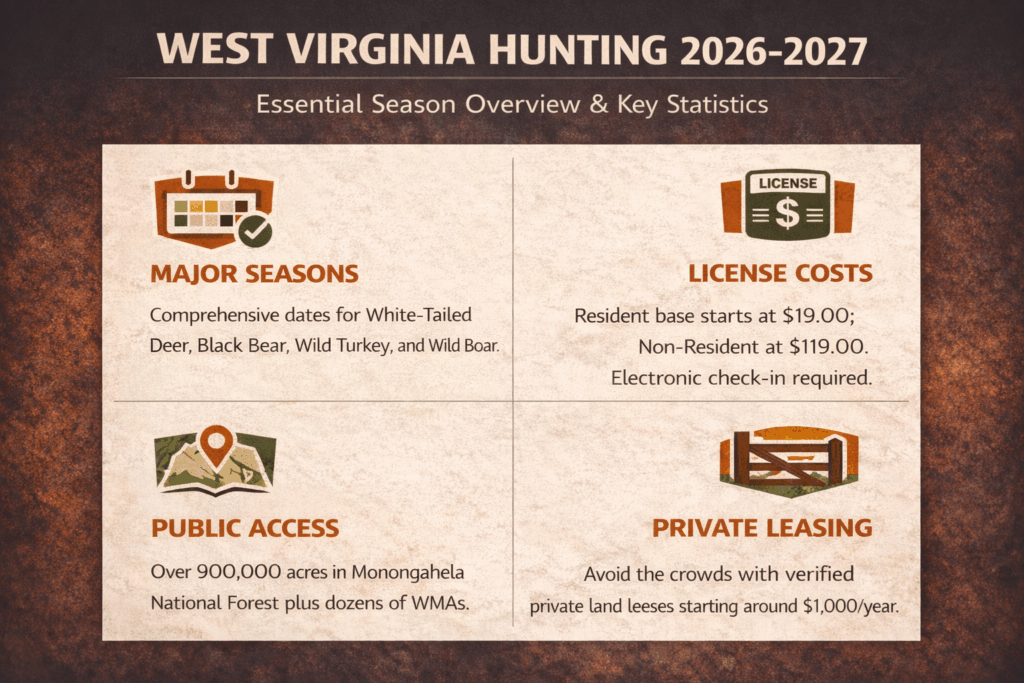
Quick Overview: Season Dates, West Virginia Hunting Licenses, and Regulations
The West Virginia Division of Natural Resources has specific requirements based on where you live, what you’re hunting, and which county you’ll be in. One thing that trips up a lot of people: if you were born after January 1, 1975, you need hunter education certification before you can get your license.
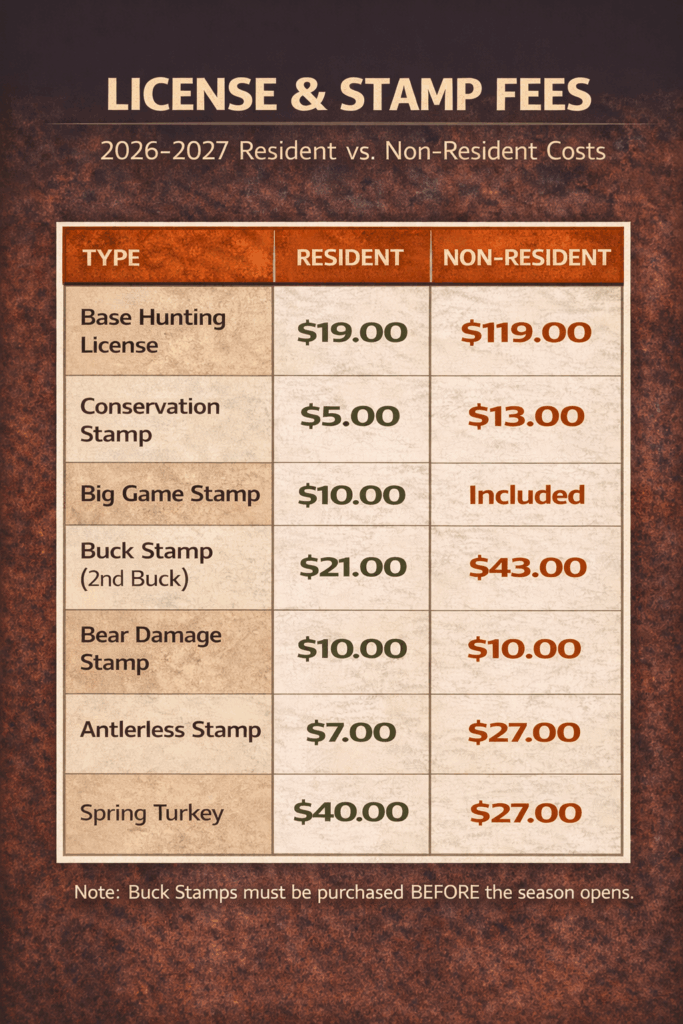
| License/Stamp Type | Resident Cost | Non-Resident Cost |
|---|---|---|
| State Hunting License (Base) | $19.00 | $119.00 |
| Conservation Stamp | $5.00 | $13.00 (CS/LE) |
| Resident Big Game Stamp (BG) | $10.00 | Included in Base |
| Buck Stamp (RG/RRG) | $21.00 | $43.00 |
| Antlerless Stamp (N/NN) | $7.00 | $27.00 |
| Bear Damage Stamp | $10.00 | $10.00 |
Here’s the deal: residents need that Class BG stamp ($10) to hunt big game with their base license. Want a shot at a second buck? You’ve got to buy the Buck Stamp (RG/RRG) BEFORE the season opens. Get everything sorted at WVhunt.com.
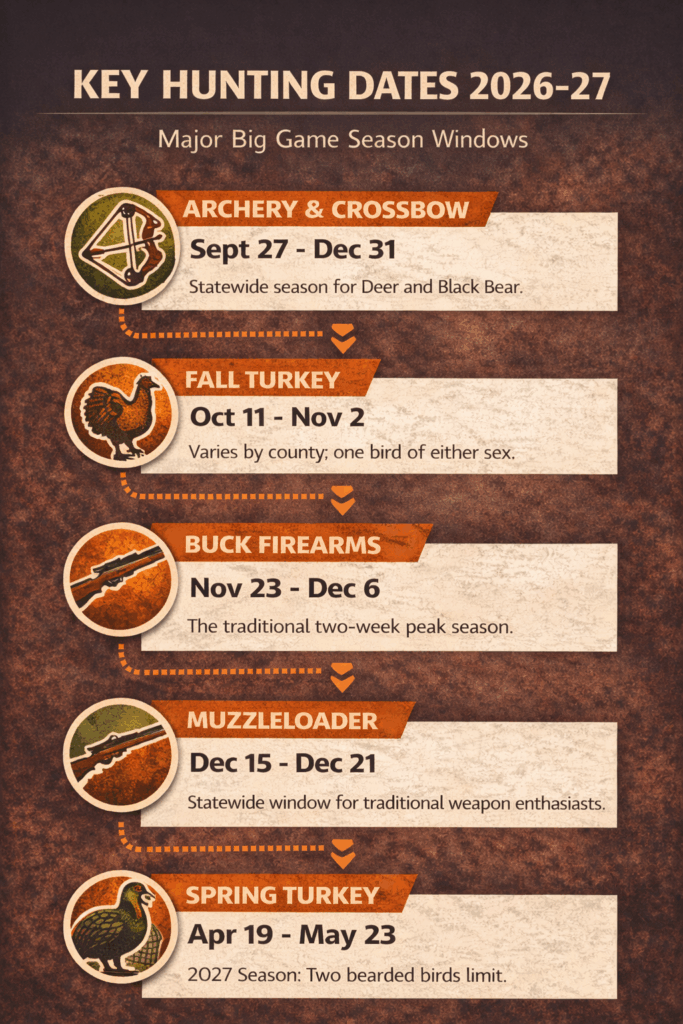
This calendar covers the major seasons. The Natural Resources Commission sets these dates based on wildlife biology and management goals.
| Species | Season Type | Start Date | End Date | Bag Limit/Notes |
|---|---|---|---|---|
| White-Tailed Deer | Archery & Crossbow | Sept 27, 2026 | Dec 31, 2026 | Statewide |
| White-Tailed Deer | Youth/Class Q/XS | Oct 18 & Dec 26, 2026 | Oct 19 & Dec 27 | 1 deer per day |
| White-Tailed Deer | Antlerless (Early) | Oct 23, 2026 | Oct 26, 2026 | Selected counties only |
| White-Tailed Deer | Buck Firearms | Nov 23, 2026 | Dec 6, 2026 | Traditional 2-week season |
| White-Tailed Deer | Muzzleloader | Dec 15, 2026 | Dec 21, 2026 | Statewide |
| White-Tailed Deer | Heritage Hunt | Jan 8, 2027 | Jan 11, 2027 | Primitive weapons only |
| Black Bear | Archery/Crossbow | Sept 27, 2026 | Dec 31, 2026 | 2 per year (1 per day) |
| Black Bear | Firearms | Various split dates | Sept–Dec 2026 | Check county “Dog” vs. “No Dog” splits |
| Wild Boar | Firearms | Oct 25, 2026 & Feb 6, 2027 | Nov 1, 2026 & Feb 8, 2027 | 1 per year |
| Wild Boar | Archery/Crossbow | Sept 27, 2026 | Dec 31, 2026 | 1 per year |
| Wild Turkey | Fall | Oct 11 (select) or Oct 27, 2026 | Oct 19 & Nov 2 | 1 bird (either sex), varies by county |
| Wild Turkey | Spring | April 19 | May 23, 2027 | 2 bearded birds total; 1 per day |
| Squirrel | — | Sept 13, 2026 | Feb 28, 2027 | 6 daily |
| Ruffed Grouse | — | Oct 18, 2026 | Feb. 28, 2027 | 4 daily |
| Rabbit | — | Nov 1 | Feb 28 | 5 daily |
| Raccoon | — | Oct 18 | Feb 28, 2027 | 4 (at night) |
| Bobcat | — | Nov 1, 2026 | Feb 28, 2027 | 3 per season |
Every big game animal needs to be field tagged and checked electronically at WVhunt.com. County rules can be tricky, especially for antlerless deer, fall turkey, and bear seasons.
West Virginia Deer Hunting
Hunting runs deep in West Virginia families—it’s something that gets passed down through generations. Deer hunting is the main event here, with seasons running about four months and plenty of chances to fill your tags.
Your base license gets you one buck. Want a second? You’ll need that Class RG (residents) or Class RRG (non-residents) stamp, and you’ve got to buy it before opening day. For the inside scoop on tactics and county-specific tips, check out our detailed West Virginia deer hunting guide.
West Virginia Deer Hunting Seasons
Archery & Crossbow Season (September 27 – December 31, 2026): This is your longest window and gives you the most flexibility. They actually added an extra day this year, and it runs statewide while overlapping with other seasons.
Youth/Class Q/XS Season (October 18-19 & December 26-27, 2026): Great news for families—WVDNR dropped the minimum age requirement, making it easier to get kids started. You can take one deer per day during these special weekends.
Antlerless (Early) Season (October 23-26, 2026): This only applies to certain counties. You’ll need to check your specific area and might need a Class N stamp, especially in counties where they’re managing higher deer numbers.
Buck Firearms Season (November 23 – December 6, 2026): The big one. Two weeks that every deer hunter in the state looks forward to. Just remember, Logan, McDowell, Mingo, and Wyoming counties are still closed to firearms deer hunting. That second buck stamp has to be purchased before opening day—no exceptions.
Muzzleloader Season (December 15-21, 2026): Statewide season for those who love the challenge of traditional weapons. It’s a great way to extend your season if you haven’t filled your tags yet.
Heritage Hunt (January 8-11, 2027): Primitive weapons only. This late-season hunt gives you one last shot using traditional methods when the woods are quiet and deer patterns have settled.
West Virginia Deer Hunting Regulations
- Buck Limit: One with your base license; second requires RG/RRG stamp bought before season
- Antlerless Deer: Limits change by county; you’ll often need a Class N stamp—check your specific county’s allocation
- Electronic Check-In: Field tag everything and check it at WVhunt.com
- Carcass Transport: Grant County has new rules about moving deer carcasses
- Baiting Rules: Pendleton County restricts baiting and feeding—double-check before you hunt
West Virginia Bear Hunting
West Virginia’s black bear hunting is some of the best you’ll find on the East Coast. Two bears per year (one per day max) gives you solid opportunities for a trophy. Just pay attention to those county-specific “Dog” vs. “No Dog” splits—they’ll trip you up if you’re not careful.
Our full West Virginia bear hunting guide breaks down all the county regulations.
West Virginia Bear Hunting Seasons
Archery/Crossbow Season (September 27 – December 31, 2026): Runs alongside deer archery season, so you can hunt both on the same trip. The long timeframe gives you flexibility to wait for perfect conditions.
Firearms Season (Various split dates, September–December 2026): This gets complicated fast with different counties opening on different dates. You absolutely must check whether your county allows “Dog” or “No Dog” hunting and when.
West Virginia Bear Hunting Regulations
- Bag Limit: Two bears per year, but only one per day
- County Splits: Firearms dates vary big time by county—verify “Dog” vs. “No Dog” dates for your area
- Electronic Check-In: Field tag and check all bears at WVhunt.com
- Bear Damage Stamp: Everyone needs this ($10 for residents and non-residents)
- Legal Weapons: Check WVDNR specs for minimum caliber and arrow requirements
West Virginia Turkey Hunting
West Virginia’s turkey population has really bounced back, making this state a top destination for turkey hunters. You’ve got plenty of chances to tag out with both fall and spring seasons offering different experiences.
For calling tips and public land spots, see our West Virginia turkey hunting guide.
West Virginia Turkey Hunting Seasons
Fall 2026 Season: County dates vary—some open October 11-19 while others follow the statewide October 27–November 2 schedule. Check your specific county before heading out. You can take one turkey of either sex.
Spring 2027 Season (April 19 – May 23, 2027): This is prime time. Over a month of hunting with a generous limit of two bearded birds total (one per day).
West Virginia Turkey Hunting Regulations
- Fall Bag Limit: One turkey, either sex
- Spring Bag Limit: Two bearded turkeys total, one per day
- County Variations: Fall dates change by county—verify before you go
- Electronic Check-In: All turkeys get checked at WVhunt.com
- Legal Hours: Usually starts 30 minutes before sunrise—confirm current times
West Virginia Minor Game Species Hunting
West Virginia Small Game Hunting Information
Small game hunting in West Virginia is perfect for beginners—longer seasons, generous bag limits, and you don’t need specialized gear. The hardwood forests support healthy populations of squirrels, rabbits, and grouse.
Squirrel Season (September 13, 2026 – February 28, 2027): Six per day and one of the longest seasons in the state. Squirrel hunting teaches you patience, accuracy, and how to read the woods—great training for new hunters. Both gray and fox squirrels live in these hardwood forests, with oak ridges being your best bet when the acorns are dropping.
Ruffed Grouse Season (October 18, 2026 – February 28, 2027): Four per day, but these birds will test your wing shooting skills. They love young forest and timber cuts, which usually means some serious hiking in steep country.
Rabbit Season (November 1, 2026 – February 28, 2027): Cottontails thrive where farmland meets cover, and you can hunt them solo or with groups, often using beagles. Five per day gives you plenty of action in brushy areas, fencerows, and field edges.
West Virginia Wild Boar Hunting Information
Wild boar hunting is unique with just one per year. Firearms season runs October 25–November 1, 2026, and February 6–8, 2027. Archery/crossbow hunters get September 27–December 31, 2026. These are tough, smart animals that provide exciting hunts and excellent eating. Check our West Virginia wild boar guide for specialized tactics.
West Virginia Raccoon Hunting Information
Raccoon season runs October 18, 2026 – February 28, 2027, with four per night. This traditional pursuit often involves hounds and gives young hunters great experience working with dogs while helping landowners deal with crop damage.
West Virginia Bobcat Hunting Information
Bobcat season runs November 1, 2026 – February 28, 2027, with three per season. These cats are elusive and provide challenging hunting plus valuable pelts. Success usually means lots of scouting, trail cameras, and understanding bobcat behavior. Our West Virginia predator hunting guide has detailed strategies.
Where to Hunt in West Virginia
West Virginia’s mountains and forests create diverse hunting opportunities on both public and private land. You’ve got everything from steep ridges and deep hollows to river bottoms and farm valleys, each supporting different game and hunting styles.
Best Public Lands
West Virginia offers extensive public hunting across different agencies:
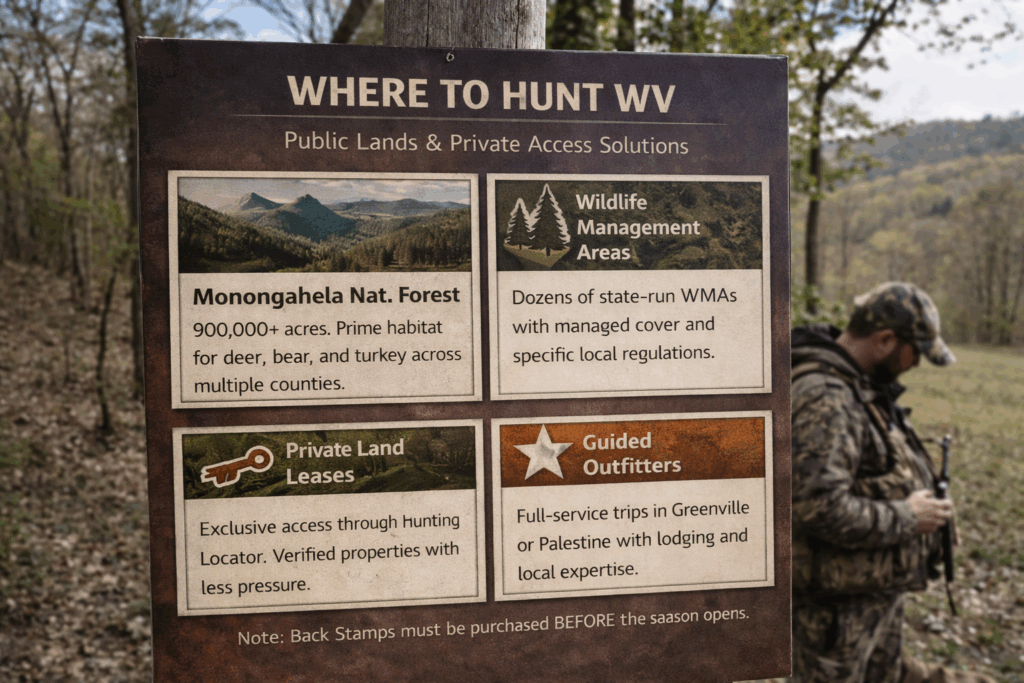
- Monongahela National Forest: Over 900,000 acres spanning multiple counties with excellent deer, bear, turkey, and small game
- State Wildlife Management Areas: Dozens of WMAs statewide with managed hunting and specific regulations for each area
- State Forests: Multiple forests with hunting access, varying regulations, and seasonal restrictions
- National Wildlife Refuges: Limited hunting on select refuges during specific seasons
Guided Hunts
Professional outfitters like Mountain Meadow Hunting Preserve in Greenville and Land Baron Outfitters in Palestine offer guided hunts with lodging, meals, and professional guidance. Guided hunts give non-resident hunters local knowledge of terrain and game patterns, access to private lands not open to the public, professional help with field dressing and processing, and lodging/meal packages that simplify trip planning.
Private Land Hunting
Private land beats public land almost every time—less pressure, better management, higher success rates. Many landowners will allow hunting with lease options from day permits to annual memberships.
Hunting leases can run around $1,000 for yearly memberships, with hundreds of properties available for daily, seasonal, or annual lease. Private access means better game management, less hunting pressure, and higher success rates than public lands.
Hunting Locator connects you directly with West Virginia landowners offering quality hunting leases and land sales. Whether you want a weekend deer lease or you’re looking to buy your own hunting property, Hunting Locator’s West Virginia listings give you verified access to prime hunting grounds that aren’t available anywhere else.
FAQ
When do I need to buy my West Virginia hunting license for 2026-2027?
Licenses go on sale July 1, 2026. If you want a shot at an additional buck during firearms season, you must buy the Class RG or RRG stamp before the season starts. Get everything at WVhunt.com.
Do I need hunter education to hunt in West Virginia?
Anyone born after January 1, 1975, needs proof of hunter education before getting a West Virginia hunting license. The course covers safety, wildlife management, and ethics.
What’s the difference between resident and non-resident license costs?
Residents pay $19 for base hunting while non-residents pay $119. Non-resident kids aged 8-17 can get a junior sportsman license (XXJ) for $16 plus a CS/LE stamp for $13. Additional stamps cost extra for everyone.
Can I hunt deer with archery equipment during firearms season?
Absolutely. Archery/crossbow season runs September 27–December 31, 2026, overlapping with all other deer seasons. Bowhunters get extended opportunities throughout fall and early winter.
Which counties are closed to firearms deer hunting?
Logan, McDowell, Mingo, and Wyoming counties don’t allow firearms deer hunting. You can still use archery and muzzleloader during their seasons.
How do I check in my harvested game?
All big game gets field tagged and checked electronically at WVhunt.com. The electronic system handles thousands of licenses and game registrations every year.
The Final Shot
West Virginia’s 2026-2027 seasons offer incredible opportunities for every type of hunter—from extended archery seasons to traditional firearms periods and specialized heritage hunts. With proper planning, the right licenses, and access to quality hunting ground, your Mountain State adventure can create memories that last forever.
Ready to lock in your spot for the upcoming season? Check out Hunting Locator’s verified West Virginia hunting leases and connect with landowners who share your passion for ethical, memorable hunts. Your next great hunting story starts with finding the right property—let us help you discover it.


