This Wisconsin Whitetail Deer Season Guide for 2026 covers every confirmed 2026 season date, license and permit cost, and land-access option, whether you’ve hunted Wisconsin’s farmland counties for twenty years or you’re planning your first trip into the state.
Here’s what’s covered:
- Every 2026 season date by weapon type — archery, gun, muzzleloader, and the special hunts — along with bag limits.
- License, permit, and harvest authorization costs for residents, nonresidents, and youth hunters.
- Where to hunt — public land, private leases through Hunting Locator, and guided hunts.
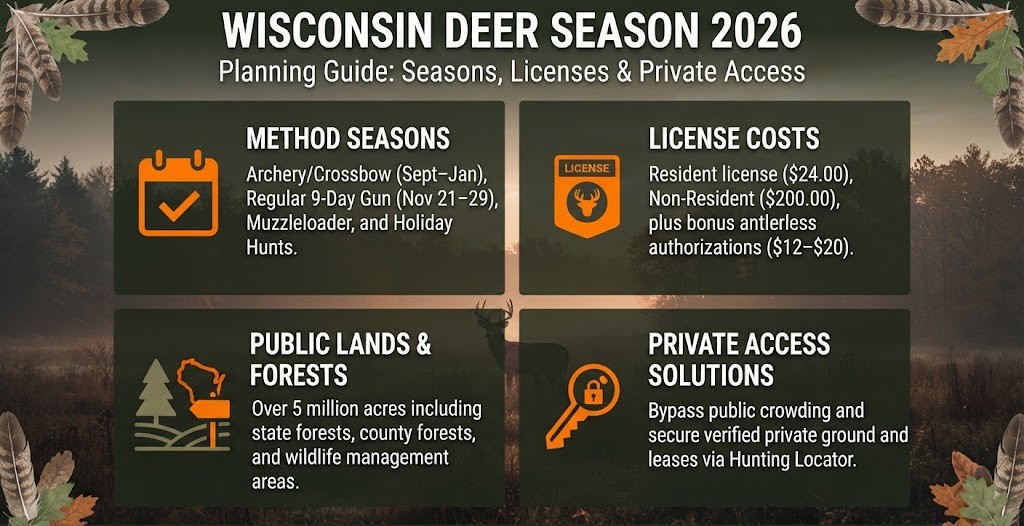
Quick Overview: 2026 Wisconsin Deer Season Dates at a Glance
If you bookmark one section of this guide, make it this one — a fast-reference table for the 2026 Wisconsin deer season dates, covering every weapon type, bag limit, and notable regulation.
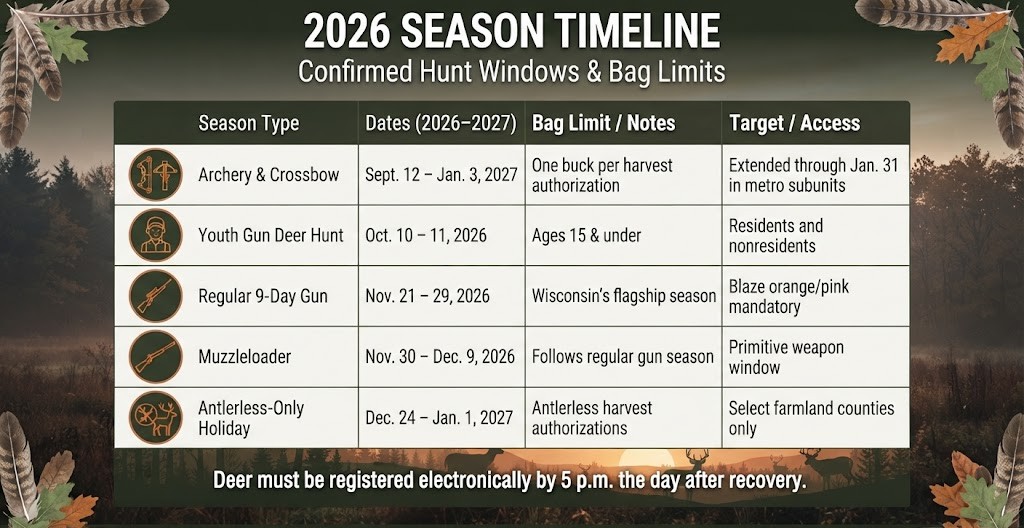
| Season Type | Dates | Bag Limit / Notes |
|---|---|---|
| Archery & Crossbow | Sept. 12 – Jan. 3, 2027 | Extended through Jan. 31, 2027 in metro subunits and select farmland units. One buck per valid, unused buck harvest authorization. |
| Gun Hunt for Hunters with Disabilities | Oct. 3 – 11 | At sponsored properties and select locations. |
| Youth Gun Deer Hunt (ages 15 & under) | Oct. 10 – 11 | Open to residents and nonresidents; a gun deer license is required if carrying a firearm. |
| Regular 9-Day Gun Deer Season | Nov. 21 – 29 | Extended in metro subunits through Dec. 9. Wisconsin’s flagship season. |
| Muzzleloader Season | Nov. 30 – Dec. 9 | Follows immediately after the regular gun season closes. |
| Statewide Antlerless-Only Gun Hunt | Dec. 10 – 13 | Antlerless harvest authorizations only. |
| Antlerless-Only Holiday Hunt | Dec. 24 – Jan. 1, 2027 | Select farmland counties only. |
For more on how the metro-subunit and farmland extensions work, see our deeper dive on season structure. Note that the Holiday Hunt’s list of eligible farmland counties changes year to year, so confirm the current list on the Wisconsin DNR site before planning a late-December sit.
Beyond the dates, every Wisconsin deer hunter needs to check a few boxes before heading into the woods:
- You need a valid hunting license (gun, archery, or crossbow) plus the correct harvest authorization for a buck and/or antlerless deer.
- Hunter education is mandatory for anyone born on or after Jan. 1, 1973, unless hunting under the Mentored program.
- Licenses, tags, and authorizations are purchased through the DNR’s Go Wild portal.
- Your antlerless tags are tied to a specific DMU (Deer Management Unit) — the zone that governs how many antlerless authorizations are available and where you can use them, by land type (public or private).
Each of these is broken down further below.
Wisconsin Deer Hunting Seasons Explained
Wisconsin runs one of the longest, most flexible deer calendars in the Midwest, with a season and weapon type for nearly every hunter — bowhunters chasing the November rut, gun hunters who plan their whole year around opening weekend. Here’s what each major season looks like on the ground.
Archery & Crossbow Season — The Marathon
Wisconsin’s archery and crossbow season runs nearly five full months, from Sept. 12 through Jan. 3, 2027, with an additional extension through Jan. 31, 2027 in metro subunits and select farmland units. That window gives you room to pattern deer early, hunt the peak rut in November, and still catch late-season post-rut movement when bucks are hungry and predictable.
For working hunters who can’t always take time off for a specific week, and for nonresidents trying to time a trip around the rut, this long window is the biggest advantage of bowhunting Wisconsin. One rule to remember: an archery buck harvest authorization can only be filled with archery equipment. You can’t use it to take a buck with a firearm, even during an open gun season.
Regular 9-Day Gun Deer Season
Most Wisconsin hunters build their entire year around the Regular 9-Day Gun Deer Season, running Nov. 21 – 29, with an extension in metro subunits through Dec. 9. It typically lines up with peak rut activity, which means more deer moving during daylight and more chances at a mature buck.
Blaze orange isn’t optional during gun season — at least 50% of your upper body must be blaze orange or blaze pink, no exceptions. If you’re planning your Wisconsin trip around one week, this is usually the week to build it around.
Muzzleloader, Antlerless & Holiday Hunts
Once the regular gun season wraps up, the calendar keeps rolling. Muzzleloader season runs Nov. 30 – Dec. 9, immediately followed by the Statewide Antlerless-Only Gun Hunt from Dec. 10 – 13. In select Farmland (Zone 2) counties, the Antlerless-Only Holiday Hunt runs Dec. 24 – Jan. 1, 2027 — a good late-season option for filling the freezer, though the eligible county list shifts year to year, so verify it with the DNR before planning around it.
Two more seasons round out the calendar: the Youth Gun Deer Hunt (Oct. 10 – 11) for hunters age 15 and under, and the Gun Hunt for Hunters with Disabilities (Oct. 3 – 11) at sponsored properties and select locations. Both are covered in more detail in the FAQ below.
Wisconsin Deer Licenses and Permits
A legal Wisconsin deer hunt comes down to three things: the right license, the right harvest authorization, and — for most hunters — proof of hunter education on file. The Wisconsin DNR’s Go Wild portal is the official system for purchasing all of it, and the source to check for any last-minute rule changes.
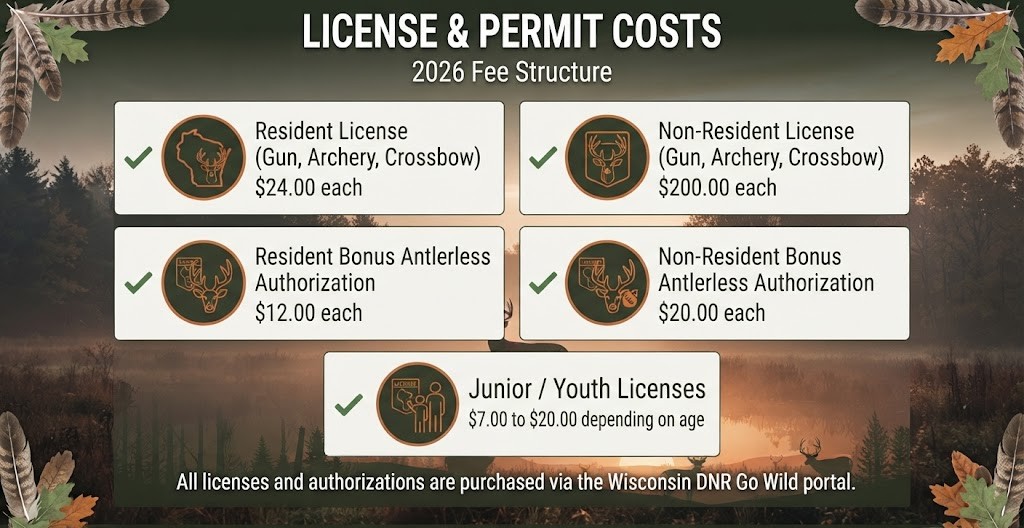
Wisconsin Hunting Licenses & Fees
Here’s what you’ll pay in 2026, by hunter type:
| Hunter Type | License Cost | Bonus Antlerless Authorization |
|---|---|---|
| Resident (gun, archery, or crossbow) | $24.00 each | $12 |
| Junior (ages 12–17) | $20.00 | $12.00 |
| Youth (under 12) | $7.00 | $5.00 |
| Nonresident (gun, archery, or crossbow) | $200.00 each | $20 |
Nonresident hunters should budget for the full $200 license plus $20 per bonus antlerless authorization when planning a trip — a figure that matches the nonresident Wisconsin license cost confirmed by independent hunter-education sources.
Eligible first-time buyers, or returning hunters who haven’t purchased the same license type in the past 10 years, may qualify for a reduced rate of $5.00 on select annual licenses. Note that all licenses and authorizations purchased through Go Wild are non-refundable, so double-check your season, weapon type, and DMU before completing the purchase.
Harvest Authorizations & How to Buy a License
Buying your license is straightforward once you know the order of operations:
- Complete hunter education if you were born on or after Jan. 1, 1973 (or hunt under the Mentored program if you haven’t yet).
- Confirm your DMU, county, and land type (public or private access) — this determines which antlerless authorizations are available to you.
- Buy your license plus buck and/or antlerless harvest authorization through Go Wild.
- Purchase any bonus antlerless authorizations specific to your DMU and land type, if you want to fill more than one antlerless tag.
The bag limit logic is worth understanding: you get one buck per valid, unused buck harvest authorization statewide, but your antlerless limit is tied to one valid, unused authorization for the exact zone, DMU, and land type it was issued for. A bonus antlerless tag for one DMU won’t work in another, so match your tags to where you’re actually hunting before you buy.
Wisconsin Whitetail Deer: Where to Hunt
Dates and licenses don’t matter much without a quality place to hunt, and losing access to reliable ground is one of the harder parts of this sport. Wisconsin hunters generally have three paths available: public land, private leases, and guided hunts. Here’s how each stacks up, including current Wisconsin deer leases if you’re ready to secure ground now.
Best Public Lands for Wisconsin Deer Hunting
Wisconsin’s public land system is one of the best in the Midwest, with more than 5 million acres available — including county forests, a resource unique to Wisconsin among Midwest states. That said, more than 80% of the state’s huntable land is privately owned, which is why many hunters eventually look toward leasing or buying private ground for more consistent, lower-pressure access.
If you’re hunting public land this season, keep these categories in mind:
- State forests — large, contiguous tracts with diverse terrain and generally lighter pressure the farther you get from access roads.
- County forests — a Wisconsin specialty, often overlooked by out-of-state hunters and worth scouting ahead of time.
- Wildlife management areas — DNR-managed properties specifically maintained for hunting and habitat.
- Other DNR-managed lands — confirm current boundaries, access points, and any local restrictions directly on the DNR site before you go.
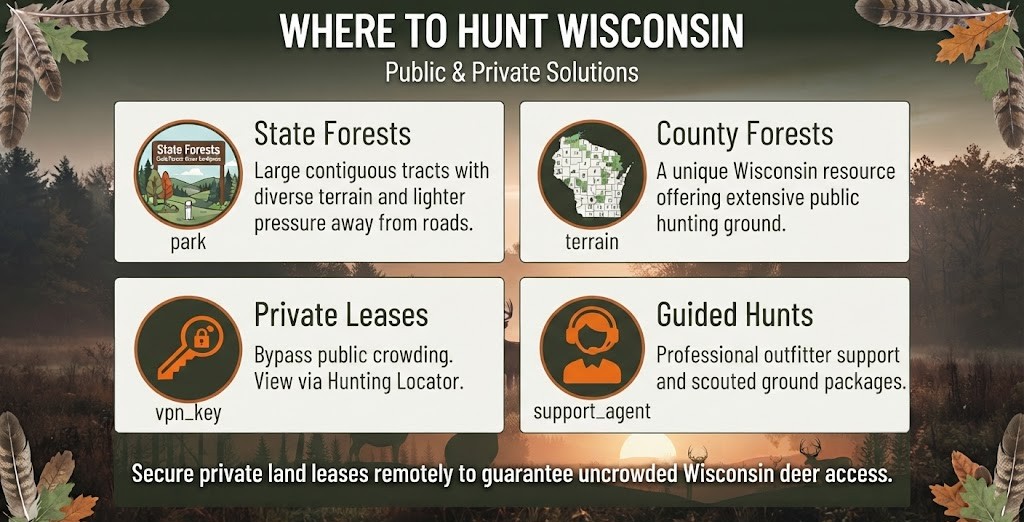
Private Land Hunting with Hunting Locator
Whether you’re looking to lease ground for this season or buy land as a longer-term investment, private access solves one of the bigger headaches in this sport: consistency. Leasing gets you seasonal, often turnkey access without the overhead of ownership. Buying builds equity in a piece of Wisconsin whitetail country you control for good. Either way, a vetted, legitimate opportunity beats cold-calling landowners and hoping for the best.
That’s where Hunting Locator comes in. The platform connects hunters directly with landowners across Wisconsin who are ready to lease or sell their hunting ground — a searchable database of real opportunities by county, acreage, and game type, rather than scattered listings across a dozen sites. You can browse Wisconsin deer leases in one place and move on the ones that fit your season and budget, whether you’re a resident hunting closer to home or a nonresident who wants a turnkey lease locked in before setting foot in the state.
Guided Deer Hunts in Wisconsin
For hunters, especially nonresidents, who want a low-hassle first trip into Wisconsin, a guided or outfitted hunt is worth considering. These arrangements typically include scouted ground, local knowledge of deer movement and terrain, lodging, and sometimes help with field-dressing or processing your deer once it’s down. You’re paying for convenience and local expertise instead of scouting cold ground yourself.
If a guided hunt is on your radar, book well ahead of the Nov. 21 gun opener — quality outfitted properties fill up fast, and you’ll want your hunter-education documentation and license squared away before you travel. If you’d rather compare the DIY route, you can explore Wisconsin land access options and weigh a leased property against the cost of a fully guided package.
Wisconsin Whitetail Deer Hunting Tips
A little preparation goes a long way toward a successful 2026 season. A few field-tested tips worth putting into practice before opening day:
- Run Trail Cameras Early: Get cameras up well before archery season opens so you can pattern deer movement and identify travel corridors before pressure changes their habits.
- Set Up the Right Blind or Stand: A quality blind keeps you concealed and comfortable through Wisconsin’s long archery season, especially during cold late-season sits.
- Stay Legal & Visible with Blaze Orange: It’s mandatory during gun season — at least 50% of your upper body needs to be blaze orange or blaze pink.
- Hunt the Rut: Plan your best days off around Wisconsin’s peak rut, which typically lines up with the 9-day gun opener in late November.
- Master Scent Control & Concealment: Basic scent management and the right camouflage matter more than most new hunters expect, particularly on pressured public ground.
You can gear up at our store for trail cameras, blinds, blaze orange, and everything else you need heading into the season.
More Resources from Hunting Locator
Keep planning with these Hunting Locator tools:
- Wisconsin deer leases — Search current private leases and land for sale by acreage and county.
- Hunting gear store — Trail cameras, blinds, blaze orange, and other season essentials.
- Wisconsin hunting seasons breakdown — A deeper dive on season structure by weapon type.
- Wisconsin deer hunting guide — Public land acreage, terrain, and species insights.
Frequently Asked Questions
How much is a nonresident Wisconsin deer license in 2026?
A nonresident gun, archery, or crossbow license costs $200.00, plus $20.00 for each bonus antlerless authorization you want to add. Licenses are purchased through Go Wild and are non-refundable once bought, so confirm your season and DMU before checkout.
Do I need hunter education to hunt deer in Wisconsin?
Yes. Anyone born on or after Jan. 1, 1973 must complete hunter education and have the certificate on file with the DNR before buying a license, unless hunting under the Mentored program. Check Go Wild to confirm your certificate is on record.
When is the 2026 Wisconsin youth deer hunt?
The Youth Gun Deer Hunt runs Oct. 10 – 11, 2026, and is open to both residents and nonresidents ages 15 and younger. Any youth carrying a firearm during this hunt needs a valid gun deer license.
How do CWD rules affect transporting my deer?
CWD testing is recommended but not required by the DNR. Before hauling a whole deer, head, spine, or other high-risk parts across zones or state lines, check current CWD carcass transport rules to make sure you’re compliant.
How do I register a harvested deer in Wisconsin?
You must register your deer electronically or by phone at 1-844-426-3734 by 5 p.m. the day after you recover it, using the harvest authorization number tied to that permit. Following the deer registration deadline rules is mandatory for every hunter, regardless of residency.
What’s the difference between an apprentice/mentored and a standard license?
The Mentored program allows qualifying hunters to hunt without first completing hunter education, as long as they’re hunting alongside a qualified mentor. A standard license requires your hunter education certificate to be on file before purchase. Check the DNR site for full eligibility details.
The Final Shot
Planning a Wisconsin deer season comes down to three things: nailing your dates, squaring away the right license and harvest authorizations, and locking in quality ground before the season gets away from you. This guide covers all three in one sitting, but for any last-minute date or rule changes, the Wisconsin DNR remains the official word to confirm before you head afield.
Whether you’re a resident chasing a familiar stand or a nonresident stepping into Wisconsin whitetail country for the first time, the Nov. 21 gun opener is coming up fast — browse Wisconsin deer leases today and get your ground locked in before the season peaks.


