This Arizona migratory bird guide covers what residents and non-residents need before opening day: season dates, zones, bag limits, licenses, and where to actually hunt. Here’s what’s ahead:
- Season dates and bag limits by species and zone (dove, band-tailed pigeon, waterfowl, sandhill crane)
- Licenses, stamps, and permits for residents and non-residents
- Where to hunt — public land, private leases through Hunting Locator, and guided hunts
Start with the quick-reference table below to confirm the basics, then read on for the details that matter for your trip.
Quick Overview: Arizona Migratory Bird Seasons at a Glance
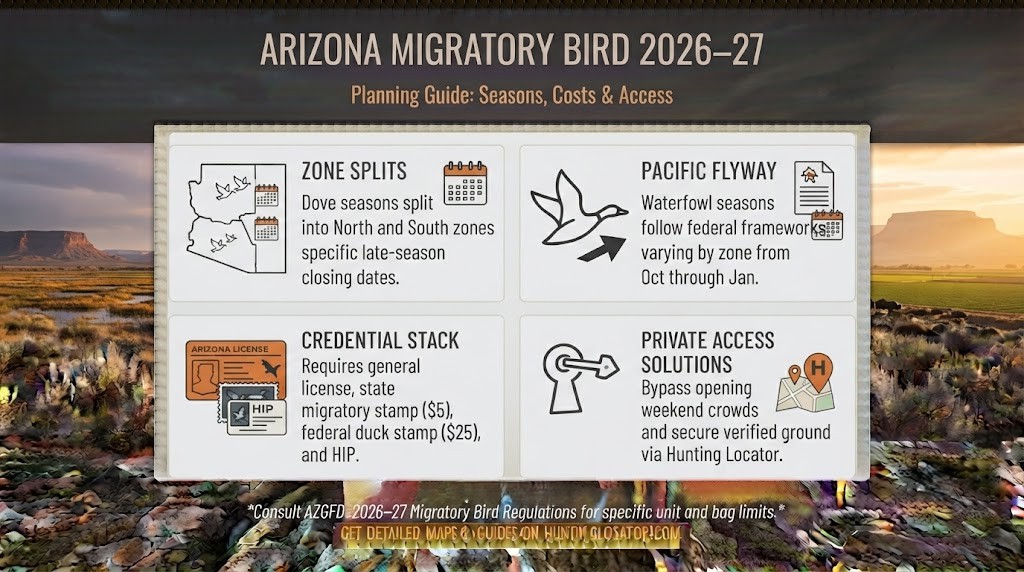
Arizona splits its dove seasons into North and South zones. Waterfowl seasons follow federal frameworks set under the Pacific Flyway, so exact dates get locked in by the Arizona Game and Fish Department (AZGFD), typically in late August. Treat the dates below as a planning framework and cross-check the official AZGFD regulations booklet before you head afield. For how migratory birds fit alongside Arizona’s other game seasons, see our Arizona hunting seasons overview.
| Species | Season Type | Zone | Start Date | End Date | Bag Limit / Notes |
|---|---|---|---|---|---|
| Mourning / White-winged Dove | Early | South | September 1 | 15-Sep-26 | 15 daily (aggregate) |
| Mourning / White-winged Dove | Late | South | Nov 21, 2026 | 4-Jan-27 | 15 daily (aggregate) |
| Mourning / White-winged Dove | Early | North | Sep 1, 2026 | 15-Sep-26 | 15 daily (aggregate) |
| Mourning / White-winged Dove | Late | North | Nov 21, 2026 | Jan 9, 2027 | 15 daily (aggregate) |
| Eurasian Collared-Dove | Year-round | Statewide | Sep 1, 2026 | Aug 31, 2027 | No limit (invasive) |
| Migratory Doves (Falconry) | Falconry only | Statewide | Sep 16, 2026 | Nov 1, 2026 | Falconry limits apply |
| Band-tailed Pigeon | General | Statewide | 26-Sep-26 | 9-Oct-26 | Per AZGFD |
| Ducks, Coots, Mergansers | Regular | By zone | Oct–Nov 2026 | Jan-27 | Varies by species |
| Light Geese (Snow, Blue, Ross’) | Regular | By zone | Oct–Nov 2026 | Jan-27 | Per AZGFD |
| Dark Geese (Canada, Cackling) | Regular | By zone | Oct–Nov 2026 | Jan-27 | Per AZGFD |
| Rails & Gallinules | Early | Statewide | Sep 13, 2026 | 21-Sep-26 | Per AZGFD |
| Rails & Gallinules | Late | Statewide | Nov 28, 2026 | 27-Jan-27 | Per AZGFD |
| Snipe | Regular | Statewide | Oct–Nov 2026 | Jan-27 | Per AZGFD |
| Sandhill Crane | 3-day permit hunts | Draw only | November 21, 2026 | 26-Jan-27 | 3 per calendar year (draw) |
You’ll also need the right paperwork before loading a shell. Here’s the credential stack:
- General Hunting License — required for all hunters age 10+
- Arizona State Migratory Bird Stamp — $5, required for hunters 18+ pursuing doves, ducks, geese, coots, snipe, and pigeons
- Federal Migratory Bird Hunting Stamp (Duck Stamp) — $25, required for waterfowl hunters 16+
- HIP Registration — free Harvest Information Program registration required for all migratory bird hunters, typically completed during license purchase
- Hunter Education — required for hunters ages 10–13
The full cost picture and application process are covered in the Licenses and Permits section below.
Arizona Dove Hunting Seasons
Dove hunting is the marquee opener of Arizona migratory bird calendar, and your season dates depend on which zone you’re standing in. The state splits into North and South zones, with the line generally following the northern borders of Coconino, Navajo, Apache, and Greenlee counties. For tactics and zone specifics, see our Arizona dove hunting guide.
Early Dove Season
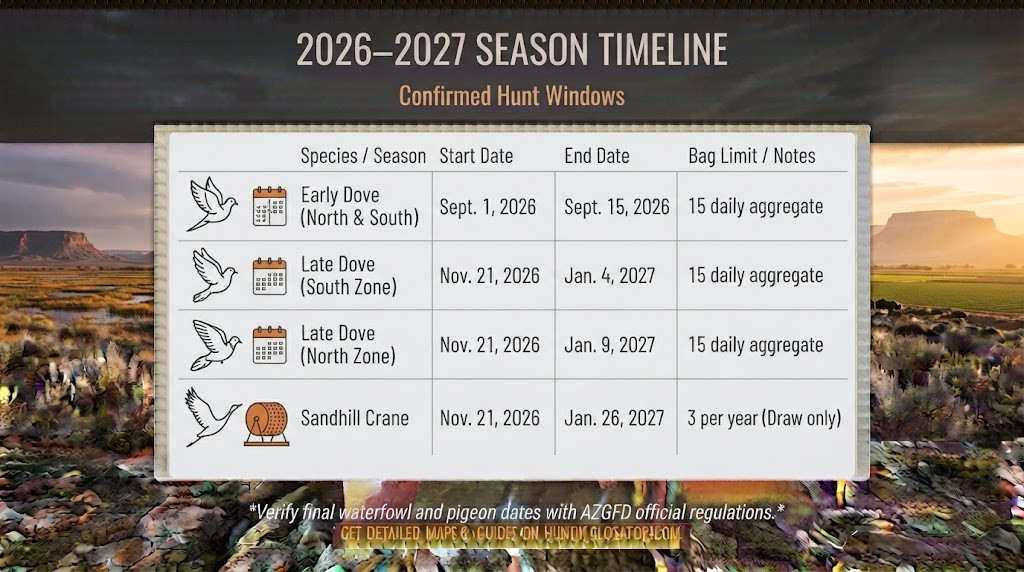
The early season runs September 1–15, 2026, in both the North and South zones — no zone-based difference here. Mourning and white-winged doves carry a 15-bird daily aggregate limit, with a 45-bird possession limit. Legal shooting hours run from one-half hour before sunrise until sunset.
Late Dove Season
Zone matters more in the late season. The South Zone runs November 21, 2026 through January 4, 2027; the North Zone runs a few extra days, through January 9, 2027. This later season targets wintering and migrating mourning doves rather than the local birds that dominate the early-season push. Those extra North Zone days can matter if your first weekend out comes up light.
Eurasian Collared-Dove & Falconry Seasons
Eurasian collared-doves can be hunted year-round, from September 1, 2026 through August 31, 2027, with no daily or possession limit because they’re classified as an invasive species. The falconry-only migratory dove season runs September 16 through November 1, 2026, for hunters working with birds of prey. For identification: collared-doves run noticeably larger than native mourning and white-winged doves and show a distinct black collar on the back of the neck.
Band-Tailed Pigeon Season
Band-tailed pigeon hunting is a short, mountain-country season. The 2026 general season runs September 26 through October 9, a two-week window in higher-elevation habitat. Bag limit specifics come from AZGFD directly, so confirm those numbers before heading into pigeon country.
Arizona Waterfowl Seasons
Arizona sits within the Pacific Flyway, one of four major migratory bird corridors in North America, which means waterfowl seasons follow federal frameworks and vary by zone. Exact 2026-27 dates for ducks, geese, and other waterfowl publish closer to the season via AZGFD, generally landing in the October/November through January window. Waterfowl hunters should wait for final confirmation rather than locking in dates too early.
Ducks, Coots & Mergansers run a regular season from October–November 2026 through January 2027. Bag limits change annually by species — mallards, pintails, and others each carry their own numbers — so check current AZGFD regulations for the exact figures before your hunt.
Geese follow the same general window. Light geese (Snow, Blue, Ross’) and dark geese (Canada, Cackling) both run October–November 2026 through January 2027.
Other Waterfowl rounds out the picture:
- Rails & Gallinules — early season September 13–21, 2026; late season November 28, 2026 through January 27, 2027
- Snipe — regular season October–November 2026 through January 2027
Non-toxic (steel) shot is required for all waterfowl hunting, regardless of species.
Sandhill Crane Season
Sandhill crane hunting in Arizona is draw-permit only, structured as multiple 3-day hunt periods within an overall window running November 21, 2026 through January 26, 2027. The bag limit is 3 birds per calendar year, and you can only pursue cranes if you’ve drawn a permit through AZGFD’s system. Because this is draw-only, getting your application in early matters — the process is covered next.
Arizona Licenses and Permits
Arizona migratory bird licensing works as a sequence of layered credentials rather than a single purchase. A base hunting license alone won’t cover you — you’ll typically need a general license, a state migratory bird stamp, a federal duck stamp (for waterfowl), HIP registration, and, if you’re chasing sandhill crane, a draw permit. Here’s how that sequence breaks down.
Arizona Hunting Licenses
| Credential | Who Needs It | Cost | Validity / Notes |
|---|---|---|---|
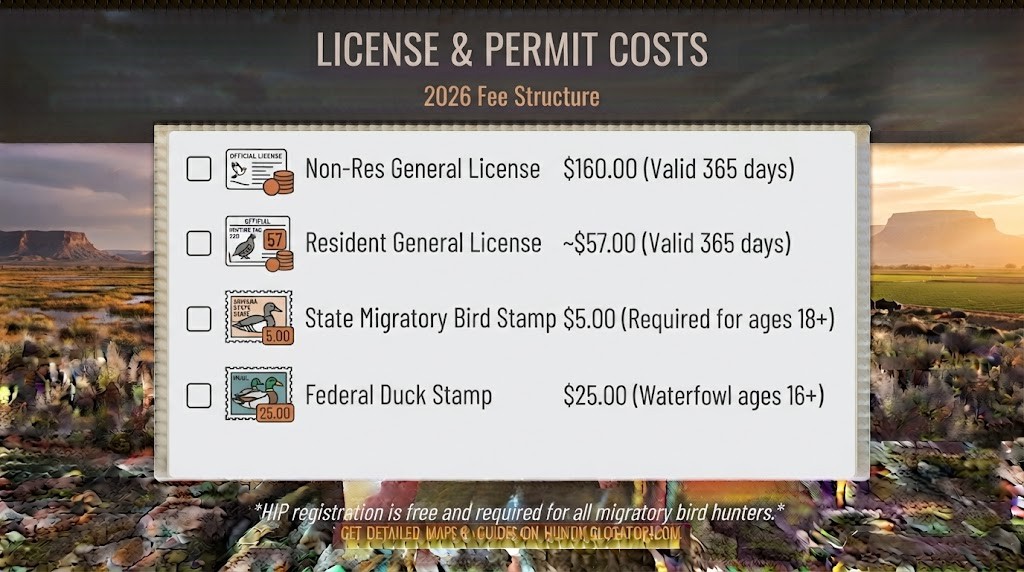
| Resident General/Combination License | Residents 10+ | ~$57 | Valid 365 days from purchase |
| Non-Resident General Hunting License | Non-residents 10+ | $160 | Valid 365 days from purchase |
| State Migratory Bird Stamp | Hunters 18+ (all migratory birds) | $5 | Valid July 1 – June 30; free in $5 Youth Combo (ages 10–17) |
| Federal Migratory Bird Hunting Stamp (Duck Stamp) | Waterfowl hunters 16+ | $25 | Valid July 1 – June 30 |
AZGFD issues all of these credentials. The non-resident hunting license cost is $160, valid for 365 days from purchase. For non-residents hunting Arizona migratory birds, the full cost lands at $160 for the license, plus $5 for the state stamp, plus $25 for the federal duck stamp if you’re hunting waterfowl. Bag limits are identical for residents and non-residents, so the extra cost buys access, not a smaller limit.
One detail that trips up plenty of hunters: your hunting license runs 365 days from purchase, but state and federal stamp requirements follow a different calendar, valid July 1 through June 30. HIP registration is free and typically completed at the point of license purchase. If you’re bringing a young hunter along, the $5 Youth Combination License (ages 10–17) includes the state migratory bird stamp at no extra cost.
Arizona Hunting Permits
Sandhill crane is the standout permit-required species here, and it works differently than a straightforward license purchase. The season is structured as multiple 3-day hunt periods, with an overall bag limit of 3 birds per calendar year, and you can only participate if you’ve drawn a permit through AZGFD’s draw system. Apply well ahead of the season — specific 2026-27 application deadlines are confirmed closer to the season, so verify exact dates directly with AZGFD.
Two more requirements apply broadly, beyond the crane draw:
- HIP registration is required for every migratory bird hunter, regardless of species. It’s free, completed online, and usually handled at the same time you buy your license.
- Hunter education certification is required for hunters ages 10–13 before they can legally hunt.
AZGFD runs the official draw application portal and publishes all deadlines — that’s the definitive source for crane permit timing.
Arizona Migratory Bird Where to Hunt
Once your paperwork is squared away, the question is where to go. Arizona offers plenty of public land, but opening weekend crowds are real, especially near the state’s dove hotspots. Here’s how the access options break down, from free-and-crowded to exclusive-and-private.
Best Public Lands
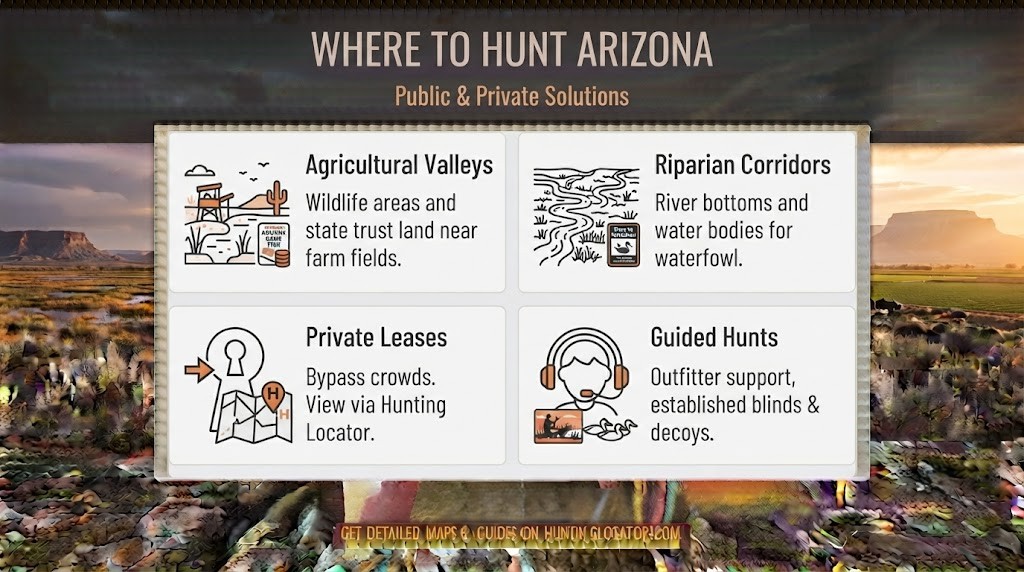
Public land remains the traditional starting point for migratory bird hunters, particularly near agricultural fields and water sources where birds concentrate. Consider these general categories as you scout:
- Wildlife areas and state trust land near agricultural valleys
- Riparian corridors and river bottoms along Arizona’s water bodies (prime territory for waterfowl)
- Agricultural field edges and desert washes where doves concentrate
- Public areas near Phoenix, Tucson, and Yuma (note these draw the biggest opening-weekend crowds)
Public land is free and accessible, but that access comes with trade-offs. Opening weekend gets crowded fast, and most public grounds lack basic facilities like restrooms or camping areas.
Private Land Hunting with Hunting Locator
Private land offers what public ground often can’t: exclusive access, less competition for prime spots, and closer proximity to the dove fields and waterfowl water that actually produce birds. Whether you’re looking to lease ground for a single season or invest in property you’ll return to year after year, private access changes the hunting experience.
That’s where Hunting Locator comes in. We connect hunters directly with landowners across Arizona who are ready to lease or sell hunting ground, with vetted listings you can search by location and game type. Instead of cold-calling ranchers or guessing which properties actually hold birds, browse Arizona hunting land for lease and find ground that fits your season and your budget.
The best dove and waterfowl ground doesn’t stay available long once September gets close, so it’s worth securing a spot before the opener.
Guided Hunts
Guided dove and waterfowl hunts make sense for non-residents unfamiliar with Arizona terrain, or for anyone who’d rather spend their limited time in the field instead of scouting. A guide typically handles the access, local knowledge, and logistics that would otherwise eat into your hunting time. Here’s what a guided package generally covers:
- Access to private ground the guide has already secured, so you’re not competing for public spots
- Local scouting knowledge on where birds are concentrating that week, not last season
- Blinds and decoys already set up and ready for waterfowl hunts, saving you setup time and gear investment
If you’d rather control your own access instead of booking a guide, browsing lease options gives you that same private-ground advantage on your own schedule — worth weighing against a guided package depending on how hands-on you want your trip to be.
Arizona Migratory Bird Hunting Tips
These field-tested planning tips can be the difference between a slow morning and a full strap of birds.
- Hunt Water and Ag Fields: Doves concentrate around water sources, agricultural fields, desert washes, and mesquite — locating a reliable watering hole raises your odds of a productive hunt.
- Time It Right: Early morning and late afternoon near water and feed are consistently the most productive windows for dove activity.
- Know Your Zone: Confirm whether you’re hunting the North or South zone before you plan your late-season trip — the end dates differ by several days.
- ID Before You Shoot: Take a moment to distinguish legal species from protected ones; collared-doves show the telltale black neck collar that sets them apart from native doves.
- Gear Up for Waterfowl: Non-toxic steel shot is required for all waterfowl hunting, and a solid set of decoys and a blind make a real difference on open water.
- Register for HIP and Carry Your Stamps: Keep your license, state stamp, and federal stamp on you at all times — HIP registration is mandatory for every migratory bird hunter.
Before the season opens, check the right dove hunting gear to make sure your shot shells, decoys, and blind setup are ready.
More Resources from Hunting Locator
Keep planning your 2026 season with the rest of our Arizona hunting library.
Migratory & Wingshooting Resources:
- Arizona hunting seasons overview — the broader statewide seasons hub covering every game category
- Arizona dove hunting guide — a deep dive on the dove opener and late-season tactics
- Arizona upland game hunting — quail and other upland birds for dedicated wingshooters
- Arizona small game hunting — rabbit, squirrel, and more small game opportunities
- Browse Arizona hunting leases — find private access before opening day arrives
- Hunting Locator store — gear up with everything you need for the season
Explore Other Arizona Hunting Seasons:
- Arizona elk hunting — plan a premier elk hunt in Arizona’s high country
- Arizona deer hunting — mule deer and whitetail seasons across the state
- Arizona pronghorn hunting — antelope hunting across Arizona’s grasslands
- Arizona javelina hunting — a true Southwest specialty hunt
- Arizona bear hunting — black bear seasons and unit breakdowns
- Arizona mountain lion hunting — pursue Arizona’s elusive big cat
- Arizona bighorn sheep hunting — the coveted desert sheep tag
- Arizona bison hunting — a rare, once-in-a-lifetime hunting opportunity
Frequently Asked Questions
When does Arizona dove season open in 2026?
The early dove season opens September 1 and runs through September 15, 2026, in both the North and South zones. The late season begins November 21 and ends January 4, 2027 in the South Zone, or January 9, 2027 in the North Zone. Always confirm final dates with AZGFD before your hunt.
How much is a non-resident Arizona hunting license?
A non-resident general hunting license costs $160 and is valid 365 days from the date of purchase. Migratory bird hunters also need the $5 state stamp (age 18+) and, for waterfowl, the $25 federal duck stamp (age 16+). AZGFD is the official issuing authority for all these credentials.
What is the dove bag limit in Arizona?
The daily bag limit for mourning and white-winged doves is 15 birds in aggregate, with a possession limit of 45. Eurasian collared-doves carry no daily or possession limit, since they’re classified as an invasive species.
Do I need a federal duck stamp to hunt doves in Arizona?
No. The $25 federal duck stamp applies only to waterfowl hunters age 16 and older, not dove hunters. Dove hunters age 18 and older need the $5 Arizona migratory bird stamp plus free HIP registration.
How do I get a sandhill crane permit in Arizona?
Sandhill crane hunting is draw-permit only, with a bag limit of 3 birds per calendar year across multiple 3-day hunt periods between November 21, 2026 and January 26, 2027. You apply through AZGFD’s draw system well in advance of the season — verify exact application deadlines directly with AZGFD.
Where can I find private dove hunting land in Arizona?
Browse vetted Arizona lease listings through Hunting Locator to secure private access away from crowded public land. Private ground typically offers exclusive access and less competition than public hunting areas, worth exploring before the opener fills up.
The Final Shot
Success this season comes down to a few basics: confirm your season dates and zone, stack your credentials in the right order — license, state stamp, federal stamp, HIP, and a draw permit if you’re chasing crane — and lock in your hunting access before the crowds do. Verify the final 2026-27 dates with AZGFD once the official regulations booklet publishes in late August. Buy your license and stamps well ahead of time. Secure your ground before the September 1 opener arrives.
AZGFD remains the final word on dates, zones, and bag limits, so keep that regulations booklet close all season long. This guide is meant to pull the regulations together and help solve the access problem, since knowing the rules only gets you halfway there. When you’re ready to lock down your spot, browse our Arizona hunting land for lease listings.


