This guide provides a comprehensive look at Arizona hunting, covering everything you need to plan your next outing. You’ll discover:
- Key season dates for popular big and small game species for 2025-2026.
- Essential information on obtaining your Arizona hunting license and necessary permits.
- An overview of where to hunt, including public lands and options for private land access.
Navigating the Arizona hunting regulations is key to a successful and lawful hunt. Let’s explore what the Grand Canyon State has to offer.
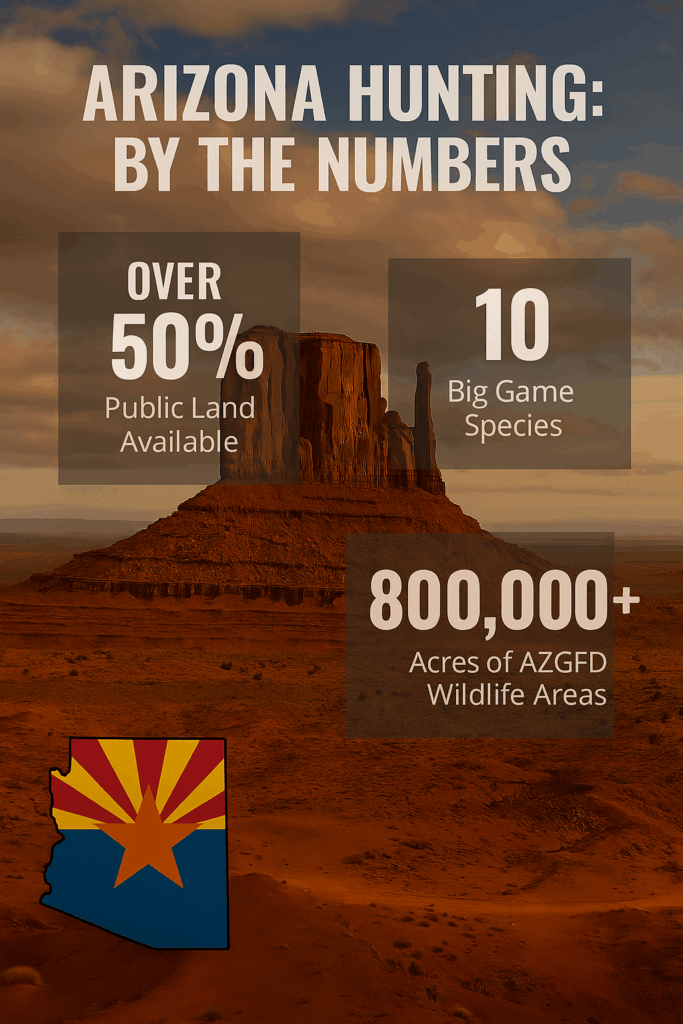
Quick Overview: 2025-2026 Season Dates, Arizona Hunting Licenses, and Regulations
Before heading afield, it’s vital to understand the framework governing hunting in Arizona. This includes securing the correct hunting license, being aware of season dates for your target particular species, and knowing the specific regulations for the game management units (GMUs) you plan to hunt wildlife in. The Arizona Game and Fish Department (AZGFD) is your primary resource for all official information.
Remember, all season dates and regulations are subject to change. Always consult the official Arizona Game and Fish Department website at https://www.azgfd.com/hunting/regulations/ and the current 2025-2026 Arizona Hunting Regulations booklet before each hunt.
Arizona Hunting Licenses and Permits
A valid hunting license is required for hunters 10 years of age and older to hunt wildlife in Arizona. Youth hunters (ages 10-17) can purchase a reduced-fee Youth Combination Hunt and Fish License. Several license types are available to suit different needs, from general hunting to combination hunt and fish options. For most big game species, a hunt permit tag, often obtained through the big game draw, is necessary in addition to your hunting license. Some species or hunts, particularly certain archery seasons or for species like mountain lion and small game, may utilize over-the-counter nonpermit-tags.
Here’s a look at some common Arizona hunting licenses and related fees for the 2025-2026 season. Note that fees are subject to change and non-resident fees are typically higher.
| License/Permit Type | Resident Fee | Non-Resident Fee | Notes |
|---|---|---|---|
| General Hunting License | $37 | $160 (Hunting License) | Allows take of small game, fur-bearing/predatory animals, upland game birds. |
| Combination Hunt & Fish License | $57 | $160 (Hunting License)† | Includes general hunting & statewide fishing. Non-resident version is hunting only, fishing is separate. |
| Youth Combo Hunt & Fish (Ages 10-17) | $5 | $5 | Includes migratory bird stamp. |
| Short-Term Combination Hunt & Fish | $15/day | $20/day | Valid for selected day(s). Not valid for big game draw. |
| Migratory Bird Stamp | $5 | $5 | Required for migratory birds (doves, ducks, geese, etc.). Included with Youth Combo. |
| Hunt Permit-Tags (Draw) | Fees generally include a non-refundable application fee ($13 for residents, $15 for non-residents). | ||
| Elk Tag | $148 | $665 | |
| Deer Tag | $58 | $315 | |
| Pronghorn Tag | $103 | $565 | |
| Javelina Tag | $38 | $115 | |
| Turkey Tag | $38 | $105 | |
| Bear Tag | $38 | $165 | |
| Bighorn Sheep Tag | $313 | $1,815 | |
| Bison (Bull/Any) Tag | $1,113 | $5,415 | |
| Sandhill Crane (3 tags) | $43 | $45 | |
| Nonpermit-Tags (Over-the-Counter) | |||
| Archery Deer Nonpermit-tag | $45 | $300 | Requires mandatory harvest reporting. |
| Mountain Lion Nonpermit-tag | $15 | $75 | Requires mandatory harvest reporting & physical inspection. |
| Bear Nonpermit-tag | $25 | $150 | Requires mandatory harvest reporting & physical inspection. |
| Archery Turkey Nonpermit-tag | $25 | $90 | |
| Javelina Nonpermit-tag | $25 | $100 | Available for specific hunts/areas per regulations. |
†The Non-Resident Combination Hunt & Fish license for $160 listed in the official regulations covers hunting only for non-residents; fishing privileges are separate for non-residents if they want a combo. The research document indicated $160 for a Non-Resident Hunting License Only.
Always verify current fees and application procedures with the AZGFD. The license fee structure is designed to support wildlife conservation efforts in the state. Many license dealers across Arizona can assist with purchases, or you can often buy them online via the Arizona Game and Fish Department portal. Some licenses offer license auto renewal.
Arizona Big Game Season Dates 2025-2026
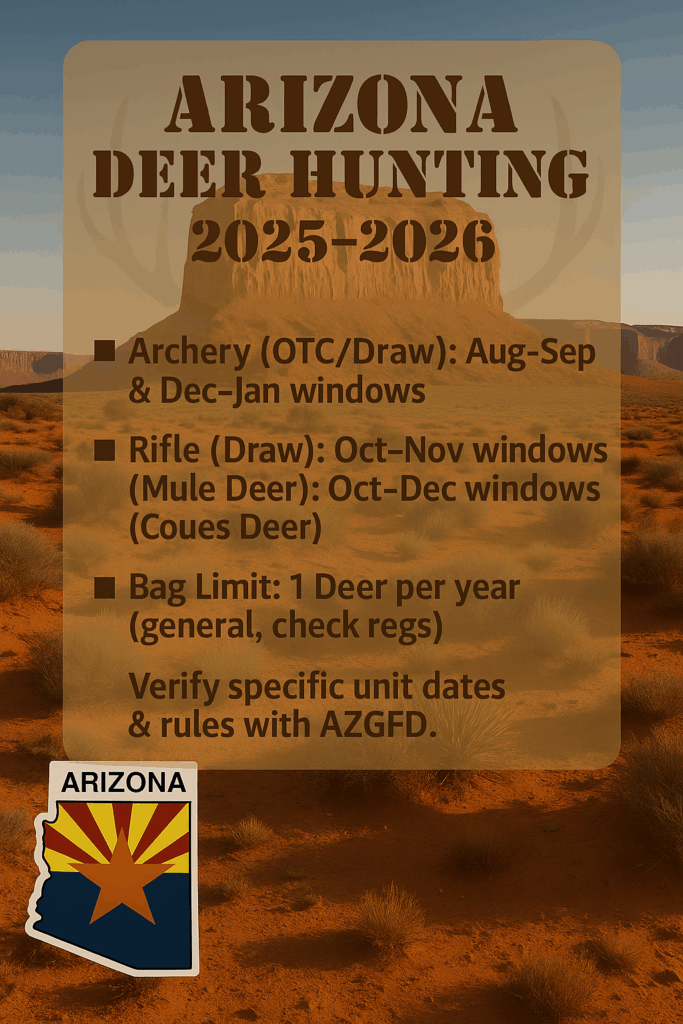
Big game hunting in Arizona is a major draw, with species like elk, deer, and pronghorn highly sought after. Most big game hunts are allocated through the AZGFD big game draw system, which uses bonus points to increase odds for long-term applicants. It’s crucial to check the Arizona hunting regulations for specific hunt permit tag applications deadlines, which typically occur in February for elk and pronghorn, June for deer and other fall species, and October for spring hunts.
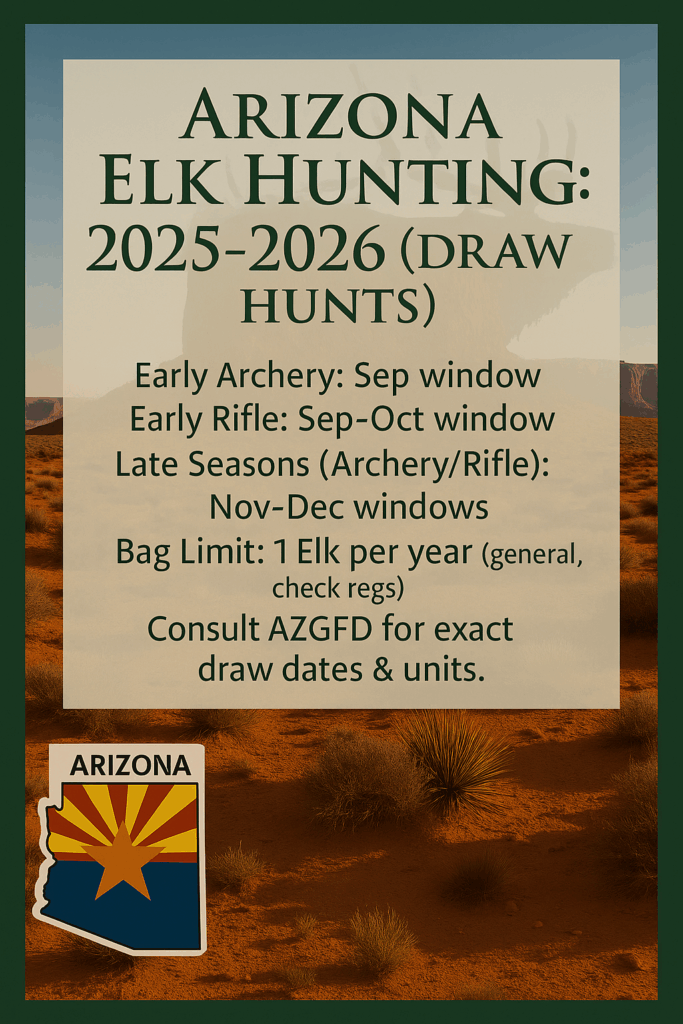
The following table summarizes the main season dates for Arizona’s most popular big game species for the 2025/26 hunting year. These dates are general and may vary by game management units (GMU) and weapon type. Some hunts require draw permits, while others may have Over-the-Counter (OTC) non permit tags. Always consult the official 2025-2026 Arizona Hunting Regulations from the Arizona Game and Fish Department for specific unit dates, weapon restrictions, and any updates.
| Species | Main Season Dates (2025/2026) | Notes/Weapon Types |
|---|---|---|
| Mule Deer | Oct 24 – Nov 2, 2025 | Early Rifle (draw) |
| Nov 21 – Nov 30, 2025 | Late Rifle (draw) | |
| Aug 22 – Sep 11, 2025 (General OTC) | Archery OTC (some units have harvest quotas, check status before hunting) | |
| Dec 12, 2025 – Jan 31, 2026 (General OTC) | Archery OTC (some units, check regulations and status) | |
| Coues Deer | Oct 24 – Oct 30, 2025 | 1st Rifle (draw) |
| Nov 7 – Nov 13, 2025 | 2nd Rifle (draw) | |
| Nov 28 – Dec 7, 2025 | 3rd Rifle (draw) | |
| Aug 22 – Sep 11, 2025 (General OTC) | Archery OTC (some units have harvest quotas for Coues deer, check status) | |
| Dec 12, 2025 – Jan 31, 2026 (General OTC) | Archery OTC (some units, check regulations and status) | |
| Elk | Sep 12 – 25, 2025 (Typical Early Archery) | Early Archery (draw) |
| Sep 26 – Oct 2, 2025 (Typical Early Firearm) | Early Firearm (draw) | |
| Nov 7 – 20 or Nov 14 – 27, 2025 (Typical Late Archery) | Late Archery (draw, dates vary by hunt) | |
| Nov 28 – Dec 5, 2025 (Typical Late Rifle) | Late Rifle (draw) | |
| Pronghorn Antelope | Aug 15 – 28, 2025 (approx.) | Archery (draw) |
| Aug 29 – Sept 7, 2025 (approx.) | General/Muzzleloader (draw) | |
| Javelina | Jan 1 – 30, 2026 (General Spring Season Example) | General Firearm (draw for Spring, some Fall OTC) Youth-Only hunts also available. |
| Jan 1 – 31, 2026 (Typical Archery Spring) | Archery (draw for Spring, some Fall OTC) | |
| Fall seasons also exist, typically Oct-Dec | H.A.M. (Handgun, Archery, Muzzleloader) seasons available (draw). | |
| Turkey (Merriam’s) | Oct 3 – 9, 2025 (approx.) | Fall General (Limited Weapon-Shotgun Shooting Shot, draw) |
| Apr 18 – May 1, 2026 (approx. Spring General) | Spring General (Limited Weapon-Shotgun Shooting Shot, draw) Archery-Only tags also available. | |
| Turkey (Gould’s) | Typically May, very limited draw | Spring General (Limited Weapon-Shotgun Shooting Shot, highly limited draw) |
| Black Bear | Aug 8 – Dec 31, 2025 (varies by unit & season segment) | General (some draw, some OTC with harvest quotas, pursuit-only seasons also exist) |
| Mountain Lion | Aug 22, 2025 – May 31, 2026 (General Season) | General (OTC tag, unit/zone harvest quotas apply, check status before hunt) Pursuit-only seasons also exist. |
| Bighorn Sheep | Oct 1 – Dec 31, 2025 (Desert & Rocky Mtn. Rams, season varies) | General (draw, once-in-a-lifetime for each subspecies with exceptions) Pioneer One-Horned Ram hunts available. |
| Bison | Aug 1 – Dec 31, 2025 (varies by hunt type/herd) | General (draw, once-in-a-lifetime with exceptions, specific herd hunts) Cow, Yearling, and Bull/Any hunts. |
H.A.M. = Handgun, Archery, Muzzleloader. OTC = Over-the-Counter. Dates for Elk and Pronghorn are based on typical patterns; the AZGFD sets these in a separate regulations booklet usually available in December/January.
Arizona Small Game Season Dates 2025-2026
Arizona also boasts excellent small game hunting opportunities, often with more generous seasons and bag limits. A general hunting license is typically required, with a valid stamp (State Migratory Bird Stamp) needed for migratory bird hunting.
The following table summarizes primary season windows for popular small game and upland game birds in Arizona for the 2025/26 year. These dates are general; always consult the official 2025-2026 Arizona Hunting Regulations from the game and fish department for specific dates, bag limits, and any unit-specific rules.
| Species | Main Season Dates (2025/2026) | Notes |
|---|---|---|
| Quail (Gambel’s, Scaled, California) | Oct 17, 2025 – Feb 8, 2026 | Statewide (bag limits apply, typically 15 aggregate) |
| Mearns’ Quail | Dec 5, 2025 – Feb 8, 2026 | Statewide (bag limits apply, typically 8 Mearns’) |
| Cottontail Rabbit | Jul 1, 2025 – Jun 30, 2026 | Statewide (bag limit typically 5 per day) |
| Dove (Mourning, White-winged) | Sep 1 – 15, 2025 (early season) | Statewide (bag limits apply, Migratory Bird Stamp required) |
| Nov 21, 2025 – Jan 5, 2026 (late season) | Statewide (bag limits apply, Migratory Bird Stamp required) | |
| Tree Squirrel (Abert’s, etc.) | Oct 3, 2025 – Jan 31, 2026 | Statewide (excluding specific areas, bag limit 5/day) |
| Chukar Partridge | Sep 1, 2025 – Feb 8, 2026 | Statewide (excluding NWRs, bag limit 5/day) |
| Dusky Grouse | Sep 1 – Nov 9, 2025 | Statewide (excluding NWRs & Unit 31, bag limit 3/day) |
| Waterfowl (Ducks, Geese) | Typically Oct – Jan, set by federal framework | Migratory Bird Stamp & Federal Duck Stamp required. |
| Sandhill Crane | Nov 21, 2025 – Jan 26, 2026 (various 3-day hunts) | Draw permit required (3 tags per permit) |
It’s important for hunters to be familiar with the specific Arizona revised statutes and Arizona game and fish commission rules that govern hunting activities. These are detailed in the official regulation booklets.
Arizona Deer Hunting
Deer hunting in Arizona is a cherished tradition, with opportunities for both mule deer and the elusive Coues deer (often called the “grey ghost”). The deer hunting seasons vary by species, weapon type, and GMU.
Arizona Mule Deer Hunting Seasons
Mule deer are widely distributed across Arizona, inhabiting diverse terrains from desert foothills to high mountain forests.
- Archery-Only Over-the-Counter (OTC): These seasons typically run from late August to mid-September, and again from mid-December through January in many units. Harvest quotas are in place for OTC archery deer hunts in specific units, and hunters must report their harvest within 48 hours. Non-resident OTC archery deer tags are capped.
- General Rifle (Draw): Most rifle hunts for antlered mule deer occur in October and November and require a hunt permit tag obtained through the big game draw. Some late-season rifle hunts may extend into December.
- Muzzleloader (Draw): Dedicated muzzleloader weapons seasons for deer are also available through the draw, often falling in October or November.
Arizona Coues Deer Hunting Seasons
The Coues deer, a small subspecies of whitetail, is primarily found in the desert mountains of southeastern Arizona. Hunting these wary animals is a true test of skill.
- Archery-Only Over-the-Counter (OTC): Similar to mule deer, archery OTC opportunities for Coues deer exist, generally aligning with the August-September and December-January archery deer seasons. Unit-specific harvest quotas and reporting requirements apply.
- General Rifle (Draw): Rifle hunts for Coues deer are allocated via the draw and typically occur in October, November, and some hunts extend into December. There are often multiple rifle seasons (e.g., 1st, 2nd, 3rd rifle) for Coues deer in various GMUs.
- Muzzleloader (Draw): Muzzleloader opportunities for Coues deer are also available through the draw.
A single deer tag allows a hunter to take one deer per calendar year, with some exceptions detailed in R12-4-120. Always check the latest Arizona hunting regulations for specific deer hunts and open units.
Arizona Elk Hunting
Arizona is renowned for its world-class elk hunting, offering chances at trophy bulls. Due to high demand, elk tags are awarded through the competitive AZGFD big game draw.
- Early Archery (Draw): Typically starts in mid-September. This is a popular hunt offering the chance to pursue bugling bulls.
- Early Firearm (Draw): Generally follows the early archery season, often in late September to early October.
- Late Archery (Draw): These hunts usually occur in November, with varying dates depending on the specific hunt code.
- Late Rifle (Draw): Late rifle elk seasons are often in late November to early December.
Elk season dates and permit numbers are meticulously managed by the Arizona Game and Fish Department to ensure healthy populations and quality hunting experiences.
Arizona Pronghorn Antelope Hunting
Pronghorn, the fastest land animals in North America, inhabit Arizona’s open grasslands. Hunting them requires skill in spotting and stalking.
- Archery (Draw): Archery pronghorn seasons usually take place in late August to early September.
- General/Muzzleloader (Draw): Firearm and muzzleloader weapons seasons for pronghorn are typically in September or October.
Like elk, pronghorn tags are allocated through the draw system.
Arizona Javelina Hunting
Javelina, also known as collared peccary, are a popular and unique desert species in Arizona.
- General Firearm (Draw): Spring javelina hunts using general firearms are a popular choice, typically occurring in January and February.
- Archery-Only (Draw/OTC): Spring archery deer and javelina seasons often overlap. Some spring javelina hunts are draw-only, while Fall archery javelina may have OTC opportunities. The new regulations list an “ARCHERY-ONLY NONPERMIT-TAG REQUIRED JAVELINA” season from Jan 1 – Dec 31, 2025, in specific units.
- H.A.M. (Handgun, Archery, Muzzleloader) (Draw): These specialized weapon hunts also occur in the spring, offering a different challenge.
- Youth-Only Hunts: Arizona provides excellent Youth-Only javelina hunting opportunities, often with more favorable season dates.
Hunters can take up to two javelina per calendar year, provided they have the appropriate tags for different hunt numbers/areas.
Arizona Turkey Hunting
Arizona offers hunts for two subspecies of wild turkey: the Merriam’s and the Gould’s.
- Merriam’s Turkey:
- Fall General (Draw): Limited Weapon-Shotgun Shooting Shot hunts are typically in October.
- Spring General (Draw): Limited Weapon-Shotgun Shooting Shot hunts usually occur from mid-April to early May.
- Archery-Only (OTC/Draw): Archery-only nonpermit tags for fall turkey are available for many units. Some archery spring turkey hunts might be draw.
- Gould’s Turkey: Hunts for the Gould’s turkey are very limited, available only through the draw, typically in the spring (May).
The bag limit is generally one turkey per calendar year, with exceptions outlined in the regulations.
Arizona Black Bear Hunting
Black bear hunting in Arizona’s mountain ranges can be a challenging and rewarding experience.
- General Seasons (Draw/OTC): Bear seasons occur in both spring (not listed in current PDF) and fall (typically August through December). Some hunts are draw-only, while others are OTC with female harvest quotas. Once a unit’s female harvest limit is met, that unit closes for the season. Hunters MUST check the bear hotline or AZGFD website before each day of hunting to confirm if their unit is open.
- Mandatory Reporting and Inspection: All harvested bears must be reported within 48 hours, and the skull and hide with attached proof of sex must be presented to an AZGFD employee for inspection within 10 days.
Arizona Mountain Lion Hunting
Mountain lion hunting is open year-round in most units in Arizona, providing a unique opportunity for dedicated hunters.
- General Season (OTC Tag): Hunters need a valid hunting license and an OTC mountain lion tag. Hunting is managed by zone-specific harvest thresholds. Once a zone’s harvest threshold is met, that zone closes. Hunters MUST check the lion hotline or AZGFD website before each day of hunting.
- Mandatory Reporting and Inspection: All harvested mountain lions must be reported within 48 hours, and the skull and hide with attached proof of sex must be presented for inspection within 10 days.
- Pursuit-Only Season: A pursuit-only season also exists, allowing the use of dogs to pursue lions, but not kill or capture them. A pursuit-only permit or a valid, unused mountain lion tag is required.
Arizona Small Game Hunting
Beyond the draw for big game animals, Arizona provides abundant opportunities for small game and upland game birds. These hunts often have longer seasons and more accessible tags.
Quail Hunting (Gambel’s, Scaled, California, Mearns’)
Arizona is a top quail hunting destination.
- Gambel’s, Scaled, and California Quail: The season typically runs from mid-October to early February. The combined daily bag limit is usually 15 birds.
- Mearns’ Quail: This unique, tight-holding bird has a later season, generally from early December to early February. The Mearns’ daily bag limit is typically 8 birds, which counts towards the aggregate quail limit.
Cottontail Rabbit Hunting
Cottontail rabbit season is very generous, running from July 1 to June 30 of the following year. The daily bag limit is usually 5 rabbits.
Dove Hunting (Mourning, White-winged)
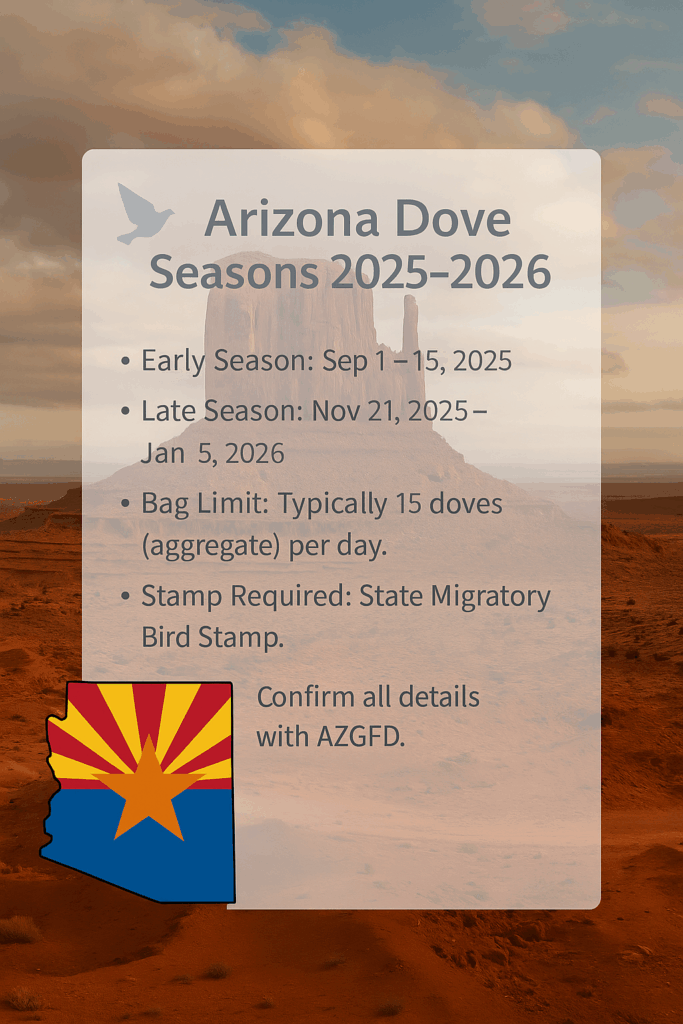
Dove hunting is popular, especially the early season opener. A migratory bird stamp is required.
- Early Season: September 1 – 15.
- Late Season: Typically runs from late November to early January.
Other Small Game
- Tree Squirrels (Abert’s, etc.): Season generally from early October to late January.
- Chukar Partridge: Season from early September to early February.
- Dusky Grouse: Season from early September to early November.
- Waterfowl (Ducks & Geese): Seasons are set by federal frameworks, usually October through January. A state migratory bird stamp and a federal duck stamp are required.
- Sandhill Crane: These hunts are by draw permit only, with specific 3-day hunt periods between November and January.
Hunter Education and Safety in Arizona
The Arizona Game and Fish Department emphasizes safe and ethical hunting. A hunter education course is mandatory for youth aged 10 to 13 to hunt big game. While not required for older hunters, these courses provide valuable knowledge on safety, ethics, wildlife identification, and survival skills. Online courses and field day options are available. Completing an AZGFD-approved hunter education course (or the “Ethically Hunting Arizona” online course for a fee) can also provide a lifetime bonus point for the big game draw.
Key safety and ethical considerations include:
- Treating every firearm as if it is loaded.
- Being sure of your target and what lies beyond it.
- Respecting landowners and property.
- Making every effort to recover harvested game.
- Understanding and adhering to fair chase principles.
- Properly caring for and disposing of carcasses.
- Reporting wildlife violations to Operation Game Thief (1-800-352-0700).
Arizona does not require hunter orange clothing for big game hunting. However, it is always a good safety practice, especially when hunting in groups or areas with other hunters. The use of trail cameras for the purpose of taking or aiding in the take of wildlife is prohibited.
Where to Hunt in Arizona
Arizona offers vast expanses of public land, providing diverse hunting opportunities. Over 50% of the state is public, managed by agencies like the Bureau of Land Management (BLM) and the U.S. Forest Service. The AZGFD also manages Wildlife Management Areas (WMAs) for habitat and public access. State Trust Lands are generally accessible for hunting with a valid hunting license.
When planning your hunt, understanding land ownership and access rules for your chosen game management units is vital. For those seeking different experiences:
- Public Hunting Land: Discover millions of acres of accessible public land across Arizona. Hunting Locator offers tools and resources to help you explore public hunting land in Arizona, making it easier to find your next spot.
- Private Hunting Leases: For exclusive access, consider leasing private land. Hunting Locator is a premier platform for finding Arizona hunting leases, connecting hunters directly with landowners.
- Hunting Land for Sale: If you’re looking to invest in your own piece of hunting paradise, browse listings for hunting land for sale in Arizona through Hunting Locator, which aggregates properties tailored for hunters.
- Guided Hunts and Outfitters: To enhance your chances of success or explore new areas, consider hiring a professional. Hunting Locator’s directory can help you find reputable Arizona hunting outfitters and guides for various species.
Always respect private property rights and obtain permission before entering private land. The AZGFD encourages positive landowner-hunter relations through various programs.
Special Hunting Opportunities in Arizona
Arizona offers several unique hunting opportunities:
- Youth Hunts: The AZGFD provides numerous “Youth-Only” hunts for various species, often with better season dates and higher draw odds, encouraging the next generation of hunters. A youth combination hunt and fish license is very affordable. Youth ages 10-13 must complete a hunter education course to hunt big game.
- CHAMP Hunts: The Challenged Hunter Access/Mobility Permit (CHAMP) program provides special accommodations and hunting opportunities for hunters with disabilities.
- Pioneer Hunts: Residents aged 70 or older who have lived in Arizona for at least 25 consecutive years can obtain a Pioneer license, which offers reduced-cost or complimentary hunting and fishing privileges, including special draw permits for species like one-horned bighorn sheep.
- Commissioners’ Tags/Special Big Game Tags: A very limited number of special big game tags are awarded to wildlife conservation organizations to be auctioned or raffled, often allowing for extended seasons and broad unit access.
- Over-the-Counter (OTC) Nonpermit-Tags: While many big game hunts are draw-only, Arizona offers OTC tags for archery deer (with unit quotas and reporting requirements), mountain lion, and some bear and javelina hunts. This provides opportunities for hunters who may not have drawn a permit.
It’s also worth noting that Arizona is monitoring for Chronic Wasting Disease (CWD) and encourages hunters, especially in units near neighboring states with CWD, to submit heads of harvested deer and elk for testing. Strict regulations apply to the importation of cervid parts from out-of-state to prevent the introduction of CWD.
FAQ – Arizona Hunting
How do I get an Arizona hunting license?
You can purchase an Arizona hunting license online through the AZGFD portal (azgfd.gov), at any department office, or from licensed license dealers statewide. You’ll need to determine if you qualify for a resident license or need a non-resident license. For many big game hunts, you’ll also need to apply for a hunt permit tag through the draw.
What is the Arizona Big Game Draw?
The Arizona Big Game Draw is a lottery system used by the Arizona Game and Fish Department to allocate a limited number of hunt permit tags for species like elk, deer, pronghorn, and bighorn sheep. Applicants can earn bonus points each year they are unsuccessful, increasing their chances in future draws. Deadlines for hunt permit tag applications are critical.
Can I hunt on private land in Arizona?
Yes, you can hunt on private land in Arizona, but you MUST have explicit permission from the landowner before entering. Trespassing is illegal. Utilizing services like Hunting Locator can help you find landowners offering leases.
Are there over-the-counter hunting opportunities in Arizona?
Yes, Arizona offers several Over-the-Counter (OTC) or non permit tags. These primarily include archery deer hunts (subject to unit harvest quotas and mandatory reporting), mountain lion tags, some black bear tags (also with quotas), and some javelina tags. Most small game can also be hunted with an OTC license and applicable stamps.
What hunter education is required in Arizona?
A hunter education course approved by the Arizona Game and Fish Department is mandatory for youth ages 10 to 13 to hunt big game animals in Arizona. It is highly recommended for all new hunters to learn about safety, ethics, and wildlife management.
Where can I find the official Arizona hunting regulations?
The official Arizona hunting regulations are published annually by the Arizona Game and Fish Department. You can find them on the AZGFD website at https://www.azgfd.com/hunting/regulations/ and the 2025-2026 PDF is available at https://azgfd-portal-wordpress-pantheon.s3.us-west-2.amazonaws.com/wp-content/uploads/2025/05/15150829/2025-26-Arizona-Hunting-Regulations_250515.pdf.
What do I do if I witness a wildlife violation?
If you witness poaching or any other wildlife violation, report it to the Arizona Game and Fish Department’s Operation Game Thief hotline at 1-800-352-0700. You can remain anonymous and may be eligible for a reward.
More Resources
Understanding all aspects of hunting, from regulations to landowner agreements, is key to a positive experience. If you’re considering leasing land for hunting, it’s important to have a clear understanding of the terms. Learn more about what goes into a Hunting Lease Agreement to ensure a fair and successful arrangement for both hunters and landowners. This resource can help you navigate the essentials of leasing private property for your hunting adventures.
The Final Shot
Arizona’s diverse habitats and abundant wildlife provide a rich tapestry of hunting experiences. From the thrill of a big game draw to the accessible enjoyment of small game seasons, the Grand Canyon State has something for every properly licensed person. By staying informed on the Arizona hunting regulations, practicing safe and ethical hunting, and supporting wildlife conservation, you can play a part in preserving this incredible heritage. Plan your Arizona game hunt today and discover the adventure that awaits.


Hi Joshua, thanks for putting together an overview of the hunting regs for the 25-26 season. One quick correction regarding the deer hunts, the 2nd rifle draw hunt for Coues deer is from Nov 7-16th, not the 13th.