Wyoming holds the crown for having the largest pronghorn population anywhere. This means success rates here consistently rank among the best in the country. From early archery antelope hunts near waterholes to classic rifle seasons amid golden sage, every hunter can find a perfect spot.
Here’s the ground we’ll cover in this post:
- How the 2025 pronghorn season dates break down
- Getting your Wyoming hunting licenses and tags
- Public land vs. private land: where to hunt antelope
- Effective tips for scouting, stalking, and harvesting
- Planning your entire hunt for a truly quality hunt experience
Let’s cover everything you need for a pronghorn adventure, starting with quick facts that’ll help you plan your Wyoming antelope hunt this season.
Antelope Hunting in Wyoming Quick Reference
Wyoming antelope hunting continues to lure sportsmen and women from around the globe. Below is a concise table that outlines crucial points about season dates, licenses, bag limits, and other must-know details for 2025.
| Category | Key Info (2025) |
|---|---|
| Application Deadline | January 2 – June 2 (licenses must be applied for online) |
| Draw Results Posted | June 19 |
| Archery Antelope Season | Typically mid-August – September 30 (exact dates vary by hunt areas) |
| Rifle Seasons | Commonly early October – late October/early November (dates differ by area) |
| Bag Limit | One antelope per license (buck or doe/fawn) unless additional doe/fawn tags are offered |
| License Costs | Resident ~$37; Non-Resident ~$326 plus conservation stamp |
| Hunter Education | Required if born after Jan 1, 1966 (or hunt with a qualified mentor) |
| Preference Points | Purchase July 1 – October 31 (increases odds in high-demand areas) |
| Land Access | Public (BLM, state trust) and private ranches; permission required on private land |
| Wyoming Game & Fish Contact | wgfd.wyo.gov (application info, regs, leftover opportunities) |
Wyoming antelope hunting is regulated through a limited quota system. Hunters should review individual hunt areas for specific dates, leftover tag availability, and public land access details.
For other species and more information, check out our guide to Hunting In Wyoming for an encompassing look at regulations, species highlights, and expert tips, ensuring you’re fully prepared before heading into the field.
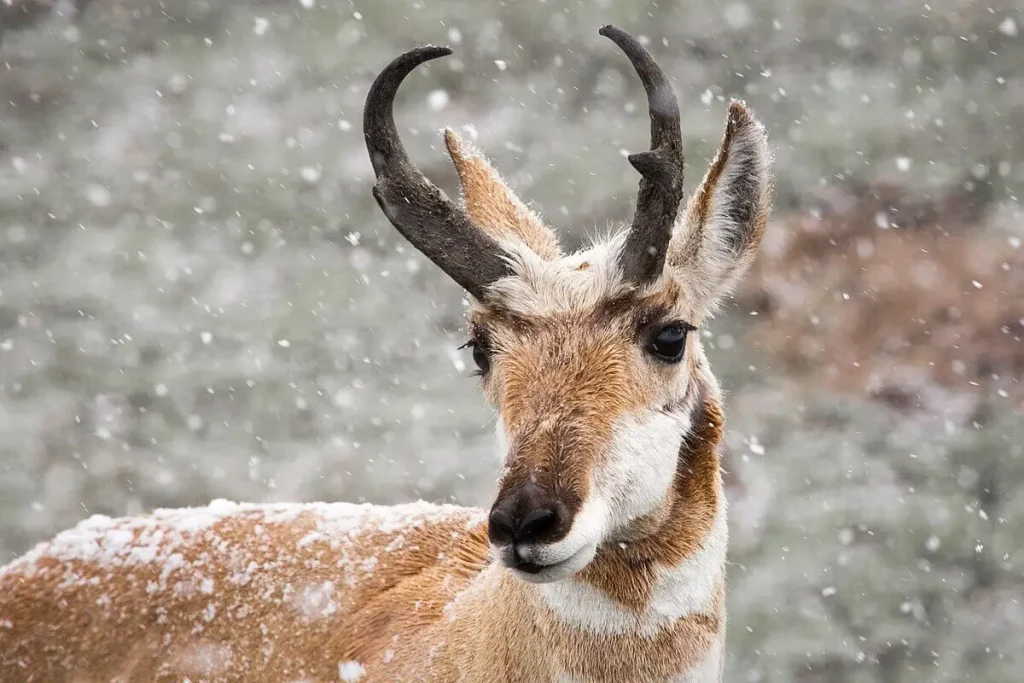
When Is Wyoming Antelope Hunting Season?
Antelope hunting in Wyoming kicks off with archery equipment in mid-August and runs through the end of September for archers. During these archery antelope hunts, many bowhunters stake out waterholes or employ spot-and-stalk tactics in rolling terrain.
Meanwhile, rifle seasons typically open in early October and conclude by late October or early November. The exact dates vary depending on your chosen hunt area (or “unit”), so it’s essential to verify current regulations from the Wyoming Game and Fish Department. Many areas in eastern Wyoming open at different times than those in central or southwestern parts of the state.
Key Points
- Archery season often overlaps the pronghorn rut, making bucks more active.
- Rifle seasons align with mild autumn conditions, offering comfortable daytime temperatures and plenty of game movement.
- Some areas feature leftover or reduced-price doe/fawn tags, giving additional opportunity for a great hunt or a chance to fill the freezer.
Plan your hunts around these windows. Note that antelope are highly visible creatures, meaning well-timed hunts can deliver outstanding success rates.
Want to combine species in a single hunt? Read Wyoming Elk Hunting if you plan to expand your big game pursuits, featuring season details, tips, and trophy elk insights across the state.
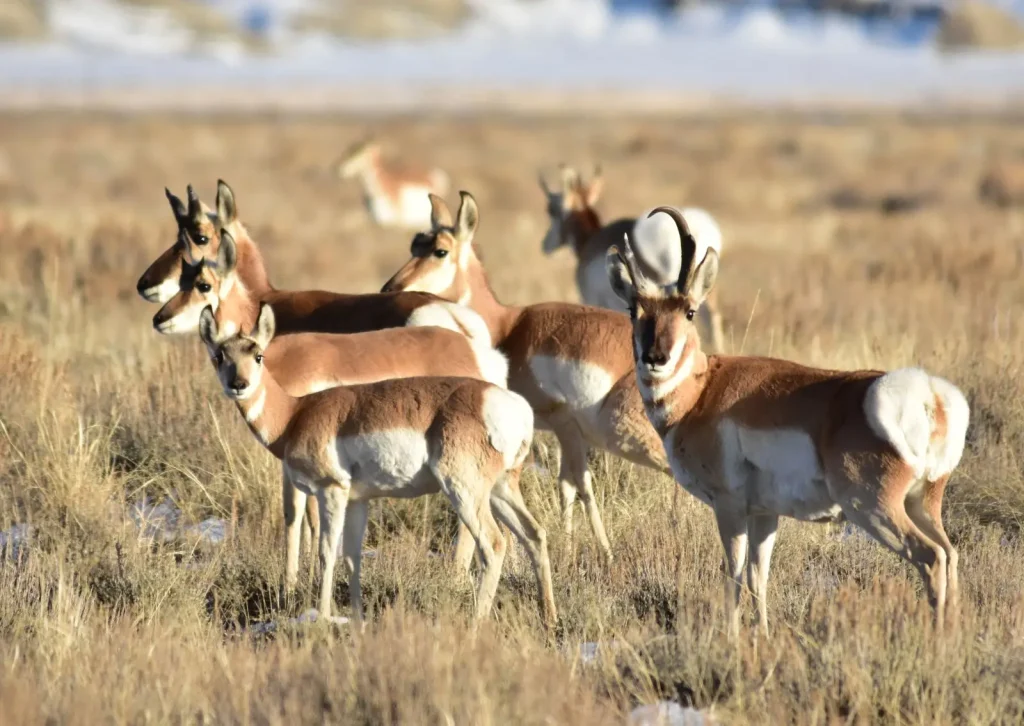
Wyoming Hunting License for Antelope
Hunting regulations in Wyoming can seem complex, but once you understand the process, it’s surprisingly straightforward. Here is how to secure the licenses and permits you need.
Wyoming Hunting Licenses
Every hunter—resident or non-resident—must hold a valid Wyoming hunting license for pronghorn. Wyoming antelope licenses are limited quota, which means you must apply by the stated application deadline (June 2, 2025). The Wyoming Game and Fish Department divides tags into 80% for residents and 20% for non-residents.
- Resident License: Lower cost, around $37.
- Non-Resident License: Approximately $326.
- Conservation Stamp: Required for nearly all hunters, costs $21.50.
Many hunters also add elk or mule deer licenses in the same year. Just remember that each big game species (deer, elk, antelope) has its own application process and deadlines.
Antelope Hunting Permits
“Antelope hunting permits” or “tags” refer to the specific license for pronghorn in each unit. Under Wyoming’s limited quota system, each unit has a set number of buck and doe/fawn licenses. Hunters apply for a particular area and type of license (e.g., Type 1 for rifle, Type 9 for archery-only, etc.).
- Deadline: January 2–June 2, 2025.
- Draw Results: Posted June 19, 2025.
- Preference Points: Points can be purchased July 1–October 31 if you weren’t successful in the draw or want to bolster future odds.
If you miss out in the initial draw, keep an eye out for leftover licenses. Some hunt areas may have leftover doe/fawn tags or less popular units.
Hunter Education in Wyoming
All hunters born after January 1, 1966, must hold a hunter education certificate or enter the state’s Hunter Mentor Program. Wyoming law aims to ensure safe, ethical, and responsible harvest of its wildlife resources.
- Certification: Must be from a Wyoming Game and Fish–approved course or a recognized equivalent from another state/province.
- Hunter Mentor Program: Allows you to hunt under direct supervision if you haven’t completed hunter education.
Having a valid hunter education certificate is a critical consideration before you apply for your license. Double-check your documentation and ensure you’re set to go.
Where to Hunt Antelope in Wyoming
With roughly half the world’s pronghorn population, Wyoming offers a vast assortment of hunt areas, from high-desert basins to rolling plains near the Bighorn Mountains. Understanding which region suits your goals—trophy, draw odds, or public land access—helps narrow your options.
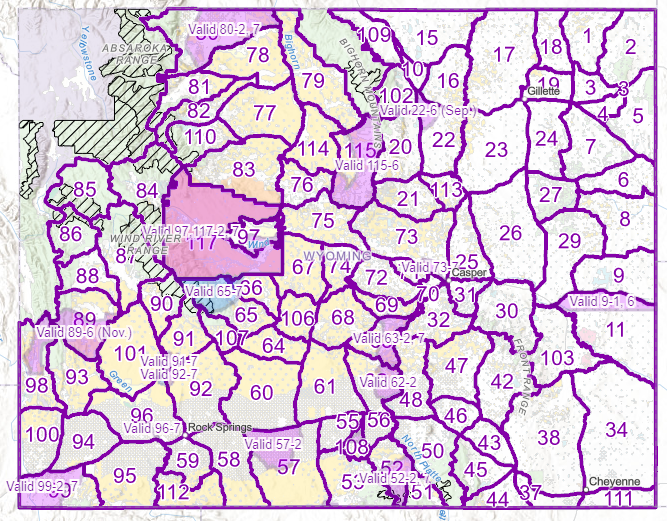
Wyoming Public Land Hunting
Public hunting opportunities on Bureau of Land Management (BLM) acres or state trust land are plentiful. If you’re looking to hunt antelope in wide-open spaces, many units across central and eastern Wyoming feature significant tracts of public land.
Popular Public Hunting Spots
- Areas near Casper (central region)
- Southeastern units around Laramie and Cheyenne
- Portions of the Red Desert region
Always consult Wyoming’s Hunt Planner maps to locate accessible parcels and confirm property boundaries. AccessYes programs and Walk-In Areas are another excellent resource that the state provides for public hunting.
Browse our Wyoming public hunting land page to locate publicly accessible areas, ideal for hunters seeking a do-it-yourself approach without leasing private land or committing to a guided operation.
Wyoming Antelope Hunting on Private Land
Many large ranches in Wyoming hold thriving pronghorn herds. If you want a more controlled experience, consider private land access via a guided operation or a direct lease. Some landowner tags or landowner permission slips exist, but they require contacting ranch owners well ahead of the season.
- Advantages: Lower hunting pressure, a quality hunt environment, potentially better trophy animals.
- Challenges: Negotiating fees, obtaining permission, ensuring the property fits your hunting style.
Private lands in eastern Wyoming and southwestern corners can host abundant pronghorn. Just be sure to handle all permission or lease contracts in a professional, upfront manner to preserve a good business relationship.
Explore Wyoming hunting leases for an extensive selection of in-state leases, ensuring private land and prime antelope habitat that caters to a variety of hunting preferences. Consultour article all about a Hunting Lease Agreement to understand contract essentials when renting private land, ensuring you finalize a secure deal for your next Wyoming pronghorn adventure.
Check out our Wyoming land for sale page to discover specialized listings of scenic acreage, perfect for those wanting to purchase property and secure their own piece of pronghorn-rich terrain.
Wyoming Antelope Guided Hunts and Outfitters
For hunters who want a streamlined experience—especially if traveling from out of state—guide service providers can offer accommodations, meals, trophy care, and local expertise. Outfitters are often familiar with landowner arrangements, so you can skip the guesswork of finding access.
Recommended Considerations
- Look for an operation with solid success rates and ethical practices.
- Ask about lodging setup—some guides run tent camps on thousands of acres of public land, while others operate comfortable ranch house rooms.
- Verify the cost structure, including transportation during the hunt and any extras like game processing or head/trophy prep.
Guided hunts can be a significant investment, but they often yield a memorable experience with minimal guesswork.
Wyoming Antelope Hunting Strategies
Pronghorn antelope have razor-sharp vision, incredible speed, and a knack for picking out threats. A thoughtful hunting plan will increase your odds of success, whether you’re stalking with archery equipment or glassing for a monster buck during rifle seasons.
Scouting Before Your Hunt
Scouting helps you locate herds, identify travel corridors, and plan your approach to access.
- Check Waterholes: In hot, dry weeks, antelope frequent water sources.
- Use Optics: Spot herds from ridges or vantage points. Scout a few days before the opener for real-time intel.
- Cover & Terrain: Pronghorn sometimes bed in shallow depressions or behind small rises. Understanding how to stalk effectively is crucial.
During Your Hunt
A methodical, low-profile approach sets you up for a clean shot.
- Spot-and-Stalk: Plan how to use sagebrush, draws, or any slight ground contour as cover. Move slowly, sometimes crawling.
- Archery Antelope Tactics: Some hunters set up ground blinds near water. Others rely on decoys or careful crosswind approaches to shoot within bow range.
- Rifle Seasons Strategy: Drive or glass from roads, locate pronghorn, then stalk from a distance. Antelope can quickly spot movement, so remain patient.
Keep an eye on the wind direction to avoid detection. Antelope often spook if they catch your scent.
After Your Hunt
Once you harvest an antelope, handle field dressing quickly and properly.
- Preserve the Meat: Wyoming’s autumn weather can vary, but midday temps can be warm. Field dress and cool the animal as soon as possible.
- Evidence of Sex: Remember Wyoming regulations require you to retain proof of sex with the carcass if you’ve drawn a buck tag.
- Reporting & Tagging: Complete your license tag, attach it to the head or hide, and comply with any online or phone-based check requirements in your hunt area.
Organize your transportation plan early. Know where local processors are located, especially if you’re traveling a week or more away from home. The same goes for taxidermy if you’re seeking a trophy mount.
FAQ
How much does it cost to antelope hunt in Wyoming?
Expect to pay around $326 for a non-resident antelope license, plus a $21.50 conservation stamp. Residents generally pay $37. Additional costs, like preference points, lodging, or an outfitter’s fee, can push your total higher. All combined, a DIY hunt on public land may stay budget-friendly, but guided hunts on private ranches tend to cost more.
Can you get over the counter antelope tags in Wyoming?
No. Wyoming antelope tags fall under a limited quota system. All pronghorn licenses require you to apply in the draw by the application deadline of June 2. Some areas do offer leftover tags if quotas aren’t filled. Grab those quickly when they appear, as they are often in less sought-after areas but still present a solid opportunity.
How hard is it to get a pronghorn tag in Wyoming?
Difficulty varies by area. Popular trophy units often demand multiple preference points, while areas with more licenses or fewer applicants can be drawn with fewer (or no) points. Non-residents face stiffer odds than residents due to Wyoming allocating 80% of tags to resident hunters and 20% to non-residents.
Are Wyoming antelopes good to eat?
Yes. Wyoming antelope (pronghorn) is known for lean, mild-tasting meat. Proper field care is critical. Quickly cooling the carcass after harvest reduces “gamey” flavors. Many hunters consider pronghorn roasts, steaks, and burger a fine table fare if the animal is handled correctly from field to freezer.
Where is the best place to hunt antelope in Wyoming?
You’ll find pronghorn in every corner of the state, but regions like central Wyoming around Casper and eastern Wyoming near Douglas are especially known for high populations. The Red Desert in southwestern Wyoming is also popular for trophy potential. Ultimately, the “best” place depends on your preferences for public access, trophy goals, and drawing odds.
Who is the best outfitter for Wyoming antelope?
Several guide service operations offer successful pronghorn hunts, each catering to different styles and budgets. Thunder Ridge Outfitters, Tyler Sims Outfitting, and Pronghorn Guide Service often come up in recommendations for quality hunts. Evaluate success rates, accommodations, and references to find the operation that fits your needs.
Can a non-resident hunt antelope in Wyoming without a guide?
Absolutely. Non-residents can hunt public land pronghorn independently, provided they secure a license through the Wyoming Game and Fish draw. Though a guide isn’t mandatory, many choose outfitted hunts for local insight, private ranch access, and simplified logistics. Ultimately, it’s the hunter’s decision based on skill, budget, and personal preference.
The Final Shot
Wyoming antelope hunting delivers thrilling stalks, magnificent vistas, and consistent pronghorn encounters. Once you’ve chosen your hunt area, completed the application process, and collected essential equipment, you’re one step closer to bringing home a prized trophy—and delicious table fare. Good luck planning your next pronghorn adventure in the Equality State.


Thank you Joshua, this site is very helpful as I’m planning a Wyoming hunt is 2026.
Blessings,
Mick
Hi Josh, I’m a longtime deer and elk hunter from Washington, wanting to hunt antelope in Wyoming. I came across your site and found it very helpful and encouraging. I’m old (70)but in pretty decent shape for a semi-retired guy so don’t mind putting in a few miles. Anyway, just wanted to give you a thumbs up for your website as I move forward in planning a pronghorn adventure.