Professional outfitters report archery season opportunity rates near 100%, which explains why hunters from across the country are booking Arizona bear hunts.
Here’s the thing about Arizona bear hunting: it’s accessible, but the details matter. Miss a regulation update and you might drive six hours to a closed unit. Forget about harvest reporting and you’re looking at violations. This guide cuts through the noise and gives you exactly what you need to plan a successful 2026 bear hunt.
What you’ll find here:
- Current 2026 season dates and bag limits (spoiler: it’s one bear per year)
- Real costs for residents and non-residents, no hidden fees
- Best hunting locations plus land access solutions that actually work
Ready to start planning? Let’s dig into the details that matter.
Quick Overview of Arizona Bear Hunting
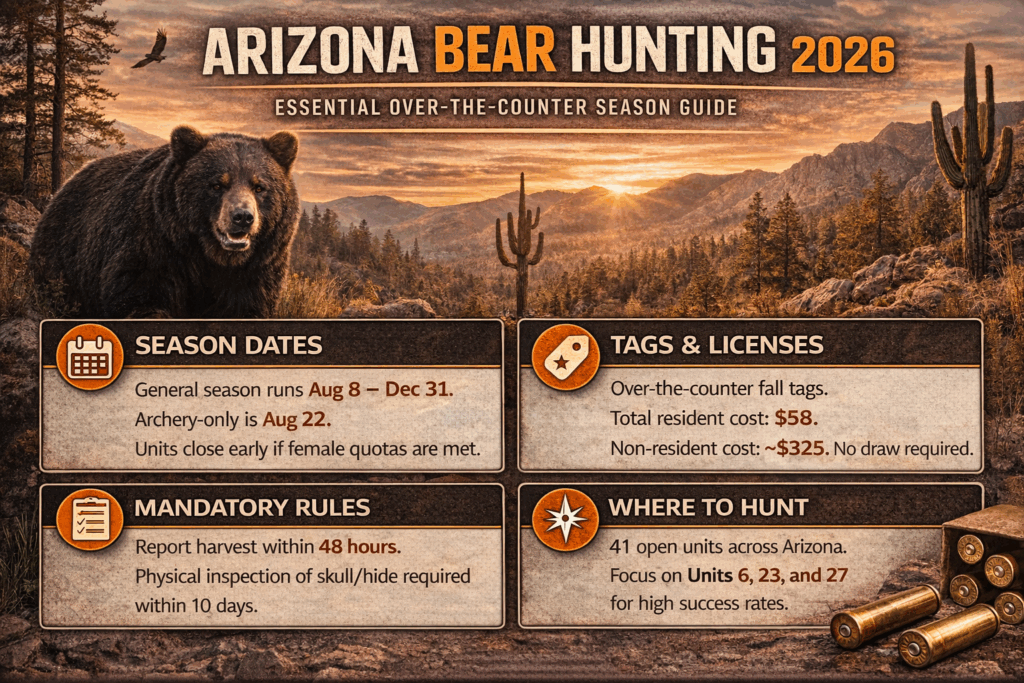
Arizona keeps bear hunting straightforward. One species, clear seasons, over-the-counter tags. Here’s what you need to know at a glance.
| Element | Details |
|---|---|
| Species | Black Bear (Arizona’s only huntable bear species) |
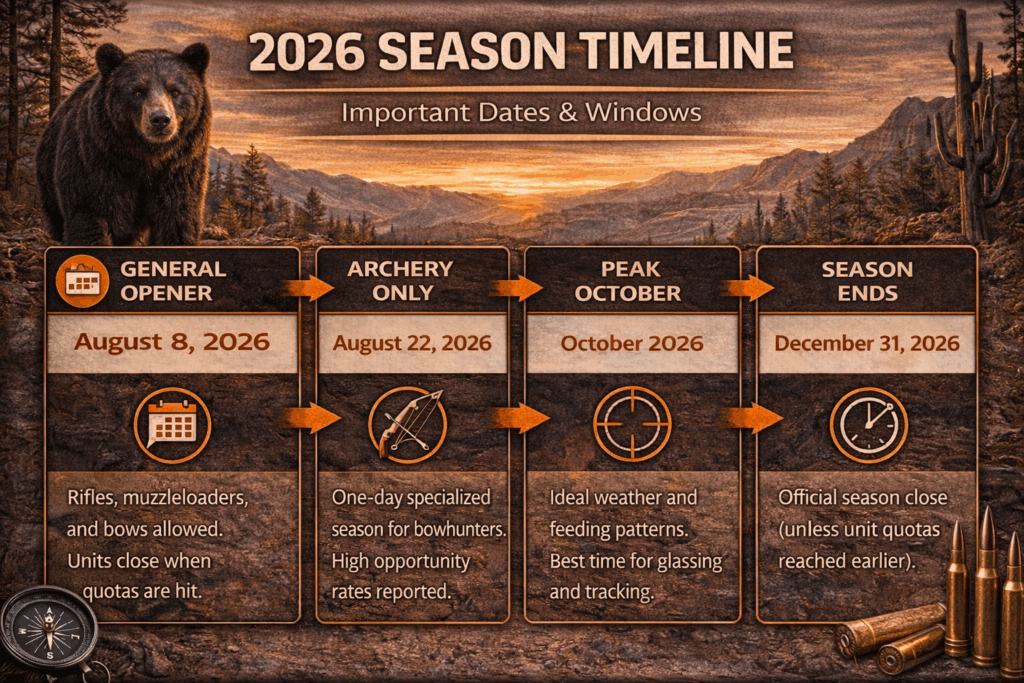
| Archery-Only Season | August 22, 2026 |
| General Season | August 8 – December 31, 2026 |
| Bag Limit | 1 bear per hunter per calendar year |
| Tag Cost (Resident) | $38 |
| Tag Cost (Non-Resident) | $165.00 |
| Hunting License (Resident) | $20 (valid 365 days) |
| Hunting License (Non-Resident) | ~$160 (valid 365 days) |
| Open Units | 41 units statewide |
| Key Regulation | Units close when female harvest quota is met |
Before you head out, make sure you’ve got these basics covered:
- Valid Arizona hunting license (works for residents or non-residents)
- Arizona bear tag (no draw needed for fall seasons)
- Hunter education certification (Arizona accepts any state’s certification)
- Mandatory harvest reporting within 48 hours at 1-800-970-BEAR
- Physical inspection requirement of skull and hide within 10 days
Skip any of these and your hunt’s over before it starts.
Arizona Bear Hunting Seasons
Arizona splits bear hunting into archery-only and general seasons, each with different weapon restrictions. Here’s the catch: seasons can close early when female harvest quotas get hit in specific units. That means you need to stay on top of unit status throughout the season, not just at the beginning.
Archery-Only Season
Mark your calendar: August 22, 2026. That’s it, one day for archery-only season. Bows and crossbows only. Professional outfitters report opportunity rates near 100% during archery season, which makes sense when you think about it. Less hunting pressure, bears haven’t been spooked by rifle hunters yet, and you’re dealing with more predictable bear behavior.
The single-day format means you can’t mess around. You need to know exactly where you’re hunting, have your spots scouted, and be ready to execute. But if you’re a bowhunter who likes high-percentage opportunities, this is your season.
General Season
General season runs August 8 through December 31, 2026. Now you can use centerfire rifles, handguns, muzzleloaders, bows, and crossbows. Professional outfitters report about 75% opportunity rates during general season, with August and October being the most productive months for actually connecting with bears.
August hunting means hot weather but active bears around water sources. You’ll have longer days for spot-and-stalk hunting, but you better be ready for the heat. October hunting? That’s the sweet spot. Cooler weather, bears feeding hard before denning, and ideal conditions for both glassing and tracking.
Here’s what you need to watch out for: when the female harvest limit gets hit, that unit closes at sundown the Wednesday right after. You don’t want to be the guy who drives eight hours to hunt a closed unit. Check AZGFD’s bear status hotline regularly.
Spring Season Note
Arizona does offer limited spring bear hunting from late March through late April, but that’s through the draw system. This guide focuses on fall over-the-counter seasons since that’s where most hunters have realistic opportunities. Want the complete picture of Arizona hunting seasons? Check out our Arizona Hunting Seasons overview.
Arizona Bear Licenses and Permits
You need two things to legally hunt bears in Arizona: a hunting license AND a bear tag. Fall bear tags are over-the-counter, which means no draw, no waiting, no wondering if you’ll get picked. That’s a huge advantage over states where you might wait years for a bear tag.
Arizona Hunting Licenses
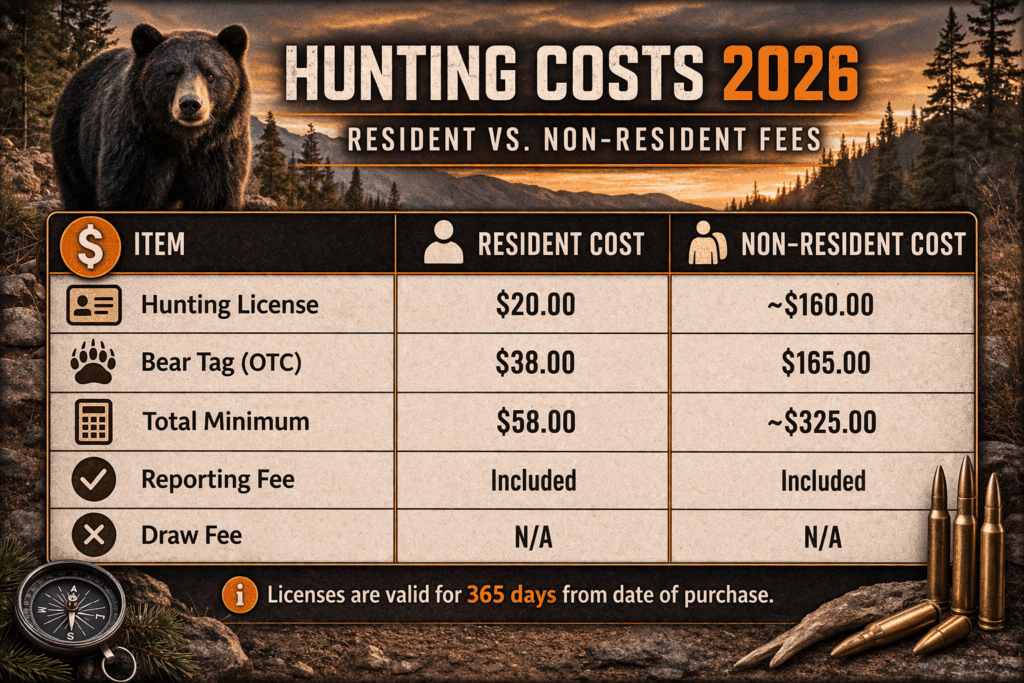
The hunting license stays valid for 365 days from when you buy it. That gives you flexibility to plan your hunt timing without worrying about expiration dates. Arizona accepts hunter education certification from any state, so you don’t need to take their course if you’re already certified elsewhere.
| License Type | Resident Cost | Non-Resident Cost |
|---|---|---|
| General Hunting License | $20 | ~$160 |
| Bear Tag | $38 | $165 |
| Total Minimum Cost | $58 | ~$325 |
You can buy these through the AZGFD website, authorized dealers throughout Arizona, or AZGFD offices. Since the license is good for 365 days, you can buy it now and it’ll still be valid for the 2026 season. That’s helpful for planning ahead.
Arizona Bear Permits (Tags)
Fall bear tags don’t require a draw application. They’re available over-the-counter right when you need them. This is what makes Arizona attractive compared to states where you’re playing the lottery every year hoping to get drawn.
You can buy your bear tag several ways:
- Online through AZGFD portal (instant confirmation)
- By mail before you arrive (especially useful for non-residents)
- At authorized retailers when you get to Arizona
One bear per hunter per calendar year, that’s the limit. Units have female harvest quotas that can shut down seasons, but there’s no limit on how many tags they sell. Keep your tag with you while hunting and validate it immediately when you harvest a bear.
Where to Hunt Bears in Arizona
Arizona’s 41 open bear hunting units cover everything from high-elevation pine forests to rugged desert canyon country. Your success comes down to finding areas with good bear populations that aren’t getting hammered by other hunters.
Here’s the complete list of open units: 1, 2A-2C, 3B-3C, 4A-4B, 5A-5B, 6A-6B, 7, 8, 9, 10, 10A, 17A-17B, 18B, 19A, 19D, 20A-20B, 21, 22 North and South, 23 North and South, 24A-24B, 27, 28, 29, 30A, 31, 32, 33, 34A, and 35A-35B.
Best Public Lands
Arizona’s got plenty of public land through national forests and BLM areas. Free access, but you’re competing with everyone else who figured out the same thing.
Top public land units worth considering:
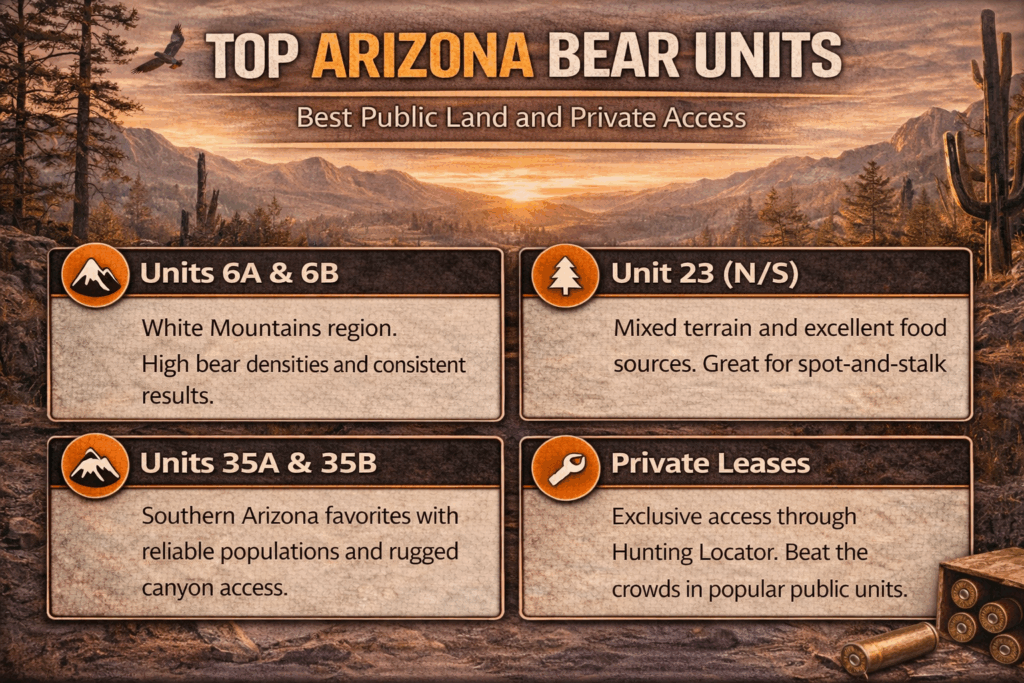
- Units 6A and 6B – Solid bear numbers in the White Mountains with decent public access
- Unit 23 (North and South) – Good bear habitat, mixed terrain that works for different hunting styles
- Unit 27 – Consistent bear activity with accessible public land and reasonable road access
- Units 35A and 35B – Reliable bear populations with multiple hunting opportunities
Arizona bear country is steep and rugged, especially in higher elevations. You need to be in decent shape. Popular public units get crowded, particularly during prime October weeks.
Looking for less crowded options? Hunting Locator’s Arizona land lease listings connect you directly with private landowners who offer hunting access.
Guided Hunts
Guided hunts make sense for non-residents who don’t know Arizona terrain or hunters who want better odds. Professional Arizona outfitters report 75% opportunity rates during general season and nearly 100% during archery season.
What you typically get with guided hunts:
- Licensed guide who knows the local area
- Lodging and meals during your hunt
- Field care of your harvested bear
- Transportation in the hunting area
You’ll need to bring your own weapon, licenses/tags, and personal gear. Book early because good outfitters fill up fast, especially for October dates. Most guides don’t include meat processing, so plan accordingly if you’re a non-resident who needs shipping.
Private Land Hunting
Private land access means less hunting pressure, potentially better bear populations, and more control over your hunting experience. Leasing hunting rights gets you exclusive or semi-exclusive access with less competition than public land.
Some hunters buy hunting property outright, but that’s a major financial commitment. The real challenge is meeting private landowners and building relationships. That takes time and effort that many hunters, especially non-residents, just don’t have.
Hunting Locator solves this problem by connecting hunters directly with Arizona landowners offering hunting leases or land sales. Instead of cold-calling ranchers or hoping for word-of-mouth connections, you can browse verified listings, compare properties by location and size, and secure access before your trip. We bridge the gap between hunters who need quality land access and landowners willing to share their properties.
Arizona Bear Hunting Tips
Arizona bear hunting success comes down to preparation, patience, and understanding how bears behave in desert Southwest conditions.
- Glass Early and Late – Bears move during cooler morning and evening hours. Get to your glassing spots with quality optics before prime time starts.
- Focus on Water Sources – August heat drives bears to water holes, springs, and creek drainages. Find water, find bears.
- Scout Food Sources – Look for oak stands with acorns, berry patches, and other natural food sources. Bears concentrate their feeding before winter denning.
- Check Unit Status Daily – Units close when female harvest quotas are met. Call AZGFD’s bear hotline (1-800-970-BEAR) regularly so you don’t waste time traveling to closed units.
- Prepare for Physical Demands – Arizona bear country is steep and rugged. Be honest about your fitness level when planning your hunt.
- Bring Quality Optics – Spot-and-stalk hunting requires good binoculars and spotting scopes. You’ll spend way more time glassing than walking.
- Know Your Target – Learn to identify male versus female bears in the field. Female harvest limits drive unit closures, and you want to make ethical shots.
- Plan for Meat Care – Arizona’s August and early fall heat requires quick field dressing and cooling. Have a solid plan for getting meat to a processor or cooler fast.
- Understand Reporting Requirements – Within 48 hours of harvest, call AZGFD at 1-800-970-BEAR. Within 10 days, bring the skull and hide with proof of sex to an AZGFD employee for inspection.
Need gear for Arizona’s challenging conditions? Browse hunting equipment at the Hunting Locator store to make sure you’re properly prepared.
More Resources from Hunting Locator
Want to expand your Arizona hunting knowledge? Check out these additional resources from our platform:
- Arizona Hunting Seasons Guide – Complete calendar of all Arizona hunting seasons
- Arizona Elk Hunting – Detailed guide to Arizona’s elk hunting opportunities
- Arizona Deer Hunting – Complete coverage of mule deer and whitetail hunting
- Arizona Javelina Hunting Season – Everything about Arizona’s unique javelina hunting
- Arizona Mountain Lion Hunting Season – Mountain lion hunting regulations and opportunities
- Arizona Pronghorn Hunting Season – Complete pronghorn hunting information
- Arizona Dove Hunting Season – Upland bird hunting opportunities
- Arizona Bighorn Sheep Hunting Season – Once-in-a-lifetime sheep hunting opportunities
FAQ
When do Arizona bear hunting seasons open in 2026?
Arizona’s general bear season opens August 8, 2026, and runs through December 31, 2026. The archery-only season is August 22, 2026. Both seasons let you hunt black bears with appropriate weapons, though units may close early when female harvest quotas are reached.
How much does it cost for non-residents to hunt bears in Arizona?
Non-residents pay $165.00 for a bear tag and $160.00 for a hunting license, totaling about $325 in required fees. You’ll have additional costs for travel, lodging, gear, and meat processing depending on how you hunt.
Do I need to apply for a draw to get an Arizona bear tag?
No, Arizona fall bear tags are available over-the-counter with no draw required. You can buy tags online through AZGFD, by mail before you arrive, or at authorized retailers. This makes Arizona way more accessible than states with limited draw systems.
Which Arizona units offer the best bear hunting opportunities?
Units 6A, 6B, 23 (North and South), 27, and 35A-35B have strong bear populations with good public land access. Your success depends on hunting pressure, weather conditions, and your individual hunting skills.
What happens if my hunting unit closes during the season?
When the female harvest limit is met, the unit closes at sundown the Wednesday immediately following. Monitor unit status by calling AZGFD’s bear hotline at 1-800-970-BEAR regularly throughout your hunt.
What are the reporting requirements after harvesting a bear?
Within 48 hours of taking a bear, contact AZGFD at 1-800-970-BEAR with your harvest information. Within 10 days, present the skull and hide with proof of sex to an AZGFD employee for mandatory inspection.
The Final Shot
Arizona’s 2026 bear hunting seasons offer some of the best opportunities you’ll find for black bear hunting in the West. Over-the-counter tags, extended seasons, and 41 open units make Arizona more accessible than most western states. Your success comes down to understanding the regulations, picking the right hunting locations, and being ready for Arizona’s demanding terrain.
Whether this is your first Arizona bear hunt or you’re coming back for another season, having reliable access to quality hunting land makes all the difference. There’s a big gap between a successful hunt and an expensive learning experience. Start planning your 2026 Arizona bear hunt today by checking out our verified land lease listings and connecting with landowners who share your passion for ethical, memorable hunts.


